
by Ben Taylor
Former Minister Jenista Mhagama has died at the age of 58. She had served in various capacities in government and Parliament, and will be remembered by colleagues as a dedicated public servant whose contributions had shaped policy and influenced national debate.
Mhagama, born in June 1967, completed her schooling from Peramiho Girls’ Secondary School before achieving a Diploma in Education from the Korogwe Teachers Training College. She worked as a teacher for six years between 1991 and 1997.
She was first appointed to the Parliament from a special seat reserved for women in 2000. In 2005, she defeated former Finance Minister Simon Mbilinyi for the right to represent CCM in the upcoming elections for the Peramiho constituency in Ruvuma Region.
Mhagama’s first ministerial role was as Deputy Minister for Education and Vocational Training in President Jakaya Kikwete’s administration between January 2014 and January 2015. She went on to serve in several other roles, including Minister of State in the Prime Minister’s Office for Policy, coordination and parliamentary affairs, Minister of State in the President’s Office responsible for Public Service Management and Good Governance. Her last cabinet position was as the Minister for Health, a position she held until a few weeks before her death.
President Samia Suluhu Hassan expressed her sadness on social media, describing Ms Mhagama as a “distinguished” member of the ruling Chama Cha Mapinduzi (CCM) party for 38 years. The President acknowledged her contributions as a stalwart youth and women’s leader, a minister across multiple administrations, and a mentor in both public life and politics.
Edwin Mtei, Tanzania’s first Governor of the Bank of Tanzania (BoT) and a founding member of the opposition party Chadema, has died aged 94. He passed away in the early hours of Tuesday, January 20, 2026.
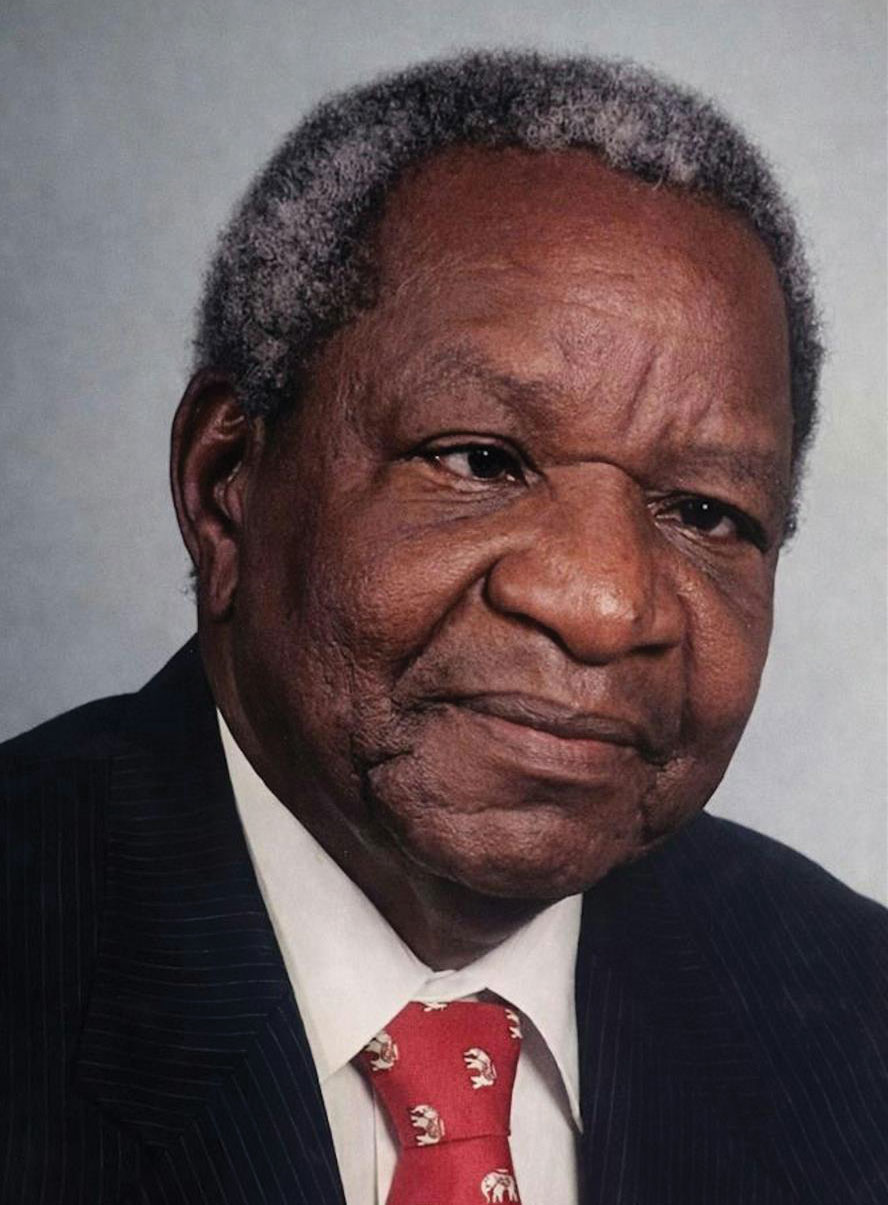
Edwin Mtei
Mr Mtei served as Bank of Tanzania governor from 1966 to 1974, before going on to become secretary general of the East Africa Community from 1974 to 1977 and Minister of Finance and Planning from 1977 to 1979.
When President Julius Nyerere appointed Edwin Mtei to this latter role, the decision placed two men of fundamentally different economic philosophies at the helm of Tanzania’s struggling economy. The collapse of the East African Community, the closure of the Kenya border, declining exports and mounting fiscal pressures had left the economy fragile and increasingly dependent on state intervention.
As detailed in his 2009 book titled From Goatherd to Governor, The Autobiography of Edwin Mtei,[Reviewed in TA 97] he clashed with the President, and the wider cabinet, on issues including export tariffs (which he opposed), parastatal reform (including part-privatisation, which he advocated for). His ideas were unpopular with his colleagues in an era when socialism defined economic legitimacy. Any proposal resembling private ownership was dismissed as ideological betrayal. President Nyerere in particular, while aware of the parastatals’ failures, was unwilling to accept reforms that touched ownership structures or diluted state control.
When Tanzania entered negotiations with the IMF on economic rehabilitation, Mtei sided with IMF on some key points, including parastatal privatisation and devaluation of the shilling. On both counts, Nyerere dismissed the advice, accusing the visitors of insolence and declaring that he would not allow Tanzania to be “run from Washington”. Shortly after this, Mtei resigned his position.
Within weeks, he turned to farming, exchanging his Dar es Salaam home for a coffee estate in Arusha. After initial struggles, a bumper coffee harvest in 198182 enabled him to clear debts and stabilise operations.
He also found his way back into public service. He was appointed executive director for African affairs at the International Monetary Fund in 1983 – a post for which President Nyerere recommended him, showing an impressive ability to refrain from holding grudges. Appointments to key commissions on banking, taxation and public finance put him once again at the heart of reform debates that would reshape Tanzania’s economy in the late 1980s and early 1990s, including seeing many of the reforms that he had previously advocated for being put into practice.
After Tanzania amended its constitution in 1992 to allow a multiparty system, Mtei founded an opposition party, Chadema, with a liberal ideology that reflected the economic views he had proposed as finance minister. Mtei himself quit frontline politics in 1998, but Chadema has survived to be the leading opposition party in the country to date.
Freeman Mbowe, the former national chairperson of Chadema, remembered his predecessor as a man who “was not one for quarrels” but for principled debate on policy.
The party’s current chair Tundu Lissu also paid tribute to Mtei, in a statement issued from prison, where he faces charges of treason. Lissu described Mtei as a principled patriot and a public servant who refused to compromise his convictions in the face of poor governance.
President Samia Suluhu Hassan issued a statement describing Mr Mtei as a “distinguished public servant and visionary” who played a key role in building the country’s economic institutions. She further acknowledged his “historic contribution to the introduction of multiparty democracy.”