
Tanzanian Affairs is a magazine with news and current affairs issued by the Britain-Tanzania Society. It is published three times a year. The views expressed or reported are those of the person concerned and do not necessarily represent the views of the Britain-Tanzania Society. All the information is copyright – please refer here for more details.
TA ISSUE 145
Reply
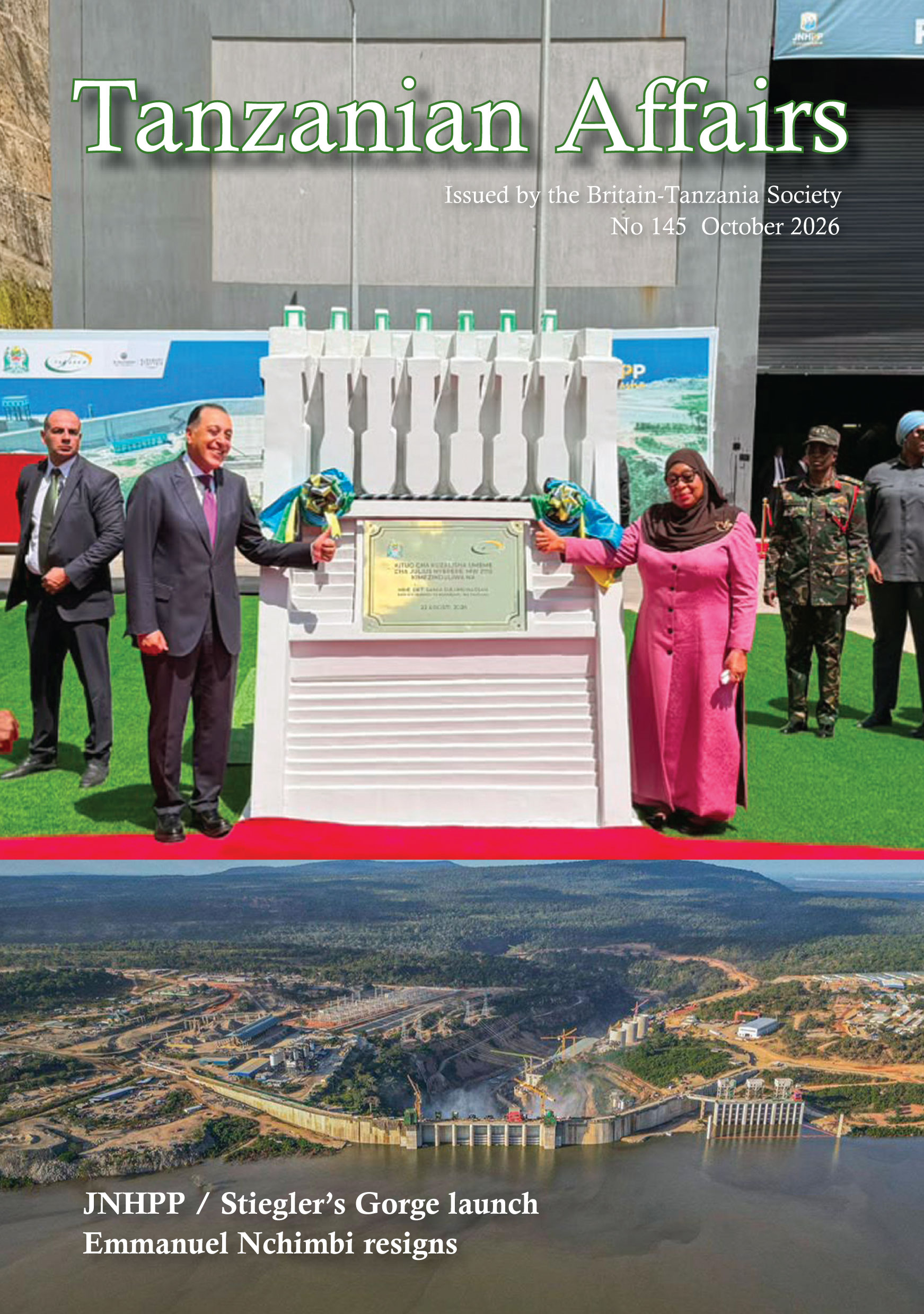
TA 145 cover features the launch of JNHPP (Stiegler’s Gorge)
Find the latest issue (Oct 2026) on the Britain Tanzanian Society website https://www.britaintanzaniasociety.co.uk/member-zone/ (membership required).
The issue will be uploaded to this site in Feb 2027 to join the searchable archive.
TA ISSUE 144

TA 145 cover featured former England footballer Rio Ferdinand arriving in Dar es Salaam airport with Paul Makonda
Presidential Commission Report & Reactions
State Visit to Russia
Ebola in the Region
POLITICS
by Ben Taylor
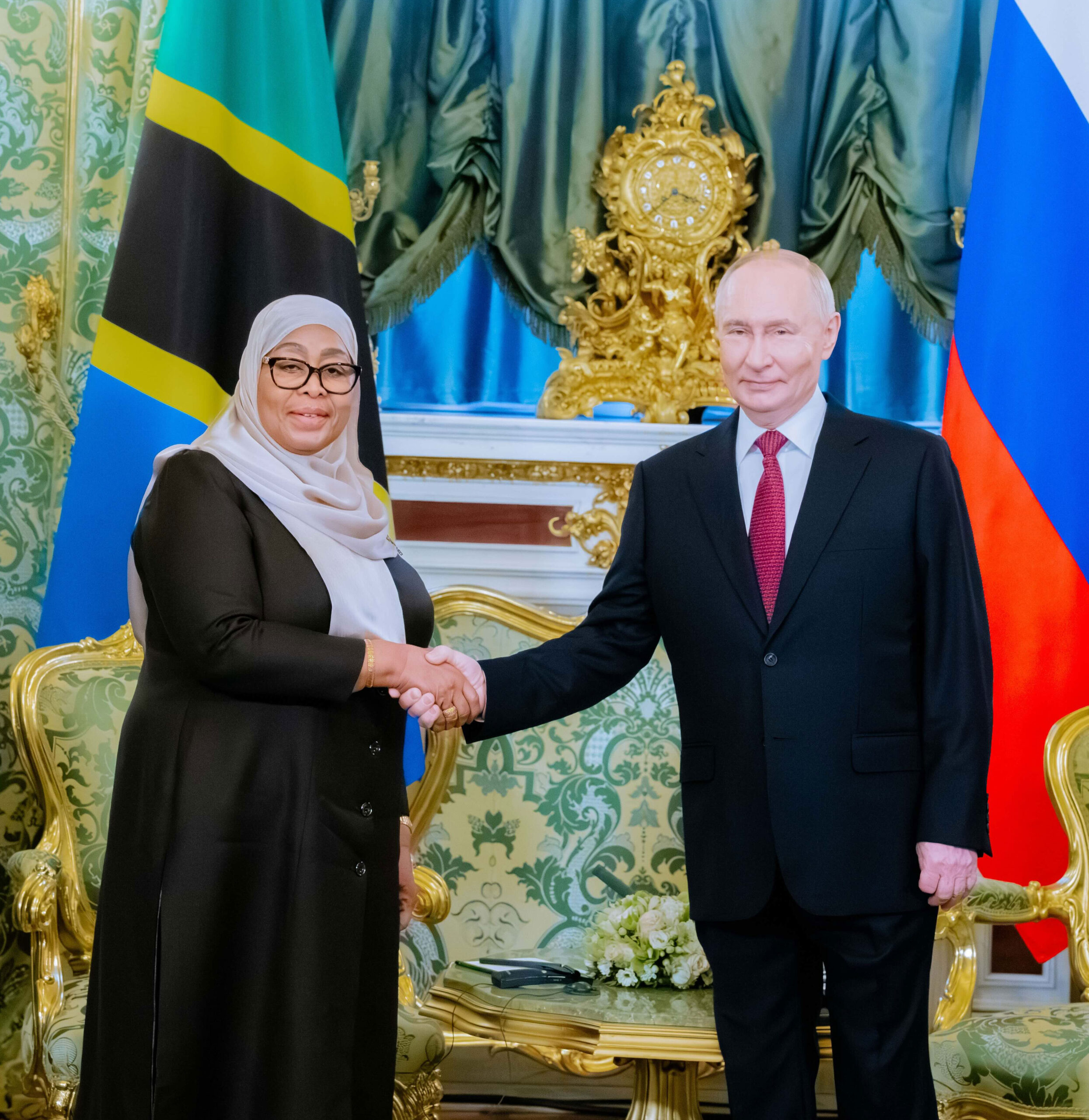
President Samia is welcomed by Russian President Vladimir Putin during her visit in June
Presidential Commission report and reactions
The aftermath of Tanzania’s highly controversial October 2025 general election took a significant turn on April 23, 2026, when the Presidential Commission of Inquiry belatedly handed its findings to President Samia Suluhu Hassan. Chaired by former Chief Justice Mohamed Chande Othman, the commission conducted a 153-day investigation across 11 regions, collecting testimony from more than 1,300 witnesses and hearing from 63,603 people.
The commission’s report confirmed a devastating human toll, documenting at least 518 deaths, over 2,390 injuries, and property destruction valued at more than TSh 125 billion. Nevertheless, opposition figures said these counts vastly understated the actual numbers of injuries and deaths, as they seemingly only counted deaths that occurred at protests, not later in homes and communities. The commission acknowledged that some deaths went unreported, meaning the statistics are necessarily incomplete.
“Evidence and information have shown that some politicians and activists used citizens’ challenges resulting from various identified sources as an opportunity to persuade citizens to participate in violence during and after the General Election using various slogans and declarations,” said Justice Chande.
“The Commission has obtained evidence beyond doubt that the events of violence in October 2025 were planned, coordinated, funded, and implemented by people who received training,” he said. Justice Chande added that he had evidence that confirmed there were people persuading and recruiting others, such as young people in difficult environments, bodaboda riders and small entrepreneurs, to participate in violence during and after the General Election. He said they were given TSh 10,000 – 50,000 and were promised jobs and a better life. He claimed further that from October 12-28, 2025, “they were kept together, given training, prepared, and encouraged to be part of starting and participating in violence on election day.”
Among the commission’s recommendations was a call for a new national Constitution be available by the year 2028, so it is used in local government elections of 2029 and the general election of 2030. “We listened to cries of those who lost their loved ones, who were injured, and who lost property,” said Justice Chande. “We saw eyes of youth who were arrested asking with anxiety their future. We met with families which until today have not understood who killed their loved ones and why.”
“But also on other side, we see Tanzanians with great courage, patriotism and wisdom. We listened to religious leaders praying for peace with real power. We saw Elders with respect providing words of wisdom. We got cooperation of citizens who came to provide evidence because they love their Nation.”
Presidential response
In response, President Samia acknowledged the profound impact of the crisis but notably chose to keep the full text of the report classified. “This is the President’s report,” she said. “Therefore, let no other people come and claim ownership of this report; it is the President’s report.”
She called for national unity in the face of challenging circumstances: “I urge you very much to continue to strengthen our unity and cohesion so that we do not give an opportunity to be disturbed by enemies of our nation.”
“We would be deceiving ourselves if we did not speak the truth that what happened at that time shook our nation. Indeed, it shook us. … The Commission has explained to us that the investigation has established that the violence that occurred was planned, coordinated, financed, and executed by trained people with criminal tendencies and destructive activities. Similarly, it has been established that the goals of those involved were to disrupt the election and create a leadership vacuum so the country would not be governed, and that is why the violence began on election day… Without a doubt, the efforts of the security and safety organs to control that violence and disorder are what have made Tanzania what it is today.”
“The Commission has examined what affected us and has provided both treatment and guidance. Our task now is to apply that treatment effectively… I will carry this responsibility with courage, confidence, and caution. But we must do this together. Do not leave this burden to me alone.”
Her senior adviser, Lazaro Nyalandu, later amplified this stance in a television interview with CNBC Africa, stressing that President Samia was “absolutely abhorred” by the massive loss of life, but defensively maintained that the violence was a “well-planned” and “orchestrated” event by political actors rather than a spontaneous democratic protest.
Wider reactions
Opposition leaders and international human rights organisations dismissed both the commission report and the President’s remarks as an attempt to whitewash state-sponsored brutality and shield security forces and government officials from accountability. They argued that blaming “outside orchestrators” completely ignored the indiscriminate violence deployed by the state.
Human Rights Watch criticised Justice Othman for failing to evaluate the lawfulness of the police force’s conduct, while Amnesty International openly condemned the decision to withhold the document from citizens. Flavia Mwangovya, Amnesty International’s Deputy Regional Director for East and Southern Africa, declared: “To withhold the Commission of Inquiry report from the public is a blow to transparency, which is key in the process of achieving accountability.”
“Using police data to investigate police conduct is methodologically unsound and undermines the reliability of findings,” argued a coalition of 14 civil society organisations, including the Legal and Human Rights Centre (LHRC), Tanganyika Law Society (TLS), Centre for Strategic Litigation (CSL) and Twaweza East Africa. “The commission collected sworn testimony from witnesses, [and] yet it failed to use this testimony to identify those responsible. This raises serious questions about whether the full report contains information deliberately omitted from the public presentation, and whether political considerations influenced what was included.”
Former Prime Minister Joseph Sinde Warioba expressed confusion over the government’s decision to keep the full Chande report confidential, saying it broke with national precedent. He noted that previous significant inquiries, such as the Nyalali Commission and his own corruption commission, had their reports made fully public. He emphasised that citizens need to know what the commission discovered to facilitate genuine national healing.
A new commission
President Samia Suluhu Hassan has officially formed a special criminal investigation commission to identify and prosecute those responsible for the deadly violence that followed the October 29, 2025, general election. This was among the initial commission’s recommendations.
The new commission will be chaired by Justice Shabani Ally Lila of the Court of Appeal, joined by three retired High Court judges, Justice Gad John Mjemmas, Justice Aishieli Nelson Sumari, and Justice Awadh Mohamed Bawazir, serving as commissioners. This directly implements a key recommendation from the initial presidential inquiry led by retired Chief Justice Mohamed Chande Othman.
This new commission’s mandate is to investigate specific matters, including identifying the main perpetrators of the violence. It is also tasked with clarifying the confusing circumstances surrounding deaths and injuries, locating missing corpses, and recommending concrete accountability steps.
However, the decision to form yet another commission has drawn sharp criticism from civil society and eminent national figures. The civil society coalition statement suggested this approach appeared designed to avoid rather than achieve accountability.
Diplomatic reactions
The fallout from the post-election violence and the commission’s findings have triggered an unravelling diplomatic crisis between Tanzania and its traditional Western partners. The administration’s decision to keep the full report classified while framing the 518 deaths as an “orchestrated plot” by unnamed opposition groups has left many in Washington, Brussels, and London dissatisfied. International responses have shifted from polite diplomatic concern to direct, punitive measures.
The United States has arguably delivered the most aggressive response. In May, the U.S. Department of State formally imposed targeted visa restrictions and financial sanctions. The primary target of the ban is Inspector General of Police (IGP) Camillus Wambura, alongside several other senior commanders within the Tanzania Police Force (TPF) and the state intelligence apparatus. The U.S. explicitly cited Wambura’s direct responsibility for command-level complicity in “gross violations of human rights,” including the deployment of live ammunition against peaceful protesters and unconstitutional arbitrary detentions.
Since the commission reported, the European Parliament and the European External Action Service (EEAS) escalated debates regarding a total freeze on aid flows to Tanzania. Brussels informed the Tanzanian Ministry of Foreign Affairs that further disbursement of governance and infrastructure aid is strictly conditional on the public release of the full, unredacted inquiry report and the establishment of an independent, internationally monitored judicial prosecution framework.
Since the report was handed over in April, the UK government has shifted its public-facing focus back toward trade and investment. For example, during the Tanzania Impact Investment Forum in early June 2026, High Commissioner Marianne Young focused her public remarks on pitching opportunities in Tanzania for British investors. While British diplomats are undoubtedly raising governance and human rights concerns behind closed doors in meetings with Tanzanian state officials, they have chosen to keep those specific grievances away from the public eye.
In response to this mounting pressure, President Samia has publicly warned citizens of a “difficult financing context ahead.” She has also begun aggressively pivoting its capital hunt elsewhere, reportedly prioritising new $1.4 billion infrastructure projects with China and a $1.2 billion uranium project backed by Russia (see below, and Energy and Minerals section, in this issue).
Tundu Lissu latest
Tundu Lissu, chair of Tanzania’s main opposition party, Chadema, remains in a highly precarious situation following his arrest on April 9, 2025. Detained after leading a political rally calling for constitutional and electoral law reforms, Lissu has spent over fourteen months behind bars. International monitoring groups, including the International Democracy Union (IDU), have repeatedly labelled his detention as politically motivated persecution aimed entirely at crushing democratic opposition in the buildup to and aftermath of the highly controversial October 2025 general election, from which Chadema was ultimately barred.
On the legal front, Lissu is currently facing accusations of treason, which carry the risk of capital punishment. Legal proceedings have been plagued by long delays and procedural standoffs before a three-judge bench at the High Court of Tanzania in Dar es Salaam. Acting as his own defence counsel due to what he describes as a systemic denial of private, meaningful access to his legal team, Lissu scored a notable procedural victory in February 2026. Presiding Judge Dunstan Ndunguru sustained Lissu’s objection against the prosecution’s attempt to use hidden, anonymous witnesses testifying from enclosed cells, ruling that the tactic unlawfully obscured witnesses from the court’s view.
Lissu’s imprisonment has drawn severe condemnation from international human rights bodies and foreign lawmakers. European Parliament members representing major political blocs issued a joint briefing confirming that Lissu has been held in prolonged solitary confinement without the option for bail. According to reports from Chadema’s deputy leader, John Heche, Tanzanian authorities have quietly attempted to negotiate a deal offering to drop the treason charges and release Lissu from prison on the strict, non-negotiable condition that he immediately accepts permanent exile and leaves the country, a compromise the opposition leader has consistently refused.
Regarding his health, deep concerns persist among international observers due to the punishing nature of his current isolation and his extensive medical history. There are also disputed reports that he suffered an attempted poisoning in mid-May. Lissu is a survivor of a brutal 2017 assassination attempt in which he was shot sixteen times, requiring years of intense, highly complex orthopaedic and reconstructive surgeries abroad. Human rights monitoring groups warn that keeping a politically targeted individual with significant lingering physical vulnerabilities in strict solitary confinement, while restricting regular access to his family, external doctors, and international observers, presents an active, ongoing threat to his long-term physical well-being.
In a surely related incident, on the night of May 20, 2026, Lissu’s personal aide David “Djumbe” Mghanja was violently abducted from his vehicle in the Bunju area of Dar es Salaam by armed individuals who handcuffed him and identified themselves as police officers. Djumbe managed to throw himself out of the kidnappers’ moving vehicle as gunfire erupted, evading his captors by hiding in a thick forest for over an hour. He was discovered at his home the following morning severely beaten and still wearing the tight metal handcuffs used by his abductors.
On May 23, three days after the attack, Prime Minister Mwigulu Nchemba publicly addressed the situation. He characterised the recent string of assaults and abductions targeting government critics as a coordinated “scheme” designed to divide Tanzanians. He strongly suggested the presence of an external conspiracy or foreign-backed elements trying to destabilise the country’s domestic peace, firmly denying that the state or ruling party had any hand in the violence against Djumbe.
On May 25, the Dar es Salaam Special Zone Police Commander, Jumanne Muliro, confirmed that the police are actively investigating the “kidnapping of the assistant to the Chadema chairman, Mr. David Djumbe,” alongside other recent serious crimes in the city. Muliro stated that investigations are ongoing and promised that the public would be officially updated as soon as any specific suspects are apprehended.
Ministry of Youth
The government’s other main response to the election situation is the establishment of a standalone Ministry of State in the President’s Office responsible for Youth Development. This began soon after the election, in late November 2025. Led by Minister Joel Arthur Nanauka, the ministry manages the needs of Tanzania’s 20 million young citizens (aged 15–35), who represent over a third of the national population but face high unemployment and a widespread sense of political disenchantment.
The stated rationale is to pull youth affairs out of diverse, fragmented bureaucratic portfolios and consolidate them under a single national focal point. In doing so, the government hopes to defuse tension by listening to young people and responding to their concerns.
The newly formed ministry has established an official guiding philosophy “Vijana Tuyajenge, Tanzania ni Yetu” (Youth let’s build it, Tanzania is ours). Its immediate strategy centres on three operational pillars: fast-tracking access to youth services, conducting regional listening tours, and investing heavily in technology through the new Vijana App portal to streamline employment and financing pathways.
The ministry’s flagship initiative is a TSh 200bn (£57m) Youth Enterprise Support Facility, launched by the government on February 5, 2026. In an acknowledgement of how past youth funding schemes dissolved into local government corruption and “ghost groups,” the ministry has adopted a new approach. For the first time, capital is not routed through local government but instead through commercial institutions like the CRDB Bank Foundation. The facility targets high-growth, productive fields including advanced agriculture, mining, manufacturing, and tech startups.
The first open application window, which ran from mid-March to late April 2026, generated over 30,000 applications from young entrepreneurs. On April 30, 2026, the ministry published its first round of preliminary data, approving an initial cohort of 1,961 youth business beneficiaries for concessional loans. To ensure the financial sustainability of the projects, Minister Nanauka has mandated that all successful applicants undergo an intense, zonal-level business and financial literacy training program before the commercial banks disburse the funds.
President Samia conducts state visit to Russia
President Samia Suluhu Hassan conducted a three-day state visit to Russia from June 3–5, 2026, marking a significant geopolitical pivot for Tanzania. This is the first time a Tanzanian head of state has made an official visit to Russia since founding father Julius Nyerere’s historic trip in 1969. She was escorted by a prominent business and ministerial delegation.
The timing of this diplomatic realignment is highly calculated; facing escalating aid cuts, direct visa sanctions, and a severe loss of reputation among Western democratic partners over the lethal post-election crackdowns of late 2025, President Samia is looking to Russia to diversify Tanzania’s foreign dependency and secure fresh capital.
The centrepiece of the visit was a high-stakes, televised bilateral meeting at the Kremlin, where Russian President Vladimir Putin welcomed the Tanzanian leader. Highlighting that 2026 marks the 65th anniversary of diplomatic ties between the two nations, President Putin noted that bilateral trade between the two countries increased by 25% over the previous year. For Russia, a deepened partnership with Tanzania serves a dual strategic purpose: it secures a geopolitical foothold along the Indian Ocean maritime logistics corridor, while simultaneously building an alliance with an emerging African nation that has expressed interest in partnering with the BRICS economic bloc.
The economic diplomacy culminated at the 29th St. Petersburg International Economic Forum (SPIEF 2026), where President Samia took centre stage as a key speaker alongside Putin and Chinese Vice President Han Zheng. Addressing the Russia-Tanzania Business and Investment Forum, she challenged executives from both countries to move past standard diplomatic rhetoric and locked in 12 major intergovernmental cooperation agreements. The delegation confirmed that Air Tanzania will officially launch its first direct flights connecting Dar es Salaam and Zanzibar to Moscow on July 2, 2026, aiming to tap into Russia’s outbound traveller market.
On the industrial front, the conversations shifted toward critical mineral extraction and advanced energy technologies. Russian Economic Development Minister Maxim Reshetnikov confirmed that energy giant Gazprom is actively drafting plans to enter Tanzania’s massive offshore gas sector, eyeing projects spanning from extraction to regional distribution networks. President Samia also utilised the St. Petersburg platform to court Russian state tech, inviting partnership in geological surveys, localised vaccine manufacturing, and active technical consultations to introduce small modular nuclear reactor (SMR) technology into Tanzania’s long-term domestic energy matrix.
Another high-profile visit
Former Manchester United captain and England footballer Rio Ferdinand visited Tanzania for three days in May. Welcomed by a vibrant reception of football fans at the Julius Nyerere International Airport, Ferdinand’s itinerary was heavily backed by the state. He travelled on the new railway to Dodoma to attend a parliamentary session, inspected sports infrastructure projects in Arusha being prepared for the 2027 Africa Cup of Nations (AFCON), and toured Serengeti National Park. By the end of his tour, Ferdinand accepted an official appointment as Tanzania’s Tourism Ambassador, pledging to use his global platform to promote the country’s cultural and social wealth.
The visit sparked significant political undertones and domestic controversy due to the identity of his primary government host. Ferdinand’s invitation and tour were personally managed by Paul Makonda, the Minister for Information, Culture, Arts and Sports. Makonda is a controversial figure in Tanzanian politics, having been placed under direct U.S. State Department sanctions in 2020 for his involvement in “gross violations of human rights,” including the targeted suppression of political opposition, critics, and marginalised groups during his previous tenure as Dar es Salaam Regional Commissioner.
The alignment of an internationally renowned sports icon and anti-racism advocate with Makonda drew frustration from domestic human rights defenders and opposition figures. Critics noted that the Tanzanian government heavily leveraged Ferdinand’s celebrity status to soften its international image and project a sense of stability and progressive development. By embedding Ferdinand directly into state-sponsored infrastructure tours and parliamentary events, the administration effectively utilised a global football legend to run a public relations campaign at a time when the state is facing severe international pressure over its domestic human rights record.
ECONOMICS
by Dr Hildebrand Shayo
Repercussions of the US-Iran war will significantly affect Tanzania’s budget
As an economic analyst, it’s a valuable opportunity to assess how the ongoing conflict in Iran and its environs affects Tanzania’s economy, especially as parliament deliberates and proposes revisions to various ministry budgets in Dodoma for FY 2026/2027.
This is important because the conflict may influence our economy in
numerous ways that many of us might not realise.
Due to the ongoing US-Iran conflict and fluctuations in global energy markets, I plan to lower Tanzania’s 2026 real GDP growth forecast to 5.7% from 6.1%, slightly below the 5.9% projection for 2025.
My main assumption is that the US and Iran will reach a preliminary agreement within the next few weeks. However, if disruptions persist into June or even July 2026, I expect to revise down Tanzania’s 2026 growth outlook by an additional 0.1-0.2 percentage points due to rising inflation and increasing risks of tighter financial conditions.
If negotiations fail and direct military conflict resumes, my assessment with a 45% probability: further downward revisions of 0.3-1.2 percentage points are likely for our 2026 Tanzania growth forecast, along with possible adjustments to my 2027 forecast based on whether the scenario escalates further.
On April 27, Tanzania’s National Bureau of Statistics announced that real GDP grew by 5.7% year-over-year in Q4 2025, a slowdown from 6.4% in Q3. The growth was mainly supported by increased activity in the financial and insurance sectors, which rose by 19.5% year-over-year in Q4, up from 14.2% in Q3, as well as in mining and quarrying, which increased from 7.1% to 7.5%.
However, slower growth in the tourism sector (6.7% to 1.5%; surely impacted by increased cost and complication of air travel), manufacturing (4.5% to 4.2%), and agriculture (5.1% to 4.4%) led to an overall slowdown in headline growth in the final quarter of the year. Given ongoing disruptions in global energy markets, Tanzania’s growth outlook, based on data, will shift from 5.9% to 5.7% due to stronger inflationary pressures, a weaker currency, and tighter monetary policy, which dampen domestic consumption.
Thus, investors willing to do business in Tanzania need to be aware that Tanzania’s growth remains solidly underpinned by large-scale infrastructure projects and mining investments. Infrastructure spending is unlikely to face significant disruption because projects are built into multi-year plans with high sunk costs. They are usually supported by pre-arranged, ring-fenced financing that keeps disbursing funds based on milestones, even amid temporary cost shocks. Furthermore, high metal prices will continue to motivate investment in mining and production.
Should the Strait of Hormuz remain closed beyond the end of May 2026, I would likely revise down my growth forecast by another 0.10.2 percentage points (pp), reflecting higher inflationary pressures, greater risks of monetary tightening, and supply chain disruptions to Tanzania’s H2 exports.
Prolonged sluggish negotiations into late May and possibly beyond could significantly increase my earlier forecast that front-month Brent futures will average USD 78/bbl in 2026. If the current situation persists well into June, I believe my 2026 annual paper price forecast would rise from USD 78/bbl to USD 81/bbl, and my physical price forecast would increase from USD 82/bbl to USD 86/bbl.
More importantly, a rising import bill could weaken the Tanzanian shilling and push domestic inflation higher. This may lead to tighter monetary policy and further depreciation of the currency.
Previously, I observed that the effect on annual exports would be minor because most of Tanzania’s cash crop exports, like cashew nuts and coffee, tend to peak in the second half of the year. Shipping, under the base case, is expected to resume before long.
If the conflict does not come to an end imminently, it could significantly reduce Q3 export revenues and potentially disrupt Q4 as well. Additionally, tourism, which also thrives in the second half of the year, might suffer greatly due to high jet fuel prices.
My primary assumption still is that ongoing diplomacy will result in a fragile agreement between the US and Iran. However, there remains a significant risk of talks breaking down and military escalation, which I estimate has a 45% chance of leading to the ‘Extend to Escalate’ conflict scenario.
Under escalation scenarios at levels 1, 2, and 3, which extend for an additional one to three months, I have modelled the annual average prices for front-month Brent futures at USD 84/bbl, USD 92/bbl, and USD 106/bbl for 2026. The pump prices most Tanzanians encountered after the last price announcement are not far from my estimates.
Under this scenario, and based on the numbers and data, I would anticipate downward growth revisions of 0.3-1.2 pp to my 2026 Tanzania growth forecast, as well as revisions to my 2027 forecast, depending on whether we enter scenarios 1, 2, or 3.
This reflects not only tighter financial conditions that dampen consumer and business sentiment and spending, but also weaker economic activity stemming from supply chain disruptions and potential fuel shortages.
Additionally, the net export outlook, in my view, will deteriorate significantly due to rising global recession risks and the negative effects of a weaker external environment on the Tanzanian shilling.
ENERGY & MINERALS
by Ben Taylor
Uranium investments underway?
Tanzania’s intention to join the ranks of uranium-producing nations has entered a defining phase, as the long-delayed Mkuju River project edges closer to industrial production amid growing pressure to secure financing and meet critical regulatory milestones.
Valued at approximately $1.2 billion, the project in Namtumbo District, Ruvuma Region, is increasingly being viewed by both government officials and investors as one of the most strategically important mining ventures.
For nearly 13 years, the project remained largely dormant after a collapse in global uranium prices forced investors to shelve plans for commercial extraction despite extensive exploration work and regulatory approvals.
However, the project has taken on increased strategic and geopolitical significance over the last few months, culminating in high-level discussions during President Samia Suluhu Hassan’s state visit to Russia.
The project is operated by Mantra Tanzania Limited, a company in which Russia’s State Atomic Energy Corporation (Rosatom), via its international mining subsidiary, Uranium One Group, holds a controlling 80% stake. The Tanzanian government owns the remaining 20% free-carried equity interest.
Some engineering is currently underway on-site, including land clearing and the construction of heavy-transport roads connecting the site to broader national transit corridors. The construction of the primary industrial metallurgical complex is reported as expected to ramp up heavily throughout the year. The long-term roadmap targets full-scale commercial mining operations by 2029, with a projected annual output capacity of up to 3,000 tons of uranium.
The project was a central pillar of the high-stakes closed-door meeting between President Samia and Russian President Vladimir Putin in Moscow. The cooperation is now expanding beyond raw mining. While speaking at the St. Petersburg International Economic Forum (SPIEF), President Samia confirmed that Tanzania is officially in active negotiations with Rosatom to design and build small modular nuclear power plants (SMPs) in Tanzania. This would mark a significant change in the country’s long-term clean energy mix strategy, pivoting Tanzania from a simple exporter of raw radioactive ore into a future domestic consumer of peaceful nuclear technology.
Dangote oil refinery under negotiations – to be based where?
President Samia Suluhu Hassan held talks with Nigerian billionaire Aliko Dangote at the State House in Dar es Salaam on May 16. The visit came at a time when there is debate in East Africa on which country would host a proposed $15 billion to $17 billion oil refinery.
The refinery, still in its planning and expansion phase, is being viewed as a potential game changer for East Africa, a region that remains heavily dependent on imported refined fuel, despite having significant crude oil reserves. If it comes to fruition, the project could reshape fuel supply chains, reduce import dependency, and strengthen industrial capacity across the region.
Mr. Aliko Dangote says the refining capacity could reach 2.1 million barrels per day by 2030, positioning it among the world’s largest refining operators.
Addressing the Tanzania Parliament in Dodoma on May 5, 2026, Kenyan President William Ruto described Tanga as an ideal location for the project, citing its strategic position and the need to strengthen regional integration. However, Mr Dangote himself told the Financial Times that he was leaning towards Mombasa, Kenya, citing the city’s deep-water port, stronger logistics infrastructure and growing regional demand.
The facility is designed to process crude oil from regional producers, including Uganda and Kenya, as well as imported crude for markets stretching to Ethiopia and the Democratic Republic of Congo.
The development also comes as Tanzania and Uganda finalise the East African Crude Oil Pipeline (EACOP), which runs from Hoima in Uganda to Chongoleani in Tanga Region. Uganda’s Hoima oil fields are expected to produce about 230,000 barrels of oil per day once commercial production begins later this year.
Mr Dangote is a prominent Nigerian industrialist and the founder and CEO of the Dangote Group, a multi-industry West African conglomerate. Consistently ranked as Africa’s wealthiest individual, his fortune, estimated at more than $32 billion, stems from a diverse industrial portfolio spanning cement manufacturing, sugar refining, agriculture, and a newly opened mega oil refinery in Nigeria. Widely regarded as a key driver of the continent’s self-sufficiency, Dangote’s business model focuses on building large-scale, domestic manufacturing operations to displace imported goods across sub-Saharan Africa.
In East Africa, Dangote’s established presence is anchored heavily by his multi-country cement manufacturing network, with major active plants and distribution operations in Ethiopia and Kenya, as well as Tanzania. Building on this footprint, his interests have aggressively expanded into the regional energy sector, including the proposed new refinery. Additionally, his Nigerian refinery has already begun exporting refined petroleum products and jet fuel directly into East African markets, positioning his conglomerate to reshape the region’s fuel supply chains.
Long awaited LNG plant agreement imminent?
There are signs that the long-awaited investment agreement for construction of a Liquified Natural Gas (LNG) processing plant in Lindi might be imminent. In early 2026, Energy Minister Deogratius Ndejembi said that “commercial agreements have been reached, tax agreements have been reached, and now we are at the legal stage.” Officials said they were explicitly targeting June 2026 to formally sign the finalised Host Government Agreement (HGA).
Once the HGA is signed, the project enters a 2-to-3-year Pre-FEED (Front-End Engineering and Design) phase before a Final Investment Decision (FID) can be officially declared. An eight-year development timeline projects first production around 2034.
While an initial framework agreement was celebrated back in 2022, the project effectively stalled in late 2023 and 2024. The main driver was a wave of economic nationalism left over from previous administrations, which collided with a major push by President Samia Suluhu Hassan to restore investor confidence.
The international consortium, led by Shell and Equinor, alongside ExxonMobil, Pavilion Energy, and Medco Energi, demanded ironclad legal protections against the government unilaterally changing tax laws or fiscal terms midway through the project’s 40-year lifespan. Equinor had previously taken a $1 billion write-down on the project due to regulatory uncertainty, making them highly cautious.
Regulatory changes under President Samia Suluhu Hassan’s administration have reduced international investors’ concerns around political risk, reversing policies that previously discouraged foreign energy investment.
Another of the final legal hurdles was determining where disputes would be settled. The energy majors insisted on international arbitration clauses (such as in London or ICSID), while local legal frameworks historically favoured local or regional courts.
A further sticking point was exactly how much gas the consortium would be forced to reserve for Tanzania’s domestic market (for local power generation, manufacturing, and fertilizer plants) versus how much they could freely export to lucrative markets in Europe and Asia.
Rare Earth minerals
Tanzania has emerged as a significant player in the global geopolitical tug-of-war for magnet rare earths (specifically Neodymium and Praseodymium used in EVs and wind turbines).
The country’s flagship critical mineral asset is the Ngualla rare earth project, in Songwe Region, approximately 147km from Mbeya. This is reportedly one of the world’s premier undeveloped rare earth deposits.
Ngualla is operated by Mamba Minerals Corporation Ltd (MML), 84% owned by Peak Rare Earths. Shenghe Resources, a Chinese state-linked rare earth producer, holds a 20% stake in Peak Rare Earths and launched a full acquisition bid in May 2025. If completed, Ngualla would pass to Chinese control.
Ngualla is expected to become an important future source of magnet rare earths used in electric vehicles, wind turbines, robotics and defence systems. As competition intensifies among China, the West, and increasingly Russia, this aspect of Tanzania’s mineral endowment may become a highly significant resource and geopolitical story going forward.
Project financing for the US$320 million capital investment is being ironed out under the new ownership. Under existing binding agreements, 100% of Ngualla’s high-grade rare earth concentrate will flow into Chinese downstream processing infrastructure, with a targeted first production window hovering between late 2026 and 2027.
Meanwhile, in May 2026, the government announced a highly significant new discovery of strategic rare earths in Njombe Region. Exploration is moving quickly under a joint venture with Chinese firm Hongji Mining Co. Ltd.
Helium declared a “critical mineral”
In May 2026, Minister for Minerals Anthony Mavunde officially classified helium as a “Critical and Strategic Mineral”, establishing tighter state oversight and high-priority development status.
Also in May, the government signed a landmark Gas Extraction Agreement with Helium One, forming a joint venture called Songwe Helium Limited. The government took a 17% statutory free-carried equity stake. Backed by highly competitive concentrations of up to 7.6% helium discovered during tests, the project is on an 18-month roadmap targeting commercial production by November 2027.
The main reason for Tanzania’s heightened focus on helium stems from the gas’s critical importance and unique properties. Helium has no practical synthetic substitute and is indispensable in various high-tech industries, including MRI medical imaging systems, scientific research, semiconductor manufacturing, fibre optics, aerospace and emerging fields like quantum computing.
Global helium demand currently exceeds six billion cubic feet annually and is projected to surpass 8.5 billion cubic feet by 2030. Supply remains concentrated among a few key producers, notably the United States and Qatar, which together account for over 75% of the world’s output. Recent supply disruptions, including Russia’s halt on exports and production issues in Qatar, have highlighted the vulnerability of global helium supply chains, making new, reliable sources like Tanzania increasingly attractive.
TOURISM & ENVIRONMENTAL CONSERVATION
by James L.Laizer
GEF unveils $3.9bn climate package, creating new opportunities for Tanzania
The Global Environment Facility (GEF) has approved a US$3.9 billion replenishment package for the 2026-2030 funding cycle, unlocking new opportunities for environmental and climate investment in developing countries, including Tanzania. The decision was endorsed by representatives of GEF member countries during the 71st GEF Council meeting held in Samarkand, Uzbekistan, from 31 May to 3 June 2026, ahead of the Eighth GEF Assembly. The package will support global priorities including climate change mitigation and adaptation, biodiversity conservation, ecosystem restoration, sustainable land management, and pollution control.
A central feature of the new cycle is its expanded use of blended finance, which combines grant resources with private-sector capital to scale up impact. This approach is particularly important for developing countries like Tanzania, where development needs are significant and public financing alone is not sufficient. By crowding in private investment, the model is expected to unlock larger and more sustainable flows into climate and nature-based solutions.
For Tanzania, the timing of this funding cycle is highly strategic. The country is advancing climate resilience programmes, expanding renewable energy access, strengthening forest conservation, and safeguarding critical wildlife corridors that underpin both biodiversity and tourism. These priorities build on previous GEF support, which has already contributed to land restoration, biodiversity protection, and community-based natural resource management, providing a strong foundation for deeper engagement under the new cycle.
The new framework emphasizes national ownership, project readiness, and measurable results, encouraging countries to prepare strong, bankable proposals that can attract both grants and co-financing from development partners and private investors. It also prioritizes nature-based solutions and community-led conservation, recognising the role of Indigenous Peoples and local communities in protecting ecosystems. For Tanzania, this aligns with efforts to link conservation with rural development, landscape restoration, and sustainable land use. Overall, the cycle offers a strategic platform to accelerate sustainable development and strengthen institutional capacity, with focus now shifting to turning commitments into long-term, measurable impact on the ground.
Kilimanjaro ice recovery sparks hope, but scientists urge caution
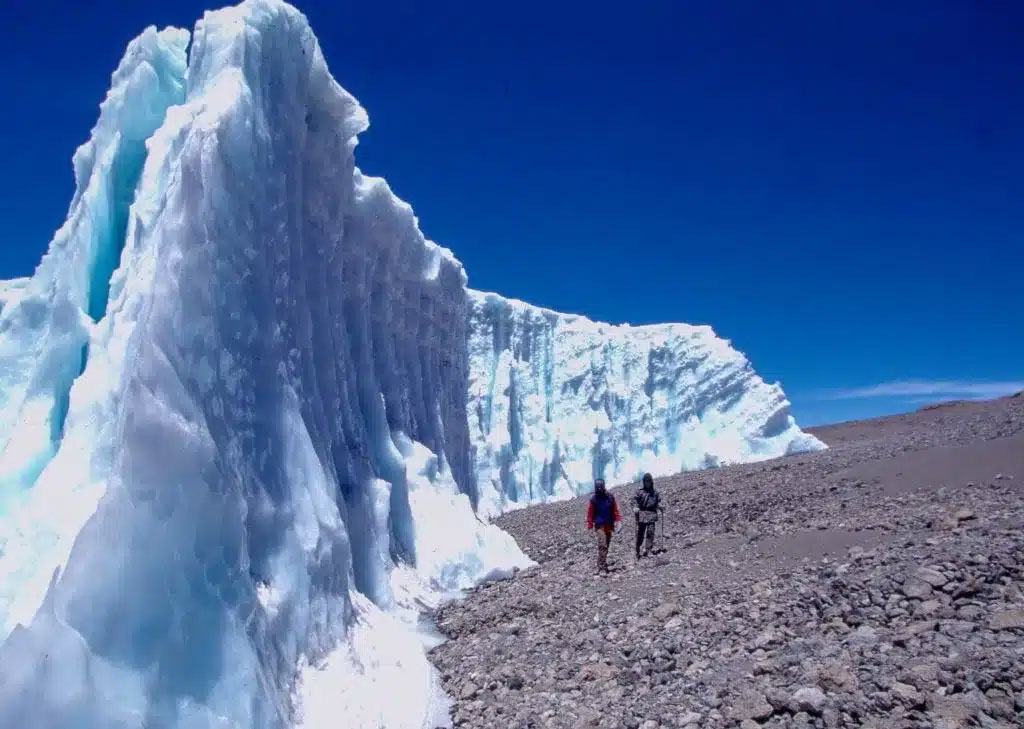
Edge of ice field on Mount Kilimanjaro – photo www.tranquilkilimanjaro.com
Mount Kilimanjaro remains one of Africa’s most iconic landscapes, symbolising both natural heritage and the visible impacts of climate change. For decades, its retreating glaciers were widely seen as evidence that the mountain’s famous ice cap could eventually disappear. Recent observations, however, have introduced cautious optimism alongside renewed scientific scrutiny. According to figures from the Kilimanjaro National Park Authority (KINAPA), glacier coverage has increased from about 2.24 square kilometres in 2010 to 5.92 square kilometres in 2025. If confirmed through independent scientific review, this would represent a rare reversal for a tropical glacier system and an important conservation milestone for Tanzania. The change is linked to more than two decades of conservation efforts led by the Tanzania National Parks Authority (TANAPA), local communities, and environmental partners, including large-scale tree planting, forest restoration, and watershed protection programmes.
KINAPA officials suggest that recovery of the surrounding forest belt may be contributing to improved ecological conditions. These forests play a key role in capturing cloud moisture, regulating local climate, and sustaining water systems that support both ecosystems and surrounding communities. The benefits extend to agriculture, biodiversity, and livelihoods across the mountain’s slopes.
However, scientists continue to urge caution. NASA-linked research shows that more than 80 percent of Kilimanjaro’s ice cover was lost between 1912 and 2011. Experts also stress that glacier surface area alone does not reflect total ice volume, as seasonal snow and measurement differences can affect results. Peer-reviewed verification is therefore essential before drawing firm conclusions.
Even so, the findings highlight the value of sustained conservation. Forest restoration has improved soil stability, water retention, and ecosystem resilience, showing how community action can shape long-term environmental outcomes. Tourism is also reinforcing this momentum, with rising visitor numbers and revenues supporting conservation and park management. This reflects broader gains in Tanzania’s tourism sector, including Zanzibar’s continued growth.
Zanzibar tourism approaches one million visitors in 2025
Zanzibar’s tourism sector recorded strong growth in 2025, welcoming more than 917,000 international visitors and edging closer to the symbolic one-million-arrival milestone. The performance reflects a steady post-pandemic recovery and the islands’ rising profile as one of Africa’s leading beach and cultural destinations. According to the Zanzibar Office of the Chief Government Statistician (OCGS) in collaboration with the Zanzibar Commission for Tourism (ZCT), the 917,167 arrivals are part of the official 2025 Annual Tourism Statistical Release. The figures are compiled under Zanzibar’s national statistical system covering Unguja and Pemba, based on immigration data from airports and seaports, and are typically published early in the following year.
Arrivals increased from 736,755 in 2024 to 917,167 in 2025, representing nearly 25 percent growth. December 2025 alone recorded over 100,000 visitors, marking one of the strongest monthly performances in recent years. The recovery has been supported by improved air connectivity from Europe, the Middle East, and regional African markets, alongside upgrades at Abeid Amani Karume International Airport, roads, and hospitality services. Europe remains the leading source market, with Italy, France, Germany, and Poland among the top contributors. Visitors stay an average of seven to eight nights, supporting jobs across tourism, transport, and local businesses.
Beyond beach tourism, Zanzibar continues to diversify into Stone Town heritage, spice tours, marine experiences, diving, and community-based tourism. As growth continues into 2026, expectations are rising that Zanzibar will soon surpass the one-million mark, with sustainability and service quality seen as key to maintaining momentum.
TRANSPORT
by Ben Taylor
SGR railway financing and freight
The Standard Gauge Railway (SGR) project achieved a significant financial milestone on April 29, 2026, in Dodoma. Standard Chartered Bank successfully arranged a syndicated financing package exceeding US$2.33 billion to push forward the remaining phases of the network. This package combines Export Credit Agency (ECA) backing from Sweden, Poland, Italy, and Turkey with commercial bank loans.
The capital infusion secures the construction finance needed for the westward extensions, specifically targeting the sections managed by
Turkish contractor Yapi Merkezi, which stretch deeper into the interior
toward Tabora and Isaka.
On the tracks, the railway is now providing a heavy-freight trains in addition to passenger-only services. On May 10, 2026, the newly completed rail spur connecting the Port of Dar es Salaam directly to the SGR main line went live, seeing the launch of the first operational container freight trains. This layout allows a potential long-term shift of heavy cargo from clogged roads to high-capacity rail lines. The initial operations focus on moving containers directly from the docks out to the Ihumwa Dry Port in Dodoma and the Isaka Dry Port in Shinyanga.
Overall network progress shows rapid advancement across multiple lots simultaneously. As of mid-2026, the initial 300-kilometer stretch from Dar es Salaam to Morogoro and the 422-kilometer leg to Makutupora (just beyond Dodoma) are largely complete. Further inland, the Mwanza-to-Isaka section has reportedly advanced past 68% completion, while heavy earthworks, bridge builds over the Malagarasi River, and track designs on the 506-kilometer Tabora-to-Kigoma line are ramping up.
Air Tanzania: launching flights to Europe and a TSh 1.09 trillion revenue push
Air Tanzania Company Limited (ATCL) continues with its international expansion and structural modernisation. Significant news broke during President Samia Suluhu Hassan’s state visit to Russia in early June. Bilateral agreements closed during the trip finalised the airline’s launch of its first-ever direct commercial route to Europe. Starting July 2, 2026, the national carrier will operate flights three times a week connecting Dar es Salaam and Zanzibar directly to Moscow, capitalising on a 25% surge in bilateral trade and a heavy wave of Russian tourism into Zanzibar.
To sustain the rapidly expanding network, the Ministry of Transport allocated TSh 185 billion for the 2026/27 budget cycle specifically for fleet development and “localised technical self-sufficiency”. This funding is split between the procurement of new aircraft, purchasing spare engines, and a major operationalisation drive. Critically, a large portion of the capital is dedicated to the rehabilitation and expansion of aircraft maintenance hangars at Julius Nyerere International Airport (JNIA) in Dar es Salaam and Kilimanjaro International Airport (KIA), a move designed to reduce the foreign currency drain previously spent sending planes abroad for repairs.
An additional TSh 98 billion was set aside under a separate “operations strengthening” umbrella to fund cargo facility upgrades, modern ICT frameworks, and practical pilot training simulators. With 33 active destinations and a target to reach 47, ATCL has projected an ambitious revenue goal of TSh 1.09 trillion from its passenger and cargo business over the next fiscal cycle.
Port expansion
With cargo volumes at the Port of Dar es Salaam hitting a historic high of 27.7 million tons annually, the Tanzania Ports Authority (TPA) has accelerated a modernisation campaign to eliminate costly maritime gridlock. The port has faced intense pressure, with an average of 20 cargo vessels waiting offshore daily due to berth limitations. In late May 2026, the TPA officially deployed a comprehensive intermodal solution that pairs physical dock expansion with integrated rail marshalling systems.
The core of the construction involves expanding the total number of berths from 12 up to 22. This includes building four entirely new berths (numbered 12 through 15), adding two parallel 500-meter berths, and executing a targeted redevelopment of two older berths within the Malindi area. Alongside the physical space for ships, engineers are constructing modern oil reception docks, extensive bulk storage facilities, and a dedicated, high-capacity rail terminal directly within the port’s perimeter to speed up container offloading.
The logistics plan hinges heavily on the “Malindi marshalling yard,” a new transit facility designed to transfer maritime cargo straight onto freight trains. The government announced that scheduled rail cargo transport between Malindi and the specialised inland Morogoro cargo terminal will officially begin this month (June 2026). This intermodal loop is designed to work alongside the developing logistics corridor toward Chalinze, potentially pulling thousands of heavy trucks off the urban road networks and shortening ship turnaround times dramatically.
HEALTH
by Ben Taylor
Health Insurance rollout underway
Tanzania’s healthcare system is current undergoing a major structural overhaul. Over February to May 2026, the sector saw several key developments, anchored heavily by the tabling of the new 1.8 trillion TSh (Tanzanian Shilling) health budget for the 2026/2027 fiscal year by Health Minister Mohamed Mchengerwa.
The Universal Health Insurance law, enacted in 2023, came into force at the end of January 2026, and official citizen enrolment rolled out nationwide. By the close of the first quarter of 2026, the government reported already having disbursed TSh 48.8 billion (approximately £14m) under the scheme to jumpstart the program.
The initial wave has registered 172,297 households, providing 463,228 citizens from low-income or vulnerable demographics with health insurance through premiums fully subsidised by the state. The past few months have been focused heavily on transitioning higher-income earners into the pool to ensure sustainable, long-term health financing.
Later, in May, the government announced that it was finalising reforms to the Universal Health Insurance system, with the second phase of citizen registration introducing a TSh 150,000 annual package for households of up to six people, with each eligible household to be enrolled accordingly. The minister said the second phase will register 589,000 households, including poor families as well as citizens in both the formal and informal sectors, respectively.
The reforms are aimed at improving efficiency in service delivery management, containing treatment costs and creating a more conducive environment for the effective implementation of the programme.
The Health Insurance scheme marks a significant departure from how healthcare has traditionally been financed in Tanzania. Historically, only about 15% of Tanzanians had health insurance, leaving the vast majority exposed to catastrophic out-of-pocket medical costs. The new UHI framework is designed to completely close this gap using a mixed-financing tier system.
The program is structured around a standard household package, moving away from individual-only enrolment to ensure entire families are protected at once. For citizens who are capable of paying, the government has set a minimum annual premium of TSh 150,000 (approximately $55–$60 USD). This single flat rate covers up to six members of the same household. The definition of eligible household dependents is quite broad. It can include the primary member’s spouse, biological, step, or adopted children under 21, blood relatives under 21, and even the parents of the primary member or their spouse.
For formal employees, registration is mandatory. Employers are legally required to register their employees into the health insurance system within 30 days of their employment start date.
According to National Bureau of Statistics data, roughly 26% of mainland Tanzanian households (about 3.9 million households) are classified as economically vulnerable. The government’s goal is to fully enrol all of them by the 2028/2029 financial year.
To fund this the Act established a dedicated Equity Fund, fed by a basket of levy allocations and “sin taxes,” on carbonated/fizzy drinks and alcohol, cosmetics and gambling/betting. There are also dedicated percentages taken from electronic transactions and a fee attached to motor vehicle insurance policies.
The insurance scheme operates hand-in-hand with the National Essential Health Care Intervention Package (NEHCIP). Services must be accessed via the national referral system (dispensary-health center-regional hospital) using contracted public and private facilities.
Local civil society successfully lobbied to ensure the package includes a special fund for Non-Communicable Diseases (NCDs). In the past, a diagnosis of cancer, diabetes, or chronic kidney disease was effectively a financial death sentence for lower-income Tanzanians. The UHI package officially subsidizes long-term therapies like chemotherapy, insulin access, and kidney dialysis, which were previously completely out of reach.
Push for Drug Self-Sufficiency
Tanzania has historically been heavily reliant on imported pharmaceutical products, leaving it vulnerable to supply chain shocks. The government has just launched an aggressive localisation campaign, and major funding was directed toward reviving the dormant Tanzania Pharmaceutical Industries (TPI) plant in Arusha. The immediate objective is the localised domestic production of critical antiretroviral (ARV) drugs for HIV treatment.
Further, the 2026-27 Ministry of Health budget allocates specific development capital to construct a state-of-the-art national pharmaceutical research laboratory, designed to help local manufacturers meet international quality and safety benchmarks.
According to Health Minister Mohamed Mchengerwa, more than 1.5 million people living with HIV in Tanzania depend on antiretroviral therapy to manage the virus, underscoring the importance of local production in ensuring a reliable and affordable supply of the drugs. Finance for these drugs was previously highly dependent on US aid, withdrawn in 2025 by US President Donald Trump.
Ebola in the region
The regional Ebola outbreak has been officially declared a Public Health Emergency of International Concern by the World Health Organisation. Centered in the volatile, conflict-ridden Ituri Province of the eastern Democratic Republic of the Congo (DRC), the epidemic has officially spread across borders into neighbouring Uganda.
Genetic sequencing has confirmed the culprit to be the Bundibugyo ebolavirus strain. Unlike the more common Zaire strain, the Bundibugyo species currently has no licensed, standard vaccine or highly effective monoclonal antibody treatments, significantly raising the stakes for regional containment.
As of early June, the outbreak has quickly escalated to nearly 380 confirmed cases and over 60 deaths, with active transmission expanding past its initial epicentre into North and South Kivu provinces. The situation is uniquely dangerous because Ituri and North Kivu are massive commercial, migratory, and mining hubs experiencing large-scale internal population displacement. This highly fluid movement of people, compounded by the fact that several frontline healthcare workers have already been infected in Uganda, has put the entire East African region on its highest epidemiological alert.
Tanzania, though it has not recorded a single confirmed case of the Bundibugyo strain within its borders, has rapidly activated its highest-tier national emergency response framework. Leveraging the infrastructure built during its successful containment of the Marburg virus outbreak, the Ministry of Health has placed all regional healthcare teams on hyper-alert, focusing heavily on the regions bordering the DRC and Uganda, as well as transit hubs like Mwanza and Kigoma. Frontline clinicians are undergoing targeted training on the rapid identification of haemorrhagic symptoms, and isolated treatment holding bays are being readied at all regional referral hospitals.
Rather than enforcing rigid, unilateral border closures (which the International Organization for Migration (IOM) warns simply drives population movement underground into unmonitored informal paths,) Tanzania is leaning heavily into data-driven border health operations. Armed with a recently updated digital health tracking system, authorities have established rigorous, mandatory temperature and questionnaire screenings at all formal ports of entry.
Further, the country is actively participating in the newly launched Africa CDC and WHO joint continental response plan, focusing on cross-border contact tracing mechanisms to intercept any potential viral transmission vectors before they can establish a foothold in the country.
EDUCATION
by Ben Taylor
TSh 1.77tn plan for the 2028 double-cohort transition
The government has announced large-scale preparations to accommodate a “double-cohort” wave of students. Under the recently revised Education and Training Policy, Tanzania is compressing its primary school cycle from seven years to six, establishing a compulsory ten-year basic education model. Consequently, students who started Standard One in 2021 will finish primary school at the exact same time as those who started in 2022, creating a massive student bottleneck.
To prevent a total infrastructure collapse when these two cohorts hit secondary school simultaneously in January 2028, Prime Minister Kassim Majaliwa announced a TSh 1.77tn (around £500m) infrastructure plan. The government estimates that a record-breaking three million students will enrol in Form One that year.
The state is also proactively moving away from the old concept of having one secondary school per ward, aiming instead to ensure that every single village has secondary education infrastructure.
The allocated funds are already being deployed across the country to construct 23,226 new classrooms, 46,632 pit latrines, and 9,366 laboratories. Beyond physical infrastructure, the budget accounts for a massive human resource push, clearing the way for the recruitment and training of 40,192 new teachers over the next two years to prevent catastrophic student-to-teacher ratios.
Expansion of the vocational secondary stream and “skills-first” reforms
Tanzania is altering its national curriculum to pivot away from purely academic, rote-based learning in favour of a competency-based approach. A key part of this reform splits ordinary secondary education into two distinct pathways: general education and vocational education. Under the latest rollouts, students can now formally choose a stream that aligns with their personal career aspirations, allowing them to study technical fields directly within standard lower secondary schools.
The Ministry of Education revealed that the implementation of this vocational stream has accelerated rapidly over the last four months. By the end of March, the number of lower secondary schools reportedly implementing these specialised technical tracks jumped to 158. To sustain this momentum, the government has injected roughly TSh 88 bn into building 103 specialised vocational schools, dozens of which are already fully operational.
To ensure that the quality of technical instruction matches international standards, the state has begun sending cohorts of Tanzanian tutors abroad for advanced technical training. Simultaneously, partnerships have been forged with domestic private sector firms to co-develop curricula for highly practical trades like aluminium glass fitting and metal fabrication. The ultimate goal is to ensure that students exiting the formal school system possess immediately employable skills that match the requirements of the country’s booming construction and industrial sectors.
TANZANIA IN THE INTERNATIONAL MEDIA
by Donovan McGrath
Suspicion surrounds death of US influencer Ashly Robinson in Zanzibar
(Guardian online – UK) Extract: Ashly Robinson, a US lifestyle influencer, died … while on vacation in the Tanzanian islands of Zanzibar with her boyfriend, Joe McCann. Robinson’s death on 9 April, just days after her birthday and a marriage proposal from McCann, has sparked suspicion on social media, with users doubtful of the current narrative surrounding her death. No arrests have been made, and police previously said that McCann was not suspected of wrongdoing. But officials in Zanzibar released a statement … saying that McCann’s passport has been “withheld”. Robinson’s family is seeking answers into her death. The visit was supposed to be “one of the happiest of trips”, according to a statement the family issued … Instead, Robinson was “found unconscious in her villa and taken to hospital, where her death was confirmed hours later”… According to the BBC, Robinson’s parents said they had heard from McCann 11 hours after the incident that is thought to have led to her death, though with not much detail. He told them at the time that Robinson was OK. Later, Zuri Zanzibar, the hotel at which they had been staying, informed the family that Robinson was dead. . . The family told TMZ that McCann had not reached out since the initial call. The confusion around her death grew from there. Initially, Zanzibar police reported that Robinson, 31, had attempted to take her own life, according to the local outlet Mwananchi. Zanzibar’s North Unguja police chief, Benedict Mapujira, said that the couple had a misunderstanding that led to hotel management splitting them into different rooms – something the hotel did not confirm. Local police … maintain that McCann is not suspected of wrongdoing. “We cannot take legal action or detain him under these circumstances,” Mapujira said to Mwananchi. (15 April 2026)
The donation drive that became a movement: ‘If anyone’s got any kit, we’re taking some to Tanzania’
(Guardian online – UK) Extract: It began with a social media post from a 13-year-old playing in Chelsea’s academy who wanted to offer spare kit to people less fortunate than her. A decade on Malaika Meena, an established WSL2 player, finds herself sifting through more than 1,000 items collected from players, fans and coaches in the past month alone, as her family tradition of donating football boots and kit to schoolchildren in Tanzania has blossomed into a movement larger than anything she could have imagined… Meena was born in England and raised west of London but her parents were born in Tanzania and when the 23-yearold visits family in the country she usually stays with her grandma, who lives in Dar es Salaam, though her mum’s side of the family are from a more rural area in the north-east nearer to Kilimanjaro. The family have always tried to make charitable donations of football boots and Meena’s successful career has raised the profile of the operation dramatically, to the extent that she is trying to register a charity… Many tourists enjoy visiting Tanzania for spectacular safari holidays, beach trips to Zanzibar or trekking up Kilimanjaro, but last year the Global Finance Magazine listed Tanzania as the 29th-poorest country in the world. The women’s national team are 121st in Fifa’s rankings, the men 113th, but the sport is beloved by schoolchildren… Meena has dreams of expanding and helping to provide school equipment such as desks, chairs, educational resources or even decorating classrooms… Meena started playing football for her local boys’ team, Burnham Juniors, just north of Slough, and, despite initially being “very shy” and worrying that “none of the boys were passing to me,” she went on to captain that team at the age of seven. She then played for Chelsea’s academy from eight to 16, before switching to Arsenal’s youth team and moving to the US to play in the college system while studying at Wake Forest University in North Carolina… (19 May 2026)
Woman has sentence quashed by Tanzania court after a decade on death row
(Guardian online – UK) A woman with severe intellectual disabilities in Tanzania has had her conviction and death sentence quashed after spending more than a decade in prison awaiting execution. Extract continues: Lemi Limbu, now in her early 30s, was convicted of the murder of her daughter in 2015. On 4 March, a court in Shinyanga, northern Tanzania, declared she can appeal. She will face a retrial, but a date has yet to be set. Lawyers and activists have condemned her sentence, saying she should not be in prison at all. Limbu, who remains incarcerated, is a survivor of brutal and repeated sexual and domestic violence and has the developmental age of a child. Under Tanzanian and international law, Limbu should not be held criminally liable, given her intellectual disability… At her first trial, Limbu pleaded not guilty. Unable to read or write, she said she did not know the contents of a statement that police claimed she had made admitting to the murder. Her original conviction in 2015 was nullified in 2019 due to procedural errors. In 2022, she was retried and sentenced to death a second time. The court did not allow evidence to be heard from medical professionals about her intellectual disabilities or history of abuse. A clinical psychologist who evaluated her had concluded she had a severe intellectual disability and the developmental age of a 10-year-old child or younger… Growing up, Limbu lived in a household where her father beat her mother. She was repeatedly raped by men in her village and gave birth for the first time aged 15. At about 18, she married an older man and had two more children. She suffered domestic violence until she fled to another village with her youngest child, Tabu, who was about a year old. She later met Kijiji Nyamabu, an alcoholic, who told Limbu he would marry her – but he said he would never accept her baby daughter, Tabu, because he was not the biological father. Shortly afterwards, Tabu was found strangled. There were no witnesses and Nyamabu had already fled by the time Limbu brought the authorities to her daughter’s body. She was arrested in August 2011. Nyamabu was never detained. A coalition of 24 African and international human rights groups last year condemned Limbu’s sentence as part of an appeal to the African court on human and peoples’ rights to look at the plight of women on death row throughout Africa… In Tanzania, the death penalty is the mandatory sentence for murder, although no executions have been carried out since 1995. There are more than 500 people on death row in the country … (19 March 2026)
Is Samia Suluhu Hassan Africa’s most disappointing president?
(Economist online – UK) Extract: Tanzania has had dramatic ups and downs. In the 1970s the government of this east African country forced farmers into collective villages at gunpoint, causing horrific food shortages. In the 1980s it abandoned utopian socialism and the economy took off. After the cold war, it scrapped its one-party system and let others contest elections (though the ruling Party of the Revolution, Chama Cha Mapinduzi, has never lost). Political stability and better economic policies lifted living standards: since 1995 income per person has quintupled. But now the repressive regime of President Samia Suluhu Hassan threatens Tanzania’s achievements and its future. The latest whitewashing of a post-election massacre of protesters and bystanders suggests that her government does not think the country’s 70m people deserve a say in how they are ruled. When Mrs Samia first came to power in 2021, she gave many signs of being a reformer. Her predecessor, John Magufuli, had started a lurch back towards authoritarianism, erratically bullying dissidents and foreign investors. When he died, reportedly of covid-19, a virus whose presence in Tanzania he denied, he was succeeded by his vice-president, Mrs Samia. The first woman to hold the top job, she initially inspired widespread optimism. She rescinded Magufuli’s bans on opposition rallies and independent media outlets, began improving ties with investors and promised to accelerate a constitutional overhaul. Tanzania’s youthful population, though fed up with the ever-ruling party, hoped Mrs Samia would usher in a more open society. Five years on, she has dashed such hopes. After a brief flicker of tolerance, she has energetically persecuted opposition leaders and critical journalists… In October she claimed to have won 98% of the vote in a general election. That ludicrous result came after the main opposition party had been barred and its popular leader, Tundu Lissu, had been jailed on trumped-up treason charges. When Tanzanians took to the streets in protest, security forces gunned them down. . . Mrs Samia appointed a commission to investigate. On April 23rd it acknowledged that 518 people died in the clashes. But it shamelessly distorted what happened, blaming the carnage on “trained agitators”, allegedly helped and financed by unspecified “outside forces”. It went on to praise the police for their supposed restraint. The full findings remain secret, making it impossible for observers to take them seriously… She should free Mr Lissu, publish her commission’s report, allow independent investigations of the election and mend fences with her unhappy citizens. It is not too late for Tanzania to turn off the ruinous road it is racing down. (30 April 2026)
Hero rat who sniffed out over 100 land mines is honored with giant statue
(Washington Post online – USA) Extract: Although Magawa weighed less than three pounds, his impact was monumental. The African giant pouched rat sniffed out more than 100 land mines during his five-year career, saving countless lives. To honor his bravery, a seven-foot statue of Magawa was unveiled … in Cambodia, where he spent his time nose-down on high-stakes missions. Magawa died in 2022, but his legacy lives on. “Magawa was one of the best rats we’ve ever had,” said Michael Raine, a program manager in Cambodia for Apopo – a Belgium-based nonprofit that trains animals to detect land mines… Born in 2013 at Apopo’s headquarters in Tanzania, Magawa was trained as a “HeroRAT,” learning to harness his strong sense of smell to detect explosives. In 2016, he was relocated to Siem Reap, Cambodia, to begin his career, quickly rising to the top among Apopo’s rats. . . Raine said Magawa could search a field the size of a tennis court within about 20 minutes – a task that would take a human several days… Apopo trains rats using positive reinforcement, teaching them to identify chemical compounds in explosives, such as trinitrotoluene. When a rat detects a land mine, it scratches the surface, alerting its handler. The rat is then rewarded with a treat, typically a peanut or a slice of banana. Rats are well-suited to this work, Raine said, mainly due to their small size and highly developed olfactory system… Cambodia has one of the world’s highest concentrations of land mines, largely stemming from the Khmer Rouge era in 1979 and the Vietnamese occupation between 1979 and 1989… Magawa’s individual impact is remarkable, Raine said. He cleared more than 1.52 million square feet – roughly 26 football fields – and detected dozens of land mines. In 2020, Magawa became the first rat to receive the PDSA Gold Medal, which rewards animal bravery and devotion to duty… (8 April 2026)
US sanctions Tanzanian police chief over human rights violations
(Independent online – UK) Extract: The United States has sanctioned Tanzania’s police chief and barred him from entering the U.S., citing alleged human rights violations committed by the police force. The sanctions … followed a general election in October in which President Samia Suluhu Hassan won a full term with 97% of the vote after a crackdown on the opposition figures. U.S. Secretary of State Marco Rubio said … the country was reviewing its ties with Tanzania over repression and election violence. Rubio said the sanctions designation against police Senior Assistant Commissioner Faustine Jackson Mafwele was based on credible information he was involved in rights violations. “One year ago, members of the (Tanzanian police) detained, tortured, and sexually assaulted Ugandan activist Agather Atuhaire and Kenyan activist Boniface Mwangi, who were in Dar es Salaam to observe the trial of opposition leader Tundu Lissu,” he said in the statement. The Ugandan and Kenyan activists were arrested and detained in Tanzania in May last year. They alleged that they were tortured by Mafwele while in detention before being abandoned near the Kenya-Tanzania border. A commission Hassan appointed to investigate postelection violence found 518 people were killed and thousands were injured. The opposition believes the casualty figures are much higher in the first major violent protests in the East African nation in decades… (22 May 2026)
Fears for press freedom as tycoon takes control of East Africa’s largest media house
(BBC News online – UK) Extract: After the acquisition … of East Africa’s biggest media outfit by a wealthy, politically well-connected businessman, questions are being asked about the future of independent journalism in the region. Every day millions of people in Kenya, Tanzania, Uganda and Rwanda turn to one of the dozens of newspapers, TV and radio stations or digital outlets owned by the Nation Media Group (NMG) for reliable news. In countries where journalists have come under pressure from the authorities, titles such as Kenya’s Daily Nation, Tanzania’s Mwananchi or Uganda’s Daily Monitor have become the standard-bearers for trusted information. But NMG now has a new majority shareholder. Rostam Aziz, who was named Tanzania’s first dollar billionaire by Forbes in 2013 – although he has since dropped off that list – announced … that his company, Taarifa Ltd, had bought a controlling stake in the group – amounting to 54% of the business. The deal still has to get approval from media regulators in the various countries. As a former MP for Tanzania’s long-governing Chama Cha Mapinduzi (CCM) party and someone who courts leading politicians across the region, critics have expressed concerns that Aziz might be tempted to influence NMG’s editorial output. But … at a press conference… [he] said he backed “credible and independent journalism” as being “essential for the development of our society”… Asha Abinallah, CEO of Tech and Media Convergency, a tech firm based in Tanzania … said it was “a possibility” that NMG outlets could align themselves with Kenyan and Tanzanian governments now that Aziz had bought a controlling stake… Aziz is also widely seen as close to Tanzanian President Samia Suluhu Hassan and the country’s former President Jakaya Kikwete, who are from the CCM party where he was an MP. Analysts say that these are relationships that have helped support his expanding business interests across East Africa… Born in western Tanzania in 1960 to a family who had moved from what is now Iran to East Africa more than a century ago, Aziz was educated to secondary level in his home country before studying economics at university in the UK. He returned to Tanzania and began making his money in trading before expanding his business empire into telecoms, mining and energy… Aziz is not a novice in the media business. In the late 1990s, he co-founded Mwananchi Communications, which published the Mwananchi, The Citizen and Mwanaspoti newspapers in Tanzania before the company was later acquired by NMG… Sceptics will be scrutinising whether he sticks to this commitment, but not everyone is alarmed over the change in the group’s owners… (14 March 2026)