
by Ben Taylor
Former Speaker of the National Assembly of Tanzania, Job Ndugai, has died at the age of 62. He passed away on August 6, 2025, while receiving treatment at a hospital in Dodoma.
Born on January 21, 1963, Job Ndugai served as Member of Parliament for Kongwa and held various senior positions in Parliament, including Deputy Speaker from 2010 to 2015. He was elected Speaker in 2015, a position he held until his resignation in January 2022.
His resignation came amid public consternation following controversial remarks he made about Tanzania’s borrowing and national debt, which drew criticism both within and outside his party. He had warned against mounting debt levels saying it risked the country being “auctioned”. In stepping down, Ndugai said he was acting in the best interest of the country and Parliament. Later, after a stern public rebuke from President Samia Suluhu Hassan, he apologised for his remarks and said he had been wrong.
As Speaker, Ndugai often faced criticism for appearing overly compliant with the government at the expense of parliamentary independence. Some analysts criticised him for presiding over what they considered the weakest parliament between 2015 and 2020, during President John Magufuli’s first administration. He dismissed the criticism, telling a local publication that those faulting him did not understand parliamentary democracy.
In a statement, President Hassan said she “received with sorrow” the news of Ndugai’s death, and has sent condolences to his family and friends.
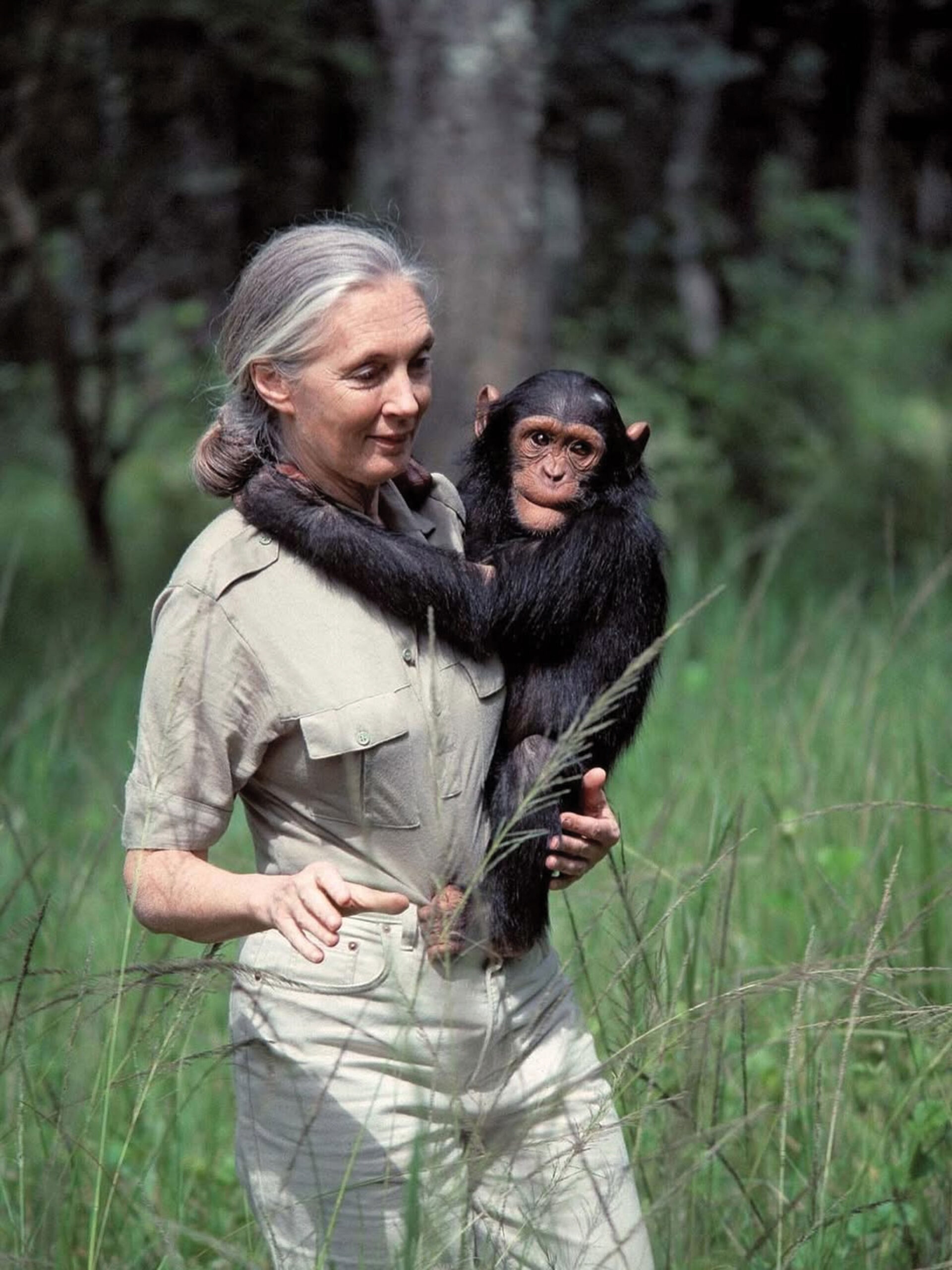
Dr Jane Goodall
World-renowned primatologist and conservationist, Dr Jane Goodall, died on October 1, 2025 at the age of 91. Best known for her work studying wild chimpanzees, Jane Goodall’s discoveries would not just revolutionise our understanding of animal behaviour but reshape the way we define ourselves as human beings.
Born in London in 1934, Goodall became fascinated by animals as a child after reading Dr Doolittle. She began researching free-living chimpanzees at Gombe in western Tanzania in 1960. It was to be the beginning of a sixty-year study of wild chimpanzees.
She learned to communicate with them – the embracing, playing and patting – even the kisses. She was the first person to record witnessing an animal using a tool; a male chimpanzee digging termites out of a mound with a stick. Until then, it was thought only humans had sufficient intelligence.
When she first went to Africa to study chimpanzees at the age of 26, Jane had no formal scientific training but managed to win the trust of the primates. She won the respect of the scientific establishment, too: in the 1960s she was just the eighth person admitted to Cambridge University as a PhD candidate without an undergraduate degree.
In 1977 she founded the Jane Goodall Institute, which works to protect the species and supports youth projects aimed at benefiting animals and the environment. It now has officers in more than 25 countries around the world. In 1991, the institute launched the Roots and Shoots project to involve young people in conservation – now a network of active young people across nearly 100 countries.
Earlier this year, Goodall received America’s highest civilian honour – the Medal of Freedom – from outgoing President Joe Biden. Previously, in 2004 she received a damehood, the title of Dame Commander of the Order of the British Empire (DBE), as well as Japan’s Kyoto Prize in 1990, a Unesco Gold Medal Award in 2006 and France’s Legion d’Honneur the same year. She was a Messenger of Peace for The United Nations.
She was honoured too by toy companies Barbie and Lego. In 2022, the Barbie Inspiring Women Series created a doll depicting Goodall wearing khaki and binoculars and paired with chimpanzee David Greybeard. Lego’s toy comprises a mini figure showing her among trees, surrounded by chimps. It was also released in 2022, in commemoration of International Women’s Day.
English naturalist and photographer Chris Packham described Goodall “revolutionary” and “remarkable”. “She loved life, she was fascinated by life,” he said, which was an “enormous motivating force” for her work.
Right up until her death, he said, she was still speaking in a “calm, calculated, deliberate way… to make sure that we can do everything we can to protect life on earth”.
António Guterres, Secretary-General of the UN, wrote in a tribute that he was “deeply saddened” by her passing. “She is leaving an extraordinary legacy for humanity and our planet”.
Remembering Dr Jane Goodall: thrilling chimpanzee hoots, deep inspiration and a profound commitment to people and nature
Paul Harrison, Chair, Britain Tanzania Society, 1st October 2025
The news of Dr. Jane Goodall’s passing was a shock, even though it came after a life lived so fully, so actively, and with such dedication to the very end. Having only just seen her briefly last week, greeting her and having a moment to reflect with her, it feels like a final gift from a woman who was always giving. Jane was, quite simply, a unique human being – a legend in the conservation world, a force of nature and a beacon of hope who worked harder than most in her nineties to the very end.
I first had the privilege of meeting Jane in Uganda back in 1994. The setting was a hotel conference room, yet the air was charged with her singular presence. I vividly remember sitting in a packed room, utterly captivated as she spoke. Then, to everyone’s delight, she broke into her now famous, resonant chimpanzee calls. The sounds filled the room, a wild and authentic echo of the forest, instantly transporting us to Gombe. It was electrifying, and a moment when her deep connection to the chimps was made utterly tangible. I met her afterwards. From there I went onto my first conservation role, in the southwest of Uganda, utterly inspired.
Our paths crossed again in 1998 in Dar es Salaam when I was living there. I had the great fortune of spending time with her at her place, a quiet evening that allowed for a more intimate conversation. I remember us sharing a wee dram – a perfect setting to listen to her wisdom and her quiet determination, as well as get a sense of her humour. I also took on board some of her profound serenity, was steered by it.
Jane Goodall’s life was one of utter determination. She never rested, tirelessly travelling over 300 days a year, carrying the message that every single person can make a difference. Sometime later, at Gatwick airport, I was able to help her with her luggage upon her return to the UK. It was a brief, unremarkable moment, yet it perfectly sums up Jane: always on the move, always travelling the globe for the cause, and always humble and gracious.
Jane managed to bring nations and people together around the conservation and community development cause, particularly playing her part in forging strong bonds between the UK and Tanzania, the country that became the stage for her life’s work. Her influence moved far beyond science and into education and advocacy: she inspired global policy and catalysed a generation of young conservationists through her Roots & Shoots programme.
Reflecting on her final days, the way she went – full of faculties, active, working and travelling to the end – is the perfect narrative for her life. She never stopped fighting for chimpanzees and the environment they call home as well as for the people who live amongst nature and the wild. Jane has left this world having given whole life for people, nature and our closest relatives.
The world is a quieter, sadder place without her physical presence, but the hoots of the chimps, and the inspiration she gave to me and so many others, including my daughter, will live on.