MISCELLANY

THE GENESIS OF ‘MZUNGU’
Readers of the Daily News have been responding to a question asked by another reader recently on the genesis of the Kiswahili word ‘Mzungu’. They explained that among the Wagogo people there are such terminologies as ‘Mulu-ngu’ describing God with ‘Mulu’ meaning an exceptional and ‘-Ngu’ meaning any being having power over nature. ‘Msungu’ is purely Bantoid spoken in Nigritic tone. When a white man first trod in East Africa the local people regarded him as different. They thus christened him ‘Musu-Ngu’ that is demi-god or godman’.

250 BRITONS ON TANZANIAN EXPEDITION
The Society for Environmental Exploration in London is in the midst of a year-long research project involving some 200 young British volunteer research assistants ac companied by a staff comprising scientists, logisticians, engineers, mechanics and medical personnel. The project is being organised through the Ministry of Lands, Natural Resources and Tourism and Tanzania National Parks. At the end of July 1989 the first six of a larger number of Tanzanian scientific consultants (from the University of Dar es Salaam) had also joined in the initial work together with Dr. M.A.K. Ngoile, Director of the Institute of Marine Sciences in Zanzibar. The advance party arrived in Tanzania in early July and they were followed by the first of four groups, each of which will spend some three months undertaking environmentally important tasks in Tanzania.

Eibleis Fanning of ‘Frontier’, the expeditionary arm of the Society, told the Bulletin that the aim of the project was to harness the enthusiasm of people committed to environmental protection. Participants are working at the Pande and Kiono forest reserves on plant collecting, forest mapping and bird netting; on Mafia island on sea clams and starfish, the biological control of the coconut eating rhinoceros beetle, and on permanent study plots in the mangroves of the northern coast; a group is also working at the Mikumi National Park and another at the Rufiji Delta on a mangrove sedimentation programme.

ANOTHER BIG FIRE
Four upper floors of the Ministry of Home Affairs headquarters in Dar es Salaam were gutted by fire on the night of May 19th 1989. The damaged floors had accommodated the offices of the Minister, Deputy Minister, the Inspector General of Police and several commissioners in the Police Force. This fire follows the loss by fire of the Bank of Tanzania headquarters in 1984 and offices of the Audit Corporation in 1988.

NEW AIRLINE
Tanzania, Uganda and Zambia agreed on May 5th 1989 to set up a joint airline to be known as ‘Africa Joint Services’. The airline is to operate regional and international flights. Costs will be shared equally by the three countries. Meanwhile, Swissair and Belgium’s Sabena have started joint twice-weekly flights from Brussels and Zurich to Dar es Salaam via Jeddah.

TV STATION UNDER STUDY
A special team set up to study the establishment of a television station for Tanzania mainland will soon present its final report to Government. The Party programme directs that Tanzania mainland should have television by the year 2,000.

MINISTRY TO BREED WASPS
The Ministry of Agriculture and Livestock Development has ordered consignments of wasps from the International Institute of Tropical Agriculture in Nigeria for the biological control of the cassava mealybug in Tanzania. The wasps will be bred and multiplied at Kibaha in the Coast Region. Some 18,000 hectares of cassava have been affected by mealybugs since the out-break in 1987.

The Minister of Agriculture and Livestock Development has also explained that there is no cure for the new fungal disease of bananas (Black Sogatoka) – Daily News

CHIMPANZEE RECORDS STOLEN Two years of painstaking research work on chimpanzees in the Gombe Stream National Park may have been lost forever when thieves broke into the house of the world famous scientist Jane Goodall in Dar es Salaam at the beginning of July. They made away with 40 video cassettes. The thieves, who are believed to have reached her beach front house at Msasani by boat, also took away two outboard engines donated to the national park – Daily News.

A JOINT THEATRICAL VENTURE
The Commonwealth Institute in London is about to launch a ‘Theatre in Education’ project to be based on Tanzania and using British and Tanzanian actors. There will be half day-programmes designed for upper secondary school pupils which will be given first in London and then at schools in the West Midlands, the Isle of Wight, Bedfordshire, West Sussex and either Dundee or the Borders Region.

Mr. Turan Ali, Performing Arts Officer at the Commonwealth Institute and Mr Ghonche Materego, Head of the Theatre Arts Department of the National Arts Council in Tanzania and Adviser to the Project told the Bulletin that the play will look at the notion of independence and economic relationships in the post-colonial period.
There will be a performance for the public on October 26th 1989. Tickets (£2.50) are obtainable at the Education Centre of the Institute.

FRIENDS OF THE MAKONDE

(In Bulletin No 33 we published a review of an exhibition of Makonde sculpture then showing at the Museum of Modern Art in Oxford. We asked Eirlis Park if she could find out something about how the collection was built up. She has sent us the following – Editor)

When I first arrived in Arusha in 1957, my husband Peter had already been there for five months and so knew exactly where to go to buy material and get the curtains made. Downtown we were warmly welcomed by the Malde family, Mr. Malde senior, Moti Malde and his younger brother. All were very helpful but our buying was often interrupted for introductions to other visitors to the shop who, to my surprise, were not buying but going over to the other side of the shop, to Moti, where there was a square glass case of cameras. Discussion there was on the subject of photography and at the end of our transaction we too drifted across. An unofficial meeting of the Arusha Photographic Society was taking place, In 1957 Moti opened his own purpose designed photographic shop near to the Safari Hotel. To those who know him, Moti Malde and photography are permanently intertwined.

He admits that, originally, the Makonde were a challenge photographically; there were still older women who wore lip plugs – but slowly he began to appreciate the nature of the people themselves – gentle, not aggressive and, as he says, “not against the laws of nature”. Their masks, used in ceremonies, were carved from wood and no killing of birds or animals was involved in decoration. Moti is a Jain and something in the Makonde character appealed to his beliefs. Jains reject the caste system, they believe in non-violence and are against any form of animal sacrifice.

Moti and Kanchen were married in the mid-fifties and it was from this period that serious collecting began. They did, at one time, do some trading in Kamba carving but they decided that the Makonde carvings would be bought and kept for their own personal pleasure, Moti is very methodical – keeping a dossier of where, when and why he purchased each of his gramophone records, for example, and of course, all his photographic material was also well documented – so it was quite natural to record the details of each carving and to make notes after the carver had explained his design.

Between the years 1954 and 1964 very few people wanted the larger Makonde carvings; everyone wanted small pieces which were easily transportable, but the bigger sculptures appealed to the Maldes. They were fascinated by the way the work was developed from the varying shapes of the timber and by how the carver expressed himself and his ideas, often with laughter. Kanchen however, told her husband that she felt that the market value of the carvings was too low and that it was unfair to pay so little for this handwork. So they used to take down from Arusha, baby food, medicines, children’s books, pencils, dried milk etc. and share these with the carvers’ families. Friendships grew up between them, strengthened by each visit.

However, by the early sixties, it became obvious to the Maldes that more and more of the young Makonde carvers were carving to meet the market demand and fewer were following the old traditional ways. They were carving more, but smaller pieces – which meant that they were able to increase their income. So the Maldes stopped collecting in 1968.

Knowing how much her husband loved his carvings, Kanchen began packing them in 1970 to send them to England. Some years later the Maldes followed, finally settling in Bedford. Now, he says he has more time to expand his notes and his one aim is to make the work of Makonde carvers known worldwide. Ask him which is his favourite piece and he will say about 150 are “his very very favourites, but everyone reminds us of a place, a person, a hamlet – very personal memories – their value is the joy of keeping the Makonde within us alive, and we want their art to be recognised in the whole world”.

TANZANIA AND JAPAN

When the Editor of this Bulletin asked me to let him have some information on Tanzanian activities in Japan I was worried because I have never been to Tanzania and didn’t know very much about it!

Luckily my husband found three articles about Tanzania in recent issues of the ‘Japan Times’, one of four English language daily newspapers in Japan. You will have seen extracts from these in Bulletin No. 32.

I decided to phone the author of the articles, Mr. Hidaka, to ask him if he could put me in touch with any other Tanzania related activities. First however he told me that he was planning another article about Tanzania and this subsequently appeared in the ‘Japan Times Weekly’. It was about the Masuguru (North West of Dar es Salaam) settlement of South African PAC (Pan Africanist Congress of Azania) refugees. He quoted one resident in the camp as saying that “we have two enemies. One is the white-controlled government in South Africa. The other is the wild animals here!” Mr. Hidaka had been told that the PAC had another camp in Tanzania where military training was being conducted but his informant had refused to reveal its whereabouts.

THE JAPAN TANZANIA ASSOCIATION
Later I heard that there is in Japan an association like the Britain-Tanzania Association with a similar name – the Japan-Tanzania Association. I called the Tanzanian Embassy in Tokyo to find out its address. On contacting them I learnt that it had been established as long ago as 1978. The Association’s membership comprises 26 Japanese companies with business ties to Tanzania and includes three former Japanese ambassadors to the country. The Chairman is Mr. K. Ikeda, President of the Nippon Koei Co. Ltd whose offices house the Association. They produce an annual newsletter – usually a single or a double sheet; half is in English and half in Japanese.

A TANZANIAN EXHIBITION IN TOKYO
At the beginning of this year a photograph appeared in the ‘Japan Times’ showing the opening ceremony of a Tanzanian exhibition in Tokyo. It was being held from February 1st to March 3rd 1989 and was the first Tanzanian exhibition organised by the Japan External Trade Organisation (JETRO) for sixteen years. So I decided to go and have a look.

On arrival, because I wasn’t sure what to do and because most of the people seemed to be gathered there, I went first to the shop. There was a good display of Tanzanian products for sale. I bought a bracelet and also a greetings card made from Tanzanian paper to send to the Editor to indicate that I was doing my best!

By this time I was quite relaxed and ventured into the main hall of the exhibition. It wasn’t very large – about the size of two fair sized rooms. I saw a beautiful large scale photograph of Kilimanjaro, an exhibition of Tanzanian paper, jewellery, leatherwork and there were two video tapes. I was given two glossy brochures full of beautiful pictures and informative articles. There weren’t many people at the exhibition but those who were there stayed a long time.

I learnt that there remains a heavy imbalance in trade between the two countries. Japan exports (mostly vehicles, electrical goods and machinery) almost ten times what it imports (mainly coffee but also shellfish, fabrics, sisal, various raw materials and animal products). For us Tanzania is the 51st most important export country; for imports to Japan Tanzania stands in the 101st position.

Included in one of the brochures was guidance to potential Japanese tourists. Prices were said to be very high but with recent devaluation it was becoming cheaper. A typical eleven day tour costs about £2,000. Potential tourists were warned that there is only one radio station in Tanzania – in Japan we have nine! – and television can only be seen in Zanzibar. The most popular souvenirs as far as Japanese visitors are concerned are Makonde sculpture and painting (there is a Makonde museum in Nagoya, Japan’s third most important city) batiks and Zanzibar chests.

Twenty Tanzanian firms had taken stands at the exhibition. I spoke to a representative of JETRO and showed him a copy of the Bulletin of Tanzanian Affairs. He was very impressed because it was being produced by British people interested in Tanzania on a voluntary basis. He implied that this was something more likely to happen in Britain than in Japan where commercial motivations were very pronounced. The representative said that the Tanzanian exhibition was the most successful one they had organised during the last year in terms of sales from the exhibition shop.

THE SAVANNAH CLUB
He also told me that the real centre of activity for Japanese interested in Tanzania is the Savannah Club in Tokyo. This was established some twelve years ago and attracts lots of Japanese businessmen, photographers, air hostesses, anthropologists and others who have been to or love East Africa. It is a social club with some seven hundred members which meets every two months and has visiting speakers on East African subjects. They publish an eight page journal every two months. The issue I saw contained articles on their 82nd meeting, new books, including one on chimpanzees in Tanzania, and their Christmas party at which the Tanzanian Ambassador and his wife had apparently been the first on the dance floor ! The Chairman is Mr. Yukio Togawa, a well-known writer. I was put in contact with Mrs. Kitamura, one of the members of the club, and it was through her help that I was able to meet Mrs Uno who later provided a personal memoir of her period in Tanzania. (This is given below in a rather abridged form because of space limitations – Editor).
Keiko Collins

TANZANIA AND I
First I would be most happy if you could know that here in Japan there are so many persons like me who are interested in and love Tanzania.

As for the relations between Tanzania and I, I have to go back to the year 1967 when I started my voluntary activity as one of the members of the Japanese Overseas Volunteer Cooperation – JOVC. I stayed in Dar es Salaam teaching housewives (who are not high society women) sewing at the biggest community centre. At that time, as Japan had almost no relations with Tanzania and had no colonies in Africa, Japanese people, except a few knew only that Tanzania is the country of Mt. Kilimanjaro, Lake Victoria, the land of Masai and wild animals by reading books and seeing pictures.

When I was dispatched there by the Japanese government as a member of the first group of JOVC, my friends asked me why I chose that country in Africa and advised me I had better stay here in Japan. However, as soon as I stepped out in Tanzania I found that almost all the preconceptions that Japanese had about Tanzania were wrong. Really, seeing is believing.

I was much impressed with the hospitality that Tanzanians showed me. Human relations full of love that I could recognise easily; their greetings in Swahili to respect others, especially the aged; the traditional way of living and cheerful and open minded nature. I felt some similarity in their attitude, philosophy and customs compared with the ones that old Japanese had and it made me feel at home.

Although they were not rich at that time they seemed to know how to enjoy life and to have special talents in making things turn to good condition with their originality and inventions, things we have forgotten for a long time in our developed society. The words ‘pole pole’ in Swahili mean slowly and before my departure from Japan I was told Tanzanian people do everything ‘pole pole’ and there is no development at all. But when I got there, although it was sometimes true, I found that quite often things had to be done ‘haraka haraka’ (quick, quick). Moreover I recognised that people were clever enough to do things as well as people in the developed countries. Opposition to them is for the reason that because of their lack of education in colonial days foreigners assumed that they had neither common sense nor cleverness.

My Tanzanian students invited me often to their houses. I should say often it was not a house but a room (housing situation was very bad at that time); even if there was only one fish with them for five family members they warmly welcomed me always. Really I had a splendid time with them, eating Ugali by hand ….. I still have beautiful memories, especially their broad and warm heart. I must say that these good relations with them were caused by Swahili language which I had used instead of English during all my stay. If I had used English they would not have treated me as a friend nor showed me their real ideas or life. Truly they had keen eyes to judge whether this man is good or enemy. All of this came about because of their detestable time under colonialism. Without me speaking their national language this good relationship with them would never have existed.

Of course I have climbed Mt. Kilimanjaro, crossed Lake Victoria, did safari in many national parks and enjoyed African dance and music. After returning to my mother country I started my new life by working at Radio Japan (The Japanese National Broadcasting Corporation’s overseas programme) Swahili section and my new relation with Tanzania also started. I found that Japanese still had biased imagination against Africa, so, in order to let them know the real situation in Tanzania I have written a book in Japanese under the title ‘My Beloved Tanzanian Mamas’.

In 1970 the World Exposition was held in Osaka, Japan and Tanzania took part. Then James Ikanga, a famous marathon runner, visited Japan several times and thus the name of Tanzania became much more well known in Japan.

More than that , Japanese assistance to Tanzania has increased. The number of JOCV volunteers has increased each year to more than 600 now. Similarly, students from Tanzania have come to Japan invited by the government and private companies. Members of the Savannah Club have bought patrol cars and binoculars for East African game parks.

I myself have visited Tanzania many times privately. When I visited Tanzania about six years ago I felt so sorry for Tanzanians for they were having a very hard time to live because of the lack of daily necessities and water, a Sunday driving ban due to lack of petrol and increased crime on the streets. People had to make a line to buy sugar and rice! They looked very sad and tired out with life. In the national parks I saw many carcasses because of the famine. In these bad conditions people lived by helping each other, dividing foods and other things among them.

Last year I had a chance to visit Tanzania again. My friend had started collecting money for the partial renovation of the UWT hostel building in Dar es Salaam by selling telephone cards (which are used here instead of coins in public telephone boxes). Each card costs 800 Yen (£3.50) of which 300 is a contribution. In two years the campaign has raised seven million Yen. UWT women welcomed us and we had a really nice time with them.

Throughout this trip I felt at ease as I could see that people were happier than at the last time though life is still not so comfortable and many troubles are not yet resolved. The town had become more beautiful and neater than before, and at the port there were so many ships at anchor. People had regained their smiles and become more vivid.

Thinking of my good friends of Tanzania who are living so far away from Japan I can’t stop praying for their happiness and prosperity.
Midori Uno Hitomi

Mrs KEIKO COLLINS teaches English in five universities in Tokyo. She has also translated some 17 books into Japanese.
Mrs MIDORI UNO has been employed by NHK Radio Japan – the Japanese equivalent of the BBC’s World Service.


COTTON PROCESSING – REHABILITATION PROGRAMMES. 1982 – 1989

(Readers of the Bulletin will be familiar with some of the problems which have been facing Tanzania’s cotton industry during recent years. A comprehensive paper on the subject, with particular reference to cotton processing, was presented to Britain’s Tropical Agriculture Association at a meeting at the Linnean Society of London on January 19th 1989. Extracts from the paper are given below – Editor)

THE SITUATION IN 1982
From a high peak of 415,000 bales in 1972/73 Tanzania’s cotton production had declined to 196,000 bales by 1982. But exacerbating this decline in production has been the state of the processing (ginning) industry. The 23 roller ginneries and 2 saw ginneries originally had a potential capacity of 400,000 bales in a 26 week ginning season but in 1982 they struggled to achieve 120,000 bales. The difference between the two different types of ginnery is that roller ginneries are slower acting and more gentle with the cotton and are particularly well suited to long staple and hand picked cotton, whereas saw ginneries provide a much higher throughput but do not retain the lint quality. Furthermore, in order to gin 120,000 bales the ginneries had to work all through the year. The crop should be ginned in only 26 weeks so that the process is completed before the next rains and at the best time for marketing. The old age of the ginning machinery, much of it built in the 1940’s and 50’s but some dating back as far as the 1920’s, caused frequent breakdowns leading to a decline in production and increased marketing costs and maintenance requirements. Poor maintenance, the lack of spare parts and of fuel and lubricants plus the numerous changes that the industry has experienced compounded the problem.

THE BEGINNING OF REVITALISATION
To determine the nature of the problems and suggest possible measures to revitalise the industry the Government of Tanzania in 1982 commissioned the British Cotton Growers Association (BCGA) which was originally formed in 1902 but is now part of the Cargill Group of companies, to carry out, with World Bank assistance, a comprehensive study of the industry. At the same time the Government of the Netherlands instigated a US$ 20 million Emergency Rehabilitation Programme to sustain production and processing. BCGA were retained as consultants to this project also.

The emergency aid programme provided funds for ginning machinery and replacement parts, machine tools and materials for a central workshop, new vehicles and a team of specialists comprising eleven BCGA engineers to provide training and to assist with production maintenance and in rehabilitation of the ginneries.

The team have experienced a number of problems. These include delays in the co-operatives ordering and arranging delivery of spare parts, the chronic short age of fuel and lubricants for the diesel generators which supply power to the ginneries and difficulties the Cooperative Unions face in sending their vehicles to the Central Workshop in Mwanza because of the poor state of the roads. Also the inability of the Unions to recruit and retain staff for training due to poor pay and conditions and the remote location of the ginneries and the poor prospects for future advancement.

But the Emergency Rehabilitation Programme has made good progress. Some 600 roller gins have been overhauled and made operational out of a total of 817 and in the 1986/87 season the Unions were able to gin 300,000 bales and to improve productivity and quality.

The 1987/88 crop increased to 450,000 bales but the equivalent of 200,000 bales remained unginned at the end of the season and had to be carried over to the following season. A crop of some 500,000 bales is forecast for the 1988/89 season.

NEW GINNERIES
As existing ginning capacity, even after rehabilitation, will not be able to cope with present and future production, in 1987 the Government of the Netherlands commissioned BCGA to design and plan new ginneries (at Manawa, Balumba, Mwanhuzi and Buchosa) under a US$ 15 million project to be managed by BCGA. Two roller and two saw gins are planned. One of the four (Buchosa) will be financed by a loan from the European Investment Bank. Britain’s Overseas Development Administration (ODA) has asked BCGA to do a feasibility study for the rehabilitation of the Manonga Ginnery and Oilmill and an appraisal of the justification for a new ginnery at Nassa. Sweden funded a study in April 1988 to assess the condition of existing plant and equipment in the Eastern cotton growing area of Tanzania. The World Bank funded a study on cotton pricing and marketing in September 1988.

COTTON SEED OIL
Much of the cotton seed from which valuable cotton seed oil and cake can be extracted is being destroyed each year because of inadequate milling capacity and to make s pace for the new crop of cotton in the limited storage facilities. Some 80,000 tons remained unprocessed in 1988 and Tanzania is forced to import large quantities of vegetable oil. BCGA is currently undertaking an appraisal of the edible oilseed processing capacity in Tanzania and hopes that this will result in donor aid for the Tanzanian oil milling industry.

COTTON TEXTILES
Tanzania’s textile industry is also facing problems. It uses only some 60,000 bales of cotton at present although its capacity is 100,000 bales. The causes are similar to those faced by other parts of the cotton industry particularly shortages of power and fuel. The World Bank is financing a study aimed at rehabilitating the textile industry.
J. W. Turnbull
Mr. J. W. TURNBULL is Divisional Director at the British Cotton Growers Association Ltd. He was previously a consultant with Minster Agriculture Ltd.

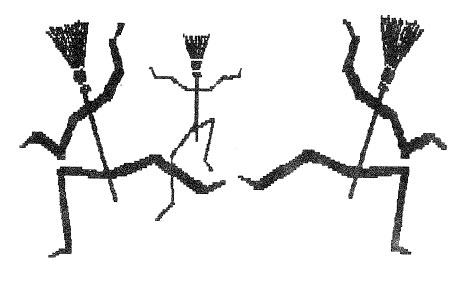
TAKING A BROOM DANCE TO TANZANIA

Late in 1988 the British Council arranged a two week visit to Tanzania by the four-person Mellstock Band. With no recent history of Council managed music tours in Tanzania, choosing the Mellstock Band was something of a gamble. But folk music fascinated large and wholly Tanzanian audiences. Wherever there were workshops with Tanzanian musicians, discussions quickly progressed beyond the superficial. The Mellstock Band debated the role of traditional music in a culture increasingly influenced by modern popular music; thus, similarities in outlook rather than differences in musical expression were always evident.

The band’s itinerary covered Dar es Salaam, Bagamoyo, Zanzibar, Iringa and Mzumbe. That the schedule was adhered to was something of a miracle. It felt like an act of faith when we finally stood in a crowd around the seafront bandstand in Zanzibar. The bandstand hadn’t been used for performances since the early 1960’s, yet a 500-strong audience was there and obviously entertained by what it saw. The Band’s programme included traditional instrumental dance music, vocal unaccompanied carols, a mummers’ play, the Dorset broom dance and an acted and sung ballad featuring one of the characters in drag. Audiences appeared to enjoy the variety. Attention only wandered when someone fell from the harbourside in Zanzibar into the sea; all the children in the front rows ran from the performance to peer at the police fishing out the unfortunate non-swimmer.

The Bwawani Hotel, Zanzibar was the venue for the most bizarre event of the tour. In return for free accommodation the band had agreed to give a concert which turned out to be a televised ‘English Night’. Publicity for the event read: ‘We had an Indian Night (they said it was wonderful); a Chinese Night (they asked how we managed it) ; a Fisherman’s Night (they asked “When again?”). Now we have an English Night with the Mellstock Band.’ A stage was built in the garden of the hotel and lit with red and blue fairy lights. The British flag was hung as a backdrop, and ancient posters of National Trust properties were pinned on trees and around the stage. A buffet was served, with surprisingly good English food, including the best bread pudding we had ever tasted!

As the tour progressed we realised that the repetition and mesmeric rhythms in the dance music had a wide appeal. Displays of virtuosity were greatly applauded, whether on the tambourine or in physical dance movements. The Broom Dance, planned as an encore, became the highlight of the show.

The mummers’ play, a traditional Dorset Christmas play, began with the four characters shrieking and banging long sticks as they stormed onto the stage. Children in the audience scattered in all directions and we realised later why they did this, when we saw the police keeping order with similar sticks. The mummmers’ play tells of a battle, and depicts the death of a warrior who is subsequently brought back to life by a doctor. The basic elements of death and rebirth were understood, even if the stylised speech was not; sympathetic magic central to the idea of the mummers’ play was probably more accessible in Tanzania than in the band’s native Dorset.

Everywhere we went people wanted to show us what they could do in return. We were treated to performances of traditional music and dance in Bagamoyo, Iringa and Zanzibar. This was an unplanned mutuality and one that affected the band profoundly. Nowhere more than on these occasions were we made aware of the poverty around us. No commercially made instruments were available, drums being made from tin cans or oi1 drums and beaten with sticks. We were enthralled by the complex and intricate rhythms created with these simple tools. The Mellstock Band will be holding benefit dances to raise money to buy instruments for the musicians of Zanzibar so I hope that readers of the Bulletin will look out for them. And if anyone has an unwanted brass instrument, do let us know.

Highlights must include flying through a rainbow over an azure sea to Zanzibar, dancing our hearts out at a Mellstock barn dance in Dar es Salaam and singing with a hall of seven hundred children whom the band had encouraged to join in their music. Our seven-hour drive to Iringa over pot-holed roads was rewarded when we entered the teachers’ college and discovered decorated signs reading ‘Welcome Mellstock band and feel at home’. The banner over the door as we left said ‘Goodbye to our friends. Please come back soon’
Anna Pincus

MISCELLANY

LEGALISING SUNGUSUNGU
The Tanzanian News Agency (SHIHATA) reports in its April 10th issue that President Mwinyi has given an assurance that traditional security groups known as Sungusungu will soon be protected by law. They have been active in stamping out cattle rustling in the Lake regions.

CRITICISM OF NEW GOVERNMENT MEASURES TO BOOST TOURISM
In a major move to stimulate the otherwise inactive tourism industry the Government has decided to give a consortium of companies management contracts for eight out of the 14 hotels run by the Tanzania Tourist Corporation. The eight are the first to be rehabilitated under a US$ 25 million, 13 year scheme to be funded by the companies which come from Yugoslavia, Germany, Switzerland, France, and West Germany. The European Investment Bank is also likely to be involved.

Tourism officials have said that the objective is to co-manage the hotels with the multilaterals as the most viable, short cut way of transforming them from what the Government periodical ‘Frontliner’ describes as their present pathetic state.

The hotels to be rehabilitated include the Kilimanjaro, Mount Meru, Arusha, Lake Manyara, Lobo Lodge, the Ngorongoro and Seronera Wildlife Lodges and the Mafia Lodge. An island a few kms off Kunduchi will be transformed into a casino, the first ever in the country.

But the local media have been critical. ‘Do we need foreign hotel managers?’ asked J. M. M. Kamala in the Sunday News of January 15, 1989. ‘Foreign Managers, Will they do Miracles?’ asked the same paper a month later. “All ATC hotels that are to be leased have been making a profit. They have been paying taxes. Their bed occupancy rates have been between 70 and 95%. They have competent trained managers and staff. This is a paradise compared to some pathetic parastatals. The problem has been lack of foreign exchange to rehabilitate them …. the claim that foreign management will improve services is far fetched. With devaluation, our breakfast costs 1.5 dollars. The same costs 10 dollars in Botswana.

Foreign investors must come to expand the existing infrastructure using their own funds instead of coming like camels and stand the risk of being kicked out of our own tent!”

AMNESTY INTERNATIONAL REPORT 1988
Tanzania comes out comparatively well in the Amnesty International Report for 1988. Tanzania occupies less than a page in a voluminous document describing breaches of human rights in many countries.

The Report states that two detained persons were adopted as prisoners of conscience by Amnesty. In August Amnesty was informed that their detention orders had been rescinded but they were then held under the Deportation Ordinance which allows citizens to be restricted to specified areas (in these cases Mafia and Ukerewe) for security reasons. Five other detainees appeared in court in February charged with assisting two suspects accused of treason to escape from custody in 1983. They had been held in detention since that time. Three were released in December.

At least seven people were sentenced to death for murder in Tanzania in 1988, but, as in recent years, no executions were reported. In March the Zanzibar House of Representatives amended a 1969 l aw which allowed the death penalty for smuggling cloves and substituted a prison sentence. No one was known to have been executed for this offence.

ILLEGAL TRADE THREATENS CHIMPANZEE EXISTENCE
The world renowned scientist Dr. Jane Goodall writing in the maiden issue of Kakakuona, a magazine of the Tanzania Wildlife Protection Fund, has stated that the illegal export of infant Chimpanzees is likely to lead to extermination of the primate in Tanzania within a few years. For every infant captured for sale to dealers at least three mothers are killed she stated. “If hunters catch say five infants in one month fifteen females are killed while trying to protect them. At that rate all existing chimpanzee mothers in Tanzania (except those in national parks) would be gone in less than three years. There would remain only bands of male chimpanzees, ever decreasing in numbers, until the last one of the community would die, alone and miserable.

POPULATION CENSUS REVEALS THERE ARE 23.2 MILLION PEOPLE
The Minister of State in the President’s Office has unveiled the preliminary results of the population census carried out in 1988. The new total of 23.2 million people compares with 17.5 million in 1978 – a growth rate of 2.8% This compares with earlier growth rates of 3.2% Sunday News

MASSIVE FOREIGN EXCHANGE INTERCEPTION
The Daily News has reported that a Sierra Leone-born, Liberia-based Lebanese national aged 24 has been caught red-handed at Dar es Salaam airport together with his alleged Air Tanzania Corporation pilot accomplice, on a KLM plane smuggling out a vast quantity of foreign currency and gold. Some US$ 164,350 and large quantities of gold and sapphires with a total value of Shs 42 million have been intercepted by Customs officials – the largest haul for many years. The Sunday News further reported that the Lebanese national had been travelling frequently between Tanzania and nine other countries since 1984.

DEATH OF WELL-KNOWN DOCTOR
The Daily News has reported the death on January 21, 1989 at the age of 64 of Dr. Nathaniel Benjamin Akim, the first Tanzanian to be appointed Chief Medical Officer in the Ministry of Health. He served in many different posts in Tanzania and was from 1974 to 1986 with the World Health Organisation in Ghana and Gambia.

UNUSUAL SEQUEL TO SONGEA MP CASE
The former Songea MP, Mr. Abdurabi Yusufu, recently appealed against his sentence of 9 years in prison (The case was described in Bulletin Nos 30 and 31 – Editor) for being in possession of 105 elephant tusks in his official Landrover. He raised six grounds in his appeal and stated that he was on duty at the time trying to arrest trophy dealers. According to the Daily News of March 24, 1989 the Court of Appeal of Tanzania set aside the original sentence and increased it to twelve years. Justice Makame said “We only wish to say that one needed very unusual courage to swallow such a fantastic story”. The six grounds raised by the appellant in his memorandum to the Court were “devoid of substance.”

PUBLIC FIRMS ACCOUNTS IMPROVING
According to the 20th Tanzania Audit Corporation’s Report for the year ending June 30th 1988 the state of parastatal accounts is improving. This was said to be a positive and encouraging response to the Presidential Directive of November 1985 requiring parastatals to up their accounts by December 31,1987. As at June 30th last year the accounts of 129 out of 482 audited parastatals were in arrears for one year or more compared to 141 by June 30, 1987 and 163 by June 30, 1986. This is the smallest number of parastatals in arrears at the end of any financial year in the last eight years – Daily News,.

THE TANZANIAN CHAPTER

The Tanzanian Chapter of the Britain-Tanzania Society has elected its office bearers for the year 1988/89. Mr. Amon Nsekela is Chairman and Vice President, Professor A. S. Msangi, Vice-President, Dr. Esther Mwaikambo, Honorary Secretary, Mr. E.W.K. Bejumula, Associate Secretary and Mrs. Agnes Msuya, Treasurer.

Those elected to the Executive Committee were A. Kanylili, O. Luena, K. J. Kunulilo, C. Eliapenda, P.M. Eliapenda, C. Imray (British High Commissioner), Dr. S.P Mosha, M.B. Mgina, A.A. Kaduri and J. Ndonde.

KILIMANJARO – A CENTENNIAL

The first encounters between European missionaries and explorers and the local Africans led to very mixed reactions. The same is true of the impact of the colonialists who came in their wake. While they brought Christianity, education, medicine and a degree of development they also exposed the continent to distortions which still vibrate today in the form of unbalanced economies, alien cultural trends and previously unknown diseases. And Africa is facing difficulties in trying to correct such distortions while continuing to enjoy the benefits of the better aspects of these encounters such as mission hospitals, charitable organisations and, not least, foreign aid.

This bitter-sweet relationship between the first Europeans and local Africans was due to be re-lived in a novel way in Kilimanjaro region early in November 1988. The re-living, in the form of a historical musical drama, ‘Kilimanjaro’ was due to be staged at the International School, Moshi, from November 3rd to 5th 1988. It was written by the school’s music and drama teacher, Kevin Allen-Schmid in collaboration with several local residents. The occasion was also intended as a tribute to the 99th anniversary of the first recorded climbing of Mount Kilimanjaro by a German geologist, Hans Meyer, and an Austrian mountaineer, Ludwig Purtscheller on the 5th October 1889. The proceeds are to be used primarily to establish a scholarship fund to assist the needy and enable local students to attend secondary school. Although the mountain was reportedly climbed for the first time in 1889 it had already been Sighted 41 years earlier by another European, Johannes Rebman, a missionary sent by the Church Missionary Society, on May 11th 1848 (locals had of course ‘discovered’ the mountain from time immemorial). Much to his dismay, Rebman’s report of a ‘great snowy mountain’ near the equator was received in Europe with outright scepticism. It was not until 1860 that the existence of snow-capped Kilimanjaro was generally conceded in Europe.

The drama has been based on the diaries of Rebman, and another early missionary, Ludwig Krapf, but the geographical focus of the play is the Village of Machame and through stories, songs and dances typical of the 1840’s we learn as much about the Machame Villagers of the time as we do about the first Christian missionaries.

‘Kilimanjaro’ was first staged two years ago by the International School and Weruweru Girls School students but has been revised to provide a more historically accurate picture of Rebman’s experiences.

The original was mostly in English; the new version has dialogue in three languages – Machame villagers speaking Kimachame, coastal people speaking Kiswahili and missionaries and their guides speaking English. By tracing Rebman’s steps from Europe to East Africa, ‘Kilimanjaro’ provides a wide ranging variety of music from Bach to traditional ngomas. A remarkable aspect of the production is the diversity of Moshi residents who participate including not only actors and dancers but, for example, the Moshi advocate Eric Ng’maryo who translated some of the dialogues and lyrics into Kiswahili and worked as a consultant on historical details and Mrs. Elly Nkya, Head of the International School’s Science Department who did the same into Kimachame. According to the author, although same of the audience will not understand all three languages the plot is easy to follow and the music can be universally appreciated – SHIHATA

(Tana Travel of Stratford-on-Avon are arranging visits to Kilimanjaro in 1989 to celebrate the Centenary of the first recorded climb of Mount Kilimanjaro. After the climb there will be a celebration dinner at the Moshi Hotel on October 6th 1989 – Editor)

PRESIDENT MWINYI’S VIEWS ON ARCHITECTURE

President Mwinyi has been expressing views about architecture which seem to be in some sympathy with those of Prince Charles. He is quoted in the October 13 issue of the Daily News as having said in Zanzibar that architecture should focus on the need for privacy, the desire for beauty and the serenity of a harmonious environment. These human needs, he said, should not be held hostage to fashion or technology.

“There is much to learn from the experience of earlier generations, gathered by centuries of trial and error, before we seek to discard this legacy for the often illusory promise of solutions imported from the western world” he told an international seminar organised by the Aga Khan Award for Architecture.

Explaining that the pressing demands of a modernising world were straining the continued existence of a historical inter-cultural architecture in Eastern Africa, the President stressed the need to preserve and enhance the indigenous heritage. He commended efforts being made to preserve this heritage, citing the Bahari Beach Hotel buildings and the Mosque at the University of Dar es Salaam.

FROM KINGS AFRICAN RIFLES TO TANZANIA PEOPLES DEFENCE FORCE

THE DEVELOPMENT OF A NEW ARMY

(Extracts from a paper presented by Col. F.S. Swai at the International Conference on the Arusha Declaration)

THE COLONIAL PERIOD
The colonial army – the Kings African Rifles (KAR) – was both a pan-territorial army and a segment of the British army with allegiance to the Queen and empire. KAR soldiers did not have to serve in their country of origin but could be stationed anywhere in East Africa. At the time of independence there were two battalions of the KAR – the 6th in Dar es Salaam and the 2nd in Tabora. The total strength was around 1,500 soldiers.

INDEPENDENCE AND THE MUTINY
At independence, the new government of Tanganyika took over the two battalions and renamed them the Tanganyika Rifles (TR). An arrangement was made for the soldiers who had been recruited in Kenya and Uganda to return gradually to their respective countries while those from Tanganyika who were serving outside could equally do the same. But apart from the change of name and the moving out of non-Tanganyikan soldiers, the military establishment remained the same both in its composition and its ideology. The so-called martial tribes (in particular the Wahehe and Watende (Wakuria)) constituted the bulk of the soldiers while the command structure remained British. The 29 British officers, under a British Brigadier, were retained in the army and given the task of training the locals until such time as they were able to manage their own affairs. But if the past was to be taken as the British pattern of promotion then it was going to take many years before the command structure would be completely nationalised. This structure of command, dominated by white officers imbued with their racial superiority and looking down upon the African officers and the rank and file and the dim prospects for change, despite the changed political situation, was to become a source of tension and the major contributor to the military mutiny in 1964.

In the end the native rank and file thought that they had no alternative but to resort to mutiny to air their grievances. The grievances were basically two. The soldiers wanted British officers removed and they wanted an increase in pay and the restoration of certain fringe benefits.

The mutiny was organised by a handful of local rank and file. Initially it was only the battalion stationed in Dar es Salaam that was involved. They were poorly trained and armed and yet they managed to put a whole government machinery to a standstill from January 20th to 25th 1964. This was possible despite the good organisational set-up of TANU throughout the country. For five days neither the Party nor the government machinery managed to organise any local resistance. On the other hand, the suppression of the mutiny required only a handful of British marines.

Hence we find that by January 1964 Tanganyika, like most other independent African countries, had a military that was too small for the defence of the territorial boundaries and unreliable for national reconstruction.

After the mutiny all private soldiers were dismissed and sent to their home villages. Their place had to be taken by recruitment of fresh youth.

DESIGNING THE NEW ARMY
In designing the new army the government and the Party took into consideration three factors. In the first place, while immediately after independence the government and Party had tried to find ways of accommodating different sectoral interests such as those of the trade unions and the civil service, the same was not done for the military. The military did not identify itself with TANU policies, nor did the leaders of TANU have any contacts with the military. The military was taken as an apolitical institution. Secondly was the fact that most of the nationalist leaders who had struggled for independence saw high government posts which were to be vacated by the colonial administrators as the quickest means of amassing wealth and leading a comfortable life. In this struggle for sharing the ‘National Cake’ the military was ignored and left out. A third factor was the obvious weakness of the political system demonstrated by the mutiny and its later suppression.

In designing the new army the military was no longer to be taken for granted. Its place in the political set-up had to be well defined so that it identified with the policies of the Party and the government.

THE ARMY IS STRENGTHENED
The period between 1964 and 1967 was crucial in defining the role that the military would play in Tanzania.

It was in 1964 that the first shots were fired by FRELIMO to mark the launching of the guerrilla war against Portuguese colonialism in Mozambique. Tanzania was to become the rear base for this protracted war. The OAU had also selected Dar es Salaam as the Headquarters of the Organisation for African Unity’s Liberation Committee which was covering all the other liberation movements in Africa as well. To the political leadership in Tanzania, this position that the country was taking up had to be backed up by a stronger military than two battalions of the TR.

It was also during the period of 1964-67 that the country had to demonstrate its non-alignment. Unlike the time when all weapons systems had come from NATO the army started to acquire arms from the Eastern block and especially from China. The Canadians were called in in 1966 to train in administration while the Chinese came for tactics in 1967.

After 1964 the Tanzania Peoples Defence Force (TPDF) as it was now known had three infantry battalions – in Dar es Salaam, Tabora and Nachingwea. The air transport battalion was started in 1964, the tank and armour battalion in 1965 and a navy unit in 1967.

INVOLVING THE WHOLE POPULATION
Concrete measures had to be taken to involve a greater part of the population in defence matters. In 1966 a National Service Act was introduced. This required all youths finishing high school or doing any advanced training after Form IV to join the National Service.

Idi Amin’s coup in Uganda made it crucial for the political leadership to secure army loyalty in Tanzania. Previous to this there had been the abortive invasion of Guinea by Portuguese forces because of that country’s support for the liberation movement in neighbouring Guinea Bissau. There was fear that something similar would happen in Tanzania because of its support for FRELIMO in Mozambique. The suppression of the attack on Guinea by a citizen militia led the Party to call for a similar type of military preparedness in Tanzania. Serious involvement of the masses in military preparedness came about therefore after the Party Guidelines (MWONGOZO) were issued in 1971. TPDF instructors were sent to every district and work place throughout the country to provide military training. Militia training is done in the evening after the normal working hours and it takes up to four months to complete the course. Recruitment of the militia is done by the Party at branch level. After training, personnel become part of the reserve army but its command is directly under the Party and not the military. The use of the militia during peace time is to perform police and security duties.

Next followed changes in the composition of the regular army. From 1976 a TPDF Bill was passed in Parliament to the effect that only officers, non-commissioned officers and technical personnel would be employed by the army on a permanent basis. The rest of the rank and file would join the army on a contract basis after which they would go home to form part of the reserve army, while fresh recruits were taken from the National Service. This policy of involving the masses proved its worth during the 1978-79 war between Tanzania and Uganda. Every level of the Party had to mobilise for the front or rear defence work. In this way it proved possible, within two months, to raise an army of 50,000 men that finally brought down the Idi Amin government in April 1979. After the war demobilisation was done by the Party in the same way. Some of the militia were returned home (this exercise took only one month); the bulk of the militia remained in uniform and constituted part of the now much larger TPDF.

POLITICISATION
After the mutiny Mwalimu Julius Nyerere called on TANU youths to volunteer for army service. Selection was undertaken by Party branches on the basis of commitment to and identification with the Party and its policies. This process produced 500 new recruits. But this number was not enough for the new army. Hence there was a selective recall of former members of the TR. As long as they had not been directly involved in the masterminding of the mutiny they could be recalled. By this process most of the former TR soldiers were taken back. However, they had to become TANU members.

In this way we find that since its formation in 1964 the TPDF was made up of soldiers who identified themselves with the ruling Party. The soldiers not only undertook professional training but were also subjected to political education. This education emphasised the history of the nationalist struggle for independence and the goals of the Party and political leadership in creating a unified nation. Under the Arusha Declaration the role of the army was defined as that of being a vanguard for the building of socialism and as a college for defence and socialism.

When addressing soldiers in Zanzibar in 1973 Mwalimu Nyerere said …. “there is no single African country which will succeed to build socialism and bring respect to the African man without making its army accept socialism; if our army accepts socialism no one will be able to prevent socialism in our country.”

After the 1971 Party Guidelines there was instituted a system of Political Education Officers most of whom had graduated from the Party Ideological College in Kivukoni. It was their responsibility to raise the level of political consciousness of the soldiers at each level. Around 20% of training time is allocated to this.

The army was organised on the basis of ‘democratic centralism’. Thus the control of the army by the Party organ is found at the national level. But below this level the Party operates as two parallel organs in the army and outside. The major difference is that, while in the civilian organisation of the Party the chairmen of the various organs are elected and do not have government executive powers, in the case of the army, the chairmen of the various organs are not elected and hold their positions by virtue of their executive powers in the Command structure. For example, the moment one is appointed a battalion commander one automatically becomes the chairman of the Party branch in the battalion. Similarly, one cannot become a branch chairman in the army if one is not first appointed battalion commander. Whoever is appointed the Political Commissar of a formation in the army automatically becomes the secretary of the Party at that level. Apart from these two posts of chairman and secretary all other committee members in the army are elected according to the Party constitution and procedures. In Party meetings an atmosphere is created whereby the ordinary soldier can ask about and criticise Party policies and their implementation. But the success of the meetings depends very much on the ideological clarity of the chairman and his secretary in creating an atmosphere of free discussion, given the strong command powers they possess.