OBITUARIES

by Ben Taylor

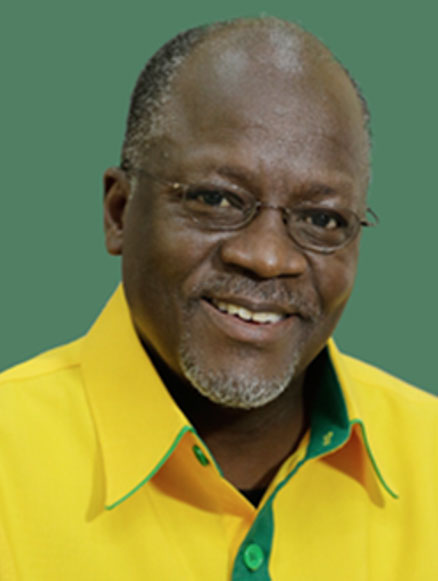
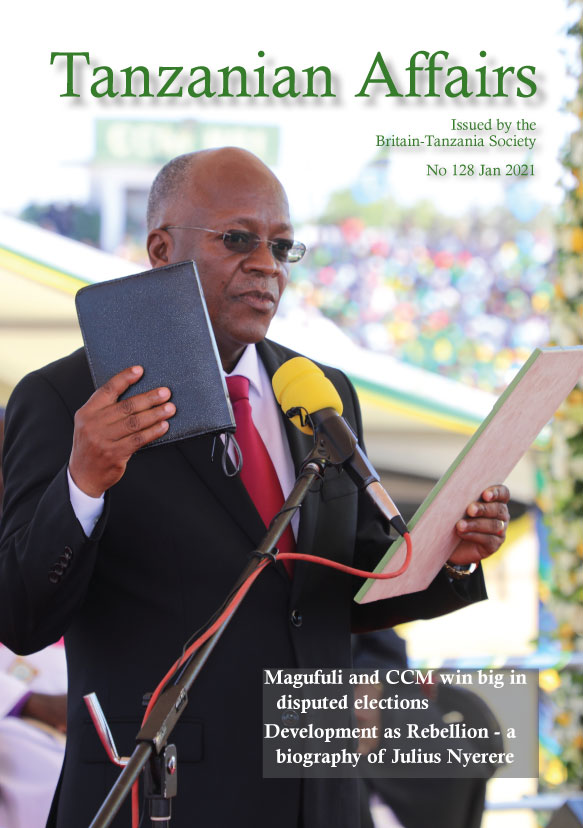
President John Pombe Magufuli


The fifth president of Tanzania, President John Pombe Magufuli, died in March at the age of 61. Popular and controversial in equal measure, President Magufuli will be greatly missed by many in Tanzania, and long remembered by all.

An unexpected selection as the CCM presidential candidate in 2015, Magufuli emerged as a compromise choice when the party rejected more prominent fig­ures including former Prime Minister, Edward Lowassa, and Foreign Affairs Minister, Bernard Membe. At the time, Magufuli was Minister of Works, responsible for road building, his second time in the role, where he had earned a reputation as a no-nonsense, hard-working operator: the “Bulldozer”.

The nickname sums up President Magufuli’s approach remarkably well, to the extent that both supporters and critics used it: the Bulldozer that sweeps obstacles out of the way as part of building something new and better, or the Bulldozer that charges around causing damage and destruction. There is truth in both perspectives.

Born in 1959 in Chato on the shores of Lake Victoria, John Pombe Magufuli grew up in a grass-thatched home, herding cattle and selling milk and fish to support his family. He attended Chato Primary School, Katoke Seminary in Biharamulo and Lake Secondary School in Mwanza, and then Mkwawa High School in Iringa for his A-levels, graduating in 1981. That same year he began a Diploma in Education Science, focussing on chemistry and mathematics, and he later earned a BSc in Education from the University of Dar es Salaam in 1988. After teaching secondary school chemistry and mathematics, he took a position as an industrial chemist in 1989. He later added a Masters and a PhD in chemistry from the University of Dar es Salaam in 1994 and 2009, respectively, including some time at the University of Salford, UK.

Magufuli switched to politics in 1995, when he was elected as MP for Chato and was immediately appointed by President Mkapa as Deputy Minister for Works, promoted to Minister for Works after the 2000 election. In 2010, President Kikwete moved Magufuli to head the Ministry of Lands and Human Settlement and later the Ministry of Livestock and Fisheries, before returning him to his former post as Minister of Works from 2010 to 2015.

As the CCM presidential candidate in 2015, Magufuli led a party that had been damaged by persistent corruption scandals under President Kikwete and weakened by the defection of Edward Lowassa and many of his supporters. He faced the challenge of doing so without a significant power-base of his own in the party. He ran a campaign under the slogan “Hapa Kazi Tu” (work and nothing else) and staked claim to the anti-corruption mantle, taking advantage of the main opposition parties’ decision to select Lowassa, a figure strongly associated in the public mind with corruption. A relatively narrow victory (with 58% of the vote) followed, and President Magufuli took office on November 5, 2015.

As President, Magufuli’s energetic early actions drew widespread acclaim. He cancelled Independence Day celebrations to save money and called on Tanzanians to spend the day on community cleaning work, cut the size of the cabinet, and swept through key institutions including port and tax authorities, firing anyone alleged to be associated with corruption or waste. The cost-cutting approach and hard-line response to corruption allegations were immensely popular within Tanzania and attracted attention further afield, inspiring the social media hashtag #WhatWouldMagufuliDo?

Even at this early stage, however, there were also signs of a different, problematic side to President Magufuli. He called on the country to stop its obsession with politics and focus on development instead. In practice, this meant opposition parties’ activities became tightly constrained, with no public rallies permitted and even private meetings disrupted. He also suspended live broadcasts of parliamentary debates – the first step in a concerted, and largely effective, campaign to control the media.

Nevertheless, citizens seemed happy to accept some loss of democratic and media freedom in return for what they saw as someone working hard and taking on corruption and waste. The President’s popularity soared. One poll, conducted in the first year of his first term, found that 96% of Tanzanian citizens approved of his performance. The President had positioned himself as being on the side of the ordinary citizen, standing firm against corrupt elites, big business and foreign interference, and the public loved it.

The concerns grew, however. Restrictions on the media spread to include social media and civil society, and opposition politicians found themselves in never-ending battles with the law. Few significant opposition figures escaped a “sedition” charge, defined in an antiquated law as making “statements that are likely to raise discontent and promote feelings of ill-will”, and most spent some time behind bars. Some were subjected to much worse, notably Tundu Lissu, who miraculously survived an assassination attempt near parliament in broad daylight in 2017, for which nobody has ever been charged.

Meanwhile, the work-and-nothing-else continued. Tens of thousands of “ghost workers” and civil servant with “fake” academic certificates were fired, and hundreds of allegedly corrupt officials across government were fired in an act-first-ask-questions-later strategy. There was an industrialisation drive, efforts to upgrade key infrastructure including railways, roads and airports, a major new hydroelectric dam at Stiegler’s Gorge on the Rufiji river and multiple new aircraft purchased to revive the national airline, Air Tanzania. The President brought new energy to long-stalled efforts to fulfil President Nyerere’s idea of shifting the national capital to Dodoma. And he picked fights with major foreign investors, most notably Barrick / Acacia and their gold mining interests, and with the Chinese government over plans to construct a major port at Bagamoyo.

The public loved this, though there were signs that the honeymoon had ended. Another poll, half-way through President Magufuli’s first term, found his popularity rating had dropped to 55%: from a record high to a record low in two years. The decline was likely a result of economic hardships rather than concern for the state of democracy. The years 2017 and 2018 in particular were marked by poor harvests and food stress. With heavy-handed enforcement of tax rules and plummeting investment, many businesses, large and small, were also struggling. Many citizens felt poorer than before.

The 2020 election was a highly-flawed exercise, marred by the lack of a truly independent electoral commission, a politicised police force, opposition parties hobbled by five years of harassment and media worried about its own survival. To nobody’s surprise, President Magufuli was re-elected, this time with 84% of the vote. The election also delivered a near-total CCM dominance in parliament, holding 93% of seats.

One issue that barely arose during the 2020 elections was the Coronavirus pandemic, even as it devastated lives and livelihoods across the world. President Magufuli had declared victory over the virus earlier in the year, and the country had stopped reporting data on case numbers and deaths in April, to the despair of the World Health Organisation. There was no lockdown and only limited efforts to improve hygiene and encourage social distancing, with the President instead stressing the value of prayer, steam inhalation and traditional remedies. Once again he pushed opinions to the extremes, attracting high praise from far-right Covid-deniers in the US and elsewhere, and mockery from the international press.

It remains too early to conclusively assess the effectiveness of President Magufuli’s position – the country has suffered far less in economic terms than her neighbours, and evidence is mixed on the health impacts. But it will, internationally at least, dominate his legacy. The irony of the chemistry-graduate Covid-denier who emphasised prayer over science and perhaps succumbed personally to the disease proved too tempting for the international press to ignore.

Officially, he died on March 17, 2021, in Dar es Salaam from heart complications. Some or all of these details may be incorrect.

Within Tanzania, President Magufuli’s legacy will be fought over for years to come. The hard worker who tackled corruption and waste head-on, who stood up to foreign interests, who gave Tanzanians back their pride and made Tanzania great again (#MATAGA)? Or the despot who rode roughshod over human rights and the rule of law, who undermined the country’s economy, who set the clock back on gender equality, and who put Tanzanians lives at risk with a reckless response to a pandemic?

He leaves a wife, Janeth Magufuli, seven children, and a nation divided.
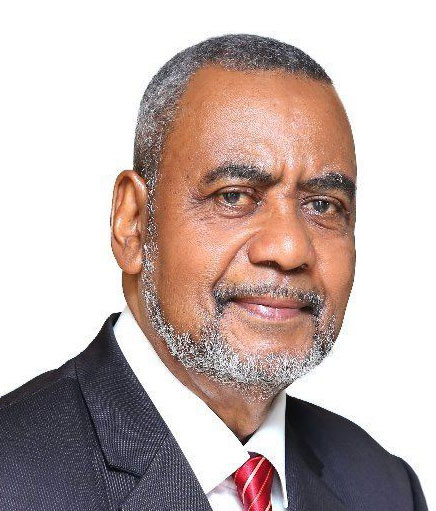
Vice President Seif Sharif Hamad

Vice President Seif Sharif Hamad of Zanzibar passed away on March 17, 2021, at Muhimbili Hospital in Dar es Salaam, at the age of 77. Known generally as Maalim Seif, reflecting his former profession as a teacher, Seif had been a dominant figure in Zanzibar politics for several decades, running for President six times and serving as Vice President twice.

Born in 1943 on the island of Pemba, Hamad attended primary schools on Pemba and King George VI Memorial Secondary School in Zanzibar town, where he was elected chairman of the Unguja and Pemba Students Council. After completing high school in 1963 he was unable to proceed to university as he was asked by the new Zanzibar Revolutionary Government to help fill the gaps in the civil service caused by the mass departure of British officials in 1964. He served as a secondary school teacher before eventually joining the University of Dar es Salaam in 1972, where he earned a first class honours degree in political science, public administration and international relations.

When he returned home in 1975, President Aboud Jumbe, previously Hamad’s secondary school teacher, appointed him as his special assistant. And from the late 1970’s Hamad served in various political and government roles, representing the ruling CCM party: Member of the Revolutionary Council of Zanzibar, Zanzibar Minister of Education, Member of the Zanzibar House of Representatives, Member of Tanzanian Parliament, Member of the Central Committee and National Executive Committee of CCM, Head of the CCM Economic and Planning Department. This culminated in four years as Chief Minister of Zanzibar from 1984 to 1988, first under President Ali Hassan Mwinyi and then President Idris Abdul Wakil.

At this point, he fell out with CCM party chiefs, including both Wakil and now Mwalimu Nyerere. He found himself dropped from his position as Chief Minister in January 1988 and expelled from the party four months later. A year later, he was arrested and taken to court to face highly questionable charges of possessing government secret documents. From two and half years in 1989–1991 he was remanded in Zanzibar Central Prison.

Upon Tanzania’s adoption of multiparty democracy in 1992, Hamad immediately became the leading opposition figure in Zanzibar. With other CCM exiles he co-founded Civic United Front (CUF), and represented the party as its candidate for the Zanzibar presidency in the first multiparty elections in 1995. He was narrowly defeated by CCM candidate Salmin Amour, winning 49.8% of the vote to Amour’s 50.2%. Observers noted serious irregularities in the poll and the CUF rejected the result as rigged.

This set the pattern for the next 25 years. Hamad ran again for President in 2000, officially receiving 33% of the vote in a poll that Commonwealth observers described the election as “a shambles”. In 2005 his official vote share rose to 46%, and in 2010 to 49%, though both elections were again marred by widely noted irregularities. Post-election violence in January 2001 prompted national dialogue but little consequential change until 2010, when newly adopted constitutional arrangements made Hamad, as leader of the largest opposition party, the first Vice President of Zanzibar.

Another disputed election in 2015, saw the result annulled. Early signs suggested that Hamad had won. In protest, the re-run election held five months later was boycotted by opposition parties including CUF and Hamad.

Hamad’s final opportunity came in 2020, now representing ACT Wazalendo, where he was recorded as achieving a highly implausible 19% of the vote. He played a critical role – as he had done nineteen years earlier – in defusing tension, insisting that justice and reconciliation must come through dialogue rather than violence. As he had done in 2010, he joined a unity government as Vice President, this time under President Hussein Mwinyi.

Vice President Seif Sharif Hamad died of the Coronavirus, the first person in Tanzania to publicly reveal a positive Covid-19 test result for 10 months, since President John Magufuli declared the country coronavirus-free. According to his ACT party colleague, Zitto Kabwe, to the last he was advocating peace and dialogue: “he stressed that it was time for the party to be at the front line to cement the accord.”

“The national unity government will continue to be honoured,” said Kabwe, “to ensure Maalim Seif’s dream for Zanzibar’s prosperity, justice for Zanzibaris and unity for Zanzibaris is not extinguished,” he said.

Throughout the turbulence years and flawed elections of multiparty politics in Zanzibar, Hamad was a much loved paternal figure. “We are where you are,” his supporters would shout in demonstration of their loyalty and dedication. As proof, they followed him en masse to ACT Wazalendo in 2019 when infighting within CUF led to a split in the party in, leaving CUF as little more than a hollowed-out husk.

His support was almost universal on the island of Pemba, but he also earned support and respect on Unguja island, in mainland Tanzania, and indeed across the globe. He will be remembered most for rising above provocation to secure peace and stability for Zanzibar, most clearly in 2001, but again in different ways after each of the six elections he “lost”.

Time and again in the face of great personal injustice he showed patience, understanding, dedication, intellect and empathy. Perhaps he lacked the ruthlessness to reach the very top. But he was a better person as a result. And with these qualities, surely, he would have made an excellent President.

Economist and former Governor of the Bank of Tanzania, Professor Benno Ndulu, died in hospital in Dar es Salaam in February, at the age of 71. He will be remembered as a highly qualified technocrat who changed the face of the central bank, and as a globally-respected economist of keen intellect, firm integrity and deep humanity.

Born in rural Kilombero in Morogoro region, Ndulu attended Catholic Church mission schools and a public school for upper secondary, after which he enrolled at the university of Dar-es-Salaam to study economics.

Prof Ndulu started his professional career at the University of Dar es Salaam (UDSM) in 1979, where his work underpinned many of the economic reforms introduced by President Mwinyi after his election in 1985. In 1992 he earned a PHD in Economics from Northwestern University in the US.

He moved to the World Bank in 1997, initially to lead the macroeconomic division in the Tanzania office, where he was closely involved with President Mkapa’s economic agenda. He later moved to Washington and served as advisor to the Regional Vice President for Africa.

President Kikwete brought Ndulu back to Tanzania in 2008 to take the reins at the scandal-hit Bank of Tanzania. He worked tirelessly to rebuild the bank’s reputation, and to protect the its integrity against political machinations, most notably in questioning and resisting payments relating to what became a major corruption scandals: the Tegeta Escrow scandal. He also focused on instituting monetary policies towards growth and containment of inflation, and encouraged expansion of access to financial services to Tanzanians who would previously never considered opening a bank account or taking a loan.

After his formal retirement in 2019, Ndulu did not stop working. His credentials and reputation earned him positions as visiting professor at Oxford University, member of economic advisory panels for President Ramaphosa in South Africa and President Abiy Ahmed of Ethiopia, board member of the Bill and Melinda Gates Foundation, and advisory board member for the World Bank’s 2021 World Development Report.

Professor Ngaire Woods, dean of the Blavatnik School of Government at the University of Oxford, said: “Benno Ndulu exemplified outstanding public leadership. A brilliant, humane man with wonderful humour, whose sharp incisive mind made sense of complex issues, and whose empathy kept him in close touch with all those he served.”

President Ramaphosa said “Africa had lost a great thinker and visionary in the infancy of continental free trade, … an outstanding economic intellectual with an extraordinary and vibrant passion for African development.”

Tanzania’s most senior civil servant, the Chief Secretary, Ambassador John Kijazi, passed away in February at the Benjamin Mkapa Hospital in Dodoma, at the age of 64. He had been admitted to hospital two weeks earlier and had been receiving treatment but succumbed to a heart attack.

Ambassador Kijazi was appointed and promoted to the post of chief secretary and cabinet secretary in March 2016. He reached retirement age later in 2016, but President Magufuli extended his contract and he continued to hold the position until his death.

Born in 1956, Engineer Kijazi held a degree in Civil Engineering from the University of Dar es Salaam and a Masters in Highway Engineering from Birmingham University. In 1982 he joined the Ministry of Public Works as an Assistant Engineer, before rising through various posts in the Ministry to the height of Permanent Secretary from 2002 to 2006. His time at the Ministry, including as Permanent Secretary, overlapped with President Magufuli’s time as first Deputy Minister (1995-2000) and then Minister of Works (2000-2005). He later served as Tanzania’s High Commission to India before President Magufuli called him back to serve as his most senior civil servant.
ELECTION RESULTS

by Ben Taylor

Magufuli and CCM win big in disputed election
The various presidential, parliamentary and local government elections that took place in Tanzania on October 28, 2020, resulted in a resounding victory for the ruling party CCM and President Magufuli, though opposition parties cried foul, with some strong evidence to back up their claims.

Results as announced
In the vote for President of Tanzania, President Magufuli was announced as the winner with 84% of the vote, well ahead of the leading opposition party candidate, Tundu Lissu of Chadema, with 13%. None of the other 13 candidates achieved more than 1%. President Magufuli’s vote share rose from 58% in 2015. 14.8 million votes were cast, out of 29.8 million registered voters, representing a turnout of 50.7%.

In the parliamentary elections, out of 264 constituency seats, CCM candidates won in 256, leaving just four constituency MPs representing ACT Wazalendo, three from CUF and one from Chadema. This includes just two seats were won by opposition candidates on mainland Tanzania – one each from CUF and Chadema.

This almost total wipe-out of opposition MPs included several prominent voices in parliament and in public debate over the past five years. Freeman Mbowe, Joseph Mbilinyi, Halima Mdee, Ester Bulaya, Rev Peter Msigwa and Godbless Lema of Chadema, Zitto Kabwe of ACT and James Mbatia of NCCR Mageuzi all lost their seats.

In addition, votes cast for the party entitled Chadema to a further 19 “special seats” MPs – nominated women MPs allocated proportion to the votes cast for each party’s presidential candidate. In the same way, CCM was allocated 95 special seats MPs. Overall, CCM has 351 seats (93%) and opposition parties have a combined 27. In comparison, after the election in 2015, opposition parties held 114 seats.

Both ACT and Chadema initially declared that their MPs would not take up their seats in parliament, in protest at what they described as a fraudulent election (see below). Later, after heated debates within the parties, most of these MPs have taken up their seats.

For President of Zanzibar, the CCM candidate, Dr Hussein Mwinyi was announced the winner with 76% of the vote, with the ACT Wazalendo candidate, Maalimu Seif Sharif Hamad in second place with 20%. This ended a run of Presidential elections in Zanzibar that were either annulled (2015), boycotted by major opposition parties (2000, 2016), or where the CCM Presidential candidates in Zanzibar won extremely narrow victories (1995, 2005, 2010).

Grounds for dispute
Even before election day, opposition parties disputed the process and there were serious grounds for concern. As noted in the previous issue of Tanzanian Affairs, the playing field was far from level during the campaign.

Then, in the days immediately before the election ACT Wazalendo reported that police on Zanzibar had shot and killed at least nine opposition supporters who suspected soldiers of distributing pre-marked ballots, and that more than 100 people were arrested. Similarly, Chadema claimed CCM officials had shot dead two Chadema supports on the mainland. Tanzania’s inspector general of police, Simon Sirro, denied any deaths.

Maalim Seif, the ACT Presidential candidate for Zanzibar was arrested on the morning of election day as he went to cast his vote. Both Chadema and ACT continued to dispute the process as votes were counted and results announced.

Zitto Kabwe, the leader of ACT-Wazalendo, said there were reports of fraud from constituencies across the country, and that party workers had found thousands of ballot papers and large numbers of returning officers’ statements of results that appeared to have been filled in before the vote. One bag was seized when it fell off a lorry. “It was not an election, and the people of Tanzania will pay the price. The international community should not recognise this election or the legitimacy of the government,” Kabwe told The Guardian.

Tundu Lissu, Chadema’s candidate for president said it “was not an election …, it was just a gang of people who have just decided to misuse state machinery to cling to power”. His party alleged ballot boxes were tampered with after its agents were stopped from entering polling stations.

The two parties demanded fresh elections, after denouncing the vote as fraudulent. In a joint news conference, they also called for mass protests.

Seif Sharif Hamad, the opposition ACT-Wazalendo’s presidential candidate in Zanzibar, and other leaders were arrested, his party said, after he called for protests. The party also reported that a member of the party’s Central Committee Ismail Jussa Ladhu was badly beaten by security forces in Zanzibar.

The National Electoral Commission denied allegations of fake ballots, saying they were unofficial and unsubstantiated. Under Tanzanian law, elections results declared by the commission cannot be challenged in court.

International assessments
A combination of the Coronavirus pandemic, pre-existing tensions between the government and the diplomatic community, and a government decision to discourage international observers meant there were fewer observer missions present in Tanzania than in previous elections. The only mission in country represented the East African Community, and concluded that “generally, the Mission is of the view that the Election process was conducted in a credible manner.”

In contrast, other international assessments were damning. The United States Embassy issued a statement noting “serious doubts” about the credibility of the polls, citing “credible allegations of significant election-related fraud and intimidation”. The EU noted the disruption of social media, claims of opposition candidates that they did not benefit from a level playing field during the electoral process, limited possibilities for electoral observation, and concerning reports on irregularities. They concluded that “these serious allegations have an impact on the transparency and overall credibility of the process”.

The UK Minister for Africa, James Duddridge, gave a statement expressing concern at “widespread allegations of interference in the country’s elections, including pre-filled ballot boxes and party agents being denied entry to polling stations. We are also deeply troubled by the reports of violence and heavy-handed policing in the elections, including the arrest of opposition political leaders.”

There was also an East African independent election monitoring initiative, Tanzania Elections Watch (TEW), formed as “one of the last few remedies available in the absence of independent oversight of the elections in Tanzania,” designed to bring regional and international civil society and others together to critically debate key developments as they unfold. They noted that the electoral commission “does not pass the basic tests of an independent and impartial election management body”, and that the vote “marked the most significant backsliding in Tanzania’s democratic credentials”. They concluded that the process “falls way below the acceptable international standards” for holding free and fair elections.

Post-election tensions
The initial response to the elections from opposition parties was – as seen above – to cry foul. They also called for nationwide protests. Hampered in part by widespread disruption to internet access that remained an issue, intermittently, for several weeks, and deterred by heavy police presence on the streets, this protest movement failed to materialise in any significant way.

Tundu Lissu sought refuge at the German Embassy in Dar es Salaam after receiving death threats. He then left the country, with the assistance of diplomats, and has returned to exile in Belgium, where he previously spent several years receiving treatment for gunshot wounds after an assassination attempt in 2017.

Moments before his flight departed for Brussels on Tuesday, Lissu spoke with reporters. “Diplomats from Germany, Belgium, the United States and other countries have negotiated with the Tanzanian government to allow me to leave the country safely,” he said. “The threats against me kept increasing after the Tanzanian presidential election and I decided to leave the country.”

“I am also going to Europe with a political mission,” he added. I want to speak with the international community about what happened during the recent election, and what it means for Tanzania and the rest of the world”

Opposition parties struggled with the dilemma of whether engaging with the new administration would legitimise the election. Initially, both Chadema and ACT Wazalendo leaderships announced that their MPs would not take up their seats in parliament, but these decisions were later revised. In Zanzibar, where the constitution requires that the two largest parties form a national unity government, ACT debated whether to join CCM, and finally concluded that they should do so, for the sake of peace – “to give dialogue a chance”. As such, in addition to the swearing in of Hussein Mwinyi as the new President of Zanzibar, Maalim Seif Sharif Hamad was sworn in as First Vice President of Zanzibar on December 8th.
President Magufuli was sworn in for a second term as President of Tanzania on November 5th.

Looking forwards
The prospects have faded for either an opposition-led protest movement taking shape or international pressure forcing concessions by the government. Instead, these elections look set to mark a serious further deterioration in Tanzania’s relations with those parts of the international community that value democracy, and the country now faces a new political landscape going forwards.

Most obviously, parliamentary debates and scrutiny look set to be significantly weakened, with fewer opposition MPs present and with experienced and outspoken figures such as Zitto Kabwe and Freeman Mbowe now lacking a platform. In turn, this will weaken other critical voices in the media, civil society, and reduce space for public debate still further. For the next five years at least, then, there would seem to be little prospect of a democratic recovery.

Beyond that, the great uncertainty remains the question of whether President Magufuli will seek to amend the constitution in order to remove or extend term limits. Currently, the constitution places a two-term limit on presidents, and President Magufuli has always insisted that he has no desire or intention to change this. However, observers have noted that senior party figures close to the President have voiced the idea several times over the past five years. CCM’s overwhelming dominance in the new parliament would also make such an amendment relatively easy to push through.

When President Nyerere stepped down in 1985, he established a precedent for peaceful and orderly transition of power. Presidential term limits were brought in, and four successive transitions since appeared to demonstrate that in Tanzania this constitutional mechanism would be respected. This could well be tested over the coming years as never before.

CORONAVIRUS UPDATE

by Ben Taylor

Uncertainty rules
With no official data having been reported in Tanzania since May 2020 on Covid-19 case numbers or deaths, the prevailing situation continues to be one of great uncertainty. The government maintains that the virus has been defeated in Tanzania, and public debate on the matter has largely ceased.

There is no doubt that – in common with much of Africa – the most alarming projections of the early epidemiological models have not come to pass. The London School of Hygiene and Tropical Medicine (LSHTM), for example, projected that there could be as many as 175,000 deaths caused by the virus in Tanzania during 2020, and Imperial College, London suggested the number could reach 360,000. These projections have, to widespread relief, proved wrong.

The reasons for the relatively slow rate of spread of the virus in much of Africa remain uncertain. The younger age-profile of the population may have contributed, or part of the population may have some form of pre-existing immunity.

Nevertheless, without official data it remains impossible to accurately assess the state of the pandemic within Tanzania. And as nature abhors a vacuum, where there is no official data, rumours and anecdotal evidence thrive.

It is worth, therefore, summarising what we know with more confidence:

First, neighbouring countries saw rising case numbers since the later part of 2020, including Kenya, Uganda, the DRC, Zambia and, most recently, Malawi. In Kenya, the daily number of newly confirmed cases rose above 1,000 for much of October-December. In Zambia and Malawi, where earlier in 2020 case numbers remained very low, sharp increases have been seen in the first two weeks of January, possibly linked to the more infectious so-called South African variant of the virus.

Second, relaxed travel restrictions into Tanzania since mid-2020 have brought rising tourist numbers, particularly from Russia, as those tourists willing to travel at this time look to take advantage of relatively cheap prices and look to Tanzania as a location where restrictions are very relaxed. If the country did truly defeat the virus locally in May and June, it has surely been reintroduced since.

Third, Coronavirus testing has continued among certain groups within Tanzania – such as those intending to travel outside the country or taking part in international sporting events. Six footballers (and three others in the touring party) from a Zimbabwean team in Dar es Salaam for an African Champions League tie received positive test results. (It should be noted, however, that there is further uncertainty in this case, as the Zimbabwean team’s leadership noted irregularities in the testing process and hinted this might have been a tactic by local authorities to hamper their performance in the match.)

Fourth, in the most obviously-comparably contexts – Kenya and Uganda – lockdowns introduced in response to the pandemic have had serious impacts on livelihoods and the economy. The data is not yet conclusive on this, but it seems probable that Tanzania will have thus far escaped some such impacts of the pandemic – though the knock-on effects of global economic difficulties have affected exports, tourism and more.

Finally, and importantly, hospitals have not been overwhelmed and alarming early rumours of night-time burials and mass graves largely dried up.

Given the lack of more dependable data, it is also worth noting, though with caution, some of the unconfirmed rumours that have been circulating more recently, including:
• Reports of a spike in case numbers in December and early January, with rumours centred on cases within the Indian community in Dar es Salaam.
• Hospitals and health workers under intense pressure to avoid speaking to the media, but rumours of patients with certain symptoms being turned away and certain hospitals having high case numbers persist.
• Reports on travellers leaving the country testing negative before departure and positive on arrival at their destination.

The ever-evolving nature of the pandemic is such that judgements on President Magufuli’s unique response are premature. For reasons that probably have little to do with the country’s policy response, case numbers have not reached anything approaching the heights of early projections. And the country has probably – so far – avoided the worst economic impacts. And yet, with rising case numbers in neighbouring countries, and new virus variants spreading rapidly around the world, there are plenty of ways in which Tanzania’s Coronavirus response could go badly wrong.

And there are yet more uncertainties as well. The government’s stance on vaccines, for example, is still unknown. On the one hand, why would a country that has officially defeated the virus need vaccines? And sure enough, the Ministry of Health has been notably reluctant to discuss the country’s attitude to vaccinations. In early January, the Minister of Health, Dr Gwajima, told a reporter: “I cannot tell you now; but we will issue a public statement soon. So, be patient.” A spokesman for the Ministry was also reported as saying that “there are no plans in place yet of importing vaccine for Covid-19, our health experts and scientists are still researching and undergoing clinical trials for the local herbs for covid-19.”

Post-Covid, it is also unclear how the wider world would view a country that decides on vaccine-scepticism. Travel advisory notices could impact on tourist numbers, for example. And if recalcitrance on combatting the virus comes to be seen as undermining global vaccination efforts and putting other countries’ progress against the virus at risk, this could cause further strain to Tanzania’s diplomatic relations, including with donor countries.

In short, while the government continues to claim victory, it remains too early to do so with confidence. And while the government’s critics continue to cry foul, their case remains, to date, inconclusive. Uncertainty is an uncomfortable position in which to move forward, yet it remains the only choice we have.

BUSINESS & THE ECONOMY

by Ben Taylor

President Magufuli’s economic goals, and a charm offensive for investors
President Magufuli emphasised economic matters in his inaugural speech to parliament following his re-election in October. Over half the speech was devoted to economics, reflecting a new emphasis.

The President focussed on the need to manage the economy well so that the country attains higher economic growth, together with an emphasis on ensuring that growth benefits citizens. The aim is to achieve 8% growth, well above historic growth averages in sub-Saharan Africa of 4%, and above 5.5% growth projected for Tanzania in 2021.

Other goals listed by the President include the creation of eight million jobs, stabilisation of the shilling, keeping inflation in single figures, and reducing the interest rate.

The combination of two targets – 8% growth and 8 million jobs – was termed the 8-8 economic agenda by President Magufuli. The President also emphasised the importance of attracting both local and foreign investment in order to achieve these goals. As part of the new emphasis, the ministerial docket with responsibility for promoting investment and the Tanzania Investment Centre (TIC) have both been moved from the Prime Minister’s Office to the President’s Office.

Prof Kitila Mkumbo, the new Minister of State in the President’s Office (Investment), took this as his cue to launch a charm offensive to improve relations with existing investors, and to attract new investors. “It’s a new dawn for investors in Tanzania,” said the Minister. “We will continue to work closely with the private sector in promoting, facilitating, handling and developing investments in Tanzania. We recognise the private sector as an engine for economic growth and a valued and dependable partner in our endeavour to achieve the 8-8 agenda of economic growth and jobs creation.”

“We will seek to constantly and consistently engage and dialogue with members of the private sector and their member-based associations on how best to promote investment in Tanzania. We will openly and transparently listen to and welcome their ideas; and we will implement good and evidence-based ideas with a view to promoting investments in our country. In the same spirit, we express our commitment to continue working responsibly and in a friendly manner with development partners and like-minded civil society institutions in investments promotion and facilitation, fostering business enabling environment, as well as private sector development – and economic development in general.”

Prof Mkumbo tasked TIC to solve issues of nepotism and unnecessary delays when an investor wants to invest in Tanzania. He reiterated President Magufuli’s target that it should not take more than 14 days in enabling an investor to invest in Tanzania.

“We need to change our mindset. Officials working with investment facilitation institutions should not see themselves as bosses to investors, we should look at them as partners and your duty is to facilitate,” he said.

The Minister said the government’s key strategic approach for promoting investments in Tanzania will be based on implementing the Blueprint for Regulatory Reforms to Improve the Business Environment in Tanzania, which has been approved by the government. He promised to “embrace the use of the World Bank’s Ease of Doing Business Reports as one of the key feedback mechanisms on our progress,” aiming to raise Tanzania’s ranking in the World Bank’s Ease of Doing Business Index to at least 100.

Tanzania’s 2020 ranking on the index was 141, just below Zimbabwe. In comparison, Rwanda ranks 38th, Kenya 56th, Zambia 85th and Uganda 116th. Tanzania has never ranked higher than 127th.

“Additionally, we will put a sustainable feedback mechanism with investors and members of the business community so as to garner their views and assessments on how we are doing – and where government action is mostly needed,” said the Minister.

After several years of strained relations between government and business in Tanzania, the business community responded with cautious positivity to the President and Minister’s remarks.

Investors and business operators have complained in recent years that they have been compelled to deal with multiple regulatory bodies and other bureaucracies. This was compounded, in their view, by multiple taxes, inordinately high tax rates and lack of adequate information on investment opportunities, as well as unpredictability of extant policies and regulatory frameworks.

World Bank cautiously optimistic on Tanzania’s economic prospects in 2021
The World Bank has upgraded its projection for Tanzania’s economic growth this year, forecasting that growth would reach 5.5% in 2021, up from its earlier estimate of 2.5% for last year.

Tanzania’s real GDP had been growing at an average of 7% in the last decade. But the government lowered the projections for 2020 to 5.5% from the initial projection of 6.9% due to factors, including Covid-19, heavy rains that resulted in floods and destruction of transportation infrastructure, and delayed implementation of some projects.

Sectors like tourism were hard-hit by the pandemic as countries across the world introduced travel restrictions to control spread of the pandemic. At the same time, however, earnings from mining exports rose due to the rising price of gold in the world market during the pandemic.

Vodacom / Vodafone criticised for conspiring to undermine freedom of speech
Vodacom Tanzania, part of the Vodafone Group, a multinational company headquartered in Britain, has come in for criticism after allegations the company “caved to a government demand to filter and block messages containing certain terms associated with the country’s main opposition party”.

The issue arose when opposition supporters realised that some – but not all – of their text messages were not reaching their intended recipients. They noted that it appeared that messages containing the name of opposition Presidential candidate, Tundu Lissu, were being blocked.

Nic Cheeseman, Professor of Democracy at the University of Birmingham criticised both Vodacom Tanzania and the Vodafone Group for acquiescing in efforts to undermine credible elections. “Despite proudly proclaiming their commitment to promoting ‘inclusion for all’, ‘operating responsibly’ and contributing to the UN SDGs on their website, a Western company aided an authoritarian leader to undermine freedom of speech,” he wrote.

“Despite aiding and abetting an increasingly authoritarian government,” he added, “neither Vodacom Tanzania nor its parent group Vodafone Plc, has been forced to explain its behaviour. Perhaps even more tellingly, they have not even felt the need to apologise.”

“Instead, Vodacom Tanzania recently intensified its efforts to cosy up to the ruling party, appointing Thomas Mihayo –a known Magufuli ally, and a member of the National Electoral Commission (NEC) that just signed off on a flawed election – as its new Board Chairman.”

ENERGY & MINERALS

by Roger Nellist

Tanzania’s gold earnings surge
According to the Bank of Tanzania the country earned US$2.72 billion from gold exports during the twelve months ending on 31 July 2020. It was an increase of almost $1 billion over the previous year. The 52% increase meant that gold exports overtook tourism receipts as Tanzania’s number one foreign exchange earner. The principal reason for the surge in gold earnings was the higher price of gold on world commodity markets, as investors switched to gold to counter economic uncertainty arising from the Covid pandemic. In July 2020, the average price of a troy ounce of gold reached $1,846, compared with $1,732 in June and $1,531 in May. The July 2020 gold price was the highest since September 2011.

Other recent gold news
In October 2020, the recently formed Twiga Minerals Corporation declared its first dividend, of $250 million. In accordance with the respective shareholdings, $40 million of it (about TSh 100 billion) was received by Tanzania, reflecting the government’s 16% free stake. Twiga is the joint venture gold mining company established between Barrick Gold and the Tanzanian government in January 2020, following the government’s protracted dispute with Barrick’s subsidiary, Acacia Mining. It operates the three gold mines at Bulyanhulu, North Mara and Buzwagi.

In December 2020, five people in Mbeya region were suspended and arrested for allegedly smuggling 15.4 kilogrammes of gold worth TSh1.8 million. Three of the five were working at the Chunya Mineral Centre and were suspended by the Minerals Minister, Dotto Biteko. The other two were Police officers. The Director of Public Prosecutions announced that his office had acquired enough evidence to prosecute the five on six counts. Three of the five appeared in Court but the other two went missing.

LNG negotiations to resume
Just before Christmas the Tanzania Petroleum Development Corporation (TPDC) announced that it was hopeful that negotiations between Tanzania and foreign oil companies would resume in January 2021 for the Host Government Agreement (HGA) that will govern the establishment of the much-delayed Liquefied Natural Gas (LNG) project at Lindi. The HGA is a crucial project agreement and the negotiation of it has been proceeding on and off for several years. Originally, it was expected to be concluded by September 2019. However, negotiations stalled when the many companies involved – Shell, Ophir, Pavilion, Equinor and ExxonMobil – supposedly could not agree amongst themselves on important aspects of the project. Then Tanzania decided to review and renegotiate some of the terms of the Production Sharing Agreements under which those companies hold exploration and development rights in the country. In December 2020 TPDC confirmed that it was still finalising the amounts of compensation to be paid to landholders in the Lindi region where the LNG plant will be sited. Once the HGA is concluded the investors will then be able to make a Final Investment Decision. The complex LNG project is likely to cost about US$30 billion.

The use and benefits of domestic gas
TPDC also announced that between July 2004 (when Songo Songo gas was first piped to Ubungo in Dar es Salaam) and the end of 2020, the use of domestic gas had saved the country $15.6 billion (TSh 36 trillion) – by displacing expensive imported fuels. $13.2 billion of the savings was attributable to the generation of electricity for the national grid and the remaining $2.4 billion was saved by industries that elected to use domestic gas directly rather than imported fuels. TPDC explained that 48 factories are fully using gas in their operations, as well as four institutions. Moreover, about 1,000 households in Dar and Mtwara are also now powered by gas. Additionally, a modest number of vehicles (about 400) are currently powered by Compressed Natural Gas (CNG), the number being constrained by the costs of converting vehicles from petrol/diesel to CNG and by the lack of CNG refuelling stations. At the present time there is only one CNG station operating in Dar (at Ubungo). However, TPDC clarified in December that it is planning to build five more CNG stations – at Ubungo, Kibaha, the ferry/fish market, Muhimbili hospital and at the University.

In November 2020, TPDC’s Managing Director, James Matarajio, told a conference that TPDC plans to extend the use of gas by households in up-country areas like Morogoro, Dodoma, Mwanza and Tanga. He pointed to both environmental benefits and significant household energy cost savings arising from the use of domestic gas. Matarajio added that Tanzania has discovered sufficient gas resources to be able to export some to neighbouring countries after satisfying Tanzania’s domestic needs, including those of the LNG and perhaps other export-oriented projects too.

East Africa Crude Oil Pipeline (EACOP)
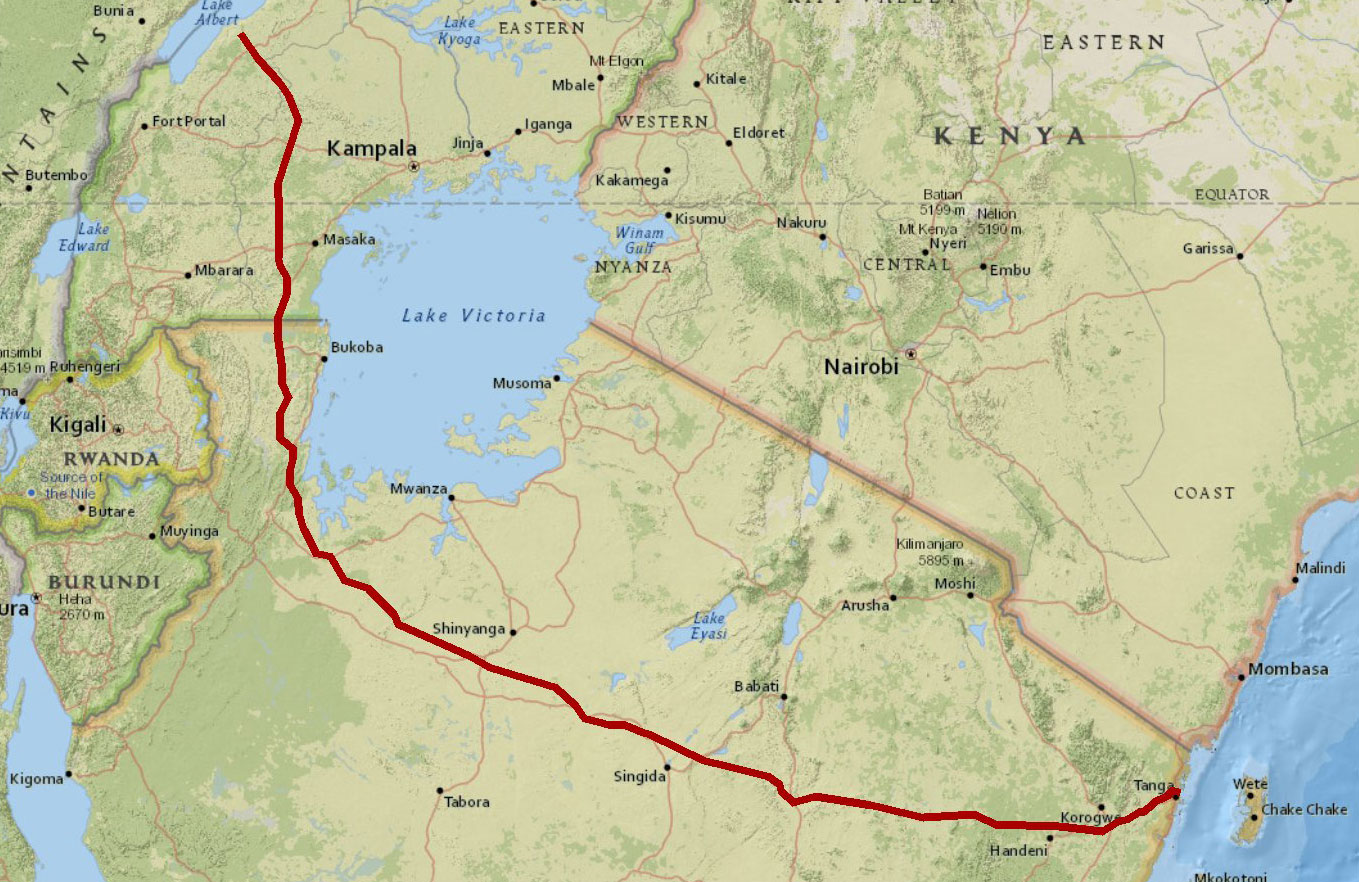
TPDC has confirmed that preparations are now well advanced for the construction of the Uganda–Tanzania East Africa Crude Oil Pipeline (EACOP), that will enable the oil discovered in Uganda in 2006 to be exported through Tanzania. The 898 miles long pipeline will link Uganda’s oil fields with an export terminal at the port of Tanga. About 80% of the pipeline will run through Tanzania. The project is expected to cost $3.5 billion and create more than 18,000 jobs for Tanzanians.
The two governments signed the overarching agreement for EACOP in September 2020, at a ceremony attended by Presidents Museveni and Magufuli. That was followed in October by signature of an agreement between the French oil giant, Total, and Tanzania. Total is the majority stakeholder in the Ugandan oil discoveries and is developing the pipeline project together with the China National Oil Company.

Map showing the proposed route of the East Africa Crude Oil Pipeline (EACOP) from Uganda to Tanga.

Possible fertiliser project
The Petroleum Upstream Regulatory Authority (PURA) which regulates the exploration, development and production of natural gas in Tanzania announced in mid-December 2020 that the planned $1.9 billion fertiliser project on the Mtwara coast is still on – but, significantly, the commercial terms have not yet been agreed with investors. According to PURA’s acting director general, Charles Sangweni, the main stumbling block is disagreement over the price that Tanzania’s natural gas will be sold to the fertiliser plant. Gas is the main raw material feedstock in the manufacture of fertiliser. Sangweni told the media at a workshop that the natural gas price should be at least $3 per MBTU but a German investor wants it reduced to $2.6, which would mean government having to subsidise the gas input. The plant is expected to export 70 percent of the fertiliser produced and the remaining 30 percent will be sold to Tanzanian farmers. It is unclear when the project will be realised. It had been expected to commence in 2016 through a joint venture between TPDC and foreign companies, but the partners were unable to agree on the commercial terms.

The project is reminiscent of the planned Kilwa Ammonia Company (KILAMCO) fertiliser project that this contributor advised on in the Tanzanian Ministry of Water, Energy and Minerals in the early 1980s. As a joint venture between TPDC (26%) and a large USA fertiliser company (74%), KILAMCO was to be a world-scale export-oriented project intended to earn the country much-needed foreign exchange at a time when the economy was in dire trouble. At $645 million (though subsequently downscaled to $425 million) it was to be the largest single investment ever in Tanzania. Intensive domestic and international efforts were made over several years to realise the project and by 1985 in-principle funding commitments were received from the World Bank Group, UK (CDC), Sweden, Italy, USA, Yugoslavia and China. However, by the late 1980s world fertiliser prices had softened considerably, undermining KILAMCO’s commercial viability. Moreover, TPDC was unable to raise the foreign exchange to support its equity stake and, given the magnitude of the sums involved, donors signalled that their financial support for the project would have to be fungible (reducing their commitments to other Tanzanian developmental projects). During the 1990s, the Songas gas-to-electricity project was developed as the preferred alternative use of Songo Songo gas, and began generating electricity at Ubungo in 2004.

Zanzibar’s hopes for oil and gas
Zanzibar President Ali Mohamed Shein told reporters in mid-October 2020 that the results of preliminary 2D seismic and other pre-drilling technical work undertaken to date point to the existence of geological structures with high oil and gas potential in five areas in the Pemba-Zanzibar block. The potential natural gas reserves there have been estimated at 3.8 trillion cubic feet. (For comparison, Tanzania has so far discovered coastal and offshore gas reserves of at least 57 tcf). He cautioned that it is early days yet and that more sophisticated 3D seismic needs to be acquired before any wells are drilled to confirm the possible reserves.

Editor’s Note: This is Roger’s final article as our regular contributor on Energy and Minerals, after eight years. I am confident that our readers would like to join me in thanking him for the brilliant way he has handled this important, sensitive and complex subject. Asante Roger, and best wishes for the future. Ben

TOURISM & ENVIRONMENTAL CONSERVATION

by Paul Harrison

Tanzanian tourist industry cautiously optimistic after the shock of Covid pandemic
Tanzania has not escaped the global downturn in the tourism and travel sector, with visitor numbers dropping considerably. Tourist numbers have at least halved compared to pre pandemic projections, with indications of up to 900,000 visitors in 2020 compared to the two million tourists planned for: a loss of over a billion dollars of revenue to the country.

The country was not able to take advantage of the usual peaks in demand during the northern hemisphere summer or winter seasons as would-be international travellers stayed put or closer to home. Despite ongoing efforts to diversify international markets and expand domestic and regional markets, the majority of tourists still come from north America and western Europe, notably countries which have faced repeated Covid-related lockdowns and travel restrictions. Rising numbers of Russian, Chinese and Middle Eastern tourists have helped boost numbers, but there has, overall, been a damaging loss to the tourism sector. Retrenchments have been common in the larger tour operator businesses whilst many small-scale operators have gone out of business. Camps have remained closed, aircraft in hangers and safari vehicles parked up.

With the northern hemisphere summer season is in sight, industry confidence is picking up, cautiously. Just prior to Christmas, the Citizen reported a wary optimism to recovering tourism prospects from the Tanzania Association of Tour Operators given the ongoing pandemic, travel restrictions and tightened purse strings. The Hotel Association of Tanzania is cautiously optimistic, noting many operators are at reduced capacity or closed, according to the Citizen. There is a hope that pandemic-weary travellers will look for tropical summer holidays, bolstered by the likely roll-out of vaccination programmes before summer. This offers some confidence that numbers will soon move back towards previous levels – and potentially beyond. In the meantime, the industry is biding its time.

The government is looking at how new markets and potentially direct flights will attract greater numbers post pandemic restrictions. There are also calls for lowering costs, though it is not clear whether this would entail the government giving way in terms of reduced taxes or an already-weakened industry would take the burden. In the meantime, foreign levies for entrance into national parks will rise from 1st July 2021, with a new fee structure that includes entrance and concession fees. The Serengeti will cost USD $70 per day.

In Zanzibar, diversifying tourism in Unguja helps maintain numbers after a lull
In Zanzibar, a new Ministry of Blue Economy and Fisheries separates fisheries from livestock and illustrates an increasing recognition by the Zanzibar government of the wealth of the sea – including from tourism. According to the Daily News, tourist numbers to Zanzibar doubled from September to October 2020 to around 12,000 visitors. This was a welcome signal of renewed interest in visiting the archipelago after the slump caused by the Covid pandemic. Whilst western Europe remains the primary source for tourist visitors, the Zanzibar administration have concentrated on diversifying their markets, with a particular focus on Russia. Thrice-weekly Russian charters bring beach tourists for short stays on Unguja Island and Russian tourists accounted for at least 15% of all international visitors in late 2020. On Pemba Island, tourism remains focused on high end, low volume and the diving markets, with operators largely waiting out the pandemic storm.

President Nyerere’s former home to be opened for tourists
In October 2020, the Ministry of Natural Resources and Tourism announced that Mwalimu Julius Nyerere’s former home in Dar es Salaam – where he lived during the run up to independence in the 1950s – would open for visitors. Following refurbishment by Tanzania National Parks (TANAPA), the house will be marketed as part of Tanzania’s increasing effort to boost cultural tourism from both domestic and international markets. The site will allow visitors to get a sense of the context of Mwalimu’s life and thinking – keeping the late President Nyerere’s legacy alive physically.

Boost to promote domestic tourism and jobs
Efforts to counter the loss of revenue from international tourist receipts by focusing on domestic tourism have continued. In December, the Daily News reported a new memorandum of understanding between the Tanzania Tourism Board and CI Group, a service provider promoting local tourism through a ‘Mama Africa’ circus exhibition. The campaign is expected to include engagement of Tanzanian celebrities, companies, colleges and schools. Promotion of domestic tourism remains a challenge due to the pricing structure of the tourism sector as well as the products available. Whilst city-dwellers are often happy to return to rural homes and origins, the domestic market has interests that are not currently served to the same extent, especially in parks and reserves. Wildlife areas that are developed to include infrastructure like boardwalks or visitor centres may have more local appeal. However, they risk putting off international tourists seeking the simplicity of wild nature. The country must achieve a sensitive balance in meeting needs of both the domestic and international tourist markets in its diversification of the tourism sector.

Successes and challenges ahead for conservation
In terms of conservation, parks are well protected with poaching appearing to decrease overall. TANAPA’s shift towards a paramilitary approach appears to be paying off in the national park estate. Conservation has become a serious matter. Unofficial reports of poaching that surface outside of the parks suggest a possible poaching revival in the Ruvuma area potentially linked to the Mozambican insurgency across the border which may also be linked to reports of increased illegal logging in the south of the country. The decrease in tourism, and associated decreases in income for tourist-dependent communities, presents latent risks for a resurgence in the illegal wildlife trade, particularly when economies revive in consumer countries. Close attention to mitigate these risks is needed. However, at the same time, donor investment into conservation has slumped, in part due to the inability of donors to programme and the squeeze on finances at home due to the coronavirus pandemic but exacerbated by sometimes strained relationships between government and development partners.

A WWF report in November flagged ongoing concerns on how illegal fishing, farming, deforestation and resource extraction business, have led to significant depletion of freshwater fish and crustaceans in the Mara River. This exacerbates ongoing concerns of conservationists that the Mara Basin will less effectively sustain the ecosystem on which so many depend for life and livelihoods.

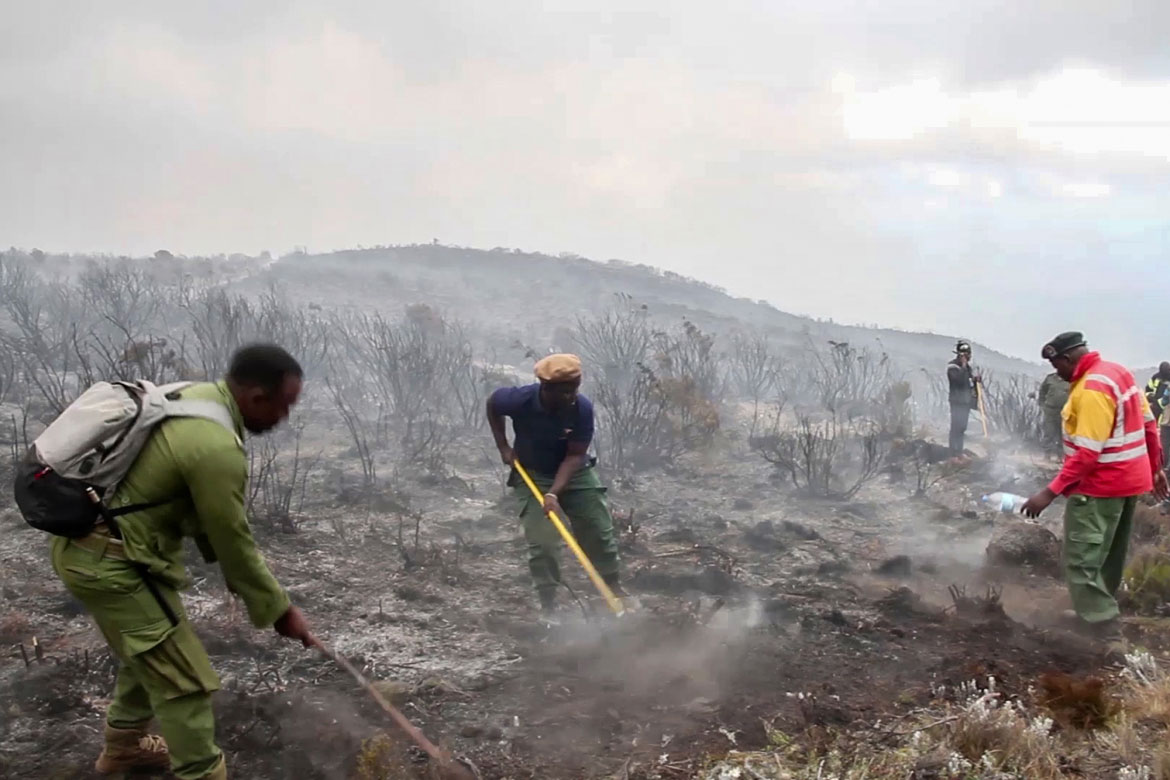
Rangers and volunteers help put out fires on Mt Kilimanjaro (AP photo)

In October 2020, there was a brief panic as fire broke out on Kilimanjaro with risks to communities and hikers alike. TANAPA and stakeholders reacted quickly to quench the fire.

EDUCATION

by Naomi Rouse

Education PS Dismissal draws mixed reactions
Education stakeholders were shocked by the announcement that Dr Ave Maria Semakafu had been sacked by the President after she announced that the Ministry of Education planned to abolish the certificate level qualification for pre-school and primary teachers, in a move to upgrade teacher expertise and therefore education quality.

Prominent education stakeholders spoke out in support of the Dr Semakafu and felt that she should not have been dismissed for the announcement, because it was not news and would have been part of the ongoing Ministry work plan.

Teachers’ union representatives expressed concern about how teachers nearing retirement would be able to respond to the new requirement.
(The Citizen)

How Covid-19 impacted education
The Tanzanian government closed schools in mid-March when the first case of Covid-19 was discovered. UNICEF estimates that a quarter of a billion students in 120 countries around the world had their education disrupted.

The Ministry of Education responded with educational programmes on TV, radio and in the newspapers, and educational experts congratulated the government on quickly innovating to deliver education through this medium. However, rural students were left behind, some not knowing about the initiative, or unable to access it.

Schools and universities had put in hygiene measures and were urged to hold awareness raising sessions for students on the opening day. (The Citizen)

Shock as urban public school lacks resources
Despite being located in the wealthy Oysterbay area of Dar es Salaam, renowned as an area for highly paid expatriates and senior government officials, The Citizen was shocked to learn that Oysterbay Secondary School suffers from a shortage of learning resources. The situation has contributed to poor academic performance. At a ceremony to hand over 311 textbooks donated by Oysterbay Rotary Club, the Board Chairman also thanked Kinondoni Municipal Council for its donation of 32 million which enabled the school to renovate classrooms. (The Citizen)

Fires: sorry state of schools’ readiness
On 14th September 2020, 10 pupils boarding at Byamungu Islamic Primary School in Kyerwa District, Kagera Region lost their lives during a fire in their dormitory, and seven were seriously injured. This was the fourth school fire in less than three months, following fires at Dar es Salaam’s Ilala Islamic School, Kinondoni Muslim Secondary School and Mivumoni Islamic Secondary School, also in Kinondoni District, Dar es Salaam and Istiqaama, in Tabora.

A random survey conducted by Success found that few schools had fire extinguishers and staff trained to deal with fire, and teachers were concerned that there was little they would be able to do with overcrowded dormitories, if a fire broke out. Tanzania fire regulations require that boarding schools have fire detectors and extinguishers, but in practice very few schools comply.

Tanzania Association of Managers and Owners of Non-Government Schools and Colleges (Tamongsco) Chairman, Leonard Mao raised concerns that there were sinister forces behind the fires, as in the spate of fires before the 1995 election. “This is an election year. Investigations should look behind the cartel as these kinds of tragedies happened in the run-up to the 1995 General Elections where at least 29 schools, including Shauritanga were razed down by fire. That year it was discovered that there was more than just technical fault or infrastructure challenges.” (The Citizen)

91% of passed students selected to join secondary school in 2021
A total of 759,706 students who passed primary school this year have been selected to join secondary schools in 2021, announced the Minister of State in the President’s Office for Regional Administration and Local Governments. 368,174 of the selected students were boys and 391,532 were girls.

Qualified students who did not secure in a place in the first round, will be offered a place by February. The Minister of State said nine regions of Kagera, Katavi, Lindi, Mtwara, Mwanza, Njombe, Ruvuma, Songwe and Tabora have successfully accommodated all qualified students to join Form One in the first phase.

“I call on regional leaders and councils to work with education stakeholders to complete the buildings and prepare the environment to receive selected students to start their studies in January 2021, without any restrictions of any kind including contributions, to implement the free education policy requirements,” he directed. (The Citizen)

Magufuli promises 26 new science schools
At a campaign rally in Mbeya in October, President Magufuli unveiled ambitious plans to create 26 specialist science schools – one in each region, and offer training in maths, science and language to 20,000 specialised teachers.

The government will also connect 1,500 secondary schools to the internet to promote IT. He said that he was delighted that investment in the education sector is paying off, as evidenced by the recent Form IV results where six public schools are in the top ten nationally. (Daily News)

Prioritisation of education of very poorest improves attainment of all
International development projects that target the education of the world’s very poorest children and marginalised girls also significantly improve other young people’s attainment, according to new research that suggests that such initiatives should become a priority for international aid.

New research conducted by academics from the University of Cambridge demonstrated the “spill-over effects” for all children. Using the work of Campaign for Female Education (Camfed) in Tanzania, the study found that every $100 spent per disadvantaged girl resulted in learning gains equivalent to an additional two years of education for all girls and boys at those schools.

Professor Pauline Rose, Director of the Research for Equitable Access and Learning (Real) Centre at the Faculty of Education, University of Cambridge said: “while it may cost more to reach the most marginalised pupils, the impact of those efforts is far more impressive than we tend to imagine. This research explains why system reforms should focus on those who need the most support. Education systems that function for the most marginalised children function for everyone.”

Impact was calculated by comparing the English test scores of children from 81 randomly-selected Camfed-supported schools with children from 60 control schools that received no support. Scores were collected at the start and end of the two years, and the team used data about the children’s socioeconomic background to make direct comparisons between pupils from similar settings. For every $100 spent on each of the marginalised girls targeted with Camfed’s programme, English learning outcomes improved by the equivalent of an extra 1.45 years of schooling for all pupils. (Daily News)

Good News: More girls enrolled in schools
Tanzania should rightly celebrate the achievement that more girls than ever before are enrolling in and completing school, especially compared with independence in 1961. However, we should remember how much needs to be done in order to tackle gender-based violence and early pregnancies, to ensure a safe learning environment for girls. (Daily News)

HEALTH

by Ben Taylor

Dr Elsa, the mobile app for health workers
A mobile app to assist health workers in rural areas, known as Dr Elsa, is currently working across 20 health facilities across Tanzania. The app, which uses Artificial Intelligence (AI) and machine learning, is designed to support health workers to make more accurate diagnosis and make better decisions about a patient’s next steps.

Dr Elsa is a project of Inspired Ideas, an Arusha based organisation, working in partnership with the Ifakara Health Institute (IHI), the Tanzania Data Lab (dlab) and others.

Megan Allen, the Head of Operations for Inspired Ideas, explained that they are targeting rural areas in particular. “Initially, we wanted to use technology as a way to get people healthier and focus on the prevention side of things, but then we realised we can make a lot of impact at the point where people come into the healthcare centre to get services. The health infrastructure isn’t the same in rural areas as it is in urban areas, and similarly there are not as many doctors and specialists in rural parts of the country. This means that communities in these areas are not getting access to expertise.”

The app runs on a tablet operated by the healthcare worker. On meeting the patient, they input information about the patient, what symptoms they have, and their history. Dr Elsa will then generate further questions relevant to the specific case.

At the end, they get an assessment which shares the diseases that the patient is likely to have and the recommendations for the next steps. Dr Elsa is able to generate these questions and assessments thanks to the medical expertise and data that has been input into her, with a machine learning model. Megan says that this tool “puts the knowledge of specialist healthcare providers in the hands of a dispensary worker, so they can then use this to make better decisions.”

There are, of course, challenging with adopting such innovative tech­nology. Megan notes that while internet use is growing, it is still a chal­lenge in rural areas, and most technology will require a strong internet connection. She also notes that changing people’s attitude to technology and training medical staff on AI and new systems can be difficult.

Despite this, the new innovations in healthcare systems are proving to make services more accessible to those who would usually struggle to get quality care. The opportunities are significant. “Technology is making us all more connected than ever,” said Megan. “And in relation to healthcare that means we can bridge the gap between those who have the healthcare knowledge and those who need the services. We are moving in the right direction.”

Higher charges for Covid-19 tests
The Minister for Health, Dr Dorothy Gwajima, announced in January that everyone testing for Covid-19 will now have to pay TSh 230,000 or USD $100 irrespective of whether they are nationals or foreigners. This replaces the previous arrangement where Tanzanians were required to pay TSh 40,000, residents were charged TSh 70,000 and foreigners paid USD $100.

The Minister said results of the test would be obtained within 48 hours for travellers who are upcountry, whereas those in Dar es Salaam will get their results in 24 hours. In Dar es Salaam travellers can visit Muhimbili National Hospital, Amana Hospital in Ilala, Temeke Hospital, IST Clinic, or the Aga Khan Hospital, among other sites, for tests.

According to the ministry the rise of new Covid-19 variant across the world and technological changes in testing has forced the cost of testing for the disease to rise. “Some countries have requested an increase in IgM Antibody testing in conjunction with PCR and an increase in demand for sampling facilities,” said the Minister.

“Tanzania is one of the countries that has taken strong measures to control Covid-19 infections,” explained Dr Gwajima.

TRANSPORT

by Ben Taylor

Air Tanzania bouncing back from Covid-19?
From September, Air Tanzania began re-starting international flights that had previously been suspended in response to the Coronavirus pandemic. Direct flights to Hahaya (Comoros) resumed in September, followed by flights to Lusaka, Harare and Entebbe in October, and later also flights to Mumbai, India.

The resumption of the route to India is the result of a bilateral agreement between the two countries, establishing an “Air Bubble” connecting the two countries, signed in early November. Scheduled international flights have been suspended in and out of India since March 2020, but the country has similar bubble agreements with around 20 other coun­tries in addition to Tanzania.

ATCL managing director Ladislaus Matindi, said the airline is now operating at between 90 and 95% of its pre-Covid domestic market capacity, well above compared to 20% recorded earlier in 2020, during “the worst of the pandemic”.

A total of 12 out of 19 foreign airlines have resumed their flights to Dar es Salaam after the airlines had previously been grounded since March, according to the Julius Nyerere International Airport (JNIA) Terminal III acting manager, Mr Barton Komba. (The Citizen)

Trans-Africa rail connection on the horizon
The prospect of an east-west rail connection across central Africa is under discussion, with the Angolan government said to particularly keen on the plan. The idea is to link Angola and Tanzania via Zambia, using the existing TAZARA railway from Dar es Salaam to Kapiri Mposhi in Zambia. A new 2,100 km line connecting Kapiri Mposhi with the port of Lobito in Angola would complete the route. The two lines would share the same gauge and would ideally connect directly in Kapiri Mposhi.

“In order to have the railway link with Tanzania, the Angolan gov­ernment would construct a new railway line into Zambia that would further link to the 1,860km Tanzania–Zambia Railway,” said the Angola Ambassador to Tanzania, Sandri De Oliveira Sandri. He added that Angola was counting on “Tanzania’s collaboration in this effort”.

There is currently very little trade between the two countries. In 2015, Tanzania exported less than USD $5m to Angola, and Angola less than USD $500,000 worth of goods to Tanzania. An existing rail link between Angola and Zambia passes through the Democratic Republic of Congo and is in very poor condition – unused since 2015.

Angola’s main interest in the proposal is to simplify trade with China, which is the destination for over USD $25bn each year, more than half of Angola’s total exports – mostly oil. For Tanzania, the new line would provide an alternative route for trade with Europe and the Americas.
(The Citizen)

Chinese contractors win Central Line contracts

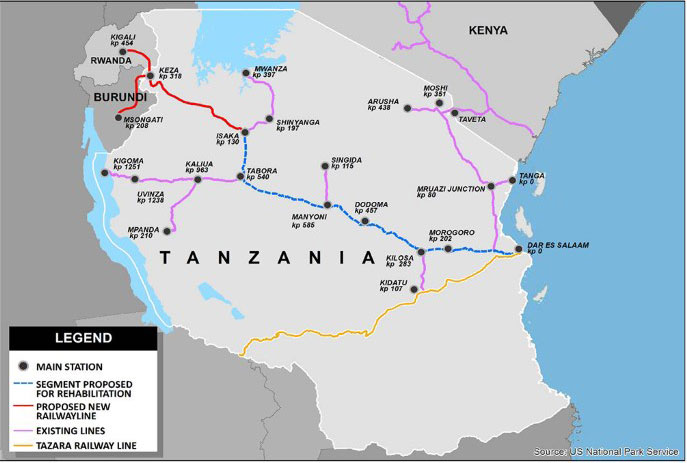
Map showing the existing central line railway line due for rehabilitation (dashed line) and proposed extension into Rwanda and Burundi (Map -US National Park Service)

Two Chinese companies have won a tender to construct Tanzania’s fifth lot of the Standard Gauge Railway (SGR) from Mwanza to Isaka (near Shinyanga) covering a distance of 341 km.

This was announced by Tanzania’s Minister of Foreign Affairs, Prof Palamagamba Kabudi, at a news briefing in early January, on the eve of a two-day visit to Tanzania by the Chinese Foreign Minister Wang Yi. According to Prof Kabudi, the construction which will cost TSh 3 trillion will be handled by China Civil Engineering Construction (CCEC) and China Railway Construction Company (CRCC).

The government through the Tanzania Railway Corporation (TRC) is constructing a 2,561 km SGR network that links Dar es Salaam, Morogoro, Dodoma, Tabora, Mwanza, Kigoma, Katavi and neighbour­ing countries of Rwanda, Burundi, Uganda and DRC.

The overall project is being implemented in phases, with the first round covering 202 km between Dar es Salaam and Morogoro. This was initially scheduled to be ready by November 2020 but heavy rains disrupted construction works. The second phase which is under imple­mentation involves 422 km between Morogoro and Makutupora in Singida Region.

In October 2020, Tanzania government signed a USD $60 million con­tract with a South Korean firm to supply trains for the standard gauge railway (SGR).