
REVIEWS

by Martin Walsh
IN THE NAME OF THE PRESIDENT: MEMOIRS OF A JAILED JOURNALIST. Erick Kabendera. Staging Post (Jacana Media), Johannesburg, 2024. 354 pp. ISBN 9781991220929 (paperback). £18.95; also available as a Kindle Edition.
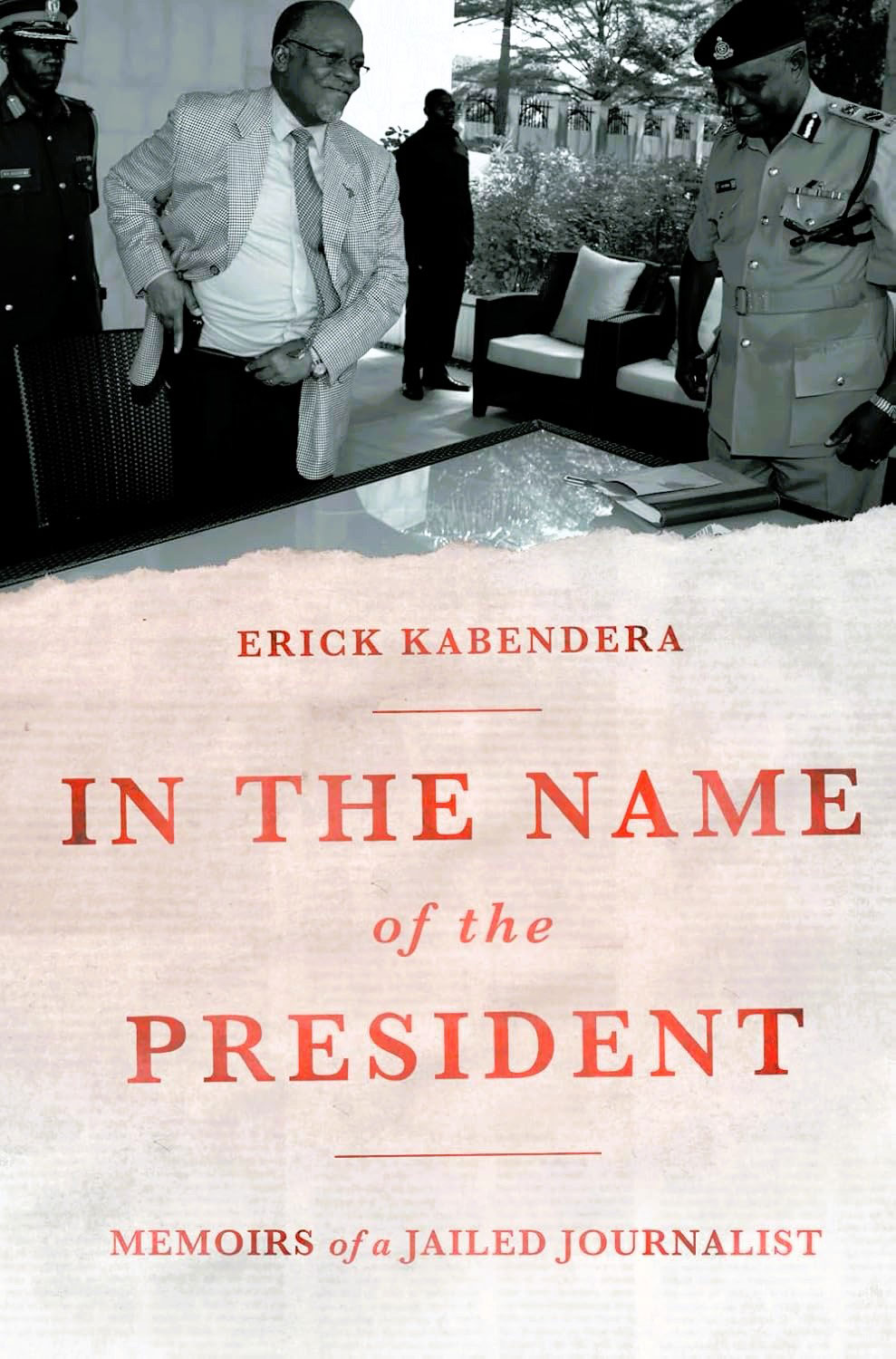
In 2019, Erick Kabendera was one of the most prominent victims of President John Magufuli’s crackdown on critics. As one of Tanzania’s most respected investigative journalists, his work had appeared in leading national and international newspapers – including The Economist and The Guardian. Under President Magufuli he served seven months in prison on unconvincing charges, following his investigations into several matters that caused or promised considerable embarrassment to the President – his state of health, his family relationships and multiple cases of apparent corruption and mismanagement.

In this book, Kabendera tells his story. It has three interwoven strands: Kabendera’s personal experience,

Magufuli and his presidency, and Tanzania’s wider history. He tells the first of these in straightforward terms, never over-dramatising or self-pitying, though the experience was clearly harrowing. The dire state of Tanzania’s police service and prison estate and the extent of political manipulation of the police, justice system, immigration service and tax authorities are laid bare.

On the country’s wider history, Kabendera explores the background to President Magufuli’s rule, looking back as far as President Nyerere’s heavy-handed approach to critics, but devoting most attention to the corruption that was seen to thrive under President Kikwete and the efforts of CCM big-wigs to ensure that Edward Lowassa did not become the party’s presidential candidate in 2015. We get a deep dive into the IPTL corruption scandal and its consequences at the highest political levels. And the manoeuvring to push John Magufuli’s candidacy, despite the reservations of those who knew him best, is presented in some detail.

The book makes a strong implicit case that a Magufuli-like figure was bound to emerge at some point: the history of authoritarian tendencies, lack of strong democratic norms, and highly centralised power structure combined to create the opportunity for a strong-man to take charge. The particular dynamics of CCM in the first half of the 2010s then thrust Magufuli forward into the role, which he was only too happy to fill.

Kabendera does not pull his punches. The charges he lays at the President’s door are wide-ranging and serious in the extreme. He accuses Magufuli of incompetence and mismanagement, nepotism and extensive corruption in his role as President. He accuses him of extreme misogyny and spousal abuse – and hints at more – in his personal life. He avers that the late President suffered not just from serious heart disease, but also from schizophrenia and extreme superstition, which he claims at one time prompted “a fear of being ensnared by ghosts purportedly sent by his predecessor, Jakaya Kikwete and the CCM Secretary General Abdulrahman Kinana.”

Shockingly, Kabendera alleges that Magufuli personally committed murder, shooting Ben Saanane, a senior opposition party figure, in the grounds of State House, in retribution for having publicly cast doubt on the President’s academic qualifications. He argues that the President’s belligerent attitude towards his perceived opponents fostered a determination among acolytes to curry favour by anticipating his desires and acting even without receiving directions. There is a suggestion that this lay behind the attempted assassination of opposition leader Tundu Lissu.

Putting all this and more together, Kabendera paints a picture for us of an intensely paranoid, thin-skinned and venal President, who lacked the political skill (and inclination) to play the game by democratic means, but who resorted instead to authoritarianism, manipulation and brutality. In this view, Tanzania had a lucky escape in the manner of the President’s premature exit from the stage, which Kabendera unambiguously attributes to Covid-19 and pre-existing heart problems.

More worryingly, however, the conditions that gave rise to President Magufuli are said to remain largely unchanged. The manner in which an incompetent leader – in Kabendera’s description – was able to seize control of key organs of the state and manipulate them to his own ends should be a major concern.

Before concluding, it would be remiss not to mention some of the book’s evident shortcomings. First, there are extensive inconsistencies and factual inaccuracies. Some dates given in the author’s personal story are incorrect, as is the year in which Prime Minister Edward Sokoine died in an apparent car crash. The sequence of events when opposition leader Zitto Kabwe paid a visit to the Director of Intelligence Services has been corrected by Kabwe himself. And there are several misspelled names. These may be little more than typos and proof-reading errors, but they do not inspire confidence.

Second, given the seriousness of the accusations laid out in the book, the minimal supporting evidence presented in some cases is problematic. Protection of sources is a key journalistic imperative, but so too is the need to demonstrate the credibility of such explosive claims. It will be much easier for Magufuli’s supporters to challenge Kabendera’s account than it might have been otherwise.

Third, the author’s writing style often gets in the way of the narrative. A tendency to jump around in the timeline and to omit important details until a story is well-underway left this reader repeatedly flicking back-and-forth through the pages to look for something that had been missed, and several times unable to work out what was actually being said.

And lastly, it is odd that Kabendera did not engage at any length with the incontestable fact that Magufuli remained – and remains – popular with many Tanzanians. This is an important element of the Magufuli story for how it enabled his excesses, for what it says about the state of the country’s democracy, and for how it emboldened (and continues to embolden) his followers. For many in CCM, Magufuli still stands as a model to be emulated.

That said, this book will be difficult to ignore. It may not be perfect, but it is essential reading for anyone with more than a passing interest in Tanzania’s recent history and near future, and the ways in which these are being contested. Under the circumstances, Kabendera’s courage and commitment to telling the truth as he sees it is admirable. It will be interesting to see how the debate over Magufuli’s legacy develops, and whether Kabendera’s warnings are borne out or heeded.

Ben Taylor
Ben Taylor is the Editor of Tanzanian Affairs.

THE OVERHEAD LOCKER: TALES OF TRAVEL, TANZANIA AND TRYING TO KEEP IT TOGETHER. Phil Double. Independently published, 2025.158 pp. ISBN 9798314381182 (paperback) £4.99; also available as a Kindle Edition.

In this book, Phil Double covers two themes – he talks about a family holiday to Tanzania, and the account is overlaid by his struggles with anxiety which affect many of his actions.

He starts the book by discussing in detail his descent into anxiety, over nearly a decade – how it started, how he was unaware of what was happening to him and wondered why he suddenly was unable to eat and was tired all the time, how he sought help and how finally he developed some coping strategies which began to help him with situations such as those he encountered on his month­long visit to Tanzania. Although he found being with people difficult, he was determined not to hide away, and this was one of the reasons he decided that the family must go to Tanzania.

Double was born in Tanzania, of missionary parents, in a remote village near Singida. He is also married to a Tanzanian, and since leaving as a child, he has visited Tanzania on other occasions. Although familiar with all matters Tanzanian, he found even planning the journey triggered feelings of anxiety.

However, the family – his wife, three children and his mother – made it safely to Tanzania, after some anxious moments on the journey, and immediately went to stay with family in a village on the slopes of Mt Meru. There are some vivid descriptions of village life and Double understands that he is able to find peace in adjusting to the very different way of life, new routines and a slower pace, making the most of each day.

He describes in detail how people in Tanzania access water in their homes, and how difficult it is for many people throughout the country, for a variety of reasons. The family embark on a project to improve the water system in this village, by repairing a tank higher up the mountain. Double hikes up with his father-in-law, through Maasai villages, to investigate the source of the problem, and he is able to gain an understanding of the water issues faced by several communities and individual households. Through the charity he works for, he can donate funds to this project. He is particularly struck by seeing small children struggling to carry heavy water containers to their homes, and is relieved that they will now have extra time and energy to spend on more profitable pursuits as a result of the improvement of the water system.

There are other trips – one to nearby Moshi where his parents worked, a week in Dar es Salaam in a hotel to spend time with other family members and his wife’s friends, and of course, a safari, to Tarangire, where they see all the necessary wildlife. Despite his anxiety, particularly when they have to make journeys, Double enjoys much of their visit. He ponders on the connectedness he feels spending time with his wife’s family, sharing meals, getting to know the children, the older people, and how this turns out to be one of the best ways to counterbalance his anxiety. But he also encounters negative aspects, lamenting the amount of rubbish in the sea along the beach where they are staying, and an example of corruption at the airport – this fills him with frustration as he wonders what new visitors to the country would make of such a blatant display of dishonesty, and he worries that it would influence their view of the country as a whole.

There are many descriptions and incidents in this book that will conjure up familiar images to those who live in Tanzania or those who, like me, have spent time there in the past – the airports, road travel, Dar es Salaam streets clogged with traffic, rural villages with their stunning greenery and busy lives. Plagued as Double is with anxiety, he is brave to have embarked on this journey, although much of it was facilitated by family members, and he comments at the end ‘You can’t reach the end if you never take a step’.
Kate Forrester
Kate lived in Tanzania for 15 years, working as a freelance consultant chiefly in social development, and carrying out research assignments throughout the country. She now lives in Dorchester, where she is active in community and environmental work.

A TRAINING SCHOOL FOR ELEPHANTS. Sophy Roberts. Doubleday, London, 2025. 432 pp. ISBN 9780857528377 (hardback) £22.00; ISBN 9781473597471 (eBook) £9.99.

At its simplest level this is a tale of four Indian elephants (two female and two male) acquired in Pune (Poona), crammed into the hold of a ship in Bombay and shipped to Zanzibar via Aden. These four animals were craned into the water in Msasani Bay, adjacent to the future colonial capital of Dar es Salaam, and swam to shore making East African landfall for the first time. Seven weeks after leaving Pune, on 2 July 1879, the animals and their Indian mahouts, set off in a caravan towards the interior.

Who triggered this operation and for what reason? Leopold II of Belgium, who had in 1865 personally acquired the space of what is now roughly the Democratic Republic of Congo, was the primary instigator. But the fact that he was purchasing and moving these animals through areas of British direct and indirect control, stirred wider official and unofficial interest. Operational leadership was entrusted to an Irishman, Friederich Falkner Carter, who had the advantages of marine logistical experience, as well as a fluency in Arabic acquired during long-term residence in Basrah at the head of the Persian Gulf. He also had a background in trading Mesopotamian fauna into a European market. The overall goal, it could be argued, was to create an equivalent of the Pune elephant breeding centre in an African space utilising African elephants. Those trained elephants would then be used in a variety of commercial contexts, in many cases replacing the role of African labourers.

The expedition absorbed the death of their senior male elephant near Mpwapwa, probably through the strain of overloading the animal. It was at this stage they were joined by a secondary Belgian caravan, adding some confusion as to who was in overall control. Within several days of leaving Mpwapwa, traversing the area of Gogo control, the second male elephant died. After ostentatiously parading through the Nyamwezi centre of Tabora, the caravan angled in a southward direction to Karema on the eastern shore of Lake Tanganyika. Within sight of that destination the third (female) elephant died of infections. Stranded in Karema, with one elephant, and starved of reserves, Carter eventually made the decision to return to the coast in order to rejuvenate his mission. Shortly after his departure in June 1880, he was inadvertently caught up in a local African conflict and lost his life; the last remaining elephant in Karema died shortly afterwards.

A unique African elephant training school in the northeast Congo did eventually come into existence some two decades after Carter’s death; its last habituated graduate died in 2010. The book has minimal detail on the initial training structure and mechanics of that later enterprise.

The author, who would see herself as a travel journalist with a sense of history, alternates chapters of the historical journey with her own quest for background in archives and on the ground in Tanzania. She occasionally hints at the wider global story of elephant exploitation in a European and North American context. She briefly mentions the aborted attempt to electrocute an elephant (‘Jumbo II’) in Buffalo NY in 1901 yet fails to mention the more successful public execution of another elephant (‘Topsy’) at Coney Island in 1903 by a combination of electrocution, strangulation and poisoning.

The initial hurried quest by King Leopold for elephants in Europe namechecks the Hagenbeck Zoo in Hamburg but the author makes no further mention of Carl Hagenbeck, arguably the greatest exotic animal entrepreneur of the period before the First World War, a merchant with a preference for female elephants from Ceylon. Several decades later, after Germany had acquired the colonial territory in which our story takes place, the metropolitan German government approved a budget to allow several German contractors to again test the idea of animal transport (not elephants), this time in the south of the East African colony. It was an exercise that produced no practicable results.
Lorne Larsen
Lorne Larson was one of the first doctoral graduates in history from the University of Dar es Salaam. He has taught East African history in Tanzania and Nigeria. He specialises in the German colonial period and is most interested in the history of southern Tanzania.

HABITATS OF AFRICA: A FIELD GUIDE FOR BIRDERS, NATURALISTS, AND ECOLOGISTS. Ken Behrens, Keith Barnes, and Iain Campbell. Princeton University Press, Princeton, NJ, 2025. 448 pp. ISBN 9780691244761 (paperback) £30.00; ISBN 9780691244778 (e-book) £30.00.

Let me review this book from the eyes of a birder widely travelling in Tanzania with a general interest in nature.

Why should we study habitats when the target of most visitors will be birds and mammals? Well, first of all you will discover in this book that Tanzania is home to many different habitats, far more than a first-time visitor will imagine to see. Even on the most classical Northern Tanzania safari tour from Arusha to Ngorongoro and Serengeti you will pass through many different habitats holding their special birds and mammals’ assemblages. Now with just a little bit of preparation (and the book is really very easy to use) you will recognise the Tropical Montane Cultivations around Arusha followed by the Northern Dry Thorn Savanna (Maasai Steppe) when driving to the Rift and arriving either at Lake Manyara or Lake Natron with its salt pans. Climbing the road to Ngorongoro Crater you will pass through the most beautiful Moist Montane Forest with its extraordinary and specific avifauna. When descending on the other side of Ngorongoro you will first enter a very dry area in its rain shadow called Afrotropical Grassland. At this very place you will encounter the millions of wildebeest calving around February when the grass is green, before leaving in March, April to the north­west into the Moist Mixed Savanna called here Serengeti.

Maybe next time you will do the Southern Circuit with a whole different set of habitats, leaving Dar Es Salaam surrounded by East Coast Forest Matrix but soon entering a mosaic of Afrotropical Grassland and a different forest type, the Miombo holding a very different avifauna and mammals difficult to find in other habitats like the African painted dog or greater kudu.

But how easy is it to recognise these different habitats? Two main criteria were used by the authors: their visual distinctiveness with species of vegetation present, e.g. grass versus
trees, that even the most narrow-sighted birder or first-time safari visitor will recognise, and their assemblage of wildlife, primarily mammals and birds.

To get the maximum information out of the book, you only have to read the very short introduction to the main text (11 pages) which includes nice and easy to understand climate descriptions and graphs. Every single habitat is introduced by a map, a climate diagram, and a beautiful black-and-white illustration showing the vegetation and including a human for scale. The habitat is then described in a way that everybody, birder or naturalist and even the novice safari tourist will understand, including numerous very high-quality photographs of the habitat, mammals and birds present and characteristics of the place with a special section explaining why these species of mammals and birds are present. Not to forget the numerous sidebars presenting great information about various topics.

But why is this book so interesting for birders? Well, with more than 1,000 different bird species present in Tanzania, it is essential to know the habitat of the different species. Let me explain with a specialised raptor, the Eastern chanting-goshawk (Melierax poliopterus), often confused with the Dark chanting-goshawk (M. metabates). Looking in your brand-new bird guide and studying the tiny maps you will get an erroneous picture of the distribution of the Eastern chanting-goshawk in Tanzania, although an almost perfect distribution map can be found on the Tanzania Bird Atlas website (http://tanzaniabirdatlas. net/start.htm). But as an owner of Habitats of Africa you can simply look at either page 37 in the East Africa chapter or at page 227 in the Savannas chapter, and knowing that the Eastern chanting-goshawk is a Northern Dry Thorn Savanna bird, you will have a perfect map of its distribution in Tanzania. The habitat as defined by the authors is clearly working!

And this is true for many bird species in Tanzania, especially in the very difficult families with tens of closely related species like sunbirds and cisticolas. Without knowing their habitat, identification, especially when they’re not singing, is an almost impossible task.

Thus this book is perfect for planning your trip, learning much more than you will ever get out of an ordinary field guide, putting your observations in a broader ecological context. By the sheer fact that you will start to understand African biogeography in relation to birds and mammals, your trip will be even more fun.

What else makes this book so appealing? A wealth of information not readily available elsewhere, written for birders and naturalists, explained by first class diagrams and maps and filled with hundreds of excellent photographs. So, from my point of view as a keen birder interested both in African birds and mammals, this is essential guide to prepare a trip and to understand distribution of the avifauna of Africa. It is even more useful with its complementary information about a topic not readily available to birders and others until now. Everybody interested in Tanzanian nature needs this book!
Tom Conzemius
Tom Conzemius is a veterinarian by profession and birder by passion, living in Luxembourg. When he first visited Tanzania back in 2005, he found his Garden of Eden. Since then, he has returned many times visiting the different regions and national parks. He’s especially interested in raptors and for many years has conducted a raptor road count on each trip, an activity which is both enjoyable and may one day be useful as a reference.
OBITUARIES

by Ben Taylor

Cleopa Msuyu

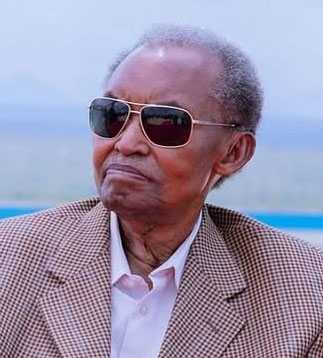
Former Vice President and Prime Minister, Cleopa Msuya, died in May at the age of 94. In a decades-long political career, he held nearly every major economic portfolio apart from the presidency, serving as the country’s first Vice President from 1990 to 1994, as Prime Minister for two separate periods in 1980-1983 and 1994-1995, as well as Minister of Finance at critical moments in the country’s economic history.

Mr Msuya had been receiving treatment for a prolonged illness both locally and abroad, including at the Jakaya Kikwete Cardiac Institute (JKCI), Mzena Hospital and in London.

Born in January 1931 in Mwanga District, Kilimanjaro Region, Mr Msuya was a prominent civil servant and politician. After studying at Makerere University from 1952 to 1955, he began his career in rural community development before rising through the ranks of public service. From 1964 to 1972, he served as Permanent Secretary in several key ministries, including Community Development and Culture, Lands and Water Development, Economic Affairs and Planning, and Finance.

He was appointed Minister for Finance in 1972, later serving as Minister for Industry before being named Prime Minister for the first time in 1980. Mr Msuya went on to hold multiple cabinet positions, including Minister for Finance, Economic Affairs and Planning and Minister for Industry and Trade.

Msuya was perhaps best known for his role in steering the country through an economic crisis after Julius Nyerere stepped down as President in 1985. Tanzania’s $3 billion debt at the time and reliance on foreign aid necessitated painful concessions. Together with the late Prof Benno Ndulu and Prof Ibrahim Lipumba, Msuya played a major role in guiding the government towards a solution.

President Ali Hassan Mwinyi, Nyerere’s immediate successor, has applauded these three economists for how they helped the government to break the deadlock. As Finance Minister under President Mwinyi, Msuya was tasked with initiating the painful but necessary reforms that would pivot Tanzania toward a market-driven economy, and guiding the country’s difficult negotiations with the International Monetary Fund (IMF).

He championed the Economic Recovery Programme (ERP) in 1986, which included currency devaluation, privatisation of state-owned enterprises, and deep fiscal restructuring. These reforms, while controversial, were seen as unavoidable in the face of mounting economic pressures.

“We must face economic realities,” Msuya said in 1987. “Our loyalty to socialism cannot blind us to the need for efficiency and global integration.”

Msuya’s reforms were a double-edged sword; they stabilised the macroeconomy but deepened disparities, revealing the limits of IMF-prescribed solutions,” said Prof Amon Mwambene, a historian.

Speaking at the funeral, Prime Minister Kassim Majaliwa said Tanzania had lost a leader whose advice was always rooted in ethical and professional execution of government duties. “His service to the country remains a mark of excellence that current and future leaders should aspire to,” said Mr Majaliwa.

As if to emphasise Msuya’s historic significance to Tanzania, his funeral took place at grounds that bear his name: the CD Msuya Grounds in Mwanga, Kilimanjaro. In a show of respect, local authorities closed all nearby primary and secondary schools, allowing students and teachers to attend the ceremony, an acknowledgment of Msuya’s enduring contributions to the education sector, where he was regarded as an architect of academic progress in Mwanga.

“The nation has suffered a great loss,” said President Samia Suluhu Hassan. “I extend my heartfelt condolences to his family, relatives, friends and all Tanzanians.” She declared seven days of national mourning.

Charles Hillary Nkwanga, renowned journalist, passed away on May 11, 2025, at age 66.

Hillary worked with top-tier media organisations, including Radio Tanzania Dar es Salaam (RTD), IPP Media, the BBC, Deutsche Welle and Azam Media. His voice was for many years a prominent and authoritative presence on the Kiswahili broadcasts of the BBC World Service.

In 2021, Hillary left the media to take up an appointment as Zanzibar’s Director of Presidential Communications, and later served as chief spokesperson for the Government of Zanzibar, his birthplace.

His death marks the end of a distinguished career in journalism and public service that left a lasting impact both locally and internationally. He had a reputation as a sharp, ethical, and passionate journalist. His reporting and editorial leadership earned him wide respect across East Africa and beyond.

News of his death prompted an outpouring of grief and tributes from across the region. Leaders, journalists, and citizens alike remembered him not just for his professional contributions but for his humility.

“The late Charles was not only a good inspirational friend and a mentor, but also a visionary leader who inspired many generations. What a life and what a humble and nice guy,” said his close friend, Abdulswamad Abdulrahim.

Ahmed Rajab, who died in February aged 79, was a journalist and political analyst whose views on Tanzanian and wider African politics and economics were highly respected.

Rajab’s career began in broadcasting, where he worked in various production roles at the BBC World Service in London before serving within the Unesco communications office in Kenya and then, in 1984, returning to the BBC as a producer.

In the 1990s he switched to print journalism as editor of Africa Analysis, a fortnightly magazine dedicated to African politics and economics. Around the same time, he became a go-to commentator on African affairs for broadcasters, including the BBC, Channel 4 News and CNN. In later years, before his retirement, he served as head of the newsroom at the Middle East/Asia bureau of Irin, the United Nations’ Humanitarian News Agency.

Born in Vuga, Zanzibar, Rajab’s early life was shaped by the revolutionary upheaval of 60s Zanzibar. He escaped this, moving to the UK to study philosophy at Birkbeck, University of London, and then a master’s in African studies at Sussex University. After that he went straight to the BBC World Service.

Throughout his career, he rode a parallel track as a human rights activist, including calling for the freedom of Zanzibari’s who were detained following the Zanzibar revolution. In this case, from London he worked closely with a small committee of progressives in East Africa such as Aishura Babu, Issa Shivji, Walter Rodney, and Abdul Sheriff, using human rights platforms in London to press their cause.

Renowned surgeon, medical educator and former cabinet minister Prof Philemon Sarungi died peacefully in Dar es Salaam in March at the age of 88.

Prof Sarungi led a life dedicated to public service and excellence. His academic journey was distinguished, beginning with a Doctor of Medicine degree from the University of Medicine in Szeged, Hungary, in 1966. He went on to earn a Master of Arts degree in Surgery from the same institution in 1970, a Diploma in Orthopaedics and Trauma from the University of Medicine in Vienna in 1973, and a Diploma in Replantation Surgery from the University of Shanghai in 1975.

Returning to Tanzania, Professor Sarungi embarked on a long and distinguished career in medical education at the University of Dar es Salaam, where he shaped the future of the country’s healthcare system. He served as professor and head of the University’s department of surgery from 1971 until 1984, then as the director general of Muhimbili Medical Centre from 1984 to 1990.

Alongside this, Prof Sarungi served as the Member of Parliament for the Rorya constituency, representing CCM. From 1990 he held several key cabinet positions, including as minister of Health, minister of Communications and Transport, minister of Defence and National Service and minister of Education and Culture.

POLITICS

by Ben Taylor

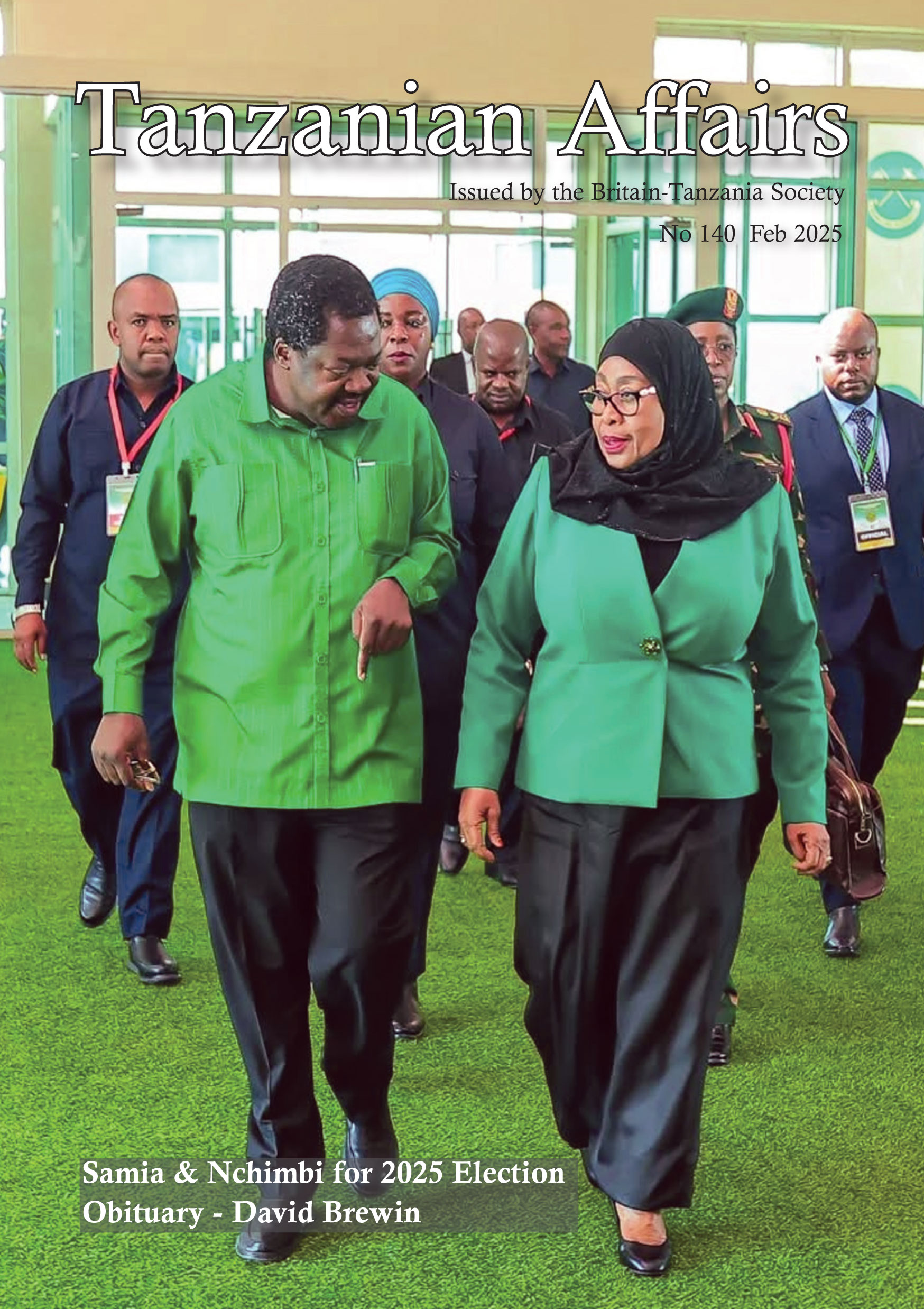
President Samia officially nominated as CCM candidate for 2025 elections

The ruling CCM party has formally nominated President Samia Suluhu Hassan, the country’s current president, as the party’s presidential candidate in the elections scheduled for October 2025. She is currently serving out the term of President Magufuli, who won re-election in 2020 but died a few months later.

The party’s national congress passed a resolution on January 19th, endorsing President Samia Suluhu Hassan and President Hussein Ali Hassan Mwinyi as its official candidates for the Union and Zanzibar presidential elections, respectively. The resolution was unanimously approved by all delegates and followed pressure from the floor and a recommendation from former President Jakaya Mrisho Kikwete.

“If we want to decide today that Samia is our candidate and Mwinyi is our candidate, we have the authority to do so,” Mr Kikwete told the delegates, to much applause.

Turning to President Samia, who chaired the congress, Mr Kikwete remarked: “Madam Chairperson, I am not sure whether I have clarified matters or made them more confusing. But the people have spoken. If they want you to continue, who else will say no?”

He then proposed that the congress formalise the decision through a written resolution to avoid ambiguity, which was then done. At the same meeting, President Hassan nominated Dr Emmanuel Nchimbi as her running mate for the upcoming elections. His nomination came shortly after Vice President Dr Philip Mpango requested to step down.

“After receiving Vice President Mpango’s letter, I consulted our elders and shared my thoughts,” President Hassan said. “Together, we agreed on one name that embodies experience and capability. That name is Dr Emmanuel Nchimbi.”

Dr Nchimbi, currently CCM’s Secretary-General, is well-versed in navigating high-stakes government and party leadership. He has a long CV both within the party and in government, as a former chair of the party’s youth wing, UVCCM, and former Home Affairs Minister (2012­13) under President Kikwete, among many other positions. He spent much of the last decade outside the country, as Tanzania’s ambassador to Brazil (2016-21) and then Egypt (2022-23).

He was a prominent support of Edward Lowassa in his 2015 bid for the CCM presidential nomination, though he did not follow Mr Lowassa to Chadema when his candidacy was rebuffed by CCM. Indeed, he was later seen as an important figure in efforts to negotiate a rapprochement, and some analysts have suggested that his ability to reach all parts of the party was a key factor in his nomination.

“By choosing someone like Dr Nchimbi, the party is not just prioritising competence but also signalling that it values unity and inclusivity,” said political analyst Faraja Kristomus of the University of Dar es Salaam.

Reading the runes – and the room
This is the earliest that CCM has settled on a presidential candidate. Indeed, it is believed to be the first time that there has been no procedure for collecting and submitting presidential nomination forms. And while the calls for the various nominations were apparently driven by delegates to the meeting, there can be little doubt that this was a pre-planned move. Some analysts suggested the vice-president’s letter announcing his intention to step down was choreographed.

This suggests that President Samia has become more adept in navigating the intricate dynamics and factions within CCM, effectively cutting off any potential obstacles to her candidacy in the 2025 elections before such shoots were able to emerge. It may also indicate that senior figures in the party are keen to project an image of unity as they approach the 2025 elections. The contrast with the current situation at the main opposition party, Chadema, is stark – see article below.

Nevertheless, the manoeuvre is not without risks. It doesn’t exude confidence if you need to launch a surprise raid while your potential opponents are unprepared. More seriously, those with presidential ambitions within the party will have to wait for another five years, and some may decide that their prospects look brighter outside CCM. Or they may feel that their time would be better spent in the background, preparing for 2030 rather than lining up behind President Samia’s 2025 campaign.

“Today we have finished the work. If there is someone who dreams of running for the presidency, forget it. Today is the end of the work. And if there is someone who had those dreams, maybe he should run for his mother’s party, but for the CCM, the work is done and completed,” said one delegate, Mr George Ruhoro, the MP for Ngara.

Those with dreams may also find that Dr Nchimbi now starts the race for the 2030 nomination in pole position. However, they will not give up hope, as the party’s practise on presidential nominations has generally been to recruit from those in mid-level ministerial experience rather than sitting vice-presidents or prime ministers.

Chadema power struggles
While the ruling party’s 2025 nominations process has concluded early, more than nine months ahead of the likely election date, the leading opposition party, Chadema, finds itself focussed on in-fighting. Specifically, the party’s previous presidential candidate, Tundu Lissu, is seeking to take over as party chair from the long-standing incumbent, Freeman Mbowe.

Supporters of Lissu argue that after 21 years under Mbowe’s stewardship without significant electoral success, Chadema needs fresh leadership. Meanwhile, Mbowe’s followers have accused Lissu of being divisive and breaching party confidentiality.

The accusations and counter-accusations from both camps, as well as the strong rhetoric employed by the candidates’ supporters, have only served to raise tensions and concerns. Observers worry that the process could deepen internal fractures, especially given the passionate support both candidates command.

Addressing Chadema’s National Executive Council in Dar es Salaam on January 20th, Mbowe urged members to remain steadfast in their commitment to the party’s mission.

“We have not come to Dar es Salaam to divide ourselves but to build and strengthen this party to fulfil the dreams of Tanzanians,” Mbowe said. He warned against succumbing to external forces seeking to destabilise Chadema and stressed that differences should strengthen rather than weaken the party.

“The whole world is watching. Our opponents are observing us, and our friends are waiting in anticipation. Let us demonstrate that Chadema is united and part of God’s plan,” he added.

Nevertheless, Mr Mbowe’s campaign took a heavy blow the same day when one of the party’s most prominent former MPs, Godbless Lema, previously an Mbowe-loyalist, declared his support for Tundu Lissu.

Lissu is well-known for his strong anti-corruption stance both within and outside the party. This endears him to the public, which is tired of corruption and other forms of malpractice in the running of public institutions. His clear commitment to transparency and accountability further strengthens his appeal as a leader capable of driving meaningful change.

In contrast, Mbowe has often appeared to struggle with the contrast between his demands for transparency and accountability from government on the one hand and his own domineering approach to party leadership on the other, though he has recently taken some steps to address internal governance issues under his leadership. STOP PRESS: After writing the above, on January 22nd, Tundu Lissu was elected as chair of Chadema. Mr Mbowe conceded defeat, writing on X: “I fully accept the decision of the General Assembly election of our party, Chadema. … I congratulate Hon. Tundu Lissu and his team for being entrusted with the party’s leadership. I wish them all the best as they move the party forward.”

Opposition, the media and activists face pressure
In October 2024, three of Tanzania’s leading newspapers – The Citizen, Mwananchi and Mwanaspoti – had their website licenses suspended by the government after publishing an animated video deemed to overstep the line in its criticism of President Samia Suluhu Hassan.

The three papers – all part of the same media house – were banned from publishing anything on their websites, on YouTube or social media for 30 days. The Tanzania Communications Regulatory Authority (TCRA) said the video violated the Electronic and Postal Communications (Online Content) Regulations of 2020. Specifically, the regulator said the content “threatens and is likely to affect and harm national unity and social peace of the United Republic of Tanzania”.
The animated video depicted a female character who resembled the President with her signature hijab. It showed the character switching between different TV stations. On each one there was someone complaining about the killing, abduction or disappearance of a family member. At the end, the character appears upset by all the complaints.
Mpoki Thomson, The Citizen’s managing editor, said the animation depicted “events that raised concerns regarding the safety and security of individuals in Tanzania”.

A (possibly political?) murder, and a presidential response
As reported previously (see TA139), the issue raised in the video – that of disappearances of activists and opposition leaders – is genuine. Indeed, it was particularly pertinent at the time of the video’s publication, coming as it did, shortly after the brutal killing of a senior member of the main opposition party Chadema, Ali Kibao.

Mr Kibao, 69, was a retired military intelligence officer and had joined Chadema in 2008. He was forced off a bus by suspected security agents while travelling from Dar es Salaam to his hometown Tanga in early September, 2024. The post-mortem found that Mr Kibao had been “severely beaten and had acid poured on his face”, party chairman Freeman Mbowe told the AFP news agency.

Hundreds turned out for Mr Kibao’s funeral in Tanga, where people interrupted Home Affairs Minister Hamad Masauni as he tried to address the mourners. “Where is the government? People are being abducted and there’s no action,” they said. “Resign, resign, resign,” they shouted at the minister.

Mr Mbowe, who was also at the funeral, intervened, urging the crowd to allow the minister to complete his speech.

The US Embassy in Tanzania voiced their support for an “independent, transparent, and prompt investigation” into the killing of Mr Kibao. “Murder and disappearances, as well as last month’s detentions, beatings, efforts to disenfranchise citizens ahead of elections, should have no place in a democracy”.

The President herself addressed such criticism angrily in a speech in mid-September, at which she took several swipes at foreign government interference in internal matters, and contrasted the reaction to this particular murder with the lack of media and diplomatic attention for other recent acts of violence. Her speech is worth quoting at length:

“It is surprising that the death of our brother Kibao has stirred up such a huge outcry of condemnation, grief, and accusations of calling the government murderers. This is not right. Any death is just death. What we Tanzanians must do is stand together and condemn these acts, to stand firm against such behaviour. The blood of a Tanzanian should weigh on us; we should not shed blood without cause.”

“When others wish to show their compassion, we urge them to do so by adhering to the agreements of international diplomatic relations as outlined in the Vienna Convention on Diplomatic Relations of 1961. … I believe that the statement made is not the directive of the heads of state from where they came.”

“The government has worked very hard to restore the freedom of political parties, the freedom of the media, and the freedom of citizens in general. Those who were in exile returned to the country; … those who had criminal cases we turned a blind eye to; those who were in prison, we released them. Now they are free and are continuing with their activities, including political activities. Our goal was to bring people together to build our country.” “Now, when those same people forget all this and engage in actions or statements that harm or set us back, we will not be willing to allow it, we will not allow it. We will protect the peace and stability of our country at any cost. Just as other countries protect theirs, we Tanzanians will protect our country at any cost.”

“I will show no leniency toward anyone who seeks to disrupt the peace of our nation,” she concluded. “We have been tolerant on many issues, but when it comes to protecting this nation’s peace, I will show no leniency to anyone involved in such matters, whether they are coordinating, participating in, or executing these evil plans.”

And another abduction

Maria Sarungi speaks at a press conference in Nairobi on 13th January, the day after the abduction.

More recently, in early January, prominent freedom of speech advocate and government critic, Maria Sarungi, was abducted in Nairobi. She later told a press briefing that she had been manhandled, choked and shouted at by four unknown assailants who forced her into a vehicle in Kenya’s capital. The activist said she was freed several hours later and left on a “rough road, in a dark place”.

“I am sure that the reason for abduction was to get access to my social media and [because of] the whistleblowing job that I do,” she said, as her abductors kept asking how to unlock her phone.

Ms Sarungi is a staunch critic of Tanzania’s President Samia Suluhu Hassan, and has accused her government of “bringing tyranny back”. She fled to Kenya in 2020, seeking asylum after facing increasing threats, she, says, from the government of late President John Magufuli.

She blamed the Tanzanian government for what happened but said she thought the abductors were both Kenyan and Tanzanian. Officials from neither government have commented on the incident.

Change Tanzania, a movement founded by Ms Sarungi, said in a statement on X it believed she had been taken by Tanzanian security agents “operating beyond Tanzania borders to silence government legitimate criticism”. It added that her “courage in standing up for justice has made her a target”.

There is some history of abductions of foreign activists in Kenya. In 2024, Ugandan opposition leader, Kizza Besigye, was kidnapped in Nairobi, allegedly by Ugandan security officials, and taken across the border for trial by a court martial. The Ugandan government said Kenya helped them in the operation, but the Kenyan government denied this.

SECOND TRUMP PRESIDENCY

by Ben Taylor

What a second Trump presidency means for Tanzania
Much of the whole world waits in trepidation (as well as excitement for some) for the implications of Donald Trump’s second presidential term, and Tanzania is no exception. After all, during his first stint in the White House, he reportedly referred to some African nations as “shithole countries”.

In November, President Samia Suluhu Hassan was quick to congratulate President Trump on his election victory. She posted on Twitter: “On behalf of the Government and the people of the United Republic of Tanzania, I extend my heartfelt congratulations to His Excellency Donald Trump, President-elect of the United States of America on your election victory. Mr. President-elect, you have my best wishes.”

There are many possible global implications of a Trump presidency – not least for global security, the climate crisis and international trade and economics. However, here we will focus on the more direct implications for Tanzania.

First, among the many actions taken by the new president in his first days in office was one that will be felt almost immediately in Tanzania: the suspension of foreign development aid. This executive order was signed by Mr Trump on his first day in office, suspending aid for 90 days to allow for an evaluation of its effectiveness and alignment with his foreign policy. “All department and agency heads responsible for U.S. foreign development aid programmes are to immediately halt new activities and expenditures for development aid,” the order stated.

This includes assistance from the United States Agency for International Development (USAID) and the U.S. President’s Emergency Plan for AIDS Relief (PEPFAR), which has been instrumental in supporting various projects, including the provision of antiretroviral (ARV) drugs to combat HIV/AIDS.

During his first term from 2017 to 2021, President Trump proposed slashing nearly a third of the U.S. diplomacy and aid budgets, including significantly reducing funding for United Nations peacekeeping operations and international agencies. However, Congress at the time resisted Trump’s proposals.

Second, strict immigration rules may limit opportunities for skilled Tanzanians to visit, work, or study in the US, as well as the potential deportation of Tanzanians who are currently living there. Precise numbers of Tanzanians who might be affected are hard to come by. However, in 2023, the number of African migrants recorded at the US-Mexico border was 58,000, and according to the United Nations Department of Economic and Social Affairs (UNDESA) there are thought to be over 70,000 Tanzanians currently residing in the US, with a wide variety of immigration statuses.

It remains unclear how concertedly the new president will carry out his pledges to deport migrants. Nevertheless, given that Tanzanians living in the US already play an outsized role in Tanzanian domestic politics – largely through their vocal social media output mainly in support of opposition parties – the prospect of many of this group returning to Tanzania could have an outsized impact on political discourse within Tanzania.

Third, President Trump’s policies when it comes to trade are likely to have some – though limited – impacts directly on Tanzania. In particular, the African Growth and Opportunity Act (AGOA), which has enabled eligible African countries to export some of their produce to the US without paying taxes since 2000, is a source of concern for many countries. It is due to expire in 2025, and Mr Trump has previously stated that he will not renew. Further, he has announced his intention to introduce a universal 10% income tariff on all foreign-made goods.

However, Tanzanian producers have never taken much advantage of AGOA and exports from Tanzania to the US are low compared to many other countries in Africa.

ECONOMICS-BANKING

by Dr Hildebrand Shayo

Banking sector projected to continue supporting the Tanzanian economy in 2025
The performance assessment drawn here examines the financial per­formance and overall positions of 41 banking institutions in Tanzania for 2024, highlighting their role in supporting economic activities. The evaluation uses published financial statements mandated by the Bank of Tanzania, sourced from the respective institutions’ audited financial statements. Only two major banks will be used as cases to illustrate performance.

Tanzania’s banking subsector grew significantly and showed resilience in 2024. A review of critical financial indicators showed upward trends in profitability, asset quality, and operational efficiency. The subsector’s credit portfolio also increased significantly, with loans and advances as a percentage of total assets rising from 57% to 59%, suggesting increased business lending activity.

Compared to 2023, profitability significantly improved in 2024, with return on average assets rising from 2.1% to 3.0% and return on aver­age equity increasing from 13.4% to 20.1%. These metrics indicate better asset utilisation and higher returns for owners. The interest margin on average-earning assets remained stable at around 8%.

Positive signs for the subsector include a politically stable climate and a predicted economic growth of approximately 6% in the foreseeable future, as banks are challenged to thoroughly assess how their service delivery model incorporates environmental, social, and governance, technology, innovation, and higher capitalisation to manage risks and take advantage of emerging opportunities.

Within this context during the year, the slow rate of company formalisa­tion, difficulties with registering chattels, ongoing structural concerns with land registry prices, dependability and efficiency, difficulties with enforcing defaults, and problems with personal identification and knowing your client (KYC) all pose challenges to growth. Continued working with the government and the Bank of Tanzania (BOT) is essen­tial for overcoming these obstacles.

Likewise, banks that embrace FinTech and digital innovations, such as artificial intelligence (AI), robotic process automation (RPA), and advanced analytics, and integrate digital channels and platforms into their service delivery model are more likely to achieve optimal results. According to the FinScope 2023 report, roughly 6.4 million people, or 20% of Tanzania’s adult population, are financially excluded, leaving a big question: Where are the takers?

Discussing takers is essential, as a detailed examination of two major banks out of the top ten banks based on capitalisation significantly influencing Tanzania’s economy reveals strong growth across all key financial metrics. This includes notable increases in income, profit, assets, and deposits, along with an improving return on equity and a low non-performing loan ratio.

The banks disclosed a significant 21% increase in profits year over year for September 2024. Profit before tax reached TSh 687 billion during the reviewed period, compared to TSh 569 billion in the corresponding period of the previous year.

From TSh 861 billion the year before to TSh 1 trillion this year, interest income was a massive jump for most banks. The increase of 19% from TSh 7 trillion in September 2023 to TSh 8.4 trillion in the loan portfolio was the main driver of the 17% gain in interest income. In September 2024, the bank’s lending profitability was further solidified by its net interest income margin of 77%.

For instance, in September 2024, NMB’s assets increased by 16% over the previous year, going from 11.5 trillion to 13.3 trillion. Higher lend­ing and investment in government securities are the primary drivers of this trend. The bank’s non-performing loans are at 3%, which was within the minimum requirement set by the regulator, which is 5%. This demonstrates that the bank has a good asset composition and is suitable for lending to enterprises.

This indicates that customers from diverse backgrounds have made deposits totalling TSh 9 billion, reflecting a 12% increase. In response to the rising demand for loans, the bank has raised its borrowings by 40%, maintaining a total of one trillion Tanzanian shillings from the previous year to the current year.

Another important bank that plays a significant role in the economy of Tanzania – CRDB – has also demonstrated that it is profitable, resilient, and has increased efficiency. The bank maintained its lead as the largest bank in Tanzania, holding the highest client deposits totalling TSh 10 trillion. Compared to others, the bank holds the largest balance sheet in the industry, totalling TSh 16 trillion, making it the leader in the market. The assets of the bank climbed by 26% during the year, which was driven by a growth in the amount of loans issued, investments in government securities, and balances with other financial institutions.

At the end of Quarter 3 2024, the profit before taxes of CRDB increased by 42%, going from TSh 411 billion to TSh 583 billion. The reduction of operational expenses and the raising of both interest and non-interest income are the factors that contribute to the expansion of profits. After reaching 861 billion in the previous year, interest income increased to 1.1 trillion TSh during the period under consideration, representing a 30% increase. The bank recorded a net interest margin of 72%, which indicates the bank’s efficiency in terms of profitability.

The bank’s strategic emphasis on digital banking has produced favour-able outcomes, evidenced by a 26% increase in non-interest income, totalling TSh 396 billion. Digital banking has resulted in fees and com­missions accounting for 80% of non-interest income. CRDB has secured the highest customer deposits, totalling TSh 10 trillion, reflecting an 18% increase from TSh 8.5 trillion reported in the prior year.

The bank’s borrowings rose by 56% in September 2024 to accommo­date the growing loan demand. During the reviewed quarter, loans and advances grew by 24%, reaching 10 trillion, up from 8.1 trillion in the previous year. The cost-to-income ratio is 46%, compliant with the regulator’s requirement of 55%. Nonperforming loans (NPL) declined to 2.6% in September 2024, down from 3.2% in the preceding quarter.

The performance of banking sub-sectors and listed equities, crucial for driving economic activities in Tanzania, has been robust in 2024, demonstrating profitability, asset quality, and efficiency improvements. Despite significant challenges in interest margins, the overall health of the sub-sector remained strong, indicating substantial potential for sustained growth that could significantly influence the economy in 2025 and beyond.

TOURISM & ENVIRONMENTAL CONSERVATION

by James L.Laizer

Ngorongoro Conservation Area Sees Renewed Optimism
The Ngorongoro Conservation Area is undergoing a significant transformation following President Samia Suluhu Hassan’s directive in August 2024 to restore essential services. This intervention has brought much-needed relief to residents long burdened by neglect and human rights challenges, including economic, social, and political restrictions that have severely impacted their livelihoods. In response, President Samia dispatched a high-level team comprising Prof Palamagamba Kabudi, William Lukuvi, and Arusha Regional Commissioner Paul Makonda to engage with the community and address their grievances. Within two days of the directive, the Ngorongoro District Council launched an assessment of immediate community needs, identifying TSh. 2 billion as necessary for rehabilitating schools, health centres, and roads. Reforms have extended beyond infrastructure improvements. Residents are no longer required to pay vehicle parking fees, and the entry deadline into the conservation area has been extended from 4:30 p.m. to 6:30 p.m., easing daily hardships previously faced by the Maasai community.

While these changes represent significant progress, more action is needed to fully address the community’s challenges. The Ngorongoro Conservation Authority must grant permits for new construction projects, and the government must lift long-standing restrictions on civil society organizations, which have been prevented from supporting the community for years. To strengthen these efforts, President Samia met with Maasai traditional elders (Malaigwanani) on 1st December 2024, to address their concerns. She announced the formation of two commissions: one to resolve land disputes and another to oversee a voluntary relocation programme. The President reiterated her commitment to improving the relationship between the government and the community while strengthening the Ngorongoro Conservation Area Authority. To some degree, these initiatives have reignited hope in Ngorongoro. By working to address grievances and promoting inclusive development, the government is hoping to foster sustainable growth and enhance conservation efforts.

Tanzania Achieves Remarkable Tourism Growth
On 9th December, 2024, Tanzania marked 63 years of independence, and the country continued to show solid progress in tourism; nearing the government’s goal of five million visitors by 2025. According to the Bank of Tanzania (BoT), over two million international tourists visited by August 2024, generating a record of $3.5 billion in revenue. This milestone underscores tourism’s critical role in Tanzania’s GDP and its ongoing significance as a cornerstone of the national economy. Tanzania’s global leadership in tourism was reaffirmed by its recognition as the World’s Leading Travel Destination for the second consecutive year at the World Travel Awards. This achievement is credited to President Samia Suluhu Hassan’s attention to the sector, particularly initiated via her ‘Royal Tour’ documentary, which has showcased the nation’s stunning landscapes, iconic wildlife, and rich cultural heritage to a global audience. In a recent report, CNN further elevated Tanzania’s global standing by naming it one of the world’s top 23 travel destinations.

Tourism now accounts for over 17% of Tanzania’s GDP and 25% of its foreign earnings. To achieve the $6 billion revenue target by 2025, the government is executing the Third Five-Year Development Plan (FYDP III), focusing on diversifying tourism products and promoting the southern circuit. Industry and government initiatives in Tanzania have acted as a useful stimulus to the tourism sector post-pandemic, further establishing Tanzania as significant market, especially in the safari sector – and in particular in the northern circuit and beaches.

Preserving Tanzania’s Mangroves: A Struggle for Sustainability

Mangroves being planted under the ReSea project with Mission Inclusion – photo missioninclusion.ca

The conflict between the Village Land Act of 1999 and the Forest Act of 2002 remains a key factor driving mangrove forest destruction in Tanzania. By 2020, more than 7,000 hectares of mangroves were cleared from the 53,255 hectares in the Rufiji Delta, primarily for agricultural activities. This destruction persists despite extensive research under­scoring the critical role of mangroves in combating climate change. In 2020, the United Nations University (UNU) and the Institute for Environment and Human Security highlighted that mangroves are significantly more effective in sequestering carbon dioxide than other forest types. Globally, over a quarter of mangrove forests have been lost in the past 40 years. The Rufiji Delta, which hosts East Africa’s largest mangrove forest, and Kilwa District in Lindi Region, home to 23,422 hectares of mangroves, face severe threats from unsustainable farming, livestock grazing and climate change, and legal conflicts. Rice farming alone occupies more than 10,000 hectares in the delta, exacerbating deforestation.

While the Forest Act emphasizes conservation, the Village Land Act permits land clearing, creating legal disputes rooted in the 1971 Ujamaa policy that established villages within mangrove reserves. Community dissatisfaction compounds the challenge. Local farmers have criti­cized mangrove restoration efforts for disrupting agriculture without adequate consultation or support. Many urge the government to strike a balance between conservation and sustaining livelihoods. In response, the government is set to launch the National Mangrove Management Strategy in July 2025, aligning with World Mangrove Day. This strategy seeks to resolve legal and administrative conflicts, strengthen policy enforcement, and engage stakeholders in conservation efforts. Updated guidelines divide mangroves into zones for conservation, harvesting, restoration, and investment, allowing for the regulated use of specific species. Mangrove conservation in Tanzania dates back to 1898 under German colonial rule and was later expanded by the British in 1928. Today, mangroves span the Tanzanian coastline, from Tanga to Mtwara, playing an essential role in mitigating climate change and preserving biodiversity.

EDUCATION

by Ben Taylor

Technology to help with teacher shortages?
In June 2024, the government unveiled its Draft National Digital Education Strategy 2024/25 – 2029/30. Taken together with the Secondary Education Quality Improvement Project (SEQUIP), this represents an ambitious bet on technology as a means to improving learning outcomes, including to lessen the impact of teacher shortages.

In 2023 alone, 17,700 desktops and 10,384 laptops were distributed to primary schools, and secondary schools received over 31,000 desktops and 10,000 laptops. Around six out of ten of these primary schools were connected to the national electricity grid, and seven out of ten of the secondary schools.

Alongside this, over 3,000 school teachers have undergone ICT training in two phases, with the aim of equipping teachers with the skills to integrate technology into their teaching practices.

This was all funded by a government allocation of TSh18 billion in the 2023/24 fiscal year to purchase ICT equipment for schools.

For decades, Tanzania has grappled with a teacher deficit, particularly in science subjects. “ICT is a game-changer in education. It allows us to address teacher shortages and improve the quality of learning,” said minister of State in the President’s Office—Regional Administration and Local Government (PO-RALG), Mr Mohamed Mchengerwa, during the launch of the first phase of ICT equipment distribution.

“With digital classrooms, a teacher in Kibaha can teach students in remote areas like Kigoma and Lindi simultaneously,” he added.
The government has also invested in creating e-content, particularly for STEM subjects. Tutorial videos featuring multimedia elements help students grasp complex topics in Biology, Chemistry, and Physics. “We are building a foundation for a knowledge-based society,” said Mr Mchengerwa. “This is not just an investment in education but in the future of our country.”

Debate over public English-medium primary schools
A debate has arisen among education stakeholders following the government’s decision to establish English medium public primary schools, a move that has drawn both praise and criticism. Some see this as a step towards diversifying education choices for parents, others fear it could widen social inequalities within Tanzania’s education system.

Dar es Salaam Regional Commissioner Albert Chalamila and Ubungo District Commissioner Hassan Bomboko recently announced a decision to “upgrade” Ubungo National Housing Primary School into an English medium institution, thus demonstrating the government’s intent.

For supporters, public English medium schools present a viable alternative to private institutions, which often charge exorbitant fees. Parents like Sophia Amoni from Sinza applaud the government’s effort. “I’ve always wanted my child to attend a quality school, but private schools were beyond my reach. Paying TSh400,000 annually for an English medium public school is manageable and gives my child a chance to excel,” she said.

Critics, however, argue that the move undermines Kiswahili as the primary medium of instruction, a policy cornerstone outlined in the Education and Training Policy of 2014 (updated in 2023). They also caution against fostering perceptions that English medium schools are inherently superior.

HakiElimu Executive Director John Kalage voiced these concerns. “The notion that schools teaching in English are better than those teaching in Kiswahili is not only misguided but also dangerous. It deepens social stratification and perpetuates inequality,” he said.

The government defended the move, arguing that it broadens the choices available to parents while improving English language proficiency among students. “We are not replacing Kiswahili medium schools; we are complementing them,” the Minister for Education, Science, and Technology, Prof Adolf Mkenda, explained. “Parents now have three options: public English medium schools, private English medium schools, and Kiswahili medium public schools.”

The minister also addressed concerns about fees, noting that parents near English medium public schools are not obligated to pay unless they agree to contribute to additional resources.

Nevertheless, many stakeholders remain sceptical about the affordability of these schools. Parents typically are asked to pay between TSh 300,000 and TSh 600,000 annually for their children to attend public English medium schools. “These fees exclude low-income families, forcing them to send their children to Kiswahili medium schools, which are often farther away,” said Dr Kalage.

Higher education: expansion struggles against staffing challenges
With the World Bank-financed Higher Education for Economic Transformation (HEET) project well underway, a significant expansion in university facilities is already taking place. The project has enabled the construction of new campuses in underserved regions like Kagera, Lindi, and Zanzibar, for example. This move aims to improve equitable access to higher education.

However, education experts warn that opening more campuses without addressing the human resource deficit will compromise the quality of education. “Expanding campuses is vital for access, but quality must accompany quantity,” said education consultant Ms Mary Nalieka. “Without enough qualified lecturers, we risk creating institutions that cannot deliver on their mandate.”

Statistics from the Tanzania Commission for Universities (TCU) paint a concerning picture. By 2023, only 33% of academic staff held PhDs, while 52% had master’s degrees. Other reports say that universities such as the University of Dar es Salaam (UDSM) have fewer than 50 professors.

The shortage of lecturers is partly attributed to the exodus of academics to better-paying opportunities abroad or other lucrative sectors, including politics. Experienced scholars often leave, creating a vacuum that younger, less experienced academics struggle to fill. “Retention is as important as recruitment,” noted an education consultant, Dr Sarah Mushi.

Experts propose a multi-pronged approach, including expanding postgraduate opportunities for local lecturers, particularly in STEM fields. They also suggest enhancement of salaries, housing allowances, and research grants to attract and retain talent as well as welcome collaborative ideas with international universities for mentorship and exchange programmes.

Ms Nalieka summarised the stakes: “The next two years are crucial. We must focus on building a robust academic workforce to match the physical expansion. Only then can we achieve the transformative goals of the HEET project.”

HEALTH

by Ben Taylor

Tanzania announces single Marburg virus case
In January, 2025, President Samia Suluhu Hassan announced that a single case of the Marburg Virus Disease (MVD) had been detected in Biharamulo District, Kagera Region. She went on to assure the public that the country has successfully controlled the spread of the disease.

This announcement comes six days after the World Health Organization (WHO) reported that eight individuals had died from suspected Marburg virus infections in the region. Speaking alongside the WHO Director-General, Dr Tedros Adhanom Ghebreyesus, in Dar es Salaam on January 20th, President Hassan reiterated that the nation had managed to contain the outbreak early on, with all suspected cases tested negative for the virus.

The President elaborated on the government’s swift response. She explained that a team was formed and sent on January 11 to investigate the cases and to ensure that the public was informed. Samples were tested at the Kabaile Laboratory in Kagera before being sent for further analysis at the National Laboratory in Dar es Salaam. “One person was found to be infected with the virus, while others tested negative,” President Hassan reported.

This marks the second time the country has experienced a Marburg virus outbreak, following the detection of cases in March 2023 in Bukoba District. “As of January 20, 2025, 25 samples have been tested, and only one person has been found infected, making this the second outbreak. However, the country is currently safe, and no further infections have been detected,” she added.

The President further stated that investigations into the source of the outbreak are ongoing.

In support of the efforts to contain the virus, Dr Tedros praised the country’s swift action, commending President Hassan’s leadership for controlling the outbreak. He confirmed that WHO is providing a financial aid package of $3 million (approximately TSh7.5 billion) to support the response. “We believe that, as Tanzania successfully controlled the outbreak two years ago, the country will manage to control this disease as well. WHO is providing $3 million to support control efforts and strengthen disease monitoring systems,” Dr Tedros said.

Dr Tedros also reiterated that Tanzania is now free of further infections and remains open to international activities, including tourism and business.

The Marburg virus, which causes severe haemorrhagic fever, is highly contagious and often fatal. Symptoms include high fever, back pain, vomiting blood, and internal and external bleeding. WHO has warned that the proximity of Kagera Region to neighbouring countries elevates the risk of cross-border transmission.

Health experts have emphasized the importance of community awareness, robust surveillance, and international cooperation to prevent further spread.

TRANSPORT

by Ben Taylor

TAZARA upgrade (and privatisation?) on the cards
Tanzania, China, and Zambia have signed a significant agreement aimed at upgrading the Tanzania-Zambia Railway Authority (TAZARA) railway. The signing ceremony took place at the Great Hall of the People in Beijing in September and was witnessed by President Samia Suluhu Hassan of Tanzania, President Xi Jinping of China, and President Hakainde Hichilema from Zambia.

It was not stated how much the project will cost or the financing modality, but China in February proposed spending $1 billion to rehabilitate the rail line through a public-private partnership model.

The Memorandum of Understanding anticipates that rehabilitation of infrastructure and rolling stock would take two years, and in the longer term traffic would increase from 0·5 million to approximately 2 million metric tonnes per year. “China is willing to take this summit as an opportunity to make new progress in the revitalisation of the Tanzania-Zambia railway, cooperate to improve the rail-sea intermodal transport network in East Africa, and build Tanzania into a demonstration zone for deepening high-quality China-Africa Belt and Road cooperation,” President Xi said.

The decision to upgrade the TAZARA railway comes at a time when regional trade between Southern and East Africa is becoming increasingly important. The improvements are expected to boost trade and economic cooperation not only between Tanzania and Zambia but also with China, which has been a key partner in the development of African infrastructure.

Later, speaking at the Joint Transport Sector Review, held in Arusha in October, the Minister for Transport Prof Makame Mbarawa, said that the government is in the process of transferring the operation of the Tanzania-Zambia Railway Authority (TAZARA) to the private sector to improve its efficiency and boost performance in the transportation of cargo.

He urged both domestic and foreign private entities capable of providing wagons and engines to seize the opportunity to utilise the railway for a special access fee.

“Now that the laws, rules and the policy have changed, our next step is to inform private sector stakeholders to submit their applications for this operational opportunity on our railways,” said Prof Mbarawa. “We have already identified a Chinese company and on September 5 we signed an MoU in China between the governments of Tanzania, Zambia and the designated Chinese company. We are currently discussing leasing terms, costs, duration and other concession details,” he explained. He added that their aim was to complete this process by the end of 2024.

Elsewhere, it was reported that the China Civil Engineering Construction Corp (CCECC) is in active negotiations for a 30-year concession to operate the Tanzania-Zambia Railway network and revitalise the infrastructure and rolling stock. CCECC built the Chinese-funded line in the 1970s, and recently undertook a comprehensive business and technical inspection of the network.

Separately, earlier in 2024, the World Bank approved a USD$270mn grant to support improvements in transport and trade connectivity between Zambia, Tanzania and Southern Africa. According to the World Bank, the money will be used to rehabilitate a portion of the TAZARA in Zambia, develop a modern border post between Zambia and Tanzania and introduce other supporting infrastructure. (Daily News, The Citizen)

SGR celebrated, but faces teething troubles
The much-acclaimed upgrade to the rail line connecting Dar es Salaam with Dodoma – and beyond – which began operations earlier in 2024, has encountered some significant operational challenges.

In early November, a temporary maintenance issue halted trains, leaving hundreds of passengers stranded for several hours while a technical team addressed the problem. TRC (Tanzania Rail Corporation) issued a statement informing passengers of the temporary disruption and apologised for the inconvenience caused by the operational fault.
The potential and advantages of the upgraded and electrified line is clear, not least in the rapid 3-hour journey time between Dar and Dodoma – making the journey much quicker than buses (typically 7 hours) and cheaper than flights.

“It is awesome,” said one passenger. “You cannot compare it with the old train: it’s convenient, it’s clean, it’s easy.”

Machibya Masanja of TRC says at least 7,000 passengers travel on the eight daily services on the line, which is already approaching capacity. He told the BBC that the demand has been so high that “we cannot meet it with those trips we are making per day. We expect the number will double or triple.”

Since the SGR services launched between Dar es Salaam and Morogoro in June, and extended to Dodoma in August, TRC has reported collecting TSh 30bn from ticket sales as of November 30.

Further, TRC director of public operations, Mr Focus Sahani, said TRC was expecting to receive the first batch of 250 cargo wagons in December 2024, with plans for a total of 1,439 wagons to support the route from Dar es Salaam to Dodoma.

Some of that potential is undermined, however, according to reports from other customers that boarding takes as much as two hours due to “excessive” airline-style security measures. Complaints have also focussed on the banning of passengers taking their own food on the journey.

In recognition of another challenge, Tanzania Railways Corporation (TRC) has announced plans to import hybrid engines that run on both electricity and diesel to ensure uninterrupted operations of the Standard Gauge Railway (SGR) in the event of power outages. Earlier in the year, amid public concerns over electricity supply reliability, TRC Director General Masanja Kadogosa reassured Tanzanians that the electric trains would have a dedicated power system independent of the national grid, a design that minimises the risk of operational disruptions.

Further, TRC is intensifying efforts to safeguard the SGR infrastructure. Collaboration with law enforcement agencies has led to the arrest of multiple suspects involved in vandalism, though exact figures have not been disclosed. TRC also has plans to install CCTV cameras from Dar es Salaam to Dodoma. “Cameras have already been installed in high-risk areas, and the remaining installations will commence soon,” Mr Kadogosa noted.

Meanwhile, SGR railway construction is ongoing, with more phases under construction: from Tabora to Kigoma and aiming to connect to Rwanda, Burundi, and the Democratic Republic of Congo.

In a boost for the project, the African Development Bank (AfDB) has joined forces with Deutsche Bank and France’s Société Générale to spearhead a financing syndication strategy aimed at raising up to $1.2 billion for the section connecting Kigoma and Tabora. “We are excited to be part of this landmark project,” said Deutsche Bank’s Managing Director for Africa, Myriam Ouazzani. “The SGR will not only connect countries but will also spur job creation and promote regional economic integration.”

Hope for the upgraded remains high, though some doubts remain. “Let’s enjoy the SGR while it lasts,” wrote one commentator. “Revel in the gliding trains and the three-hour journeys. Reality is cruel: diesel engines will replace electric engines and this shiny new toy is going to get rusty. Very rusty.”

Air travel setbacks – and growth
In a setback for Air Tanzania’s growth prospects, the European Union has banned the airline from using EU airspace, citing safety concerns. The move is of no immediate practical significance as Air Tanzania does not operate any flights to the European Union.

According to the EU statement issued on December 13, 2024, Air Tanzania’s inclusion on the list stems from safety issues identified by the European Union Aviation Safety Agency (EASA).

Commenting on the ban, Tanzania’s chief government spokesperson, Gerson Msigwa, stated that ATCL was in talks with the EU to acquire landing slots in the EU Zone. Msigwa clarified that efforts are underway to obtain the necessary licensing for the national carrier to enter EU airspace, aligning with the bloc’s stringent aviation rules and regulations.

“The decision to include Air Tanzania in the EU Air Safety List underscores our unwavering commitment to ensuring the highest safety standards for passengers in Europe and worldwide,” said Apostolos Tzitzikostas, EU Commissioner for Sustainable Transport and Tourism. “We strongly urge Air Tanzania to take swift and decisive action to address these safety issues. I have offered the Commission’s assistance to the Tanzanian authorities in enhancing Air Tanzania’s safety performance and achieving full compliance with international aviation standards.”

In other news, the company had reason to celebrate, with the resumption of flights to South Africa following the resolution of a long-standing dispute. An Air Tanzania Airbus A220-300 had been impounded in Johannesburg, South Africa, following an order by the High Court of South Africa, amid a protracted legal battle between the Tanzanian government and retired farmer Hermanus Steyn. Details of the settlement that enabled the resumption of flights remain undisclosed.

TCL managing director Ladislaus Matindi said that the South African route will be a resounding success, driven by rising demand for travel between the two countries. “Many people view each country as a second home to the other, and as Tanzania’s national carrier, we feel that we are returning home,” he added.

Meanwhile, Air France announced a resumption of flights to Kilimanjaro International Airport after an absence of 28 years. Air France will operate three flights a week between KIA and Charles de Gaulle Airport in Paris. This is the latest expansion of Air France services to Tanzania, following their introduction of flights to Zanzibar twice a week via Nairobi since 2021 and direct flights from Paris to Dar es Salaam since 2023.