
COMMONWEALTH GAMES TRIUMPH

Samson RamadhaniSamson Ramadhani

Tanzanian Samson Ramadhani (a police officer) won the gold medal in the marathon at the Commonwealth Games in Melbourne on 19th March. He was in fierce competition with Kenyan Fred Mogaka throughout much of the race and finished the 34 seconds ahead. “I knew that the Kenyans were very strong – they were the favourites to win – but I didn’t use my strength. I used my brain” Ramdhani said. According to the Arusha Times he returned home with not only the gold medal but also with some newly acquired football skills from ‘Down under.’ Ramadhani had spent his final hours at the athletes village enjoying a game of ‘kick-to-kick’ with his compatriots and emergency services personnel. ‘Australian Convicts’, an organization which promotes Australian Rules Football overseas, donated two balls to the runner, in order for him to bring the game home to his fellow Tanzanians.

THE WALKING DREAM

By Jane Bryce

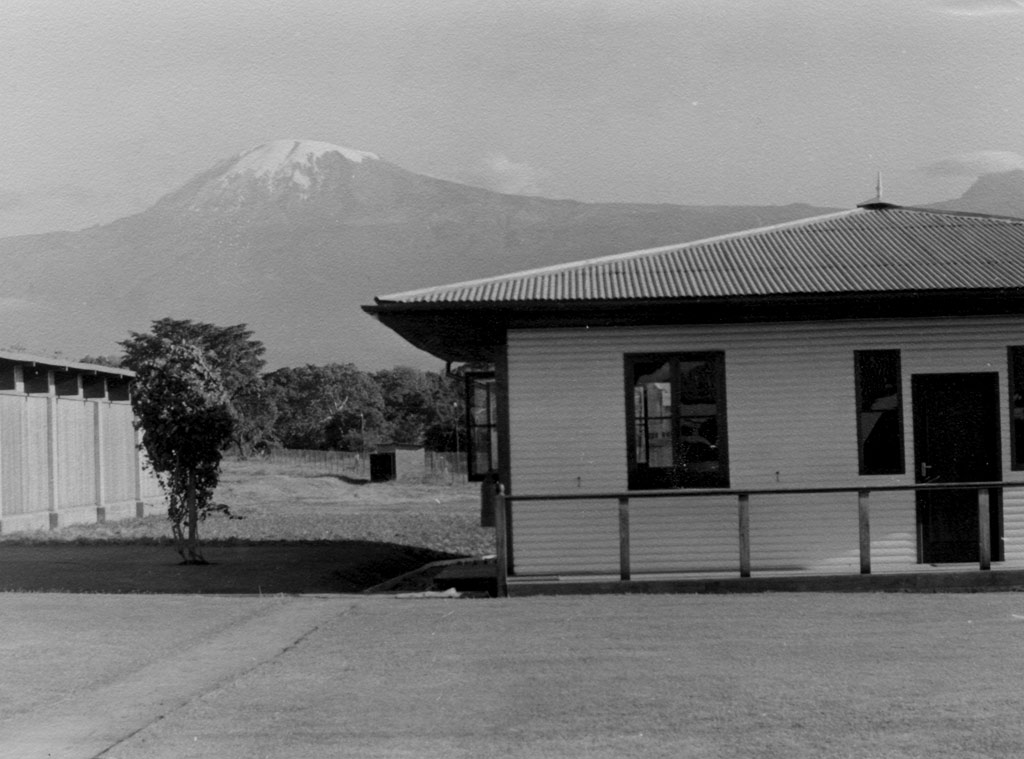
When my parents arrived in Tanganyika in 1949, they were sent to the Rondo Plateau, a remote area in the south, where my father’s job was to map a forest. This he was to do by foot safari, camping in the bush for up to weeks at a time, with a team of porters to carry the tents and provisions. Before she became pregnant with me, my mother went on foot safari with him. I have the pictures they took – a record of the dying days of colonialism, the white administrator with his canvas bath, dinner served at a folding table by lamplight, my mother washing her hair in a stream…but my memories are all of Moshi, where we lived from when I was three to seventeen. My parents spent nineteen years in Tanzanian Government and left in 1968.

safariThe writer’s father’s office at the Hardwoods Research Station, Moshi
Continue reading

THREATENED TOADS MULTIPLY

The Kihansi spray toads (featured in an earlier issue of TA) which are regarded as a threatened species, and which were taken to the US in 2002 have multiplied from the original 72 to 216 in zoos in New York and Ohio and San Diego. Plans are now being made for them to return to Kihansi and for the possible establishment of a domestic breeding facility there. The government initiated project was assisted by World Bank funding.’ The toads might prove useful in future with the growth of biotechnology, especially in the pharmaceutical industries –Guardian.

TANZANIA IN THE INTERNATIONAL MEDIA

In reviewing the probable future of the East African Community in the Kenyan THE NATION (March 26) Gitau Warigi concentrated on Tanzania’s new leader. Extracts: ‘Kikwete has started off doing some sensible things, like cracking down on crime and police corruption. He has also ruffled his country’s male establishment by appointing a host of women to powerful government positions. For me, Kikwete’s main problem is that he is a populist. The worry is whether he will allow this populism to play havoc with sensible governance. Most of the extravagant manna he promised during his presidential campaign is clearly not something poor Tanzania can afford right now. This populism could turn problematic in other ways. There is a powerful political and business lobby in Tanzania, which takes it as its calling to raise red flags about Kenya and its presumed designs to suffocate its neighbours economically. Continue reading

MISCELLANY

President Jakaya Kikwete has appointed Dr Abdulkadir Shareef, former High Commissioner in London, as Coordinator of the ‘Brand Tanzania Initiative’. Dr Shareef, who was the President’s deputy when he was Minister of Foreign Affairs and International Co-operation in the previous government, will spearhead efforts to promote Tanzania abroad as a preferred tourism and investment destination. Under the Initiative, which will be implemented through the President’s Office, views on what should be done to sell Tanzania will be collected and forwarded to policy makers.

Continue reading

REVIEWS

Edited by John Cooper-Poole (UK) and Marion Doro (USA)

BLUEPRINT 2050: SUSTAINING THE MARINE ENVIRONMENT IN MAINLAND TANZANIA AND ZANZIBAR
. Edited by Jack Ruitenbeck, Indumathie Hewasam and Magnus Ngoile. Published by the World Bank, 1818 H Street NW Washington, DC. ISBN 0-8213-6213-6.

The special nature of Tanzanian marine life has most recently been brought to the attention of newspaper readers in the UK through the re-discovery of the coelacanth, a fish that was thought to have been extinct for at least the last 70 million years. In January 2006, The Observer ran an article on the regular appearance of these strange fish – which have no backbone, and sport four limb-like appendages- in nets in shallow waters off the Tanzanian coast. The implication of the article was that these rare and endangered fish are being driven into shallow water by deep water trawling in the coelacanth’s offshore habitat.

Like elsewhere in the world, Tanzania’s marine ecosystem is coming under increasing, and unprecedented risks. Threats include over-exploitation (of, for example, deep sea habitats like that of the coelacanth, but also of resources closer to shore: mangroves, lobster and coral); destructive fishing methods (dynamiting, poisoning), industrial and domestic pollution; potential unregulated tourism development and global climate change. Continue reading

KIKWETE’S GREAT TRIUMPH

OPPOSITION ALMOST DEMOLISHED

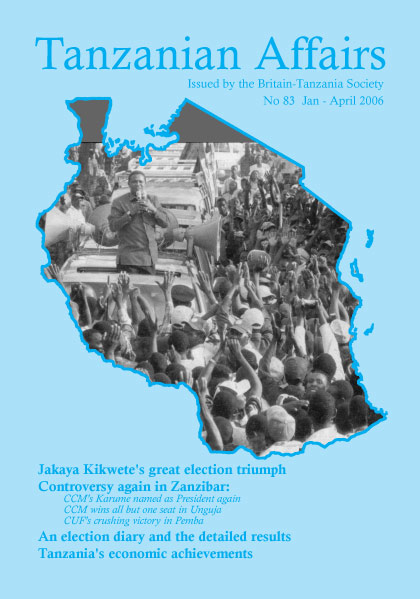
Mr Jakaya Kikwete, Tanzania’s Minister for Foreign Affairs and International Development for the last ten years, swept to a massive victory in Tanzania’s general elections, considered to have been broadly free and fair, on December 14th.

The presidential result was expected but, when the results of the parliamentary elections came in, they were a surprise to many seasoned observers of the Tanzanian political scene and even to some of the leaders of the ruling CCM party. Many could not understand why Tanzania’s love affair with the CCM party, which has lasted for 44 years, has not diminished but has actually increased. Many had expected that, at least in the elections for MP’s, one or two of the 17 opposition parties would have increased their representation but this did not happen.

In the presidential election, Kikwete secured just over 80% of votes. Six out of the ten presidential candidates came from one region – Kilimanjaro. Continue reading

THE NEW PRESIDENT

KikweteJakaya Kikwete greets children in Morogoro during the electrion campaign – photo Michuzi Jr

IRIN (a UN humanitarian news and information service, which may not necessarily reflect the views of the United Nations or its agencies) has issued a profile of the new president. Extracts: Jakaya Kikwete, is widely regarded as a career politician and staunch socialist. Yet he has repeatedly expressed his commitment to continuing his predecessor’s free-market reforms. Despite opposition complaints, these have left the majority of the people as poor as they were under the country’s socialist system. Kikwete’s affiliation with Tanzania’s founding President, Julius Nyerere; his immediate successors Ali Hassan Mwinyi and Mkapa; as well as Kikwete’s long-time membership in the ruling Chama Cha Mapinduzi (CCM), are well known. Continue reading

THE UNION ELECTION RESULTS

Union Presidential Elections
As held on December 14th 2005 having been postponed from October 30th because of the death of Mr Jumbe Rajab Jumbe, the Vice-Presidential candidate of the CHADEMA party.

Candidate (Party)

Number of Votes

% of Votes

Jakaya Kikwete (CCM)

9,123,952

80.28%

Ibrahim Lipumba (CUF)

1,327,125

11.68%

Freeman Mbowe (CHADEMA)

668,756

5.88%

Augustine Mrema (TLP)

84,901

0.75%

Sengondo Mvungi (NCCR-Mageuzi)*

55,819

0.49%

Christopher Mtikila (DP)

31,083

0.27%

Emmanuel Makaidi (NLD)

21,574

0.19%

Anna Senkoro (PPT-Maendeleo)

18,783

0.17%

Leonard Shayo (MAKINI)

17,070

0.15%

Paul Kyara (SAU)

16,414

0.14%

Continue reading