Two government ministers are among the latest victims of crime. Deputy Minister for Community Development, Gender and Children, Dr Batilda Burian, lost her mobile phone worth over TShs 400,000 from her home in Kijionyama. A second robbery then took place at the new house of neighbouring Deputy Minister for Defence, Omar Yussuf Mzee. Mrs Mzee told the press that her ornaments (including 22 rings) made of gold, diamond, and rubies worth millions of shillings were taken. She offered a TShs 500,000 reward but to no avail. Mrs Mzee said she kept the 22 rings so as to match her dresses – Mtanzania. Continue reading
Category Archives: Issue Number
SUSTAINABLE ENERGY AWARD
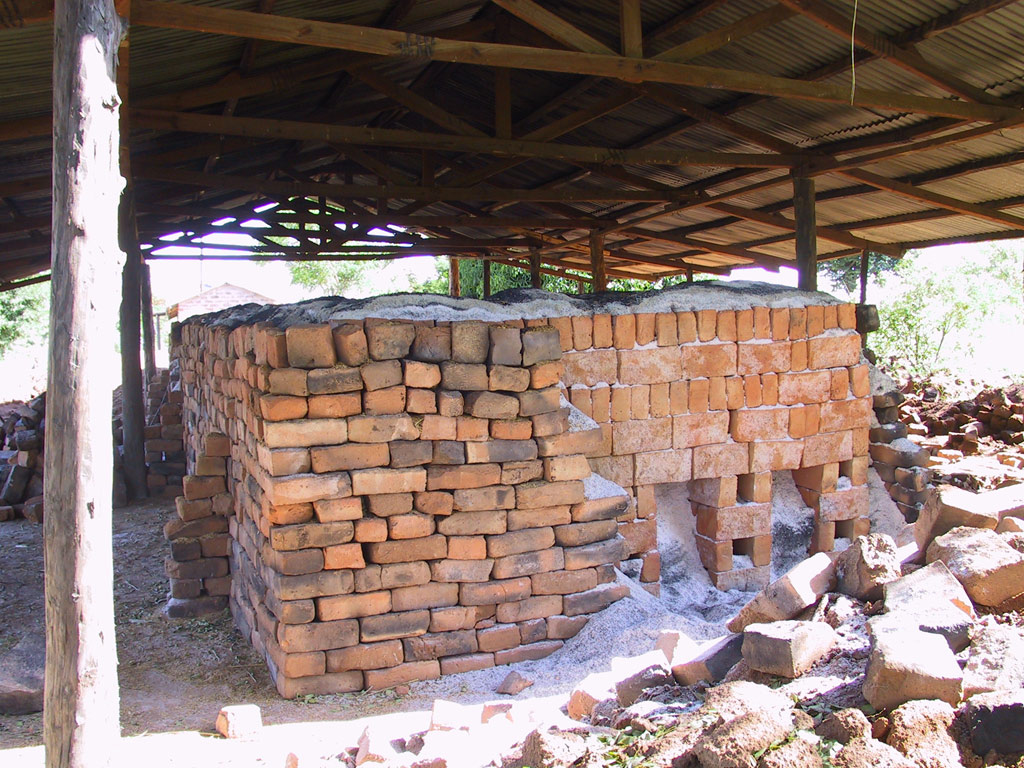
The NGO “Mwanza Rural Housing Programme” (MRHP) has been awarded the “Africa Award” worth £30,000 in the prestigious ‘Ashden Awards for Sustainable Energy’ – a programme now in its 6th year. MRHP, who have been working in the area for 15 years, saw an urgent need to find a way to improve the quality of housing in the region without adding to the problems of severe deforestation by using traditional wood fired brick kilns. MRHP’s solution was a kiln using widely available agro waste including cotton waste, rice husks, coffee husks and in some cases sawdust as fuel source.
Bricks waiting to be fired (photos www.ashdenawards.org)
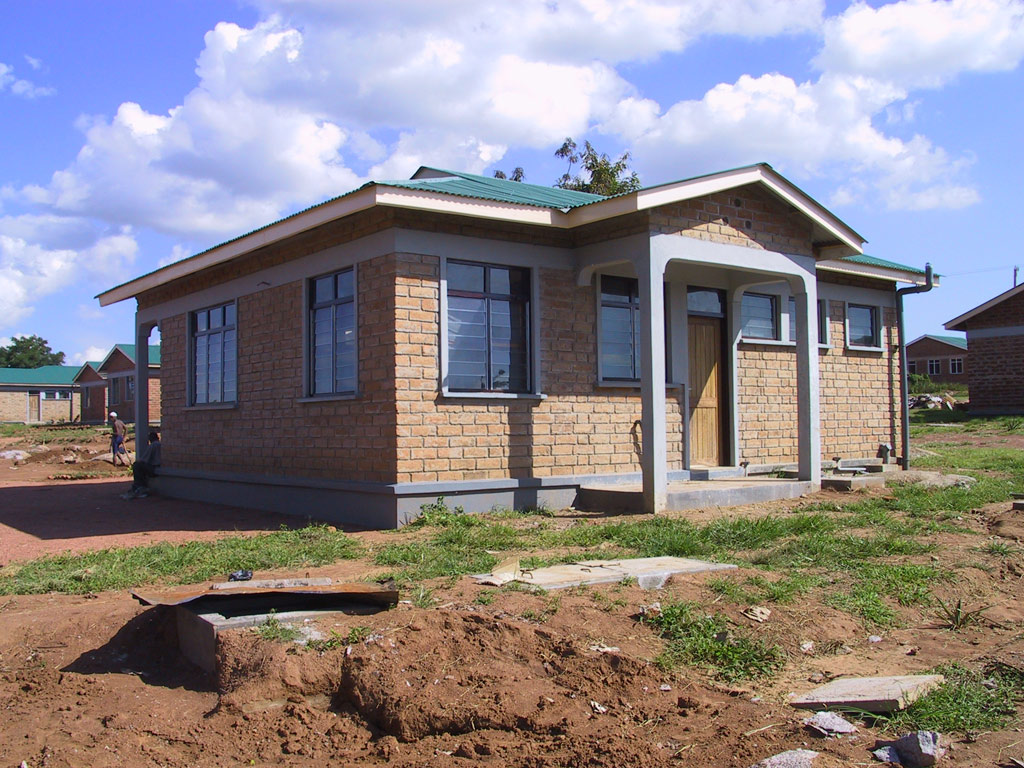
Completed house using bricks fired in an MRHP designed kiln
Continue reading
BUSINESS AND THE ECONOMY
(Exchange rates: £1 = 2,426 TShs, 1US$ = 1,244 TShs on August 6th 2006 )
The economy recorded a lacklustre performance for the year 2005. Though there was an increase in value of exports by 13.8% to $1,676.3 million this was matched by a similar increase in value of imports to $ 2,661 million leaving a trade deficit of $985 million equivalent to 5.8% of GDP. There was a 10.8% decrease in foreign reserves to $2,048 m which is equivalent to 6.4 months of imports as opposed to the targeted 7 months. This may have contributed to the 3.6% depreciation of the shilling to an average of TShs 1,128.8 to the dollar. Continue reading
NEW MONKEY GENUS
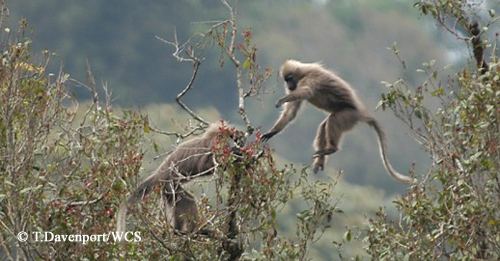
Monkeys are among the most heavily studied wild animals on earth, and it is getting on for a century since a new species of them was last recognised by zoologists. The monkeys were discovered in Tanzania last year by Tim Davenport of the New York-based Wildlife Conservation Society and his colleagues.
The Kipunji monkey – photo Tim Davenport/WCS
The monkeys were originally named the ‘highland mangabey’. However, examination of their DNA and skeletons, proved that they are related to baboons of the Genus Papio, even though they do not look like baboons. As a result, the monkeys have now been assigned to a genus all of their own by the journal SCIENCE – Rungwecebus (after Mount Rungwe, where the first colonies were found) kipunji. The kipunji has pale grey-brown fur, with off-white fur on its belly. Sixteen colonies have been found in the Rungwe-Livingstone Forest and Ndundulu Forest Reserve. This is the first new genus to be identified amongst primates for 83 years. (Thank you Ron Fennell and Simon Hardwick for sending details of this from the Economist and the Times (May 12).
DARE TO DREAM
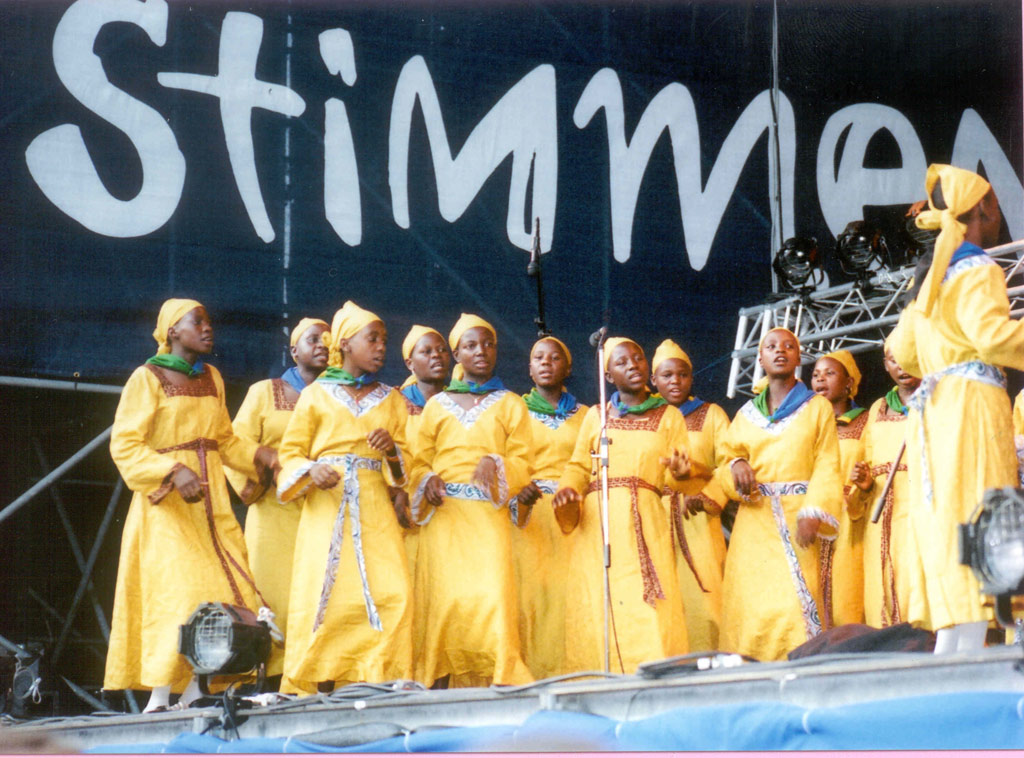
Every individual on the planet has the capacity to shine. By being open minded, free spirited and with a belief that anything is possible, we can shine and positively affect all those around us. One such individual, Grant Pierce, an Australian mining engineer and recognised long term philanthropist in Tanzania, has had a profound effect on 42 children from rural villages in Nzega. For the last eight years he has been assisting a small school called Isanga Primary. By 2003 a choir had emerged consisting of 42 children (between 11 and 18) from Lusu, Bujulu and Isanga primary schools.
The Golden Pride Choir at Stimmen Festival, Germany – photo Grant Pierce
THE WALKING DREAM (Part 2)
Jane Bryce continues the story of her return recently to Tanzania, where she spent much of her childhood. The first part was in the last issue of TA. She is writing about her return to Moshi.
I’ve walked a long way now, but something is growing in me. I’m certain I’m getting close, that this is the edge of the neighbourhood where I grew up, and if I just keep going, I’ll inevitably get there. I strike off onto a bush path – like any African, I’ll always look for a short cut when the main road is getting long-winded. I’m weaving through the backs of colonial era houses, solid and well built, surrounded by gardens. These are the kind of houses my friends lived in, the houses I visited with my mother, the gardens I played in. I am in suspense, waiting for that particular corner, that special landmark, which will tell me I’ve come home. Then I’m walking down a wide, well paved road with old trees on either side. I know this road. It’s called Kilimanjaro Road, and runs west to east, with the mountain on the left hand side still hidden by cloud, and the Police Training School grounds where we used to see groups of Chinese sitting in a circle when the communists were courting President Nyerere. My road, the road with my house on, branches off this one. It used to be called Rombo Avenue. I know exactly where I am. In another few minutes, I will be there. Continue reading
“TANZANIA – A DONOR COUNTRY”
UN Secretary General Kofi Annan has commended Tanzania for its immense contribution to hosting refugees from the Great Lakes region.
President Kikwete and UN Secretary General Koffi Annan
During talks with President Kikwete at the seventh ordinary meeting of the African Union in the Gambia in August, Dr Annan said Tanzania should be considered ‘a donor country’. He said it was unfair for the UN to recognise countries that give material and moral support to refugees as the donors and forget the host countries. President Kikwete said that, although Tanzania had been hosting a number of refugees, its contribution had not been recognised by the UN as was the case with countries that give material support. “Hosting refugees is very risky because a country’s security is put in jeopardy and the adverse impact on the environment is likely to last long” he said.
FORMER PRESIDENT MKAPA
The Zimbabwean Herald (July 3) reported that the UN would support efforts by former Tanzanian President Benjamin Mkapa to mediate and mend relations between Zimbabwe and Britain. The paper went on: ‘Relations between Zimbabwe and Britain have been on ice since 2000 after Harare embarked on the land reform programme to correct historical imbalances caused by the colonial system in the ownership of land. Mr Annan told journalists at a Press conference that Comrade Mugabe had, during their meeting on the sidelines of the recent African Union Summit in the Gambia, told him that Mr Mkapa would mediate. Mr Annan said the UN would support his efforts and “we both agreed that he should be given the space and time he needs”. The British Government, despite a close relationship between Mkapa and Tony Blair, was said to have opposed the proposal. British Minister responsible for Africa Lord Triesman said it was unfortunate that the UN Secretary General did not take up the job himself. A diplomatic officer with the British High Commission in Zimbabwe said that there was no conflict between Britain and Zimbabwe and so there was nothing to mediate.’
President Mkapa has been nominated as the Patron of the UN Committee for the 2008 ‘International Year of Planet Earth’. The other co-patron is another retired president, Sam Nujoma of Namibia. Tanzania is also among 17 nations appointed by the UN to form the Secretariat.
TANZANIA IN THE INTERNATIONAL MEDIA
According to an EAST AFRICAN STANDARD report on 2nd July, not all was sweet and light in CCM before President Mkapa voluntarily opted out of the chairmanship of the party a year earlier than an election was due. Extracts: Mkapa was quoted as speaking about the poisoned political atmosphere in the party in 1995 when founding President Julius Nyerere had decided to back Mkapa for the presidency, despite Jakaya Kikwete having won the nomination. The grudge was said to have persisted to this day. Continue reading
TANZANIA AND ZIMBABWE
The Guardian reported on April 29 on the new government of Tanzania’s relations with Zimbabwe. It wrote: ‘President Kikwete has supported President Robert Mugabe’s land reform policy…. Addressing a dinner hosted by President Mugabe at the Bulawayo State House, President Kikwete said Tanzania supported African countries that were struggling to rebuild their economies. “We will continue to propagate the philosophy that political freedom becomes meaningful only if we can make decisions freely without being pushed or interfered with by foreign countries.” He also praised President Mugabe for his firm anti-neo-colonialism stand, saying the freedom that Zimbabweans fought for would otherwise be meaningless. “As we speak today, Mr President, we can say those who sacrificed their lives for the sake of the betterment of other people during Chimurenga and the independence struggle did not do so for nothing.” He said the relationship between the two countries should not be confined to the independence struggle but should also cover the economy, commerce and security.” Continue reading