REVIEWS

by Martin Walsh

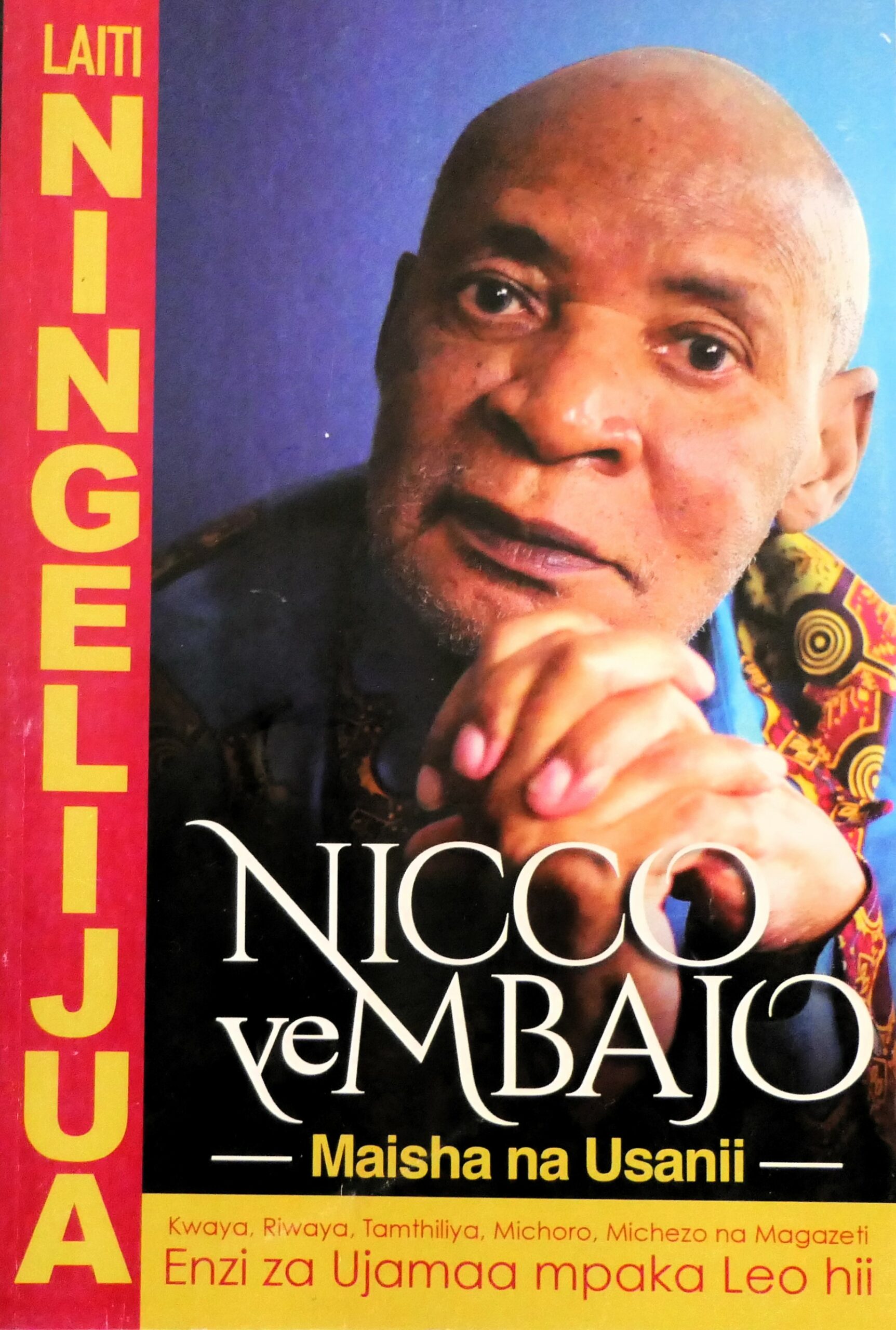
LAITI NINGELIJUA: MAISHA NA USANII

.

LAITI NINGELIJUA: MAISHA NA USANII. Nicco ye Mbajo. TuwaKadabra Productions, Dar es Salaam, 2020. 141 pp. (paperback). ISBN: 9789987971091. TSh. 10,000 (available in Tanzania from Elite Bookstore at Mbezi Beach and Kona ya Riwaya Bookshop in Kinondoni, Dar es Salaam. It can also be obtained from the reviewer at uta.reuster@gmail.com.

Nicco ye Mbajo (1950-2021) was a popular Swahili writer and illustrator, cartoonist, editor, and co-founder of the Swahili magazine SANI (established in 1978). He was among the popular Swahili writers of the 1970s and 1980s such as Hammie Rajab, Kajubi Mukajanga, S.A.M. Kitogo, and Ben Mtobwa, who created an extensive body of work that combined entertainment with social criticism. Unbeknownst to many, Mbajo was also the father of the famous SANI cartoons, such as Lodi Lofa (the city loafer), Madenge (the cunning school-boy), Ndumilakuwili (the hypocrite) and Komredi Kipepe (the backward country-bumpkin). They represent certain personality types that the urban environment in Tanzania produced, contrasted with a set of rural characters, who stand for backwardness and simple-mindedness.

Mbajo, however, was also a gifted musician and choir director, who even founded a dance band up-country in the 1970s. His active career as an artist, cultural producer and entrepreneur spanned the period from the 1970s to the 2010s, from Ujamaa to Mageuzi, experiencing and navigating privatisation, liberalisation, and multiparty democracy.

In his autobiography he looks back on this career, which, as the title Laiti Ningelijua (“If I Had Known”) signals, ultimately fell short of what he would have thought possible, given his talents and artistic abilities. The text is a gripping account of Mbajo’s various attempts to make a living through art and culture in Tanzania, which led to some great successes, but always followed by drastic setbacks. In some cases, Mbajo blames his own misjudgements and bad decisions for his failures, which gives his autobiography the character of a confession. In other cases, however, he was affected by political and economic developments over which he had no control.

The first chapters follow chronological order, starting with Mbajo’s childhood in the village where he grew up as one of ten children of a Christian catechist, to whom he credits his artistic talents. At school, his talents were recognized and used for school festivities and political events of the newly independent country.

During his secondary education in Dar es Salaam (1966-1969), Mbajo became an enthusiastic supporter of President Nyerere’s political vision of Ujamaa socialism. He joined TANU’s youth league and composed political propaganda songs. At the same time, he became fascinated with urban music culture, especially the performances of orchestras such as Kilwa Jazz, Dar Jazz, and Safari Trippers. In all his works, he tried to entertain while promoting Ujamaa ideology.

Unfortunately, at that time there was no possibility of formal artistic training in the country. After O-level, Mbajo was selected for training as an agricultural officer and was posted to Tanga in 1972. Yet, he remained true to his artistic inclinations. During college, he played in a jazz band, composed choir songs, and wrote and directed propagandistic theatre plays. He continued his cultural activities in Tanga and became well known in the region. However, as he neglected his professional duties, he was one of the first to be affected by the redundancy of state employees due to budget restrictions in the mid-1970s.

Mbajo’s account of his various attempts to secure an income during the following two years is adventurous. He eventually ended up in Dar es Salaam, where after some time he was employed by the state-owned Printpak printing press as an illustrator and layout artist. Printpak was a hub for publishers of entertainment magazines, almost all of which focused on photo-novels. Seeing a market opportunity, Mbajo developed a magazine featuring comics and cartoons that was based on the Kenyan Joe magazine. Using their initials, together with his partner Saidi Bawji they registered SANI magazine. It became the longest living Swahili entertainment magazine, published until 2020. However, Mbajo was forced out of the company after a short time. This was a crushing blow for him, especially as he had given up his job at Printpak for SANI.

Subsequently, Mbajo founded a new, similar magazine, which he soon published de facto on behalf of Murtazar Alidina, a Tanzanian media entrepreneur of Asian descent, who financed the magazine and paid Mbajo royalties. In dire economic conditions in Tanzania, this businessman took on several authors and so became the engine of popular Swahili magazines and novels, which could be printed in numbers above 10,000 because he was able to distribute them widely. Mbajo published seven novels during that time, which he summarises and puts into context in the fifth chapter of his autobiography. However, the cooperation with Alidina came to an end in 1985, when the latter emigrated to Canada due to the political “anti-economic sabotage” campaign of Prime Minister Sokoine. The publication of popular literature in Tanzania dropped for a while as a result.

Lacking the capital to continue publishing, Mbajo switched to working as a choirmaster for a number of choirs, mainly from Lutheran congregations. He reports on this in the sixth chapter, which also includes songs he composed himself. In particular, he focuses on the choir competitions which are an integral part of the choir culture in Tanzania and in which his choirs had often been successful. In addition, they took him on trips to neighbouring countries and even to the United States. Eventually, he worked as editor of the church magazine Pwani na Bara (“Coast and Hinterland”) until he retired in 2005.

Mbajo’s autobiography is a unique testimony of an important producer of Tanzanian popular culture in the 20th century and a well written literary work that captivates with its self-critical attitude. It shows first-hand how difficult it was to earn a living as an independent artist in socialist Tanzania. As such, it is an important contribution to Tanzania’s cultural history that complements previous scholarly research.

Uta Reuster-Jahn
Uta Reuster-Jahn, PhD, has been a lecturer in Swahili language and literature at Hamburg University, Germany. Since working in Tanzania in the 1980s, she has been connected to the country. She has widely published on oral literature, popular literature, Bongo Flava music and Urban Youth Language (Lugha ya Mitaani) in Tanzania.

POLICE ADMINISTRATION AND LAW ENFORCEMENT IN TANZANIA: A STRATEGIC TRANSFORMATION PERSPECTIVE. Said Ally Mwema. Rhythm Publishers, Dar es Salaam, 2023. 264 pp. (paperback). ISBN 9789976535419. (Distributed for free to police forces and training institutions in Tanzania and Zanzibar, and to be made available online – details to be announced.)

Once you get this book by the former Inspector General of Police Said Ally Mwema in your hands, you won’t want to put it down. It offers useful suggestions for enhancing the efficiency and professionalism of the police and provides a road map for developing a more responsive, effective, and community-focused police force, covering new technologies, training programmes, and community policing involvement. Its chapters delve into these complexities, examining the effects of globalization on law enforcement and the need for new thinking and new strategies to keep pace with the evolving nature of crime that is at the forefront of policing.

We learn from Mwema’s book that Major S.T. Davies arrived with 31 officers in Lushoto, Tanga, to establish the first police headquarters, which was later shifted to Morogoro in 1921 and then again to Dar es Salaam along Kilwa Road in 1930. We also learn that the first police station in the country was inaugurated at Lupa Gold Mine in Chunya, Mbeya, in 1925. Policing in the country has come a long way since then, but, as this book makes clear, much more remains to be done.

The security of life and property is the bedrock of the social, economic, and political stability of any nation. Governments are saddled with the responsibility of ensuring internal security through established agencies empowered by law. This duty is distilled into standard policing to enforce law and order in the wake of a safe environment. The standard of policing available to a nation determines the level of development of that country. Unfortunately, Tanzania has not always been able to live up to these expectations, even though currently it is undertaking reforms to enhance policing performance.

Part of the problem is that the police must grapple with a myriad of challenges. The police force suffers a deficit of public legitimacy and support; the public does not trust the police because their performance is deemed inadequate. Also, the public regards the character and level of accountability of the police as grossly unsatisfactory. The policemen and women in the country are generally feared but not respected, and they are widely despised for being very brutal when suppressing people who rise to demand political and civic rights. They are notorious for demanding bribes but very casual when it comes to enforcing law and order. People in communities therefore often want to keep their distance from the police.

The writer proposes several strategies to foster effective policing in Tanzania and the modernization of the force. They are built on the assumption that public security and safety are fundamentally rooted in the communities as they are socio-economic and political concerns. Therefore, engaging the public in policing is logical and essential to build mutual trust and empower the citizenry to be informed and competent partners in support of national efforts to ensure public security and safety.

Community policing requires police leaders who are skilled in community engagement. They also need to be strong believers in the rule of law and collaboration with other security agencies. Currently, there is community disillusionment with the traditional, top-down approach in which community policing is implemented within the existing militaristic structure and where political interference, poor leadership, corruption, excessive use of force and torture, and lack of effective oversight and accountability are endemic. A real change in the regulatory and institutional structure is critical, including an improved enabling environment in which community policing and the criminal justice system are better aligned.

There is a need to assess the impact of strategies adopted so that closer alliances between the police and the community reduce citizen fear of crime, improve police-community relations, and facilitate a more effective response to community problems and sharing of information in a timely, accurate and effective manner between the community and the police. Much work is needed to improve the way community policing is currently done in Tanzania to achieve a high level of sustainable trust between the police and the community of stakeholders. A first step must be to transform the Tanzania Police Force into a Police Service.

Mwema discusses all this and more in this engaging and thought-provoking book. Having had the privilege of reading both the English and Swahili versions, I can confidently say that it will be an invaluable resource for all stakeholders, including law enforcement professionals, criminal justice students, and citizens who care about the safety and security of our country. Not least it offers a fresh perspective on the situation that faces policing today and constructive proposals for a much better future, one that matches our President’s own vision and expectations for a thoroughly modern and professional police service.

It will be challenging to fill Said Ally Mwema’s former role, but in writing this book he has proved himself our best guide. There is something in the book for everyone, which is a credit to the author, not only for sharing his experience and insights, but also for showing us how policing in Tanzania can meet the challenges facing it in the 21st century.
Hildebrand Shayo
Dr Hildebrand E. Shayo is a UK-educated scholar with BA (Hons.) MA and PhD in economics; currently employed at Tanzania’s TIB DFI Development Bank, a 100% state-owned development financial institution, as Principal Officer, Agency Funds Solicitation and Administration expert. Dr Shayo has authored three books, produced more than 300 articles, published widely in national and international publications, and contributed to book chapters. Dr Shayo is a board member of the Tanzania Broadcasting Corporation (TBC) and a columnist for the national English newspaper Daily News.

RELIGION, EUGENICS, SCIENCE AND MATHEMATICS: AN ETERNAL KNOT. Karim F. Hirji. Daraja Press and Zand Graphics Ltd., Toronto, 2023. 378 pp. (paperback). ISBN: 9781990263224. US $37.00 (e-book US $7.99).

This is another spectacular book, written in Hirji’s small home in Upanga, Dar es Salaam, with the help and support of his wife Farida. It continues his previous book Religion, Politics and Society reviewed in Tanzanian Affairs 135.

The first main section, about eugenics, is particularly interesting, because the topic has almost dropped out of contemporary discourse. Eugenics is a belief that “human populations can be made more healthy, more intelligent and less prone to ‘vice’” by processes of selection. These can be positive, as when “gifted people” are encouraged to marry each other. But very dangerous are those who advocate that people who are not gifted, or have illness or disabilities, should be prevented from marrying, or, taking the argument to its logical conclusion, sterilised or put to death. Such beliefs, based on science which underplays the importance of nurture rather than nature, provided Hitler with arguments to justify the genocide of groups with physical or mental diseases or from the fringes of society. With support from eugenicists in the United States he quickly extended this to the killing of Jews, Communists, other political opponents and people from the Slav countries. More Soviet citizens died than Jews during the Second World War, and nearly 2 million non-Jewish Poles.

Eugenics was invented in England, and widely adopted in the United States. Hirji shows that a remarkably wide range of intellectuals signed up to it – Charles Dickens, George Bernard Shaw, H.G. Wells, Beatrice and Sidney Webb, D.H. Lawrence, Virginia Woolf, John Maynard Keynes, and Bertrand Russell, to take just some, and politicians including Winston Churchill and Neville Chamberlain. In America the ideas were promoted at Harvard University, and eugenics research was sponsored by the Carnegie and Rockefeller Foundations, and was reflected in the thinking of Supreme Court judges such as Oliver Wendell Holmes, Jr., and Presidents such as Warren G. Harding, William Howard Taft and Theodore Roosevelt. This partly explains why so many Western leaders were slow to appreciate the dangers posed by Hitler and the Nazis in the 1930s.

In our own times, similar views of ethnic or racial superiority have lain behind the policies of authoritarian leaders such as Narendra Modi in India, Jair Bolsenaro in Brazil, and Viktor Orbán in Hungary. Given the inequalities in the present world, and the willingness of authoritarian regimes to demean and persecute minority groups, this is a story that needs to be retold, and Hirji’s 60 pages are as good a start as any.

The section on science is largely philosophical, examining such questions as “Does God exist?”, or what free will means in a world dominated by advertising and social media, and its relationships with morality, or what can be said about consciousness. Hirji is sympathetic to the view that science and religion are different, and often complementary, ways of looking at the world.

The third section, on mathematics, is largely historical. The first numbers were recorded 20,000 years ago. 5,000 years ago, the South American Inca codified their book-keeping into a formal written discipline with symbols and numbers. Pythagoras’ theorem for the sides of a right-angled triangle was discovered independently in tropical Africa, China, Mexico, Iraq, Egypt and India more than 2,500 years ago. The mysterious number called zero came relatively late. It was first used in India about 1,500 years ago, and the even more remarkable one which we call infinity (it is always bigger than anything you have previously thought of) was at first more a theological belief (in the infinite love of God) than a mathematical one.

Many of the pioneering mathematicians were persecuted, especially when they drew conclusions about the stars and the planets which their sponsors did not want to hear – hence Copernicus, Galileo, and Kepler. Newton was a mathematician, a person of the world, and also a devout though unconventional Christian, as were many other leading scientists and mathematicians. In today’s world, mathematics is often misused – not least by internet companies which collect data about their users in order to feed them advertising material, or national security agencies which collect information about those they do not like. Or pharmaceutical, tobacco and petrochemical companies which distort statistics to sell their products.

The book is full of interesting reflections. Religion features in all the chapters, but it plays a relatively subsidiary role in the arguments of this volume. Its treatment is always liberal-minded and sympathetic. The book was written before the COVID-19 pandemic, the war in Ukraine, the rapid development of the climate crisis, and the unexpectedly fast development of artificial intelligence. But where it concentrates, it provides clear and well-written summaries – of the philosophy of science, and the discoveries of numbers from their earliest identification to the non-Euclidean geometries used by Einstein in his theory of relativity. And of the use of genetics and statistics to develop the pseudo-science of eugenics, and the links between US leaders and Hitler that resulted. Anyone who reads this book can expect to make new discoveries.

Andrew Coulson
Andrew Coulson worked in the Planning Unit of the Ministry of Agriculture in Dar es Salaam 1967-1971 and taught agricultural economics at the University of Dar es Salaam 1972-76. His edited book African Socialism in Practice: The Tanzanian Experience was published in 1979. Tanzania: A Political Economy followed in 1982, with a second edition in 2013. His most recent book, with Antony Ellman and Emmanuel Mbiha, is Increasing Production from the Land: A Sourcebook on Agriculture for Teachers and Students in Africa (Muki na Nyota, 2018). He was Chair of the Britain Tanzania Society 2015-18.

OBITUARIES

by Ben Taylor

Bernard Membe

Bernard Membe, the former Foreign Affairs Minister and later opposition party presidential candidate, died in Dar es Salaam in May 2023 at the age of 69, after suffering a pulmonary embolism.

Membe was born in Rondo, Lindi Region on November 9, 1953. He began his career as a security analyst at the Office of the President between 1978 and 1989 before proceeding to study International Relations at John Hopkins University, Washington DC, from 1990 to 1992. He then served at the Tanzanian High Commission in Ottawa, Canada for eight years.

He successfully ran to become the MP for the Mtama constituency in 2000 and represented the constituency for CCM for 15 years. He swiftly rose to prominence and was appointed as a minister shortly after the 2005 elections. The high point of his political career was nine years (2007-2015) as Minister for Foreign Affairs under President Jakaya Kikwete, during which time he became known as a polished communicator – particularly when dealing with the international diplomatic community – and also as someone who was highly adept at navigating party politics.

“I knew him for many years,” said President Kikwete in a tribute. “We came a long way and helped each other in many areas. I knew him as a good diplomat, serious activist, scholar, God-fearing patriot, and hard worker,” he said. “I believed and trusted him in all positions he served in my cabinet.”

Freeman Mbowe, national chair of the opposition party, Chadema, said that although they belonged to different political parties, he still appreciated Membe as a keen leader and that he will always be remembered for his service to the country. “In the history of multiparty democracy in our country, Membe remained one of the senior leaders at the ministerial level who did not have the habit of denigrating the opposition,” said Mbowe.

Membe served also at high levels within the CCM party hierarchy, most notably as a member of the National Executive Committee of the ruling Chama Cha Mapinduzi party from 2007.

In January 2013, Membe informed his constituents that he would not be vying for a seat in the next parliamentary elections in 2015 thus giving rise to speculation that he may be considering a run for the presidency. Indeed, the battle to become the CCM presidential candidate in 2015 became a heated struggle between himself and the controversial former Prime Minister Edward Lowassa.

It was a contest that threatened to divide the party into the Membe and Lowassa factions. To avoid this danger, party elders intervened to remove both candidates from the process, which ultimately delivered the relatively unknown John Pombe Magufuli to the nomination as something of a compromise candidate. Magufuli went on to become President of Tanzania.

The relationship between Membe and President Magufuli was never a close one, with Membe widely perceived to be organising resistance within CCM to President Magufuli’s anti-democratic tendencies. In 2020, in February 2020, the CCM central committee expelled Membe from the party after accusing him of “indiscipline and violating the party’s ethics and constitution”. He denied any wrongdoing.

In July 2020 he handed back his CCM membership card, shortly after which he joined the opposition party Alliance for Change and Transparency (ACT- Wazalendo) and said he was willing to stand as its candidate in the 2020 General Election. He did indeed run for President, coming third with 0.5% of the vote, in an election that was marred by irregularities.

In 2022, Membe rejoined CCM after writing a letter asking for readmission. By this time, President Magufuli had sadly died and President Samia Suluhu Hassan had taken office.

“I have received with sadness the news of the death of Bernard Membe,” said President Samia in a statement posted on Twitter. “For more than 40 years, Membe was a brilliant public servant, diplomat, Member of Parliament and Minister who served our country professionally,” she wrote.

ACT Wazalendo leader Zitto Kabwe said on his Twitter account: “There are no words that can describe my shock following reports of his death other than thanking God for the life of our elder Bernard Membe. A brilliant politician and a representative of citizens.”

The UK High Commissioner to Tanzania, David Concar, also used his Twitter account to pay tribute to Membe. “Condolences to the government and people of Tanzania over the sad news of the passing of former Foreign Minister Bernard Membe. He was a top diplomat, a voice for international peace, and a supporter of African democracy. We will remember him with respect and fondness. Apumzike kwa amani.”

Prominent business leader and founder of Precision Air, Michael Shirima, has died at the age of 80.

Mr. Shirima’s rise to the top started after he left Air Tanzania in 1979, after becoming disillusioned both with the airline and with the failure of those in office to address the issues he raised with them.
He gave up his dependably salary and had to move his family out of his government-owned house. He survived by running a barbeque business. Later on, he secured a loan and started selling cotton oil, then timber, then exporting coffee.

He decided to invest in the aviation sector, founding Precision Air in 1991. It operated at first as a private charter air transport company, but in November 1993, it began to offer scheduled services to serve the growing tourist market. Based in Arusha, the airline proved successful and grew rapidly, triggering the acquisition of more equipment and the expansion of routes. In 2003, Kenya Airways purchased a 49% stake in the company for $2 million. In 2006, Precision Air became the first Tanzanian airline to pass the IATA Operational Safety Audit.

British diplomat, David Le Breton, has died at the age of 91. Amid a distinguished career in the colonial era Overseas Civil Service and then the Foreign and Commonwealth Office, he spent time in both Zanzibar – a brief spell that coincided with the 1964 revolution – and earlier as an administrator in southern Tanganyika. Around the time of independence, he was based in Dar es Salaam, as private secretary to the governor.

He met his future wife, Patricia Byrne, in 1958, when she had recently arrived in Dar to teach English at a secondary school.

Born and brought up in colonial Kenya, David was a fluent speaker of Swahili and felt a strong affinity for Africa. Through a long career of postings, mostly around Africa, he rose to the position of British High Commissioner in 1981 before retiring in 1987. In 1978 he was appointed CBE for his commitment to service amid difficult circumstances in Anguilla.

POLITICS

by Ben Taylor

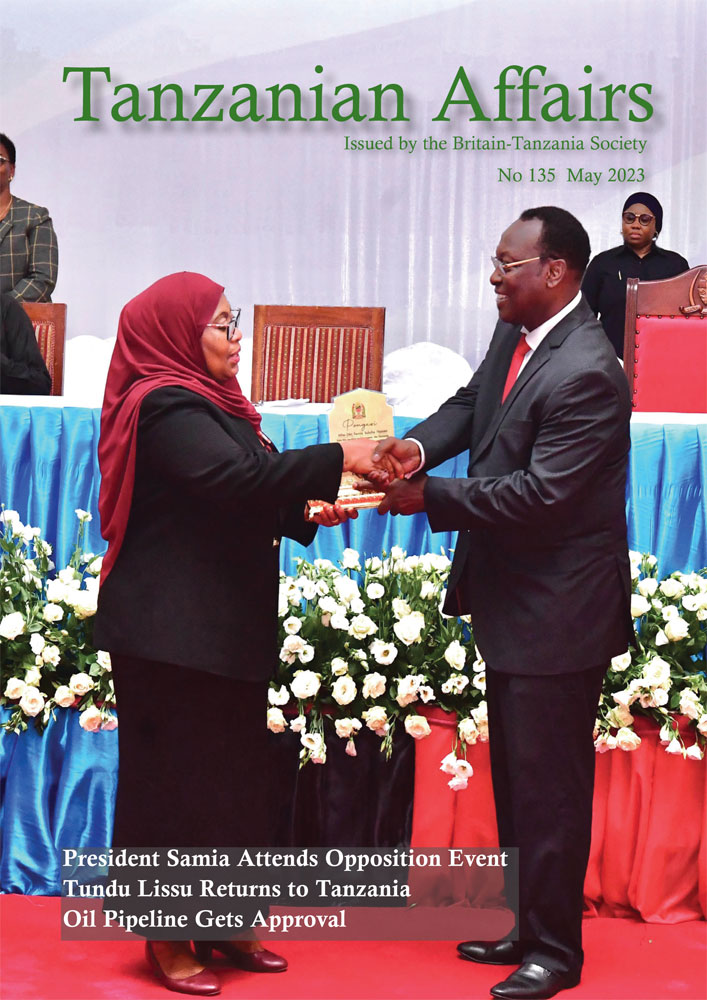
President Samia Attends Opposition Event

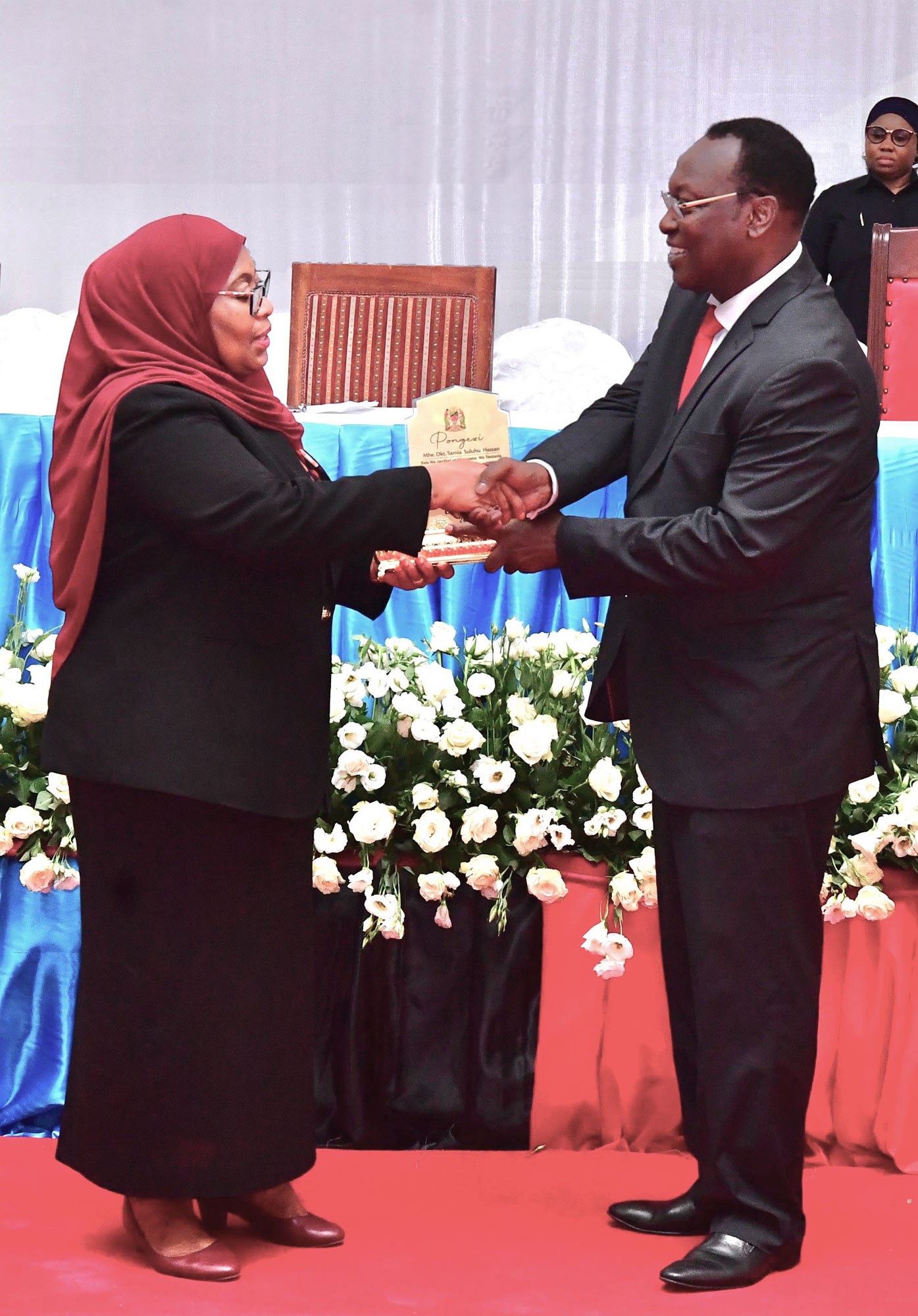
President Samia Hassan and Freeman Mbowe at the BAWACHA event – photo Ikulu


In an unusual move by both sides, President Samia Suluhu Hassan attended an event organised by BAWACHA, the women’s wing of the opposition party, Chadema, in early March. The event was a celebration of International Women’s Day.

At the event, held in Moshi, the President sat next to CHADEMA national chairperson Freeman Mbowe, the person planning to remove Samia’s party from office.

The President described her presence as “unprecedented”, going on to describe Chadema as an ally in building a new culture of politics in Tanzania. “The new way of doing politics won’t be accepted immediately by everyone,” she told the Chadema women, who cheered her every word. “There are hindrances on both sides, mine [within the ruling party, CCM] and yours.”

For President Samia, the occasion signified her commitment to building a new nation after almost seven years of divisive and polarising politics under her predecessor. “For your assurance, reforms are happening that will allow us to build a new nation, a Tanzanian nation with political competition but without violence,” she explained. “That’s where we want to go.”

She revealed that her decision to lift a ban on political rallies (see TA134) was met with scepticism from CCM senior figures when she shared it with them. “I presented the idea,” she said, and “a bitter debate ensued, just like what Mbowe received when he invited me here.”

Much social media attention and argument accompanied Mr Mbowe’s announcement that President Samia would grace a Chadema function, with some describing the move as “colossal”. Recognising this controversy, President Samia told Mr Mbowe: “So, Mr Chairman, it turns out we both have conservatives in our parties.”

President Samia used the occasion to restate her commitment to reviving the stalled constitution-writing process, acknowledging that while she cannot go as fast as some stakeholders would like, the process will commence as soon as practically possible.

“Nobody is saying no to demands for a new Constitution,” she said. “Even my party has said let’s go and revive the process. So, very soon, I’ll form a committee, after consulting other political parties, that will carry it out.”

Speaking earlier during the event, Mr Mbowe drew the Presidents’ attention to how the administrative system in Tanzania has been relegating supporters of opposition parties to the status of second-class citizens, calling for deliberate interventions to change this.

“It is my hope, Madam President,” he said, “that your intention to unify the nation will be adopted by those under you, those in your government, [and] in various institutions responsible for dispensing justice in our country.”

Mbowe told President Samia that “democracy can never be optional” and that “no nation has ever prospered by embracing dictatorship and discrimination.”

He assured Samia that while remaining open to the ongoing reconciliation efforts, Chadema will stand strong in its duty as an opposition party to hold the government accountable for its actions.

Tundu Lissu makes triumphant return with Dar rally

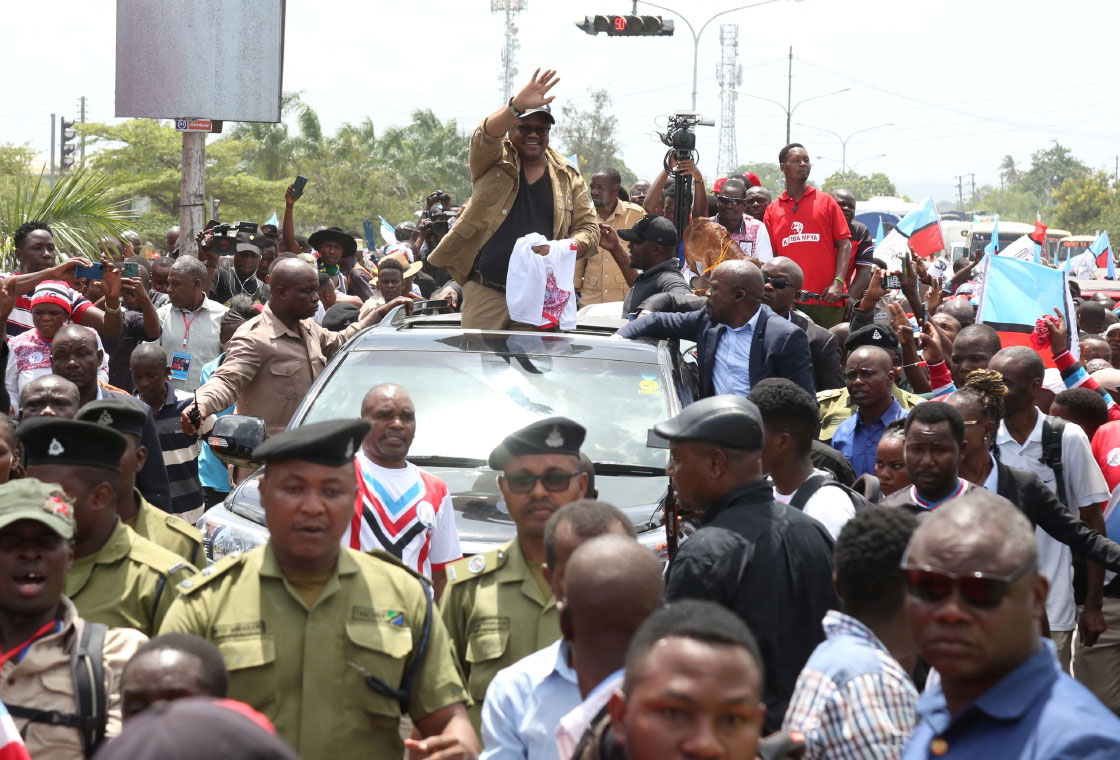
Tundu Lissu on his return to Tanzania

On Wednesday 25th January, 2023, Tundu Lissu made his much awaited return to Tanzania. The former opposition party presidential candidate, with Chadema in 2020, had been living in exile in Belgium for more than five years, since he survived an assassination attempt in September 2017.

Mr Lissu arrived in Tanzania shortly after midday, on a flight from Addis Ababa, Ethiopia. He was received by his supporters at the Julius Nyerere International Airport before leading a procession to Temeke grounds where his welcoming rally took place, attended by several thousand.

Mr Lissu thanked his supporters for the reception they accorded him, saying he’s “extremely happy” to be back in “my country.” “Living in exile, being forced to do so because you fear for your life, is the most difficult experience one can go through ever,” he stated in his 30-minute address. “These past six years have been extremely difficult not just for me but also for my family, the party and the country.”

Mr Lissu paused on his way into town to speak with some of his supporters, and later in his speech he recounted what they had said to him. “How come the price of beans is the same as that of meat?” they had asked. “The price of almost everything is up and people are demanding that they should be lowered to allow them to live.”

He then related the people’s concerns with the ongoing demand for a new Constitution, noting that almost all of the people’s problems have their foundation in the current constitution that he called “outdated and poor.”

“It is the President who is causing us all these hardships,” Lissu explained. “This is not because President Samia is evil. No, it is because the constitution we have allows her to decide how to tax us and how to spend those taxes. And it is because of such presidential power, we have been having corrupt presidents.”

Speaking during the rally, Chadema national chairperson Freeman Mbowe underlined Mr Lissu’s call for a new Constitution. However, he said, this will never happen if the people of Dar es Salaam will not stand up and actively participate in the movement, urging Tanzanians to take responsibility in defining the future of their country.

Commission to reform justice sector
President Samia Suluhu Hassan on Tuesday inaugurated a commission to review the public bodies responsible for dispensing criminal justice in Tanzania, with the goal of improving the justice system.

The President had previously announced the formation of the commission against the backdrop of complaints from activists working in the area of criminal justice, who called the system as unfair and discriminatory. The President would appear to share this view, as she described current state of the criminal justice system as “total chaos.” She added that this “is not because we don’t have ethical guidelines in this country but because those guidelines are not being observed.”

“As a consequence, people without power or money rarely get justice in this country,” she said. “They have been forced to endure things no one should endure. Money decides who gets justice and who doesn’t.”

The institutions that will form the subjects of the review include the Tanzania Police Force, the Prevention and Combating of Corruption Bureau (PCCB), the Drug Control and Enforcement Authority (DCEA), the National Prosecutions Services and the Tanzania Prisons Service.

The President urged the commission to pay particular attention to the Police Force, saying that it tops other institutions in terms of complaints from the public. “If you ask 100 people what they consider to be the most problematic institutions in terms of access to justice, 70 of them will point at the Police Force,” she said.

The commission will be chaired by former Chief Justice Mohammed Chande Othman, and will submit a preliminary report by the end of May, 2023.

Other members of the commission include the former Chief Secretary Ambassador Ombeni Sefue, the president of the Tanganyika Law Society (TLS) Edward Hosea, the former president of the Zanzibar Law Society (ZLS) Yahya Khamisi Hamad, the Attorney General Dr Eliezer Feleshi, the permanent secretary for Public Service Management and Good Governance Dr Laurean Ndumbaro, and two former Inspectors General of the Police (IGP) Said Mwema and Ernest Mangu, along with various others.

US Vice President Kamala Harris visits Tanzania

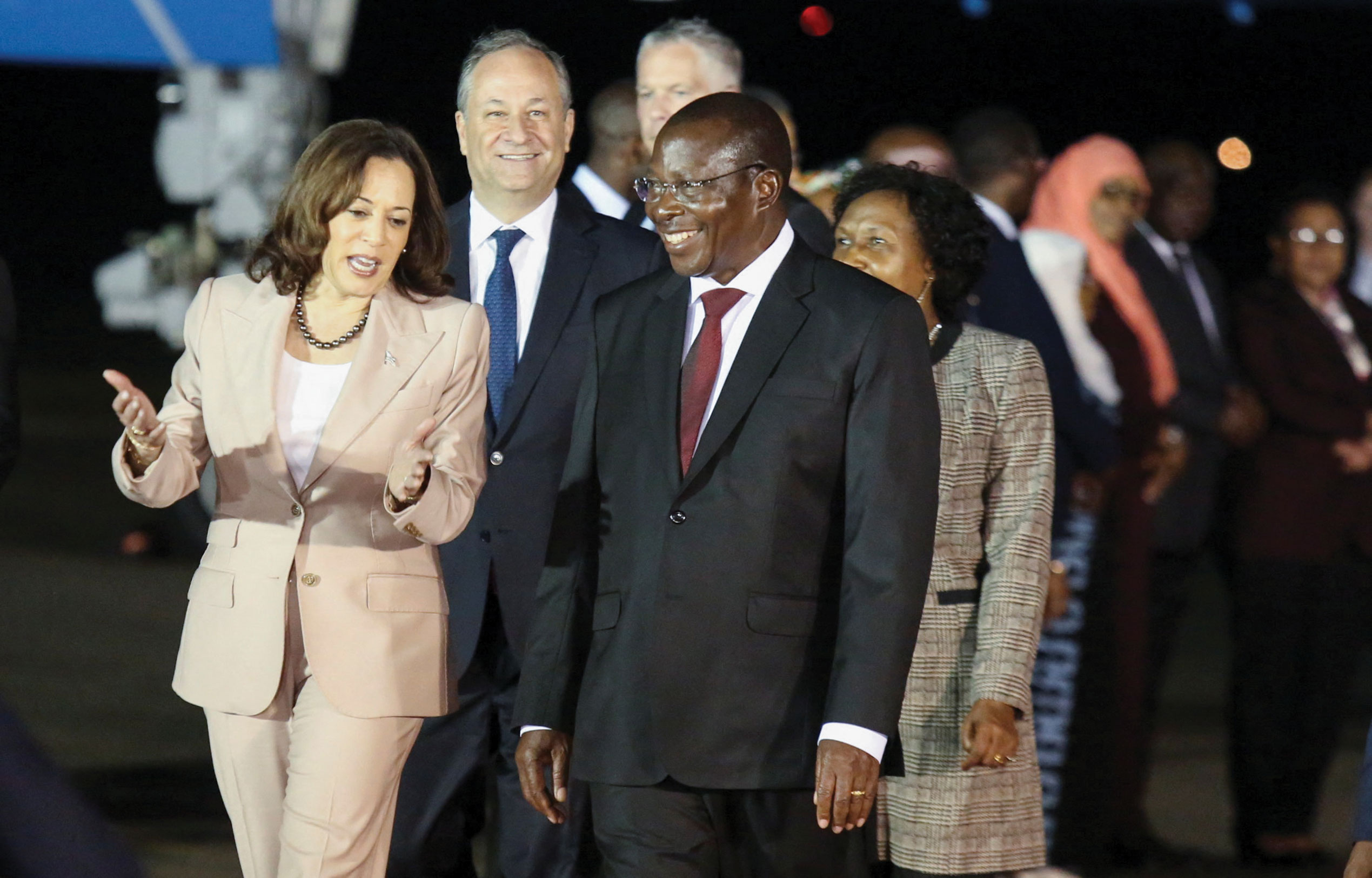
US Vice President Kamala Harris and Second Gentleman Doug Emhoff, escorted by Tanzanian Vice President Philip Mpango


In early March 2023, President Samia Suluhu Hassan hosted a visit from US Vice President Kamala Harris. The visit was billed variously as an opportunity to promote trade and strengthen democracy, as well as strategy to counter the increasing influence of China and Russia in Africa.

Harris started her trip with three days in Ghana before flying to Dar es Salaam, where she met with President Samia. The two leaders spoke to the media before holding private talks.

Vice President Harris applauded the progress made by President Samia on strengthening democracy in Tanzania, describing the President as “a champion of democratic reforms in this country,” and explaining that this had expanded the partnership between the two countries. “Today, then, is part of the strengthening relationship between our countries and, under your leadership, I have full confidence that we will be able to do just that.”

“Madam President, under your leadership Tanzania has taken important and meaningful steps and President Joe Biden and I applaud you,” Harris said, standing alongside Hassan.

Harris announced $560 million in U.S. assistance for Tanzania, some of which will require congressional approval. The money is intended to expand the countries’ trade relationship, as well as encourage democratic governance.

Harris also mentioned a new partnership in 5G technology and cybersecurity, as well as a U.S.-supported plan by LifeZone Metals to open a new processing plant in Tanzania for minerals that go into electric vehicle batteries.

“This project is an important and pioneering model, using innovative and low-emission standards. Importantly, raw minerals will soon be processed in Tanzania, by Tanzanians,” she said, adding that the plant would deliver battery-grade nickel to the United States and the global market from 2026.

President Samia made several requests of her guest, including an expansion of the long-term visa program for Tanzanians in the U.S., a 10-year extension of the African Growth and Opportunity Act, and a future presidential visit.

“Tanzanians are now anxiously waiting for President Joe Biden’s visit in Tanzania,” she said. “And please kindly convey our greetings and our invitation that Tanzania is waiting to host him.”

After the meeting, Vice President Harris visited a memorial to the U.S. Embassy bombing in Tanzania in 1998, the day a simultaneous bombing took place in Kenya. At the memorial, called “Hope Out of Sorrow,” Harris shook hands with staff who were present during the attack in Dar es Salaam, as well as the U.S. ambassador to Tanzania from that time, Charles Stith.

TANZANIA-EU BUSINESS FORUM

by Ben Taylor
February saw the maiden Tanzania-EU Business Forum in Dar es Salaam, bringing together over 600 business leaders from the EU and representatives of the Tanzanian government and business community.

Speaking at the event, Tanzania’s Vice-President, Dr Philip Mpango, invited investors from the 27 EU member states to explore untapped investment and business opportunities in Tanzania. He cited potential areas for investment as agriculture and agro-processing for value addition of local farm produce, as well as tourism, energy, mining, real estate, transport and logistics.

Dr Mpango, also a former Finance Minister, assured delegates of a conducive environment for trade and investment. “Just last year, the government repealed the Investment Act of 1997 and enacted new legislation that offers more incentives to strategic investors,” he said, adding that Tanzania is among the fastest growing economies in the sub-Saharan Africa at present.

At the same event, Dr Mpango urged Tanzanian businesspersons to also explore and take advantage of investment and trade opportunities in the EU.

Tanzania and the EU have been enjoying more cordial relations since President Samia Suluhu Hassan came to power in March 2021. In February 2022, the President visited the European Commission (EC) headquarters in Brussels and met with Commission President, Ursula Von der Leyen. Shortly after this meeting, the EU head of delegation to Tanzania, Mr Manfredo Fanti, stated that investors in the 27-member European bloc were happy with initiatives that the East African nation was taking to improve its business climate, saying this would foster increased Foreign Direct Investment (FDI) inflows.

According to the 2022 EU Investment in Tanzania Report 2022, imports to Tanzania from the EU were valued at €856 million in 2021, representing 12% of Tanzania’s imports, while exports stood at €456 million (10%). The report, which was jointly prepared by the EU Delegation and the European Business Group (EUBG), also found that over 100 companies from the EU have invested in the country, creating an estimated 151,000 jobs.

DATA PROTECTION ACT

by Ben Taylor
In late 2022, the parliament of Tanzania enacted the Personal Data Protection Act – broadly an equivalent to the General Data Protection Regulation (GDPR) of the European Union and the UK Data Protection Act. The Act spells out the responsibilities for any organisation that handles personal data of private individuals in Tanzania and provides for the establishment of a Personal Data Protection Commission.

The law is yet to come into force, however, as it requires both Presidential assent and for the Minister of Information, Communication and Information Technology to publish notice in the official government gazette stating the date when the Act will take effect.

The new law means Tanzania joins her East Africa Community (EAC) peers, Kenya, Uganda, and Rwanda, that already had Data Protection Acts in place. It will help the country participate in the global digital economy, as many countries have restrictions on doing business in jurisdictions that lack protections for data privacy.

Among other things, the law requires that all data processors and handlers must appoint a personal data protection officer, and outlines criminal sanctions and fines for those who breach the legislation.

The Personal Data Protection Commission established by the Act is tasked with registration of data collectors and processors, monitoring the compliance of data collectors and processors with the Act, handling complaints on the breach of data protection and the right to privacy, and researching and monitoring technological development in relation to data processing.

Any person or organisation that intends to collect or process data in Tanzania will need to be registered by the Commission. The Act also specifies that personal information may only be collected where necessary and for a legitimate purpose. To ensure accuracy of information, the Act places a duty on data collectors to take necessary steps to confirm that data collected is complete, correct and consistent with the purpose for which it was collected.

Disclosure of personal data without consent is punishable by a fine of up to TSh 5 billion (approx. USD $2.1m) for the institution responsible, and/or imprisonment for up to ten years for the individuals – including responsible officers within an institution.

The Act does not prohibit the transfer of personal data to jurisdictions outside the country, provided that such jurisdictions have a reliable legal system for the protection of personal data, and the transfer is necessary for a legitimate or public interest.

The Act also lays out the rights of individuals with respect to data held about them. This includes the right to be informed of data collection and processing as well as the purpose involved, the right to access the data collected and processed, the right to object the processing of personal data collected where such processing will lead to adverse impacts, the right to rectify personal data to ensure its accuracy, and the right not to be subject to automated decision making.

Stakeholders have given a cautious welcome to the new law. Maxence Melo, the founder of Jamii Forums, a popular Tanzanian online forum, said the law had been a long time coming, considering that the dream for the bill dates back to 2014. Melo added that it is important to foster data residency, meaning that personal data should be stored within the country, as a measure to ensure the data met regional and international data privacy standards.

However, others have expressed concerns that the law does not require the subjects of data security breaches to be notified, and that it imposes unnecessarily heavy restrictions on even small organisations handling small amounts of data about – for example – job applicants, beneficiaries of charitable work, or school students.

ENERGY & MINERALS

by Ben Taylor
Controversial oil pipeline gets government approval
The government of Tanzania gave formal approval in February for the construction of the USD $3.5bn East African Crude Oil Pipeline (EACOP), despite human rights and environmental concerns around the project. This followed official approval for the project from the Ugandan government in January.

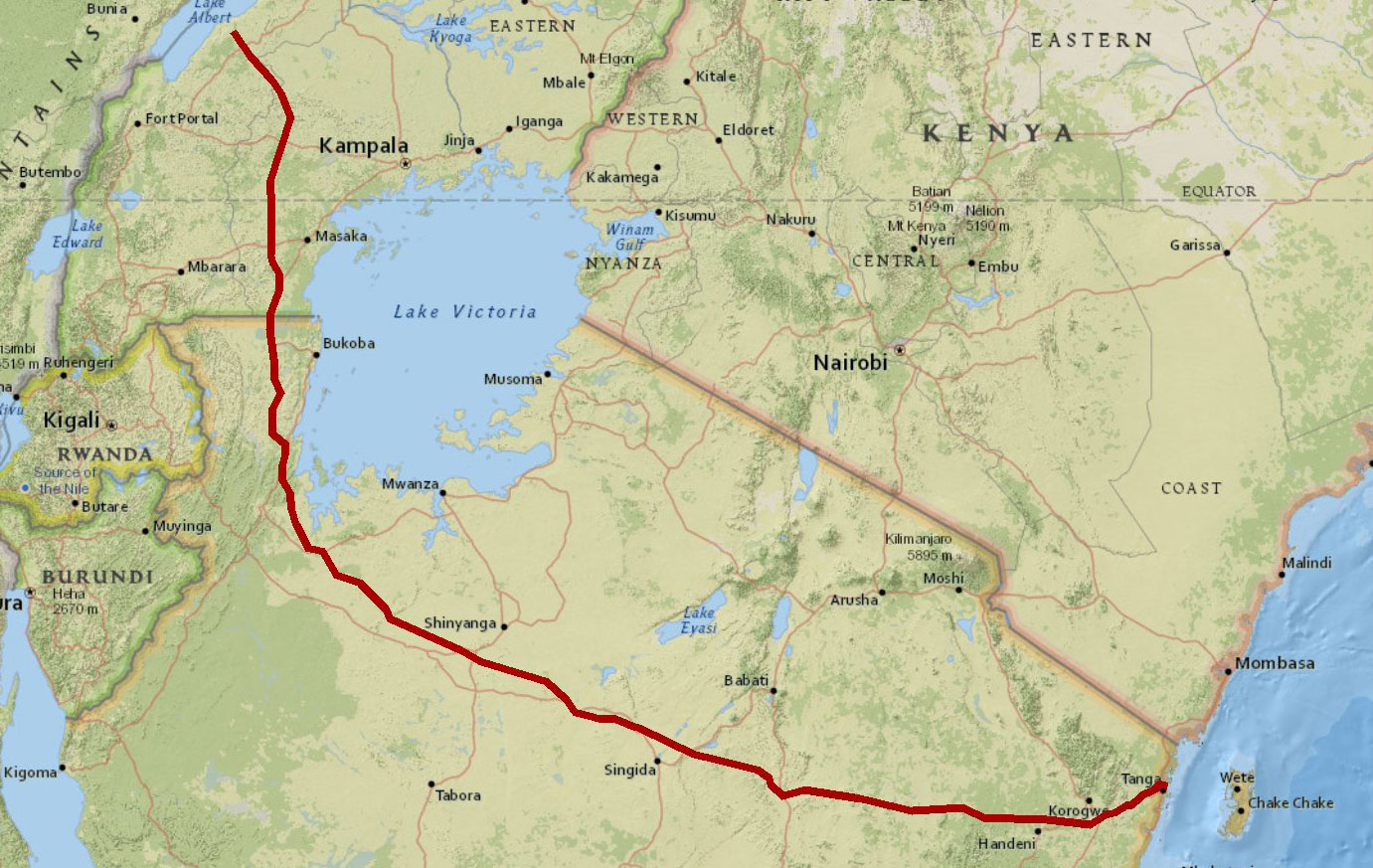
The 900-mile pipeline will transport crude from oilfields in Lake Albert in north-western Uganda to the port of Tanga on the Indian Ocean, passing not far from Singida and Kondoa [see TA 128]. The pipe will be 600mm diameter steel with heating to improve the fluidity of the oil, and will require a 30m wide corridor over the entire route (Eacop.com). The $10 billion oilfield and pipeline project is being jointly developed by France’s TotalEnergies, the China National Offshore Oil Corporation (CNOOC) and the state oil companies of Uganda and Tanzania. The first oil is expected to flow in 2025.

“This construction approval marks another step forward to EACOP as it allows commencement of the main construction activities in Tanzania, upon completion of the ongoing land access process,” said EACOP Tanzania general manager Wendy Brown.

The project has been hailed by some as an economic boon for both countries, though it has run into strong opposition from human rights and environmental campaigners, who say it threatens the region’s fragile ecosystem and the livelihoods of tens of thousands of people.

Tanzania’s Energy Minister, January Makamba, dismissed the environmental and rights concerns as “propaganda”, and said that all environmental, safety and human rights standards have been complied with. “We are proud of the pipeline because it will increase Tanzania’s influence in the world,” he added.

Map showing pipeline route


The oil originates in two oilfields on Lake Albert. Drilling began in January at the Kingfisher field on the south-eastern edge of the lake, operated by CNOOC, while the second field on the lake’s northern shore is being developed by TotalEnergies. This second field, known as Tilenga, extends into Uganda’s largest national park, Murchison Falls. At least 100 oil wells are reported to have been drilled inside the reserve.

There are an estimated 6.5 billion barrels of crude oil under the lake, of which a little over 20% is thought to be recoverable. The reserves are expected to last up to 30 years, with production peaking at 230,000 barrels a day. This would be sufficient to make Uganda the fourth-largest hydrocarbon producer in sub-Saharan Africa.

The pipeline has been controversial for the potential damage it could do to the environment and to people’s lives and livelihoods along the route. Fishers on Lake Albert are already seeing pollution on the lake, and one-third of EACOP will pass through the Lake Victoria watershed, on which an estimated 40 million people depend for their livelihood. “A leak along the pipeline could be a cataclysm,” said Hilda Flavia Nakabuye, a Ugandan activist, and “once consumed, the oil extracted will emit nearly 34m tonnes of CO2 a year, six times the emissions of Uganda”.

TotalEnergies is being sued in France by a group of NGOs for allegedly failing to comply with the country’s 2017 duty-of-care law. The NGOs are asking the Paris court to suspend TotalEnergies’ Ugandan projects, claiming the company is in breach of their legal obligation to identify and prevent human rights and environmental abuses resulting from its own activities or those of its subcontractors.

Civil society organisations in Uganda have also fought against the project, but have met with stiff resistance from the authorities. According to reports, the army now has a regular presence across the oil-producing region, journalists have been persecuted and human rights activists hindered in their work. Dickens Kamugisha of the Africa Institute for Energy Governance, a small NGO, explained that “the government passed a law in 2016 designed to hinder the activity of NGOs. The aim is to muzzle civil society”. Another activist, Maxwell Atuhura, is among those to have been arrested over EACOP. “The more I informed people, the more I was being watched,” he said. “It started with tailing, then negative blurb about me on the local radio, and finally an arrest in May 2021. I spent two nights in jail. The police confiscated all my equipment and threatened me, telling me that I was risking my life to continue my work.” (The Nation, The Guardian)

President Samia calls for attention on Africa in the energy transition
President Samia Suluhu Hassan has called for western governments and companies to focus on the needs of African countries when acting to address climate change and steering the global energy transition. She made the call in Davos, Switzerland, in January, on the sidelines of the annual World Economic Forum (WEF).

President Samia said it was high time developed countries in Europe and America put focus on producing energy from Africa, and that resources in Africa could help smooth the energy transition. “Africa could be another source of energy,” she said. “When it comes to green energy, we have almost everything ranging from nickel, cobalt and copper.”

She also reached out to private sector in developed countries to provide funding for Africa to enable the continent to produce more energy from natural gas. “It is true that we need energy transition but this should take some time, we also need funding to embark on energy transition,” Dr Samia appealed. She noted that there is high demand for energy in the African continent amid the fourth industrial revolution which is taking place across the globe.

Further, the President urged African countries to put more efforts in strengthening regional power pools such as East African and Southern Africa power pools, saying not enough has been done. “If we create these power pools there will be no problems of shortage of energy because whoever who will be having a crisis will be served by the regional power pools,” she remarked.

She reminded leaders during the discussion that the energy transition is a global problem which requires global solutions. “There is a need for a multilateral approach in addressing the challenge,” she said, and expressed her concerns that many developed countries are formulating energy strategy unilaterally rather than engaging developing countries.

Speaking late in 2022 at the United Nations Climate Change Conference (COP27) in Egypt, President Samia said Tanzania is taking a number of initiatives aimed at mitigating the impacts of climate change for sustainable development.

She said the government has adopted a national climate change response strategy and contribution with a target of reducing greenhouse gas emissions between 30 to 35 per cent by the year 2030. This includes continuing to construct and expand rapid transport networks. She explained that these are expected to reduce more than 900 million tonnes of carbon emissions each year. (Daily News)

Agreement reached for new hydropower project in Kagera

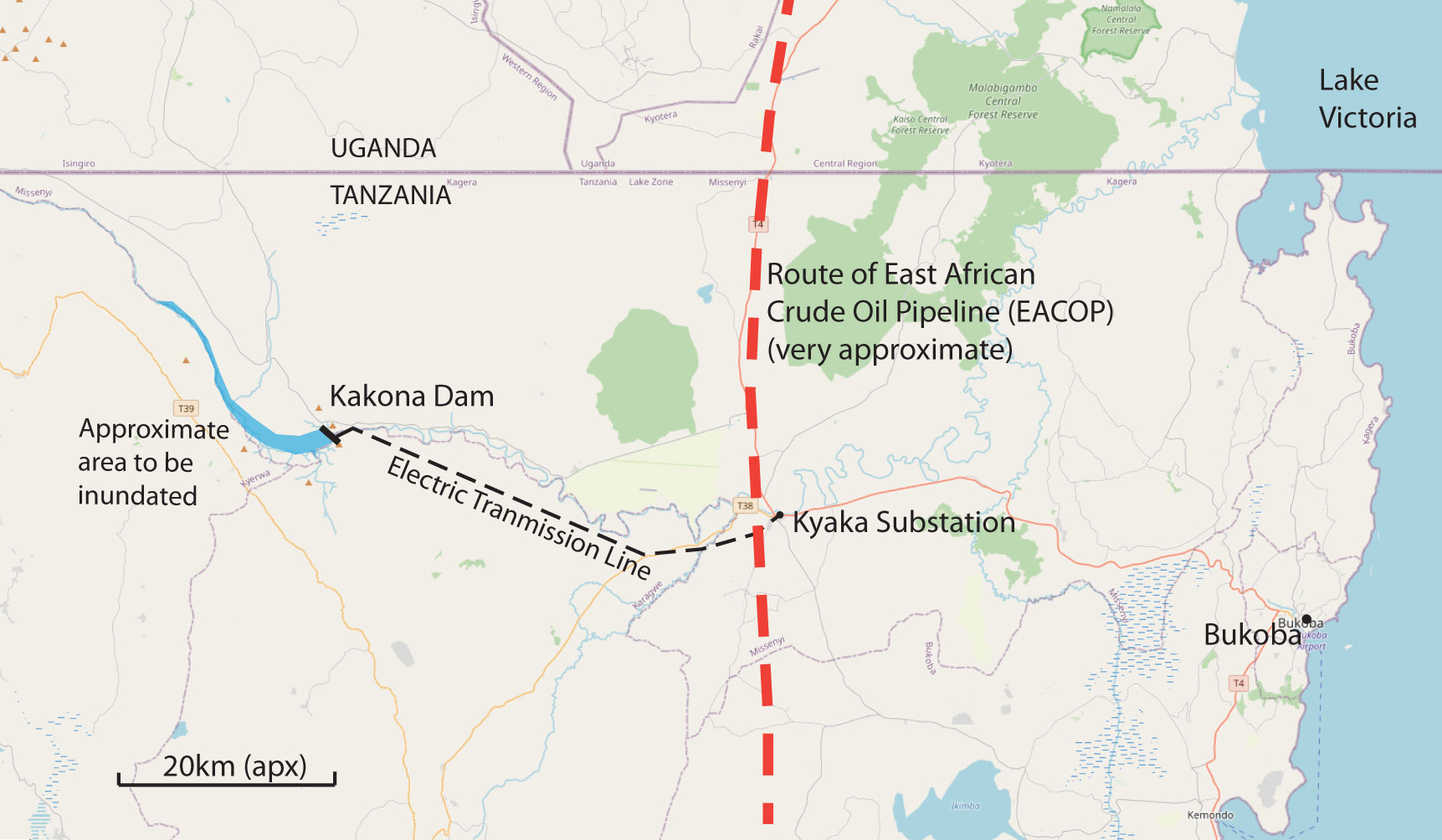
Map showing location of the Katona Dam (background openstreetmap.org)

The government of Tanzania, the African Development Bank (AfDB), and the French Development Agency (AFD) have signed agreements for two development project loans worth a total of $300 million to finance the construction of the 88MW Kakono Hydropower Plant in Kagera region. The project also received a grant of 36 million Euros from the European Union (EU).

The project, to be implemented by the Electric Supply Company (TANESCO), will reportedly reduce greenhouse gas emissions by an estimated 216,065 metric tons per year and comply with highest international environmental and social standards. The government expects that the project will serve four million people and increase the service coverage rate by around 7% of the population.

Alongside the construction of the new hydropower plant, associated infrastructure will be built, including upgrading the existing Kyaka substation and a new 39-kilometre 220-kilovolt transmission line and capacity building support for TANESCO.

The French Ambassador to Tanzania Nabil Hajlaoui said: “We have heard President Samia Suluhu’s message. She aims to generate 5GW of electricity by 2025. France is ready to be part of this journey by investing in power generation and transmission projects to meet the rapidly growing electricity demand while reducing the carbon intensity of its energy mix.”

The concrete dam will be 51m in height above the river bed, creating a reservoir which will extend about 28km upstream of the dam, with a width of around 1.5km at the widest point. (AfDB)

Deals agreed with three Australian mining firms

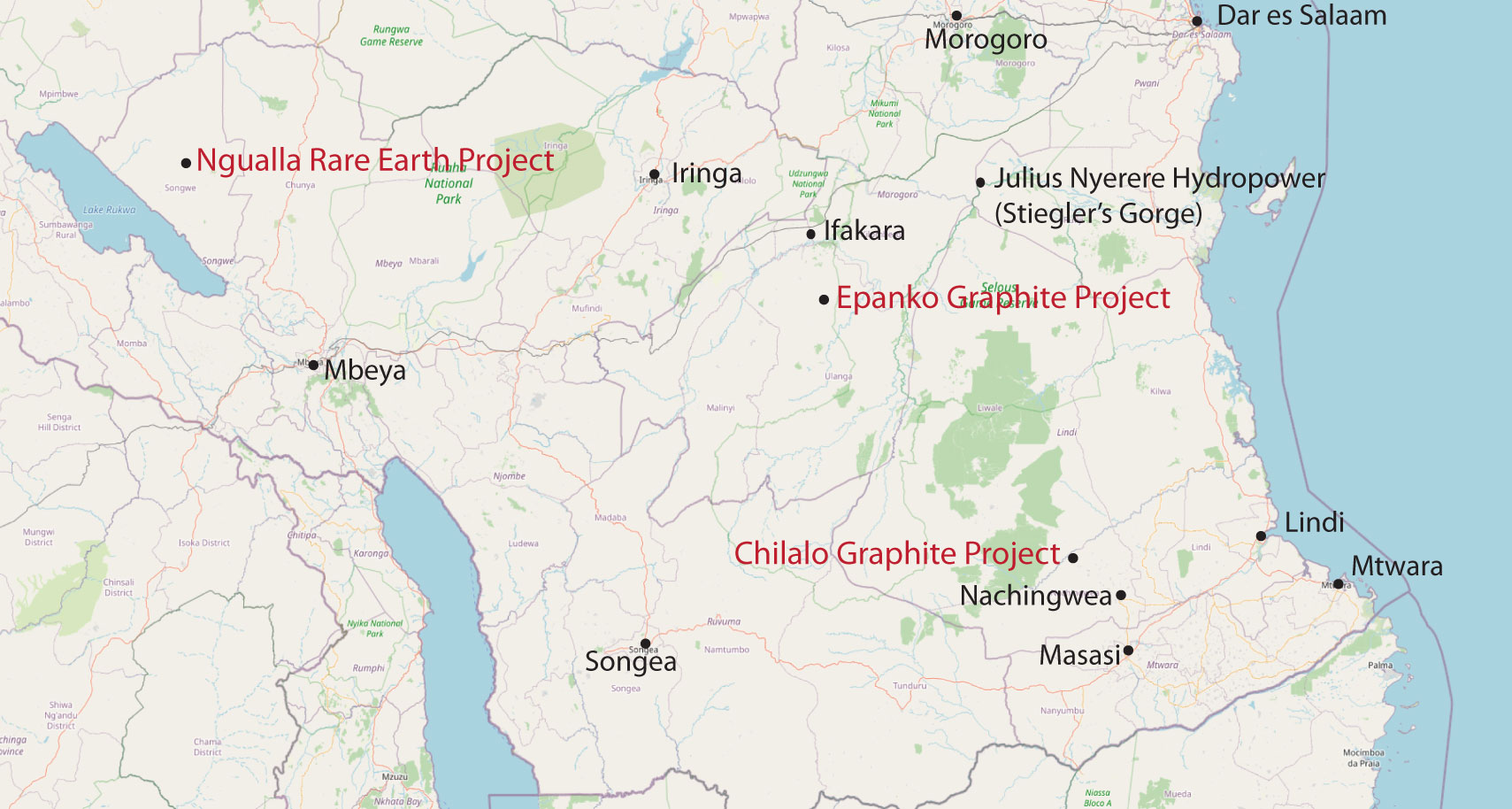
Map showing the locations of the three recently announced projects.

President Samia Suluhu Hassan in April witnessed the signing of deals worth US$600 million with three different Australian companies as Tanzania seeks to gain more from its vast wealth of minerals.

During a function at the State House in Dodoma, the President witnessed her administration closing deals with Evolution Energy Minerals Limited, EcoGraf Limited and Peak Rare Earth Limited.

With EcoGraf Limited, Tanzania agreed to the development and operation of the Epanko Graphite Project in Morogoro. An initial investment worth US$127.7 million will be made. With Peak Rare Earths Limited, the government agreed to the development of the Ngualla Rare Earth Project with an initial investment of US$439 million. With Evolution Energy Minerals Limited, the Samia Administration agreed to the development of the Chilalo Graphite Project in Lindi with an initial investment worth US$100 million.

ECONOMIC OUTLOOK

by Dr Hildebrand Shayo

2023/2024 budget amid thorny audit report
Tanzania’s national 2023/2024 budget debate is gaining thrust at a time when numerous flaws have been exposed by the 2021/22 report of the Controller and Auditors General (CAG), in addition to the global economic outlook that remains thought-provoking, flimsy, and unclear. The Russian vs Ukraine situation that is impacting other major economies might make this year’s 2023/2024 budget tricky.

The 2023/2024 national budget debate likewise is taking place at a time when capital markets are not functioning efficiently, and unemployment continues to persist as a major concern both at the national and global levels, but nationally at the time when the sixth phase government has been more transparent and embarrassing openness something which led to exposing the number of losses in government expenditure and revenue collection.

In these circumstances, advanced economies and important emerging nations such as Tanzania will be facing difficult policy choices, to strike a balance between the imperative of fiscal consolidation and the need for sustainable economic recovery and growth.

For emerging and rising economies, the road to a sustained recovery will continue to be challenged by several key concerns comprising capital inflows volatility, risks of domestic credit and asset price bubbles, commodity price instability, especially fuel and food prices, and inadequate resources. This will be coupled with limited fiscal space and large development needs, containing the need to achieve the MDGs.

Evaluation of economic trends and performance signals that the global economy will continue to struggle financially. Despite the realisation of unprecedented macroeconomic policy responses, including monetary and fiscal measures undertaken, uncertainties will continue regarding the path to economic recovery partly coping with the effects of Covid and the ongoing war between Russia and Ukraine.

Global headwinds
All is happening when the global economy continues to grapple with financial market fluctuations and macroeconomic imbalances, that is leading to increasing vulnerabilities in global economic recovery and weakening employment prospects across many economic sectors.

Against this setting, world output growth is projected to decelerate from an estimated 3.0% recorded in 2022 to 1.9% in 2023, indicating the world will have one of the lowest growth rates in recent decades. This makes the world economic situation and projection for the remaining 2023 present a gloomy and uncertain economic outlook.

Similarly, growth in cutting-edge economies has already declined from 5% recorded in 2021 to 3.8% in 2022 and 2.3% projected in 2023 a pace that, while moderating, will be satisfactory to restore output and investment to cope with the post-pandemic trend and impact of the on-going war in Russia and Ukraine.

Economic output in the US is expected to slow early this year in response to last year’s sharp rise in interest rates. Nonetheless, the output is expected to start growing again during the second half of 2023 as falling inflation might permit the Federal Reserve to cut interest rates, which would likely cause a rebound in sectors of the economy that are sensitive to interest rates. Further, US domestic consumption, the major driver of economic growth, is still sluggish as the foreign inflow starts to decline wary of emerging market uncertainty after the failure of three banks in the US during the last month of March 2023.

In Europe, the weak banking sector limits credit supply and hampers the pace of economic recovery. Households and firms across the euro area are currently feeling the effects of higher inflation and weaker economic activity, amid the ongoing energy crisis prompted by the war in Ukraine.

According to the European Central Bank’s November 2022 financial stability review, the deterioration in economic and financial conditions has increased the risks to euro area financial stability and how this might negatively affect emerging markets and developing countries through trade and financial channels thus adding to domestic weaknesses.

GDP growth in Germany, the largest economy in Europe, has increased by 1.8% in 2022. Notwithstanding high inflation, growth has been supported by the boost in demand that followed the post-pandemic reopening of the economy, and in particular, services although by the third quarter of 2022, investment and private consumption had not yet reached their pre-pandemic levels that led to a decreased in the fourth quarter with real GDP contracting by 0.2%. The weak private demand is the main factor behind this weak performance and the prolonged output gap.

On average, the BRICS group of five major emerging economies-Brazil, Russia, India, China, and South Africa has grown strongly since its inception in 2006. Accounting for 23% of the global economy, 18% of trade in goods and 25% of foreign investment, BRICS nations have formed an important force that cannot be ignored in the world economy. BRICS economies imply that the irresistible rise of emerging markets and developing countries has injected strong impetus to the reform of the global economic governance system that will have a considerable impact on other nations’ planning.

National challenges
Tanzania’s 2023/2024 national budget partly relies on development partners’ support, which is of course affected by global dynamics. And in addition, the recent CAG’s report has recommended serious action to be taken since currently, global economic growth is slowing amid a gloomy and more uncertain outlook.

Tanzania’s parliament will debate budgeting issues of respective sectors for a few months when the world’s three largest economies are stalling, with important consequences for the global outlook with inflation remaining a major concern.

Inflationary risks will remain high due to both external and domestic influences. The external risks will be associated with the possibility that the international financial crisis may persist, while the domestic risks will be associated with a context of slower demand due to the slow growth in private sector activities and low-capacity utilisation in many sectors.

All in all, higher-than-expected, although global inflation has been revised in part due to rising food and energy prices, especially in the United States and major European economies, will continue to trigger a tightening of global financial conditions and this will have further negative spill-overs from the war in Ukraine and as a result, global output will be affected enormously.

This year, inflation is anticipated to reach 6.6% in advanced economies and 9.5% in emerging and developing economies. Inflation has also broadened in many economies, reflecting the impact of cost pressures from disrupted supply chains and historically tight labour markets. These issues are critical to Tanzania as honourable MPs debate national budget for 2023/2024.

TRANSPORT

by Ben Taylor

Air Tanzania clashes with Airbus, faces financial struggles
Air Tanzania’s ongoing dispute with Airbus took a new twist in March, when the airline (ATCL) took the matter to the African Airlines Association (AFRAA), calling on the assistance of four other African airlines to pressurise the manufacturer to find a solution.

Two ATCL planes have been grounded since October 2022 due to failure of its engines, with the airline blaming the manufacturer for failing to secure new engines.

The other airlines called upon for assistance include Air Senegal and Egyptair. The latter reportedly has 12 Airbus aircraft, out of which 10 have been grounded for similar defects.

ATCL’s Director General, Ladislaus Matindi, said that the manufacturer will have to pay ATCL compensation as spelt out in the contract, but complained that the process has taken a long time, and that in the meantime the company is accumulating losses.

Currently, ATCL has a fleet of 12 aircraft, of which three are grounded due to technical and legal issues, including two Airbus with the capacity to carry between 120 and 160 passengers.

Meanwhile, the Controller and Auditor General reported that ATCL incurred a loss of TSh 35.2 billion (around USD $15m) in the financial year 2021/22. This represents a relatively small reduction in losses compared to the previous year, when they stood at TSh 36.1 billion.

Earlier, in February, the Deputy Minister for Works and Transport, Atupele Mwakibete, told Parliament in Dodoma that the government has set aside funds to bailout ATCL. Specifically, he said the government has allocated over TSh 10 billion to settle debts owed to Air Tanzania Company Limited (ATCL) workers.

Preliminary report for Precision Air crash released
In Match, a preliminary report on the Precision Air plane crash was released by the Works and Transport Ministry through the Aircraft Accident Investigation Branch (AAIB).

A Precision Air aircraft with 39 passengers and four crew on board crashed into Lake Victoria on November 6 last year as it was flying from Dar es Salaam to Bukoba. Nineteen people died in the accident [see TA134].

According to the report, the weather in Bukoba was poor when the plane went down and the crew did not respond appropriately to a series of warnings from the plane’s enhanced ground proximity warning system (EGPWS). The aircraft was on final approach to Bukoba Airport in marginal weather conditions when the EGPWS warned about the excessively high descent rate three times. “The warning was not followed by corrective action of the flight crew. Instead, the flight crew pushed the control column into a nose down position,” the report says.

Prior to the crash, the plane circled for about 20 minutes in heavy rain, prompting the flight crew to make right and left turns in order to navigate through narrow weather windows. “Marginal visibility caused high workload among the crew and may have contributed to the failure to react to terrain warnings during the final approach.”

The aircraft and its crew were in good shape, according to the report. “There is no evidence to suggest the flight crew were not fit and healthy prior to the flight,” it says. The aircraft had valid registration, airworthiness and release-to-service certificates and the required scheduled maintenance had been conducted.

Air Transport Accident Investigation assistant director, Mr Redemptus Bugomola, emphasised that the latest findings were merely observations about what happened during the ill-fated flight. “The final report will be released at the conclusion of the investigation. It will include causal and contributory factors of the accident,” he explained.

The final report is due by November 2023, at the conclusion of a deeper investigation being conducted jointly by aviation experts representing the Tanzanian government, privately-owned Precision Air, and the aircraft’s manufacturers in France.

Mr Gaudence Temu, an aviation expert, said the Precision Air accident should be viewed as an opportunity to learn lessons to prevent similar incidents in the future. “Every incident has a lesson to offer. We need to adhere to the rules and regulations because they are there for a reason,” he said. He added that in his view the flight crew were blameless, and the disaster was caused entirely by bad weather.

KLM briefly suspends flights to Tanzania
Air France-KLM briefly suspended flights to Tanzania in late January, citing claims of civil unrest in the country. The airline resumed flights three days later, and issued an official apology to the government of Tanzania.

It may be coincidental that shortly before the airline’s suspension of flights, the US Embassy in Dar es Salaam warned that “Terrorist groups could attack with little or no warning targeting hotels, embassies, restaurants, malls and markets, police stations, mosques and other frequented places by Westerners.” KLM itself made no public reference to the Embassy’s warning. The Tanzania Police Force assured the public that the country was safe.

While the suspension was in force, Tanzania’s Ministry of Information, Communication and Information Technology issued a statement noting “with great concern the false claims being spread by some foreign institutions and companies that there is civil unrest in Tanzania.” They dismissed the KLM claims as “baseless, alarmist, unfounded, inconsiderate and insensitive”.

“Our agencies remain vigilant to ensure the safety and protection of individuals and their property…. we are cooperating with our partner states to interdict any security threat,” the statement said.
After the issue was resolved, the Minister Prof Makame Mbarawa thanked and appreciated all those aviation stakeholders who had disregarded the “unfounded and baseless” claims and continued with their operations.

Uber draws criticism

The ride-sharing service, Uber, has drawn criticism for its “ruthless practices” in its control of drivers across Africa, including Tanzania. According to Global Information Society Watch (GISWatch), in the decade since Uber’s launch on the continent, the vision of the inclusion and empowerment of African workers in a new, flexible, egalitarian world of work has not materialised. Instead, African labour has been commodified within new digital value chains, which funnel much of the value to northern corporations.

This controversy has played out prominently in Tanzania. When, in March 2022, the government tried to determine a per-kilometre ride-hailing rate and force companies to lower their commissions to 15% amid soaring fuel prices, Uber suspended its operations in the country, giving one day’s notice of its plans. Its main competitor, Bolt, also significantly reduced its operations. Uber resumed operations in Tanzania six months later, apparently having reached an agreement to work with the regulator. Shortly after this, the government agreed to allow Uber and others to charge 25% commission and a 3% booking fee.

Uber thus made it clear that it is willing to leave urban African transport systems in the lurch if and when regulators try to take steps to protect drivers’ pay. The company says it “rigorously engages” with drivers and takes their feedback on board.

MV Mwanza launched on Lake Victoria
The much anticipated MV Mwanza launched its operations in the waters of Lake Victoria in February with a number of senior government officials taking part in the ceremony.

Bearing the nickname ‘Hapa Kazi Tu’, the MV Mwanza is a 1200-passenger ship constructed at Mwanza shipyard. The vessel is 92m long and powered by twin engines, and is designed to carry over 1000 passengers, 400 tonnes of general cargo, 20 cars and three (3) trucks. It will ply between Mwanza and Bukoba ports in Tanzania as well as Kisumu port of Kenya and Port Bell in the Nakawa Division of Kampala, in Uganda.

Bridge to Zanzibar proposed
Tanzania is set to build a bridge that will connect the mainland to the Islands of Zanzibar to ease movement of goods and people, according to the deputy minister of Works and Transport Godfrey Kasekenya. He was speaking in Parliament in April.

Kasekenya said that authorities had met with the prospective investors of M/S China Overseas Engineering Group Company (COVEC), who have shown interest in building the bridge. He said the outcome of the meeting is still being worked on by the governments of Tanzania and Zanzibar. If undertaken, the 50km bridge will be the longest in Africa.

TOURISM & ENVIRONMENTAL CONSERVATION

by James L.Laizer

Nyerere National Park, an emergent tourism destination in Southern Tanzania
The Tanzanian government and tourism sector partners are keen to highlight the potential of the Nyerere National Park, and various outlets now cover news and offers on this emergent tourist destination. Covering an area of 30,893 square kilometres, the park is one of the largest in the world. Located in south-eastern Tanzania, about 230 kilometres by road from Dar es Salaam city to Mtemere Gate, it was carved out from the Selous Game Reserve, a gigantic wilderness area and safari destination in Southern Tanzania.

The park was named after the first president of Tanzania, the late Julius Nyerere, in recognition of his work going back to the Arusha declaration of 1967, championing conservation and protection of wildlife in the country, as a matter of national heritage. It is one of the wildest places remaining in Africa, with a wide variety of wildlife habitats, including open grasslands, miombo woodlands, swamps and riverine forests in the many tributaries of the mighty Rufiji River which flows through the park to the Indian Ocean.

Given that the park was only upgraded to national park status in November 2019 and less frequented by tourists, animals there tend to be less exposed to humans. The park hosts some of the largest populations of mammals and reptiles in Africa, including buffaloes, elephants, hippos and crocodiles. Together with the remaining part of Selous Game Reserve, it is considered to be the last stronghold of the African wild dog—or painted wolf. Other common wildlife includes the wildebeest, zebra, giraffe, eland, the greater kudu, sable antelopes, black rhino, waterbuck, impala, lion, leopard, the spotted hyena, cheetah, baboon, blue monkey, and the black and white colobus monkey which can be viewed in riverine forests.

Increasing coverage indicates Nyerere National Park offers a wide variety of game viewing opportunities including the experience of a walking safari in the company of an armed ranger. The many waterways in the park provide an excellent natural setting for boat safaris, both for big game viewing and bird watching. This is in addition to the game drives in bespoke safari vehicles which, combined with boat and walking safaris, offer specialist products distinctive to Nyerere National Park.

The best time to visit is from June to October, when vegetation is sparse and when thirsty ungulate herds move towards water, trailed by lions, hyenas, leopards and wild dogs. During the long rains, between March and May, some parts of the park are temporarily closed for game drives due to poor accessibility. For bird lovers, Nyerere National Park is one of the best birding destinations in Tanzania and the best time for one to go for birding is between November and April during the wet season when migratory birds fly into the country. Established bird species include the yellow-bellied bulbul, mangrove kingfisher, black cuckoo-shrike, palm-nu vulture, red throated twin spot, red-winged warbler, African skimmer, spotted flanked barbet and the grey hooded kingfisher among others. About 440 species of birds both resident and migratory have been observed in the national park.

There is an increasingly wide range of choice for accommodation, which have been developed for this new key tourism product and conservation habitat in the southern circuit.

Dialogue over securing a single tourist visa for EAC Partner states
Initial discussions over securing a single tourist visa for the East African partner states are in progress. The East Africa Tourism Platform (EATP) is developing a work plan for research and advocacy to partner states on the East African Community (EAC) single tourist visa to help the sector thrive. Mr John Bosco Kalisa, the Executive Director of the East African Business Council (EABC), stated that the new initiative is in line with a vision of developing a single tourist destination to boost the performance of the bloc’s tourism sector.

The visa will therefore help to ease movement of international tourists across the EAC partner states boarders of Kenya, Uganda, Tanzania, Rwanda, Burundi, South Sudan and the Democratic Republic of Congo, and make it easier for industry players to offer multi-destination packages and fostering economic growth in the sector.

Tourism is one of the significant sectors in the EAC economy. The sector accounts for approximately 17% of total export earnings, 10% of GDP growth, and 7% of total employment opportunities in the region. The sector has close links to transportation, food production, retail and entertainment sectors. The EAC is a popular region offering numerous tourism investment opportunities, include the establishment of resort cities, the branding of premium parks and the construction of internationally branded hotels.

Other opportunities include the development of high-quality meetings, incentives, conventions and exhibitions (MICE) tourist facilities and conference tourism facilities, as well as health and sports tourism.

According to data from 2022, the EAC recorded around 5.8 million international tourist arrivals, and in the context of the African tourism market, the EAC held a share of approximately 13.5% of the total international tourist arrivals in Africa, which stood at around 43 million last year, according to Mr. Yves Ngenzi EATP Regional Coordinator. Mr Ngenzi said by streamlining the visa application process for international tourists, the EAC can create a more tourist-friendly environment that could potentially lead to an increase in tourist arrivals, as visitors would find it more convenient to explore multiple EAC destinations with a single visa.

Study suggests challenges with community conservation partnerships
Current partnerships for wildlife, forestry and marine resource conservation have had limited or no impact on local communities, according to a recent study. It proposes a number of steps for the arrangement to be improved on, to provide the desired results.

The five-year study, from which results were launched on 6th April, 2023, was a collaboration between researchers from the University of Dar es Salaam (UDSM), Copenhagen Business School and University of Roskilde (Denmark), University of Sheffield and the Autonomous University of Barcelona.

Experts who were based in the districts of Kilwa, Rufiji and Mtwara Rural presented evidence to stakeholders and the government to enhance their methods of conservation of natural resources in relation to the livelihoods of local residents. The project ‘New Partnerships for Sustainability’ (NEPSUS) suggests that while complex partnerships that link donors, government, community organisations, NGOs, consultancies, certification agencies and other intermediaries have been emerging to address the sustainability of natural resource use, this has not yet delivered better outcomes for local communities.

The findings led to the publication of a book titled “Contested Sustainability: The Political Ecology of Conservation and Development in Tanzania.” The authors argue that to a large extent, the results of those partnerships have been beneficial for the elite class. According to the research, village groups around natural resources, especially in coastal areas, face governance challenges related to structural, financial and participatory failures.

They propose that in the formation of community groups, the local community are sometimes involved at the beginning, but the process ends up being captured by the central government and local elites. ‘’Financially, most local groups such as Beach Management Units (BMUs) are poorly equipped and the funds accrued from fines and fees are not enough to facilitate the setting up of alternative livelihood activities,” reads part of the report findings. Despite deliberate, evolving and persuasive efforts by government, NGOs and companies to raise awareness about the relevant rules and regulations, the results suggest that sustainability partnerships have struggled to gain and maintain legitimacy. They argue that “local communities are yet to perceive these partnerships as responsive, accountable and trustworthy arrangements that strike the requisite balance between community welfare and conservation goals”. The findings indicate that much of the economic benefits are primarily realised at the community level rather than the household level.

Prof. Christine Noe from UDSM, one of the report authors, says that they aimed to have evidence to advise the improvement of various government policies. “To whose benefit do we conserve?” she inquired, adding that many community members have been seen as enemies of conservation and recommending that alternative sources of livelihood that make sense to local communities should be facilitated. According to Prof. Noe, greater efforts should be made to facilitate contact between local communities and other key actors before the establishment of sustainability partnerships, to maintain them during their operation and to ensure that the benefits accrued from the income resulting from partnerships need to be distributed evenly and avoid elite capture.