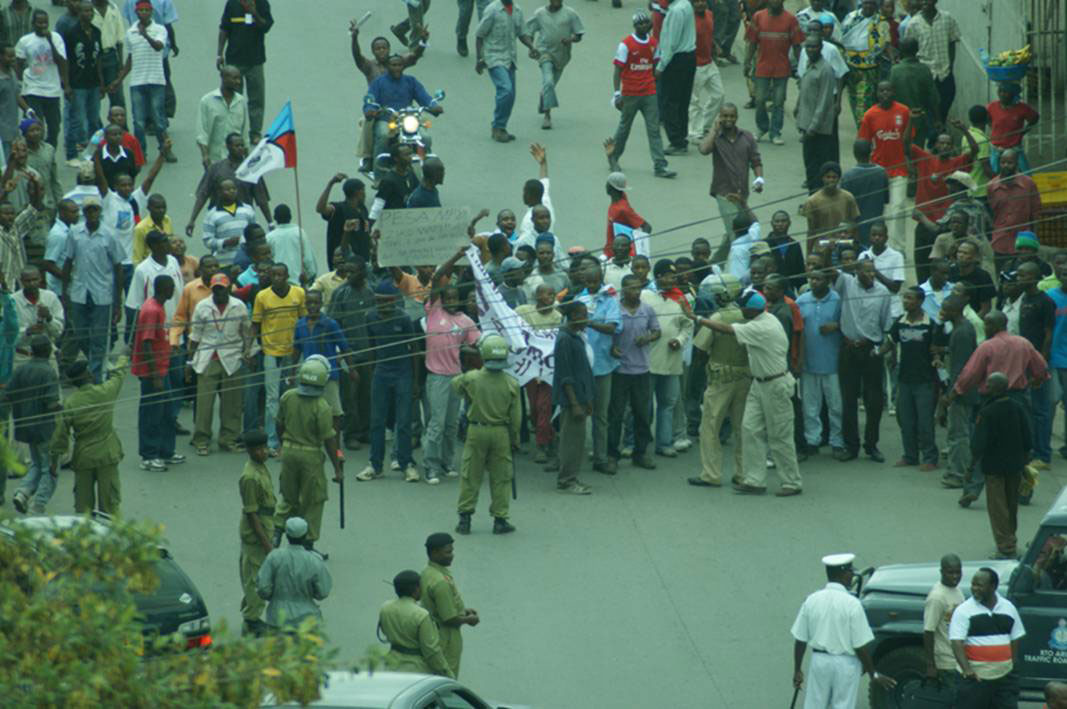
As this issue goes to the press, there are reports that three people were killed by police during a demonstration organised by CHADEMA in central Arusha on Jan 5th. The CHADEMA leadership were arrested and held overnight before being released on bail. We will include more details in the next issue of Tanzanian Affairs.
Category Archives: Issue Number
ZANZIBAR ELECTIONS

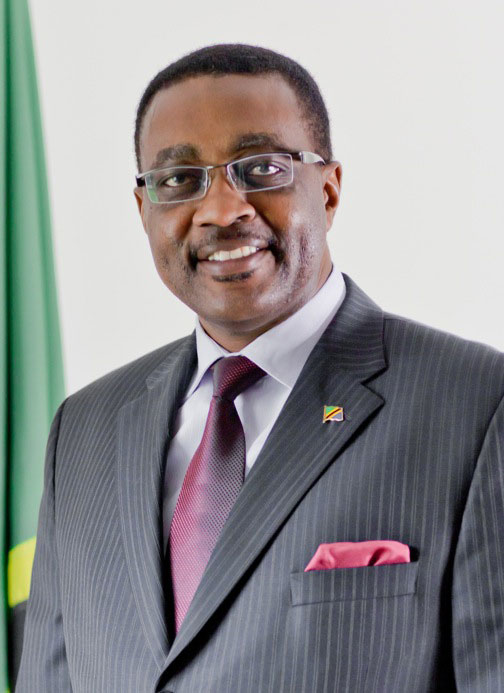
New President of Zanzibar Dr Ali Mohamed Shein (CCM) (left) and First Vice President, Maalim Seif Shariff Hamad (CUF), embrace at the start of the Government of National Unity.
The former Vice-President of Tanzania, Dr Ali Mohamed Shein who hails from Pemba, won the Zanzibar presidential election in Zanzibar with 50.1% of the votes. The CUF candidate Seif Shariff Hamad gained 49.1% of the votes. There were four other candidates.
As a result of the agreement entered into before the elections under which there would be a Government of National Unity (GNU) in the Isles after the election, the election itself took place peacefully and without major problems unlike the elections during the previous 15 years.
Some analysts have been trying to explain how it was that the two main parties (CCM and CUF) were able to come to an agreement after their fierce rivalry in the past. The explanation they have given is that CUF finally realised that the CCM would never allow it to rule Zanzibar alone (several CCM leaders made this clear in the past) and, that, if it were to have influence in the development of the country it could only do so in a government of national unity. Similarly, the explanation continued, the CCM realised that it was losing support and risked losing the 2010 election if this was free and fair. The election results, with the difference between the respective party’s votes differing by only one per cent, tend to support this hypothesis.
The Zanzibar Cabinet
The new President Dr Ali Mohamed Shein increased the number of ministers in his cabinet from 13 under the previous President Karume to 19 plus six deputy ministers (compared with five). The Special Seats for women were increased, with eleven allocated to CCM and nine to CUF.
The duties of the new Vice Presidents
Veteran leader in the Isles of the CUF party and a former Chief Minister in a CCM government, Zanzibar`s new First Vice President, Maalim Seif Shariff Hamad, has revealed that his official duties in the GNU will include being first-line advisor to the President and overseeing issues relating to the environment, people with disabilities and the war on drug abuse and HIV/Aids. Maalim Seif also explained that Zanzibar’s seventh phase government was determined to serve the people as diligently and efficiently as humanly possible and that the most important thing was for people to give their all in helping the government to serve them. He wanted to cut red-tape in the public service to the minimum and said he would himself set a good example by reporting for duty at 7.30am each day. He said that Zanzibar would only move forward socially, economically and otherwise “if all people ensure maximum discipline at their various workplaces and if public servants desist from bureaucratic behaviour and practices”.
He hailed the new President, Dr Ali Mohamed Shein (who had been Vice-President of Tanzania prior to the elections), for having cooperated with him during the run-up to the formation of the GNU and the cabinet “despite the fact that the constitution allows the president to form the cabinet even without any consultations” – Guardian.
The Second Vice President, Ambassador Seif Ali Idd, will be responsible for government business.
Pemba secessionists give up
One day after President Shein declared his new cabinet the group of 12 elders from Pemba who have been calling for secession of the island from Zanzibar said their demands had been met. Four years ago they submitted a petition to the UN and foreign diplomatic missions in Dar es Salaam, complaining that people of Pemba were denied their basic rights by the governments of Zanzibar and Tanzania. Coordinator of the group, Ali Makame said Zanzibar can now teach democracy to other African countries. He said the Pemba elders were now willing to collaborate with the unity government – Mwananchi.
ONGOING CORRUPTION CASES
The radar case and WikiLeaks
The case related to the purchase by Tanzania of an air traffic control system (RADAR) from Britain’s BAE Systems in 2001 for £28million reached apparent finality in London in December. After an unexpected reversal by the High Court in London of a previously agreed plea bargain arrangement under which BAE would compensate Tanzania, new information came from the publication by the London Guardian of dispatches from the American Ambassador in Dar es Salaam revealed by WikiLeaks. In its comments the Guardian wrote: ‘Every individual involved in the BAE scandal in Britain and Tanzania has escaped prosecution. BAE had agreed with the UK Serious Fraud Office (SFO) to pay £30m in corporate reparations and fines, provided the word “corruption” did not appear on the indictment. The Head of Tanzania’s Anti Corruption Bureau had alleged that his life might be in danger on this matter and that senior politicians in his country were ‘untouchable’….
In what appeared to be the end of the matter, as far as Britain is concerned, the Southwark Crown Court in London ruled that BAE would pay a fine of £500,000 for ‘failing to keep proper accounting records,’ £225,000 in legal costs and the remainder of the penalty of £30 million to the people of Tanzania as restitution. The court criticised BAE for concealing the purpose of nearly £8 million in payments made to Shailesh Vithlani, its marketing advisor in Tanzania at the time. (Thank you Elsbeth Court and John Sankey for helping on this story – Editor).
The Richmond Saga
On November 15 the International Chamber of Commerce (ICC) ordered the Tanzania Electricity Supply Company (Tanesco) to pay Dowans Holdings SA and Dowans Tanzania Limited a sum of Shs106 billion for breach of a power contract. The two companies inherited the project from the controversial Richmond Development Company of the USA’s Shs152 million-a-day emergence power supply contract, which was also the cause of the resignation of three ministers including the Prime Minister in February 2008. The two parties in the case were also instructed to pay fees and expenses of the arbitrators and the ICC administrative expenses amounting to $750,000 equally. Tanesco had moved to the High Court to restrain Dowans from disposing of its turbines. Dowans wanted to sell the turbines after the government had terminated power production and purchase agreements between Tanesco and Dowans on grounds of underperformance. The plan to sell the turbines had been a source of public debate throughout 2010 with some people proposing that the government should nationalise the plants after the company had allegedly failed to honour its agreement. There were varying reactions in Tanzania on whether the country should pay such a large sum to Dowans. Several leaders said that Tanzania should not pay.
Before this court decision the Government had increased the supply of heavy fuel to Dowan’s firm – Independent Power Tanzania Ltd (IPTL) – enabling it to pump more electricity into the national grid to ease the ongoing power rationing – Majira.
The ‘Twin Towers’ case
In September the Bank of Tanzania’s former Director Amatus Liyumba was sentenced by the Kisutu Resident Magistrate’s Court to two years in jail after he was found guilty of abuse of office during the construction of the Bank of Tanzania’s ‘Twin Towers’ project. His lawyers immediately filed an appeal. The change of scope of the work being done had been under the supervision of the Bank’s former Governor the late Dr Daudi Balali, who was in charge, they claimed. They further submitted that the court erred when it dismissed the appellant’s defence and his witness, former BoT secretary Bosco Kimela, on grounds that they had cooked their testimony because they were locked in the same remand prison – Guardian.
DAR-ES-SALAAM CONSTRUCTION BOOM

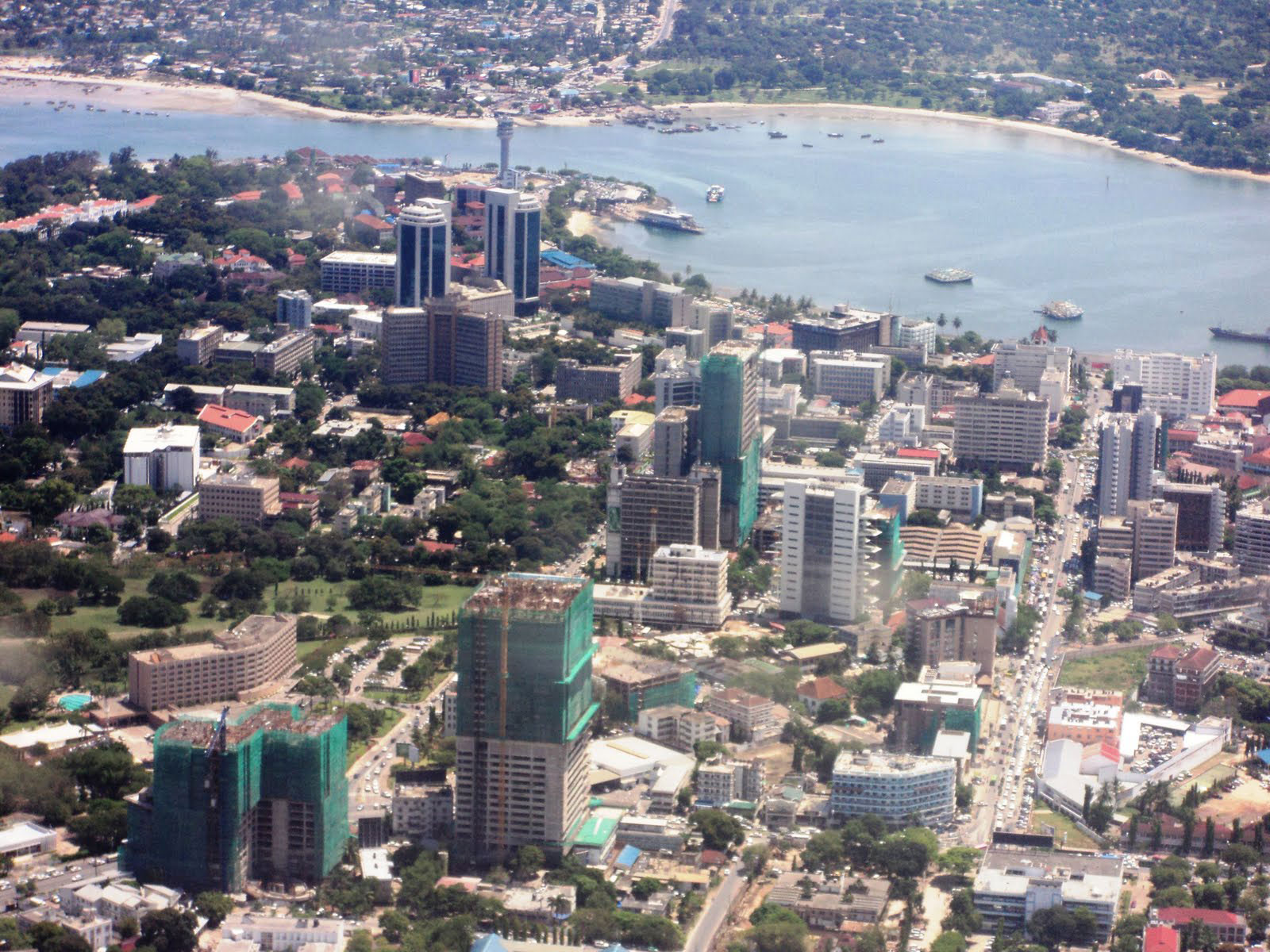
Kivukoni area of Dar-es-Salaam, with the Askari Monument to the right, and the Bank of Tanzania twin towers in the distance, near the ferry to Kigamboni. Photo Issah Michuzi http://issamichuzi.blogspot.com
Visitors to Dar-es-Salaam cannot fail to see evidence of the construction boom in the city. Perhaps most obvious is the number of skyscrapers being constructed in the central Kivukoni area (see photograph). One casualty is the Nyumba ya Sanaa (Nyerere Cultural Centre) which has been demolished to make way for a tower. The centre’s operations will be relocated to Msasani Village.
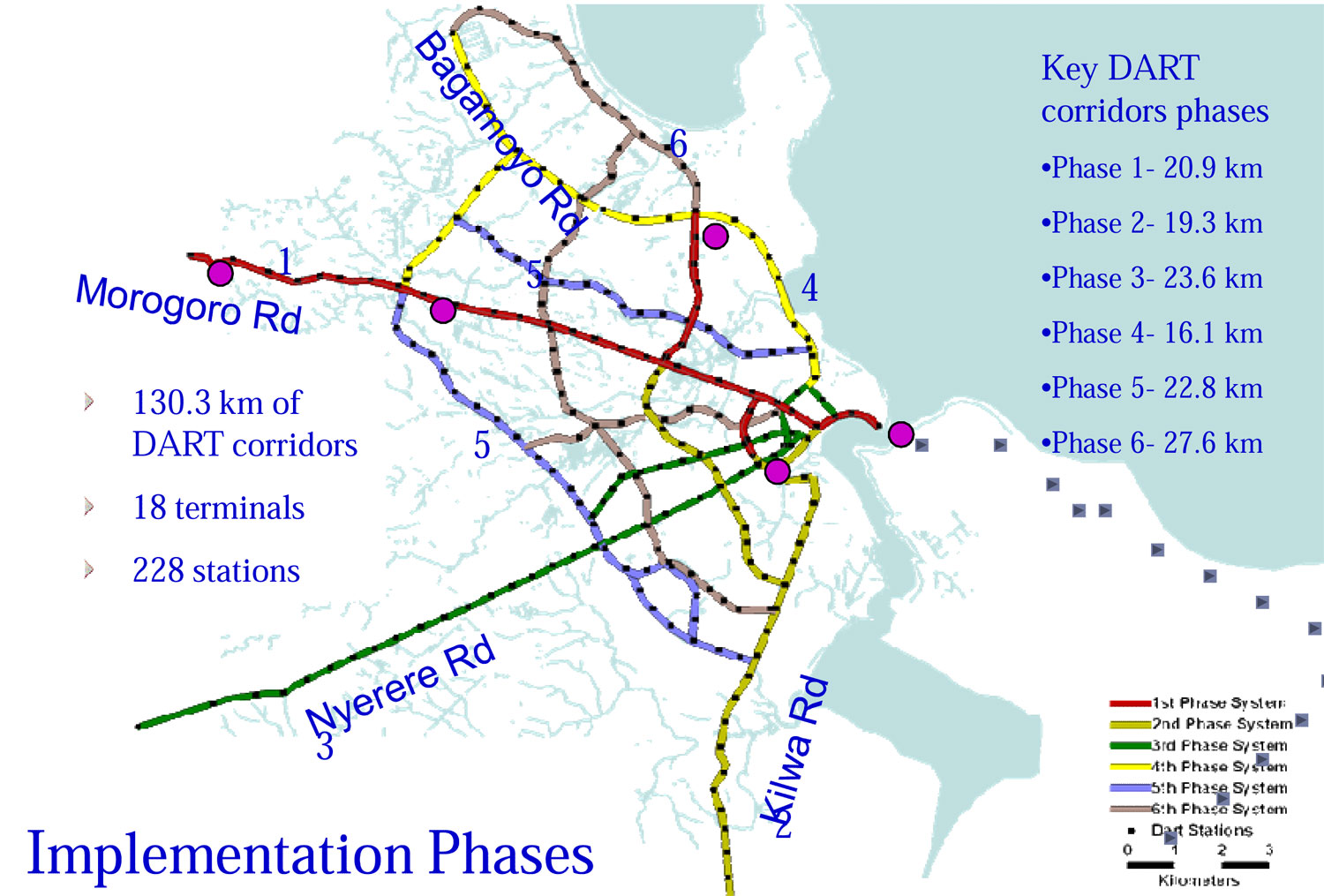
An ambitious project to try and alleviate the chronic congenstion faced by commuters is the Dar es Salaam Rapid Transit (DART) project, which was launched by President Kikwete in September and is expected to start operating in 2012. The system will use guided buses (Bus Rapid Transit) on segregated bus lanes, and dala-dalas will no longer be allowed to operate on the routes, but will operate as feeder services to the DART arterial routes.
The project will comprise six phases and a total of 130km of road plus two workshops, five main stations and six feeder stations. The first phase has just been let to Chinese firm Beijing International Engineering Group (BCEG). The route follows Morogoro Road from Kimara – Ubungo – Kivukoni with branches to Kariakoo and Morocco. 145 articulated buses, each capable of carrying 140 passengers will operate on the route, with an expected 400,000 passengers using the system every day. Subsequent phases comprise Kilwa Road, Nyerere Road, Bagamoyo Road, and orbital routes. The scheme further includes cycle tracks alongside the routes with the aim of encouraging non-motorised transport in the city. Funding for the project comes from the World Bank and UNEP as well as the Tanzanian governemnt.
The government has also released a tender for construction of a road flyover at Tazara and a bridge at Bendera Tatu that will link the junction of Nyerere Road to Bibi Titi Road, also with the aim of reducing congestion.
Private development is gradually spreading outwards from the central areas of the city, for example a large mixed use project planned for Mchikichini, Illala district, with over 1,600 multi storey flats, office accommodation and hotels, jointly funded with a Malaysian company.
Construction work is also underway at Julius Nyerere International Airport (JNIA). Speaking at the official launch of the project, Tanzania Airports Authority (TAA) Director General, Mr Prosper Tesha said that the project would involve rehabilitation of taxiways, runways and sewage system, and is set to be finished by May 2011.
RAILWAYS
The Tanzania Zambia Railway Authority (Tazara) has signed a contract with a Chinese manufacturer for the manufacture and supply of 90 container wagons worth approximately US$5 million. The Chinese company was given eight months in which to manufacture and deliver the wagons which will be used in the transportation of containerised cargo and metals such as copper and manganese. Other components of the agreement are expected to follow including the supply of six new mainline locomotives, rehabilitation of three shunting locomotives and training of staff. Chinese ambassador to Zambia Li Qiangmin was quoted as saying that Tazara was a symbol of friendship between Zambia and China and his country was saddened by problems the company was facing. “We are sending a technical team to Tazara to investigate the problems and help them improve efficiency,” the envoy said. Tanzania’s Infrastructure Development Minister Shukuru Kawambwa was quoted as saying that the Chinese financing was intended to save Tazara from total collapse as the company had been experiencing major operational and financial problems with a debt burden of over US$100 million – Guardian.
BUSINESS & THE ECONOMY
Addressing a conference of leading financiers in Dar es Salaam Prime Minister Mizengo Pinda stated that strong supervisory enforcement of financial regulations had enabled Tanzania to weather the storm during the recent world economic crisis without too much impact compared to other countries. Limited links with the global financial markets had also helped to keep the country’s financial sector strong and sound, as the world went through its most severe financial crisis in recent times. All major financial indicators of the local banking sector had remained strong he said. The banking system had remained adequately capitalised against any potential financial risk and the ratio of non-performing loans to total loans had remained within prudential limits. “Furthermore, the banking system has managed to keep enough liquidity to operate smoothly and cover its liabilities without recourse to the central bank.”
“Our banking system has maintained reasonable profitability”, he pointed out. He also announced that the Bank of Tanzania recently took steps to review the minimum capital requirements for commercial banks, raising it from Sh5 billion to Sh15 billion. This would consolidate the strength of the banking industry and enhance its ability to self-bailout in case of a crisis. On the proposed East African Monetary Union (EAMU), the PM said that recent reforms in Tanzania’s financial sector had placed the country in a better position for financial integration. Since these had been undertaken in various phases dating back to the early 1990s, the number of banks that operate in the country had increased to 42, up from only three public-owned banks in 1992. Insurance companies had increased from two in 1990s to 26 at present. The total assets of banks had risen significantly from an average of 6% of GDP in the early 1990s, to above 40% of GDP currently.
Warning to foreign traders
The government has issued a warning to foreign traders doing small business in Tanzania without following procedures. One of the requirements for a foreigner to do business in the country is that he should have a minimal capital of $300,000. Some foreigners are said to be entering the country for work on the mines or on major projects but later moving into petty trading in Kariakoo market in Dar es Salaam. The Guardian has reported that there has been an increase of shopkeepers of Chinese origin at several business centres in the city which were adversely affecting local businesses. However former Industry, Trade and Marketing Minister Dr Mary Nagu she said this was due to globalisation. “It is not only Tanzanians who conduct their businesses in the area, but also Congolese, Zambians, and Malawians” she said.
Big Korean investment
100,000 hectares of land in Tanzania’s Rufiji valley are to be developed by South Korean corporation KRC as part of Tanzania’s Kilimo Kwanza programme. In an interview with the BBC, Lee Ki-Churl, of the state-run Korean Rural Community Corporation, said the move would see Tanzanian farmers benefit from an education centre as well as from South Korean expertise on the ground. Plans envisaged half the land given over to local farmers with the rest being used to set up a food processing complex for exports to Korea. The initiative was said to be partly the product of Prime Minister Mizengo Pinda’s visit to South Korea to help develop economic ties between the two nations.
UK gives £103.5 billion
While some donors have decided to cut down on their donations towards General Budget Support, Britain is giving Shs 230 billion in the financial year 2010/11. This was said by the UK Parliamentary Under-secretary of State for International Development, Stephen O’Brien, during a visit to Tanzania. Earlier on, the British minister had a meeting with Finance Minister Mustafa Mkullo during which they had a profound discussion on the utilisation of the funding. “This will help in the priority areas as stipulated in the Mkukuta development strategy,” said the statement. Tanzania ranks third among the recipients of British aid – Mwananchi.
TANZANIA IN THE INTERNATIONAL MEDIA
Compiled by Donovan Mc Grath
‘A disgrace that we have to import food’ – New African (November 2010, No. 500)
In celebration of its 500th issue, New African magazine reprinted several noteworthy articles of the previous century to be read in retrospect. President Julius Nyerere’s message to Tanzania’s farmers (published in June 1981) was among these articles. Below is an extract on the realities behind the late president’s remarks:
‘… Julius Nyerere, recently told his countrymen they were facing “a serious food shortage” as a result of floods and droughts during the past four years … Nyerere said that last year [1980] Tanzania spent $83.3m on food imports … [M]inister for agriculture, John Malecela, warned Tanzanians that the country would run out of food … [A]bout 96% of the population, live in rural areas … President Nyerere has said that it was time for peasants to discard the primitive methods of farming inherited from their grandfathers, and engage instead in modern farming by using fertilisers and other advanced techniques.’ Immediately following the end of the article, NA remarks on what has happened since by saying: ‘Tanzania, like most African countries, still imports food. The Old Man must be turning in his grave.’
Introducing Kamba, Plaited Rope from Tanzania – Living Woods (November-December 2010)

It is amazing where Tanzania turns up! This is a wonderful article by Graham Cole published in ‘Living Woods’
Extract: ‘People in Africa could teach us plenty about using natural materials, from rushes and grasses to trees great and small … The natural material which I want to introduce here is a rope made from palm leaves. It’s made by plaiting leaf fronds together and the resulting rope is amazingly consistent in size. The leaves come from the tall doum palm which gracefully lines the banks of rivers in dry parts of Africa or from a dwarf palm which has its leaves conveniently close to the ground for harvesting. The rope which I prefer to call by its Swahili name “kamba”, has many uses including making chair seats and resilient bed bases. Some people also use palms leaves for thatching houses and for weaving mats, hats, baskets, fans and food covers…
‘Subsistence farmers can make kamba during the long dry season when there is little work to do on the land. The dwarf palms in Masasi District are evidently sustainable in their natural habitat and do not have to be planted in place of food crops. I was keen therefore to expand the trade in kamba to this country and I began importing it with the help of an Anglican monk whom I had met in Masasi and he arranged for someone to send me parcels by sea mail…
‘A number of chair makers have been enthusiastic customers and several leading teachers of greenwood crafts have encouraged pupils to use kamba in place of hemp or rush. One advantage is the greater width of kamba which allows for coverage with far fewer turns and so the time taken to weave a seat is reduced. As kamba is very strong an open weave is quite practical …
‘Kamba is sold very cheaply in Tanzania but I don’t sell it cheaply here. I take into consideration the many hours of labour needed to harvest the palm leaves and the patient and skillful (sic) plaiting needed for each long hank. Thus enhancing the value for our market makes good sense and I return all profits to the producers and their kin through the Anglican-organised Friends of Masasi charity. I think this can reasonably be called fair trade…
‘Hopefully this trade in kamba will help the producers and give some of you a wonderful “new” material to work with.’ Thanks to Tim Brooke for recommending this item – Editor.
Coin Shortage – “Retailers, buyers suffer as coins shortage bites hard” reads the headlines (The East African, August 2-8, 2010). Apparently, major retail chains in Kenya like Nakumatt, Tuskys and Uchumi now offer sweets to customers instead of coins. The acute shortage of coins has been blamed on runaway inflation, which has rendered lower denomination currencies almost worthless.
There is a similar situation in neighbouring Tanzania where inflation has seen the value of the shilling deteriorate, consequently increasing the price of goods and services: In Tanzania, no one wants [coins] except in buses is the headline in a corresponding article. Extract: ‘Tanzania coins are facing imminent death as they are hardly used anymore with people ignoring them saying they are worthless. The coins which are now rendered valueless are Tsh20 ($0.01), Tsh10 ($0.007), Tsh5 ($0.0035) and Tsh1 ($0.0007)… The only coins still in circulation – Tsh50 ($0.0035) (sic), Tsh100 ($0.07), and Tsh200 (0.14) – are mostly used in commuter buses.’
Africa’s largest national park – The East African (August 16-22, 2010)
Extract: ‘Tanzania has spent $4.027 million in expanding Ruaha National Park on the southern tourist circuit, making it the largest game sanctuary in Africa. The park has been annexed to Usangu Game Reserve, increasing its size to over 15,000 square kilometres. Tanzania National Parks Authority Director for Planning Projects and Tourism Services Allan Kijazi told The EastAfrican … that a large chunk of the cash was used to compensate local people who were displaced in order to pave the way for the project.’ Government officials expect the expanded park to boost tourism.
Flower Power – African Decisions (South African publication. Issue 3/2010)
In April 2010 the eruption of the Icelandic volcano Eyjafjallajökull resulted in an ash cloud causing widespread airline disruption and financial loss. However, despite such losses Africa’s well-established floriculture sector managed to absorb the impact and is moving ahead.
Extract: ‘Africa is the world’s biggest supplier of roses and carnations. Did you know this? … Flower farming, or floriculture, has become increasingly popular in Africa since the first flower farms started in Kenya in 1969. Since then the sector has grown exponentially, with a number of other countries establishing their own flourishing flower industries, including Zambia, Uganda, Ethiopia, South Africa, Zimbabwe, Malawi, Tanzania, Mozambique … and Côte d’Ivoire… The general climatic conditions in Africa are well suited to the production of flowers.’ Besides Eyjafjallajökull’s ash cloud, floriculture in Africa is facing other challenges, for example, the pollution and shrinking of Lake Naivasha in Kenya where ‘blame … has been laid at the door of the approximately 60 flower farms that line its banks… In Tanzania … concerns are being raised about health and safety of farm workers (70% of whom are women), many of whom work with harmful pesticides intended to produce crops of perfect blooms. Issues of sexual harassment also abound as many of these women are unfamiliar with their rights in the workplace. As a result, the Tanzanian Plantation and Agricultural Workers Union (TPAWU) presents courses to farm workers explaining their rights and equipping them with the skills needed to work safely with harmful chemicals.’
New cassava types boosting food security in Zanzibar – The East African (July 19-25, 2010)
Apparently, disease-resistant high yielding cassavas have been developed in Zanzibar. Extract: ‘While millions of cassava farmers in East and Central Africa are distressed by the viral cassava disease that is ravaging their crop, Zanzibar is experiencing a quiet revolution from four new disease-resistant and high yielding varieties. Introduced three years ago, the four varieties, Kizimbani, Mahonda, Kama, and Machui, have given the crop a new lease of life after it was devastated by the two main diseases afflicting the country cassava brown streak and cassava mosaic.’
Revealed: how crocodile that thought it was a cat got stuck on a branch of the tree of life – The Times (05.09.10)
Extract: ‘An ancient cat-like crocodile that lived 105 million years ago has been discovered in Tanzania …’ The “croco-cat” was similar in size to modern cats and probably hunted similar prey (small mammals, lizards and large insects). Extract continues: ‘The creature, which became extinct about 80 million years ago, has been named Pakasuchus kapilimai, meaning cat in Ki-Swahili … “-suchus” comes from the ancient Greek for crocodile, and the species name “kapilimai” honours the late Professor Saidi Kapilima, of the University of Dar-es-Salaam, a leader of the project that made the discovery.’
Regional security heads react to accusations of illegal renditions and rights abuses: Exchange of crime suspects within East Africa ‘normal,’ say police chiefs – The East African (October 11-17, 2010)
Extract: ‘In the wake of a Kenyan High Court ruling against the illegal transfer of Kenyan terrorism suspects to Uganda for detention and trial, it has emerged that security chiefs have been trading high profile criminals in blatant disregard of extradition laws… The partner states have a common agreement [since 1967] on mutual extradition of nationals who are suspected or accused of organised crimes and corruption, said Tanzanian security sources… The revelations came even as civil society and human rights groups were up in arms over the recent rendition of 13 Kenyans to Uganda on charges of terrorism… Tanzania’s Director of Criminal Investigations, Robert Manumba, said the agreement demonstrated the mutual determination to combat organised crime and would strengthen confidence among East African states…’ In reference to current negotiations between Uganda and Tanzania (i.e. extradition of three suspects linked to bombs in Kampala on 11 July), Mr Manumba later added that ‘… the EAC member states do not need to go through extradition trials to surrender cross-border criminal suspects who are arrested less than 100 kilometres from the common border. The mutual agreement also enables criminal investigation authorities in the EAC countries to exchange information without going through diplomatic channels… “The time has gone when criminals co-operated better than the countries.”’
Airport Security – Jenerali Ulimwengu, chairman of the board of Raia Mwema newspaper shares his concerns with airport security in an article published in The East African (October 4-10, 2010) beginning with the headline: “Airport thief who stole my Blackberry, beware, the cyber juju app is a killer.”
Extract: ‘Air travel has always been a hassle for me … The Tanzanian authorities … have done something all the others should emulate, by doing away with the “departure” and “arrival” declaration forms for Tanzanian passport holders… all you need do is show your face and passport, maybe stare into an electronic eye and off you go, or in you come. That really alleviates the burdens of travel for me, especially because I just hate filling out forms of any type… But all the smiles … will just as quickly be wiped out if our authorities continue to ignore a serious problem that has plagued our airports for as long as I can remember: Thievery [by unscrupulous airport handlers] … What good is served by all those electronic surveillance machines, what use are all the searches and frisks, if the human agents handling them can steal items such as underpants and aftershaves … I’m not saying all this simply because a week ago [a nimble-fingered luggage handler] went away with my Blackberry that I’d forgotten in checked luggage. It was a beautiful little gizmo, and may whoever took it never learn to operate it.’
Tanzanite – “Other dealers feel left out of the $500m industry: Protests as govt exempts firm from raw tanzanite ban” – The East African (September 27 – October 3, 2010)
Extract: ‘Tanzania has lifted the July ban on exports of raw tanzanite for commercial mining firm TanzaniteOne much to the dismay of other players [in the gemstone industry] … [who] see the London Stock Exchange-listed TanzaniteOne as trying to establish a monopoly on the $500 million tanzanite industry at the expense of local small-scale firms.’
Cross-border crime: Abductions – “Tanzanian parents panic over Kampala child kidnap gang” – The East African (September 20-26, 2010)
Extract: ‘Tanzania’s intelligence personnel have intensified a manhunt for kidnappers after several children were rescued from a gang of criminals in Uganda. The kidnappers operating from Uganda’s capital Kampala have been abducting children under 10 years in Tanzania, triggering the worst panic among parents in the country’s history… The crime is a relatively new phenomenon in Tanzania and is forcing parents to reduce their working hours to stay at home with their children.’ Tanzanian parents are paying as much as $6,000 ransom for the safe return of their children.
Tanzania’s election: Promises, promises – The Economist (October 30, 2010)
Immediately following the headline a statement reads: ‘Tanzania is still a backwater compared with its Kenyan neighbour to the north.’ However, CCM candidate January Makamba has plans that, if successful, may begin to change this view.
Extract: The parliamentary campaign in Bumbuli, a constituency of 167,000 souls in the mountainous Lushoto district of Tanzania, is a mixture of ancient and modern. January Makamba … stands for the modernists… Educated in the United States, the son of a CCM power broker, [Mr Makamba] recently quit his job as a speechwriter for [President Kikwete] to run in Bumbuli. He wants Tanzania to enter the world market. . . Bumbuli is among Tanzania’s most densely populated constituencies. Most of its people farm tiny plots too small to be subdivided further. But Mr Makamba has a plan. He wants to borrow $10m from Wall Street philanthropists, to be repaid in ten years. The sum, he says, will be invested in east African treasury bonds and stocks, in the hope of dividends producing $700,000 a year to invest in Bumbuli. Some of the cash would help farmers package their fruits and vegetables. Mr Makamba dreams of refrigerated lorries owned by the community leaving daily at dawn for Dar es Salaam and Nairobi with “Fresh from Lushoto” produce.’
Potent malaria drug offers hope of a single-dose cure – The Times (03.09.10). This article shows a picture of the singer Cheryl Cole who contracted malaria in Tanzania in 2010.
Extract: ‘The first patient trials of a potent new anti-malaria drug could begin by the end of the year, after animal experiments showed it to be highly effective against a disease that causes more than 800,000 deaths a year. The new agent, known as NITD609, promises to provide a new generation of treatments for malaria, which could fight strains of the parasite that have developed resistance to today’s frontline drugs. Such fresh therapies are considered to be critical to the prospects of containing malaria, which causes 243 million infections worldwide and 863,000 deaths each year. The disease … kills a child in Africa every 45 seconds… Rick Davis, business development manager at the Wellcome Trust, said: “A single-dose cure would go a long way to addressing the unmet medical need in malaria …”’ Thank you John Sankey for this item – Editor.
Survey shows popularity of witchcraft – Tablet (24.04.10)
Extract: ‘Many professing Christians and Muslims in sub-Saharan Africa also believe in alternative gods, witchcraft, evil spirits, sacrifices to ancestors and reincarnation, according to an extensive new survey [conducted by the US-based Pew Research Center, which specialises in religious issues]… The survey found that Tanzania had the highest levels of belief in juju and superstitious objects… In contrast, Rwandans were found to be the least superstitious people in Africa, with only five out of 100 people interviewed saying they believed in juju.’ Thank you John Sankey for this item – Editor.
Welcome to Africa, the home of mobile banking – until the West catches up – The Times (October 27, 2010)
Extract: ‘The British company’s M-Pesa mobile payment system may have been created in Newbury, but it is in Africa that it has taken hold. The system, launched three years ago in Kenya, already has 20 million users in three countries… The [Vodafone] network has set itself an ambitious target to have 50 million M-Pesa users by 2012… [M-Pesa] has grown beyond the company’s wildest expectations… The reason that the service has taken off in Africa lies in the lack of traditional banking infrastructure and the prevalence of mobile phones across the continent. Only 3.5 million of Tanzania’s 41 million inhabitants have a bank account but half of the population owns a mobile phone… The benefits of the service have not gone unnoticed and the Bill and Melinda Gates Foundation is set to provide £5 million to spur greater take-up of mobile payment systems in Tanzania. Cenk Serdar, head of mobile payment for Vodafone, said that M-Pesa had fostered trade in a way that charity donations have failed to do. It is a lesson that is being applied on the ground in Tanzania, where Vodacom runs a micro-finance initiative to help women in business. The first beneficiaries are 109 women in the coastal town of Bagamoyo, who will receive interest-free loans for two months. None have bank accounts and will disperse the money via M-Pesa.’
The Economist (November 27, 2010) included an interesting Vodafone Innovation advertisement with the heading: Using simple tools to solve complex problems. The ad is based on a testimony by Mfaume Hermedi, a district health co-ordinator in Tanzania.
Extract: ‘[Mr Mfaume] can now use SMS technology to help reduce the spread of malaria.’ The advert text points out that if the right drugs to treat the disease were more widely available, this would reduce the number of people dying from malaria.
Extract continues: ‘Malaria outbreaks occur all over the country and it is difficult for health care professionals such as Mfaume to keep track of the stocks available in all the different clinics … [which is the reason] why Vodafone’s SMS for Life programme has made a huge difference. It’s a partnership between Vodafone, Novartis, IBM and Roll Back Malaria, and it’s a service that helps Mfaume keep account of his supplies. All he has to do is send a text message from the drug distribution centre where he is based to remind staff at the clinics to check and report on their stocks. Each reply feeds into a database covering the entire province so Mfaume can see a detailed report showing him where stock are running low. Mfaume can now allocate or even re-allocate his supplies to where the need is greatest.’ Thank you Ron Fennell for this item – Editor.
Gemma Sisia, from a sheep farm in New South Wales, Australia, is one of the remarkable people who do extraordinary work in Tanzania. Gemma founded the School of St Jude in Arusha in 2002 with just three students and one teacher. The school now boasts over 1300 students and 350 staff. The Australian local community newspaper the Cambridge Post (November 20, 2010, Vol.37, No. 47) featured the sponsor Evi Ferrier of Mosman Park, Perth, who visited the school.
Extract: Nine-year-old Samwel Wilson, a student at the School of St Jude … was over the moon when Evi Ferrier … dropped in for a visit and helped make costumes for the school musical, Joseph and the Amazing Technicolor Dreamcoat… With a motto of Fighting Poverty through Education, [the School of St Jude] educates some 1300 of the country’s poorest but brightest children and is helping them break the cycle of poverty that has gripped their families for generations. The education is free and sponsors like Evi cover the cost of fees, uniforms, stationery, transport, hot meals, snacks and drinks for each child. To read more about the school’s amazing success, or join its sponsorship program, see www.schoolofstjude.co.tz.’ Thank you Douglas Gledhill for this item – Editor.
Rare spray toads make long hop home from US to Tanzania – The Guardian (21 August 2010)
Extract: ‘… One hundred extremely rare Kihansi spray toads, a species last seen in Tanzania in 2004 after their habitat was destroyed by a new hydroelectric dam, have been flown home from the Bronx and Toledo zoos in the US. They were taken to a “state-of the-art propagation centre” in Dar es Salaam … “We are optimistic that they will acclimatise soon and be taken to their homeland in Kihansi Gorge in the near future,” said Anna Maembe, of the Tanzanian government, which collaborated on the project with the World Bank and the two zoos. The species was first discovered in 1996 during an environmental impact study for a large hydroelectric dam in Udzungwa mountains, in southern Tanzania. The toads lived exclusively in a five-acre zone under the spray of a waterfall.’
Appelant (sic) cited favouritism: Govt cancels lab supplies’ tender – The East African (November 15-21, 2010)
Extract: ‘Tanzania has revoked the tender to supply deoxyribonucleic acid reagents, instruments, supply services and spare parts citing a flawed process. The tender had been awarded to Immunolabs Medical Supplies Ltd and Hightech Systems (T) Ltd. According to the Public Procurement Appeals Authority, the tender submitted by the appellant (Mesacom UK) as well as the successful tenderers were flawed. . . PPAA ordered that the appellant be compensated Tsh2.12 million ($1,420) as legal consultation fees and appeal filing fees, against their request for Tsh38.2 million ($25,670).’
Tanzania’s oldest ship to be ‘floating’ museum – The East African (November 15-21, 2010)
Extract: ‘Tanzania plans to turn one of the world’s oldest passenger ships – mv Liemba – into a floating museum… The Graf von Götzen, as it was formerly known, was built in 1913 at the Meyer-Werft Shipyard in Papenburg, a city in the district of Emsland in Lower Saxony, Germany, along the river Ems… Count Gustav Adolf von Götzen was a German explorer and governor of German East Africa who presided over the bloody quashing of the Maji Maji Rebellion… [The ship] was salvaged by a British Royal Navy salvage team and re-commissioned in 1927 as the Liemba. The ferry has been operating almost nonstop since that date.’

NEW HIGH COMMISSIONER
Peter Kallaghe is Tanzania’s new High Commissioner to Britain, where he replaces Mrs Mwanaidi Sinare-Maajar, who was earlier this year appointed ambassador to the US. The son of a diplomat, Mr Kallaghe attended Kiev State University where he studied International Relations. He was previously ambassador to Canada.
Mr Kallaghe addressed the Britain-Tanzania Society AGM in October and details of his speech can be found in the BTS newsletter.
AMBONI CAVES THREATENED
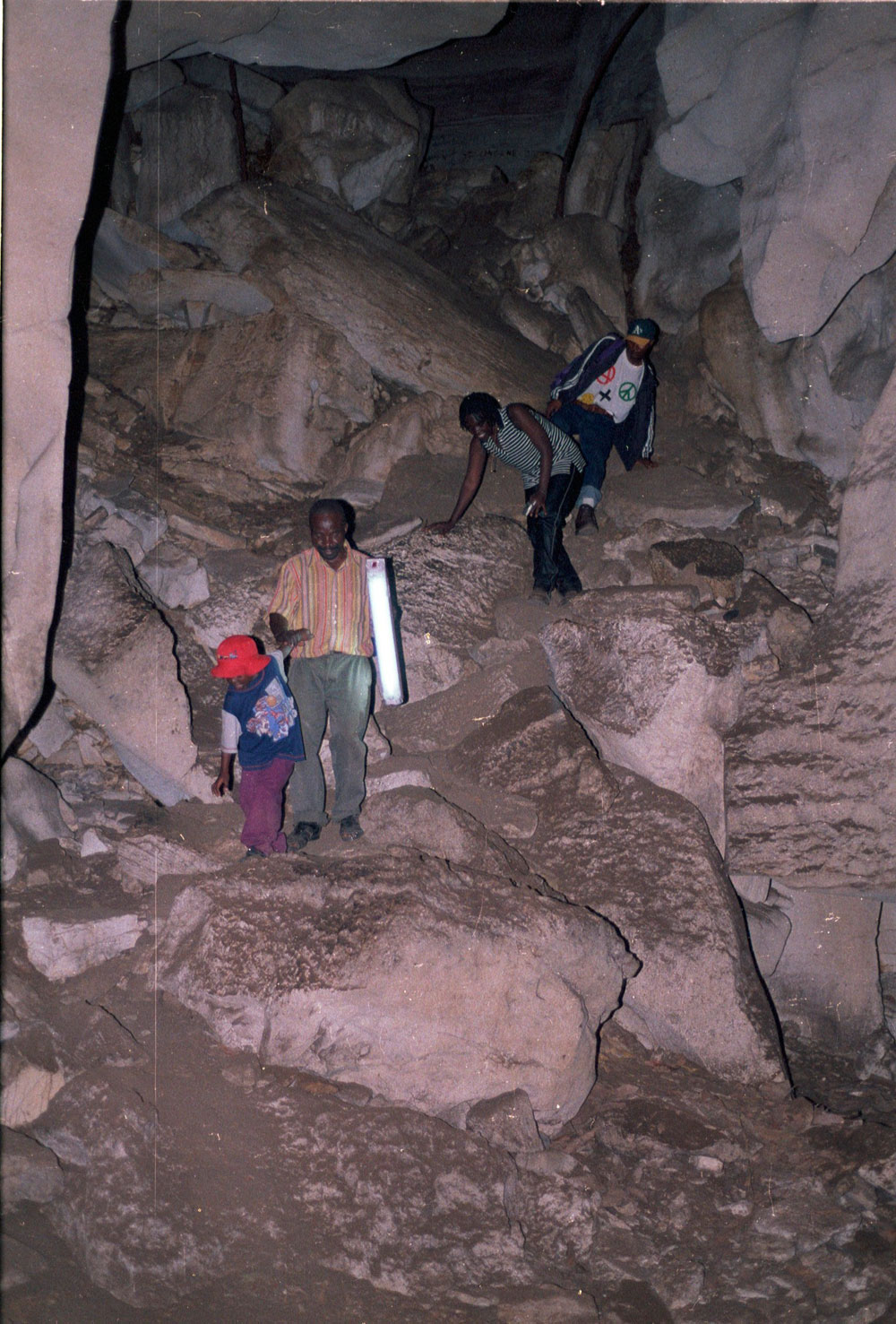
The Amboni Caves are one of Tanzania’s less well know tourist attractions, located just 8 km north of Tanga. The most extensive limestone caves in East Africa, formed about 150 million years ago during the Jurassic age, there are altogether ten caves covering an area of 234 km², although only one is accessible for guided tours.
Local people have used the caves as a sacred place for anything up to 600 years, and what appear to be ancient paintings of animal footprints can be seen in some areas, although it is not clear how these were created. The caves certainly have strong significance with the local people, and there are chambers within the caves which are treated as sacred and reserved for worshipping. One of them is called “Mzimu wa Mabavu”, which some believe is the home of a powerful deity who can increase wealth, bring justice, alleviate sickness & sufferings and increase fertility. Bottles with perfumes, oil or blood from sacrificed goats or chicken can be seen at the entrance of the chamber.
Amboni Limited, a company which was then operating sisal plantations in Tanga Region, acquired the area in 1892 and informed the British colonial government about the caves who in turn declared the caves a conservation area in 1922. In 1963, the then government of Tanganyika handed over the caves to the Department of Antiquities.
As well as tourists, the caves attract students for their geography lessons, with examples of stalactites and stalagmites and rocks sculpted into strange shapes from the passage of water. For those with fertile imagination, the guide can point out resemblances of all kinds, including a rock in the shape of a lion at the entrance of the cave, rocks in the shape of a sofa, a ship, a crocodile, an elephant, the US statue of liberty, a statue of mother Mary, and even a map of the continent of Africa !
There are numerous legends associated with the caves, such as a hole which is believed to connect to underground rivers which lead to Mombasa in Kenya. According to one story, in 1914 a European man accompanied by his dog ventured down the hole and disappeared without trace except for the dog which was found dead a few days later in Mombasa. There is also a chamber inside the big cave which was used as a hideout for Osale Otanga and Paulo Hamis, two latter day Robin Hoods who used to steal goods and terrorise foreigners in the region. While the government regarded them as criminals, locals seems to have regarded them as freedom fighters during the struggle for Independence.
However, recently concerns have been growing that the caves are being seriously damaged by blasting in nearby quarries where lime and aggregates are being mined.
Reacting to charges that the government has neglected the historical site, Deputy Minister (Ministry of Natural Resources and Tourism), Mr Ezekiel Maige said he is planning to meet with the Tanga District Commissioner’s Office and the City Council to discuss ways of saving the caves.
He said that the Ministry has initiated a strategy to promote tourism in Tanzania, including the Amboni caves. “The Northern Tourism Circuit has been promoted for years while the North Eastern part which includes the Amboni Caves, the East Usambara mountains and the Saadani National Park has not enjoyed the same publicity,” he said. He noted that the Ministry has already taken steps to improve the area as a tourist attraction by reviewing the area legally and increasing its budget, noting “We have already released over Sh30 million for the purpose. We want the Caves to become one of the identities of Tanga”.
MISCELLANY
Banknotes

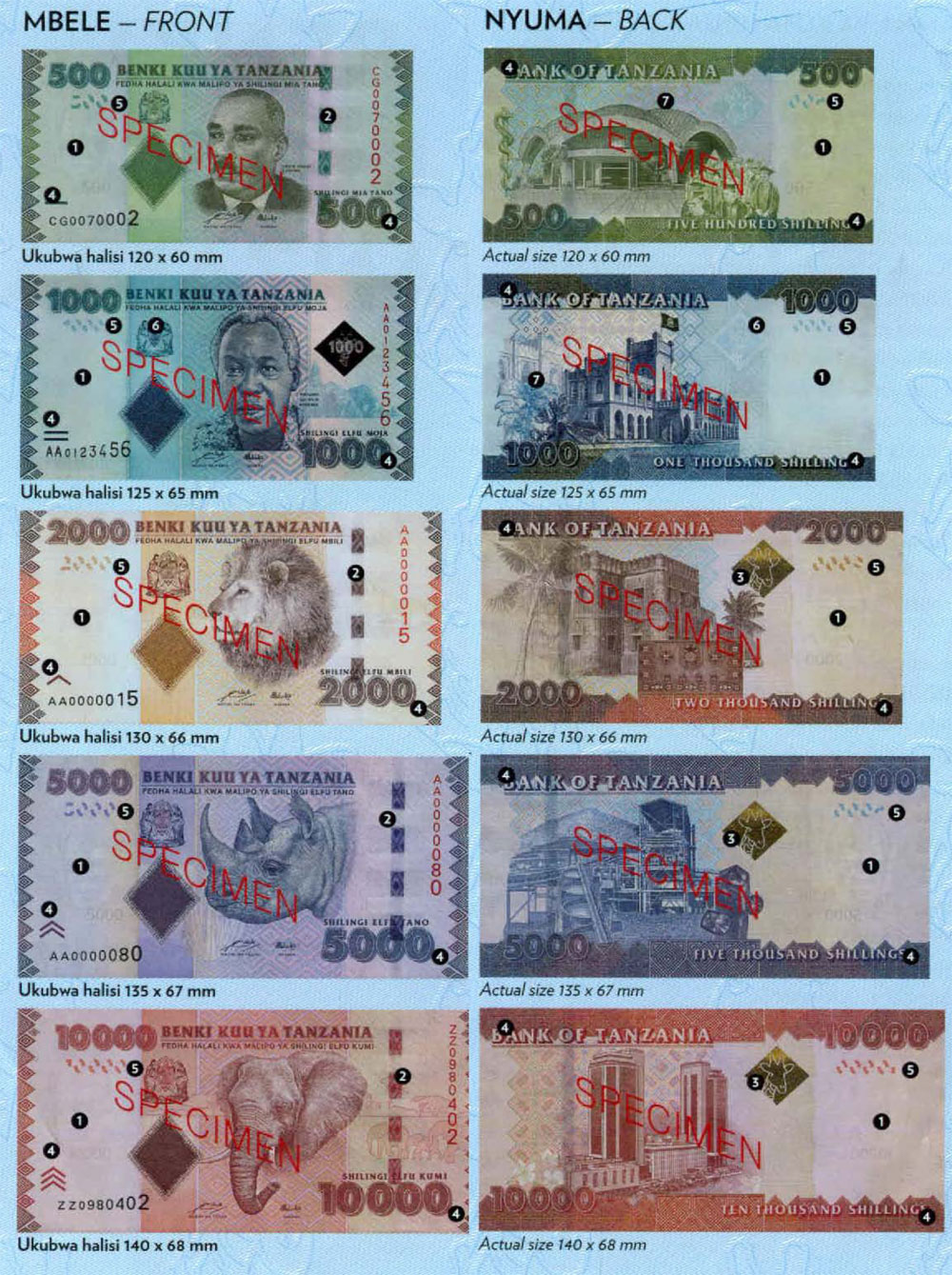
The Bank of Tanzania has issued a new series of banknotes which will circulate side by side with the current notes which were introduced in 2003, until these are gradually withdrawn from circulation. Changes include the portraits of founders of the Nation, the late Mwalimu Julius Kamabarage Nyerere on the one thousand and the late Sheikh Abeid Amani Karume on the five hundred denominations. The other notes show Tanzania’s wildlife heritage with the Lion, the Rhino and the Elephant. Various new technologies are also included in an effort to curb the problem of counterfeiting.
Ghailani Partially Cleared
Tanzanian Ahmed Ghailani (36) who has been in a New York court charged with taking part in a worldwide terrorist plot, which killed 236 people in the bombing of the American embassies in Nairobi and Dar es Salaam in 1998, has been cleared of 284 out of 285 criminal counts. The jury found him guilty on November 17 of just one count – conspiring to destroy buildings and property of the US, which carries a minimum sentence of 20 years in prison. Ghailani was captured in Pakistan in 2004, held by the Central Intelligence Agency for more than two years and subjected to so-called enhanced interrogation techniques, which the defence called torture. He was later transferred to the US naval base at Guantanamo – Guardian.
Mkapa for the Sudan
The United Nations Secretary General, Mr Ban Ki-Moon, has appointed former President Benjamin Mkapa the leader of a special panel to monitor the referendum in Southern Sudan. Other members of the panel according to the Citizen are former Portugal Foreign minister Antonio Monteiro and former Nepal Election Commission chairman Bhojraj Pokharel.
New rôle for rats?
Sokoine University of Agriculture in collaboration with ‘Apopo HeroRats’ are looking at prospects of mounting cameras on rats following earthquakes to help in the search for human beings. Dogs can only sniff those lying on the surface. The organisers are looking for funding for equipment including cameras that won’t burden the rats, wireless devices to project the images to a visual device, microphones, torches and also training of the rats so that that they know when to return when they come across a body. It is hoped to use the same concept being used in Mozambique to detect landmines. Over 1.9 million square metres of land of has been returned to the local population there.
Apopo is a social enterprise that deploys rat technology for humanitarian purposes and is currently employing 143 staff in Tanzania and Mozambique and has over 300 rats in various stages of breeding, training or implementation.
The Serengeti Highway
[See background in TA 97] A network of 56 environmental non-governmental organisations asked the government in December not to tarmac a 53 km section of the proposed 480 km Arusha-Musoma highway through the Serengeti National Park as it is an important corridor for seasonal migration of wildebeest. The project has drawn the attention of activists from around the world.
An official from Serengeti Environmental Protection and Development Association said that the majority of people backed the road due to its socio-economic importance – Guardian.
Rise in Pass Rates
53.5% Standard Seven pupils passed the examinations that determine those entitled to join secondary schools. This is an improvement of 4.1% over the previous year. 48% of the successful pupils were girls and 59% boys. Pass rates increased for Swahili (71% compared with 69%) mathematics (25% compared with 21%) and science (56% compared with 53%) – Citizen.
Project Fame
Uganda’s Davis Ntare emerged the winner of Tusker Project Fame reality show in November to claim the KSh5 million ($62,000) prize. Tanzania’s Peter Msechu finished in second place, with Kenyans Stephen Nyabwa and Amileena Mwenesi in third and fourth places respectively. A total of 18 contestants spent eight weeks at the academy and were coached on improving their vocal, instrumental, dance and performing skills.
Lilanga wows Paris
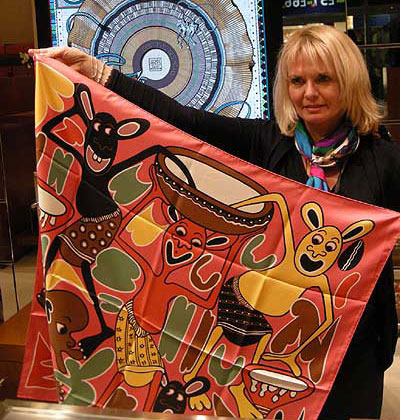
As a sign that the “tinga tinga” style has become an internationally accepted art style, Hermes of Paris have brought out one of their famous silk scarves screen printed with a design by the late George Lilanga. Lilanga’s work has been displayed outside Africa since the late seventies, at the Mary Knoll Ossining Centre in New York in 1978 and in a 1985 travelling exhibition that stopped in Austria, Denmark, Finland, Norway and Sweden. He also took part in the landmark “Africa Remix” road show which passed through Europe, Japan and Houston in 2004-2006.