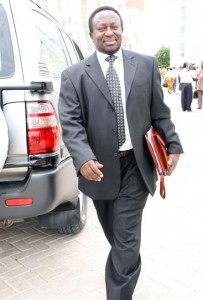
 Dr Mwakyembe prior to delivering his report in Dodoma
It is understood that the Richmond saga began when plans were being made for the construction of an oil pipeline from Dar es Salaam to Mwanza. There was intense international competition to obtain the construction contract. Eventually it was awarded to a hitherto unknown American company called Richmond Development Company. It soon became apparent however that this company was not able to do the job.
In 2006 Tanzania faced a serious crisis in electricity supply and, as an emergency measure Richmond was awarded a contract to supply generators to provide 100 megawatts at a cost of TShs 172 billion. The generators failed to arrive on time and when they did they did not work as required.
The pipeline was never built and the generators were provided by another company. Under part of the contract however the government agreed to pay some $137,000 a day regardless of the amount of electricity provided. Opposition MP’s began to smell a rat and the House of Assembly set up a Select Committee to investigate the whole saga under the chairmanship of the ruling CCM party’s Kyela MP Dr Harrison Mwakyembe. The committee worked diligently and eventually came up with a 165- page report.
MP’s shocked and angry
On February 8 the Guardian described what happened when Dr Mwakyembe read his report to Parliament: ‘Courteous norms and sugar-coated language were set aside as fiery MP’s spoke with bitterness as they contributed to the debate on the findings of the select committee. Opposition and government CCM MP’s spoke with one voice in criticizing the contract imposed by top government officials on TANESCO…. It was a ‘born-again’ Parliament, with MP’s clearly stating that the time for tolerating vice and the signing of bad contracts by ministers and other public officials while Parliament looked on helplessly were gone for good. After hearing the committee’s findings they said: “It’s time we (legislators) joined hands. It is time we worked together regardless of our political differences in matters of public interest. We have to protect the welfare of millions of Tanzanians who are dying simply because of problems caused by these dubious contracts” MP’s said. Anna Komu (opposition CUF MP) said “The squandered TShs 200billion were equivalent to the annual budgets of the ministries of Education and Community Development and Gender, and Children’s Affairs. Philemon Ndesamburo (opposition CHADEMA MP), asked the President to drop the head of the PCCB anti-corruption authority and Attorney General from the task force investigating the BoT scandal and said that those behind the Richmond contract should be taken to court and have their property confiscated by the state. “In other countries, such people are hanged in public” he said.
The Select Committee Report
Dr Mwakyembe told parliament that his committee had proved beyond reasonable doubt that Richmond did not deserve to be awarded the tender for the generators. “We would like to announce in this Parliament that Richmond Development Company LLC, which won the tender and eventually signed a contract with TANESCO on June 23, 2006 lacked experience, expertise and was financially incapacitated.” The firm had no share records or registration in the US or Tanzania and the whole bidding process had been marred by corruption and gross irregularities. Richmond had later passed its contract to Dowans Holdings. Dr Mwakyembe came up with 16 recommendations to make those responsible for ‘this shameful act’ pay for their misdeeds.
He said that due to the fact that the final selection of Richmond as the successful bidder was done by Prime Minister Edward Lowassa himself on June 21, 2006, and due to the fact that he had exerted pressure to have Richmond awarded the tender, it was upon him to ponder over his responsibility to the nation.
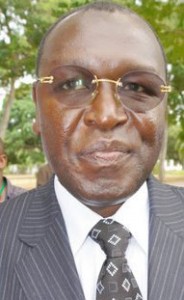 Nazir Karamagi
The committee also proposed that the Minister for Energy and Minerals, Nazir Karamagi, be taken to task for barring TANESCO from withdrawing from the agreement which it wished to do. The committee said Karamagi’s decision indicated that some trusted leaders were out to advance their personal interests at the expense of national interests.
As for a subsequent report by the Prevention and Combating of Corruption Bureau (PCCB), a report which had cleared the Richmond contract, the committee said that this had been a ‘whitewash.’ The committee proposed that immediate changes in the Bureau`s management be made to restore public confidence in it. It was not there to cover blunders.
The committee also proposed that Attorney General Johnson Mwanyika, and his representative, Donald Chidowu, who formed part of the Government negotiation team, be fired immediately for failure to advise the government on the various irregularities. Mwakyembe said his committee had failed to comprehend the degree of arrogance displayed by officials in the Ministry of Energy and Minerals, who had deliberately disregarded the advice of the cabinet on adherence to procurement procedures and had three times ignored technical advice by the Public Procurement Control Authority. The ministry had ended up granting Richmond the contract and rejecting eight other applicants.
Mwakyembe’s committee further advised on the need for the government to abandon the ‘colonial attitude’ that contracts between the government and private companies should remain secret. Parliamentary standing committees should be involved in the early preparations of agreements, Mwakyembe said.
The committee’s report also implicated former Energy Minister Dr Ibrahim Msabaha for the confusion that reigned during the entire process, which had denied possibly more credible companies from the right to win the tender. Mwakyembe said Msabaha was reported to have told MP’s that he had no powers on the irregularities because the company belonged to the ‘big boss’, meaning the Prime Minister. “I am only taken as `Bangusilo,` meaning in the Zaramo language, a ‘sacrificial lamb’ to die for others” – Guardian.
Mwakyembe said that since Richmond falsely presented itself as having been registered in the USA, its proprietors and all collaborators should face justice. Commenting on allegations that the business registration authority, BRELA had allowed the swapping of genuine files of Richmond with fake ones, Mwakyembe said BRELA should submit reports to the relevant ministry on a weekly basis and copies of the files should be preserved by the government separately. The drama continued when CCM MP Lucas Seleli, who was a member of the Select Committee, took to the podium to tear apart earlier allegations made by Prime Minister Lowassa that the committee had condemned him unheard. He challenged the Prime Minister to withdraw his allegations, short of which he would seek the application of Parliamentary Standing Orders to compel the Prime Minister to apologize. The Prime Minister had had a hand in the whole transaction he said.
When Lowassa rose to respond to Seleli’s demand that he withdraw his remarks, he said a line that was contained in the report that had particularly disturbed him was to the effect that ‘The proprietors of Richmond are Prime Minister Lowassa and his close friend (Igunga MP) Rostam Aziz.’ The Speaker sidestepped this issue by inviting other MP’s to contribute to the debate on the findings. Then followed the announcement by the Prime Minister that he intended to reign over the Richmond scandal and the ministers for Energy and Minerals (Nazir Karamagi) and East African Cooperation (Dr. Ibrahim Msabaha) also resigned. Karamagi said the government signed the agreement in good faith because the country was facing power problems – Guardian.
The most heartbreaking factor experienced when collecting evidence, said the chairman, was the fear shown by government officials, including professionals. “The time has come for this House to enact a law that would protect junior officers when giving information to relevant authorities in the interest of the nation.“
After all this, as recently as late April 2008 Richmond was advertising in the press that it was a respectable company – Guardian.


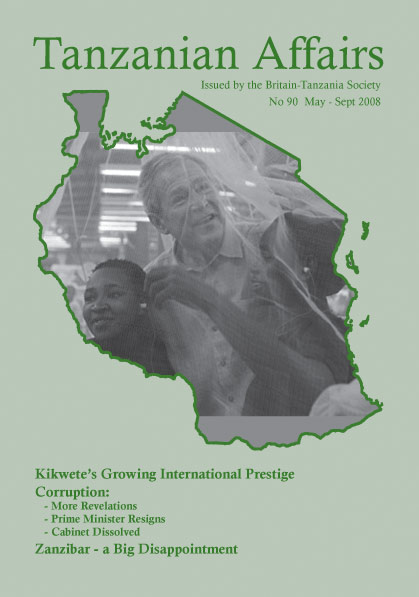
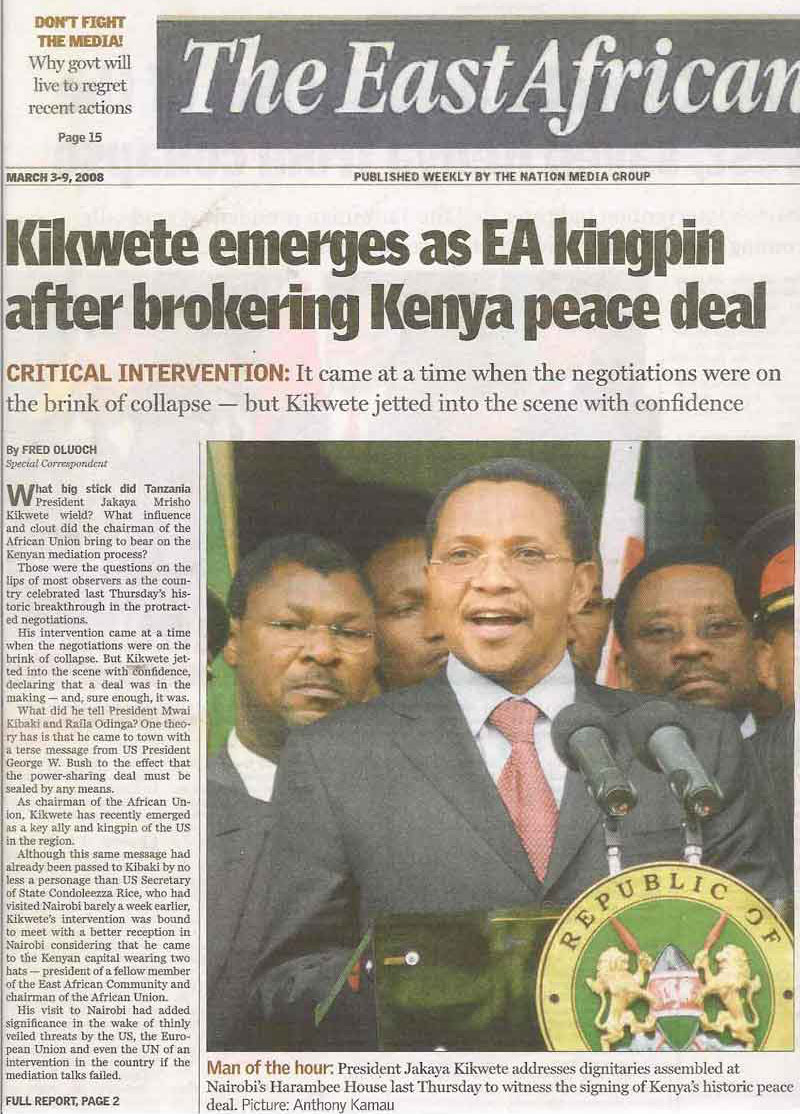 The East African front page
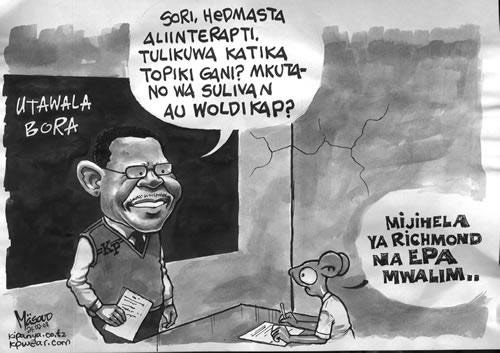 “Sorry the headmaster interrupted me – which topic were we on ? The Sullivan Conference [to be held in June 08] or the World Cup ?” “The Richmond and EPA scandals, teacher” Cartoon by Kipanya www.kipanya.co.tz
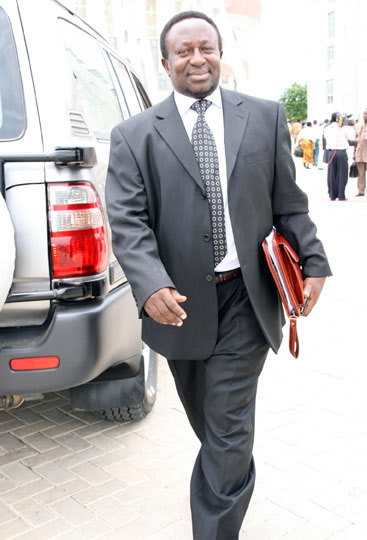 Dr Mwakyembe prior to delivering his report in Dodoma
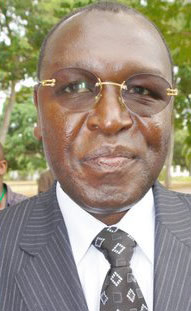 Nazir Karamagi