Writing in the GUARDIAN (August 16th) Xan Rice describes how the three British senior managers of City Water were forcibly escorted out of Tanzania on June 1st 2005 to mark the end of City Water’s involvement in water supply in Dar-es-Salaam but also the beginning of a long legal dispute between BiWater plc (which led the consortium) and the Tanzanian Government (See previous issues of TA – Editor related stories ) Continue reading
Category Archives: Issue Number
MISCELLANY
On September 24 the Africa-America Institute Annual Awards Gala in New York raised nearly $900,000 for educational and training programs in Africa. Tribute was paid to the people of Tanzania for the country’s significant progress in education, environmental conservation, and in creating a business-friendly environment for entrepreneurs and investment. Tanzanian President Kikwete accepted the ‘African National Achievement Award’ on behalf of the people of Tanzania. Nearly 500 distinguished U.S. and African leaders and top diplomats attended the function.
The founder of ‘The Grumeti Community and Wildlife Conservation Fund in Tanzania,’ announced the creation of 20 Kikwete Scholarships to support tertiary level training for Tanzanian students to pursue studies in the field of environmental conservation at U.S. universities. In his remarks, President Kikwete personally thanked Tudor Jones for the scholarships, saying it would help further study on environmental conservation in Tanzania. Continue reading
CHINA – QUALITY & COUNTERFEITS
As imports of goods from China increase from year to year business people and customers are increasingly complaining about the quality of the goods and the number of imported counterfeits. The Chinese Embassy in Dar es Salaam laid the blame on unscrupulous traders and manufacturers who were using China as a transit route for their exports to Tanzania. The reaction came a few days after the ‘Free Competition Commission (FCC)’ stated that 50 per cent of Chinese consignments sold in Tanzanian markets were counterfeits including, in particular, Hitacho TV sets and Kiwi Shoe Polish. The government is planning to review the law governing the FCC with a view to giving it legal teeth, so that it can conduct random inspections of godowns and retail outlets – Guardian.
REVIEWS
Edited by John Cooper-Poole (UK) and Marion Doro (USA)
LAW AND JUSTICE IN TANZANIA: A QUARTER OF A CENTURY OF THE COURT OF APPEAL EDITED BY Chris Maina Peter and Helen Kijo-Bisimba. Dar-es-Salaam: Legal and Human Rights Centre and Mkuki na Nyota Publishers. 2007. xx plus 382 pages. ISBN 9987 449 43 3. £29.95.
The Court of Appeal of Tanzania was established in August 1979, after the demise of the respected Court of Appeal for East Africa. Approximately twenty-five years later the Court celebrated its Silver Jubilee in style, with speeches by leading figures (including the Presidents of Tanzania and Zanzibar), a procession, dancing, and a seminar on the Court’s performance. This substantial volume includes photographs of the celebration and of almost all of the judges in the history of the Court, but the bulk of it is devoted to sixteen thoughtful papers on the history, achievements, and challenges of this admirable institution. Continue reading
TA ISSUE 88
TANZANIA LOSES TWO STALWART FORMER CHIEFS
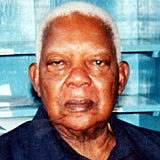
Two of Tanzania’s most distinguished chiefs in the period before independence have passed away.
The country’s first Justice Minister after independence, Chief Abdallah Said Fundikira, died of heart complications in Tabora in mid August. The late Chief joined Makerere University College in Uganda from 1940 to 1946 and obtained a qualification in Agriculture. In 1957, he was ordained as Chief of the Wanyamwezi in the Nyanyembe chiefdom. He lost his title when founding President Nyerere scrapped all chiefdoms after independence. Continue reading
ZANZIBAR NEGOTIATIONS COLLAPSE?
According to the Chairman of the Civic United Front (CUF) Professor Ibrahim Lipumba, quoted in Mtanzania and other media outlets, negotiations which have been going on between his party and CCM for the last eighteen months have reached a blind alley. He told the press that there was a very slim chance of a successful conclusion to the talks, which were due to end on August 15, unless there was international arbitration. Lipumba attributed the impasse to a lack of political will in the Zanzibar branch of the ruling CCM party. “It seems that President Kikwete (who had said at his inauguration that he was determined to solve the impasse in Zanzibar) has given in to hardliners who have been resisting any changes or amicable solutions,” Lipumba said. Warning that the political situation in Zanzibar was very volatile he reminded people of what was happening in Darfur. Continue reading
OTHER POLITICAL DEVELOPMENTS
On the mainland things have been relatively quiet politically in recent months. But, as this issue of Tanzanian Affairs went to press, there were heated debates in parliament as the opposition parties tried to exercise their limited muscle.
National Assembly Speaker Samuel Sitta prevented the tabling of a private member’s motion by Dr Wilbroad Slaa, opposition CHADEMA MP over an alleged scam at the Bank of Tanzania – Mtanzania.
Then the outspoken CHADEMA MP Zitto Kabwe was suspended under House Standing Orders until January 2008 after the House voted against him, midst acclamation from ruling Chama Cha Mapinduzi (CCM) MP’s. He was accused of humiliating Energy and Minerals Minister Nazir Karamagi. He had claimed that the Minister had lied about a controversial gold mining contract which he had signed in London. Kabwe had tried to table a private members motion requiring the formation of a committee to investigate the contract. Continue reading
BUDGET 2007/8 CRITICISED
In her 2007/2008 budget statement in June, Finance Minister Mrs Zakhia Meghji stated that she would not borrow from the domestic market this year through Treasury bill and government bonds. The East African described this as the most ambitious fiscal target by a finance minister in years. She must have felt under some pressure to do this because large government deficits make it difficult for the private sector to obtain credit and contribute to inflation. Interest rates on Treasury bills are 16% in Tanzania compared with 12% in Uganda and 6% in Kenya. In the previous year the Government took TShs 35.92bn from the Bank of Tanzania.
Mrs Meghji indicated that next year’s revenue should be enough to enable the government not to borrow locally as weather forecasts appeared encouraging. She will be relying on considerable support from the donor community however to do this. Some 42% of the budget would come from donors – up 3% on 2006/2007.
Many of the other measures she announced attracted strong criticism especially a proposed increase of almost 9% on diesel and petrol and also more tax on kerosene which would have seriously affected the poor. Some opposition MP’s described the budget as the worst since independence. Eventually, under heavy pressure from MP’s, she deleted the kerosene tax increase from the budget, and reduced the proposed increase in vehicle licenses for smaller vehicles and increased them for luxury cars.
Priorities for expenditure were: education (18%), roads (12.8%), health (10%) and water (5.1%). She was criticised by MP’s for allocating only 6.2% to the agricultural sector.
Funds were also provided for the identity card scheme which is aimed at facilitating tax collection, accessing bank credit and to help in the war against crime. Income tax for low income earners was reduced from 18.5% to 15%. The budget also had a ‘green’ element. Tariffs for low energy consuming bulbs and solar energy panels were zero rated.
In summary, the Government expects to spend TShs 6.06 trillion, an increase of TShs 1.20tn on the previous year.
Meghji praised the efforts being made in revenue collection and estimated that GDP would grow at 7.3% this year.

BUSINESS & THE ECONOMY
Tanzania no longer needs financial support from the International Monetary Fund according to IMF Deputy Managing Director Murilo Portugal quoted in the Guardian. He said that Tanzania had achieved strong growth and low inflation through macroeconomic policies in the past few years. He added that the external position had strengthened in recent years, and debt relief had reduced Tanzania’s external debt burden. He said the role of the Fund now would be to continue supporting Tanzania’s development of a sound macroeconomic policy framework and to encourage reforms in areas that are critical to securing higher and more sustainable growth. Much remained to be done for Tanzania to make greater inroads in reducing poverty and raising living standards especially in creating a business environment conducive to private investment. Continue reading