TANZANIA IN THE INTERNATIONAL MEDIA

by Donovan McGrath

Bamboo: Africa’s untapped potential taking root in Africa April 2016 edition of New York-based United Nations’ Africa Renewal magazine published a feature, with individual subheadings for the handful of African countries involved in the cultivation of bamboo for the growing global market. Tanzania is one of the countries featured under the subhead­ing Tanzania: New income for 5,000 rural women. Extract: Bamboo has been increasing in importance as a non-timber forest product in Tanzania over the last two decades, according to INBAR [International Network of Bamboo and Rattan]. Locally bamboo is sought for handicrafts, residential fencing, flower farming, farm props for banana plantations, furniture and other minor cottage industry products like basketry and toothpicks… INBAR, in partnership with the International Fund for Agricultural Development, helped to establish 100 bamboo nurseries and set up micro-enterprises, and trained 1,000 locals in a specially created Bamboo Training Centre. Today some 5,000 women in these rural communities produce handicrafts and desks for local schools and sell charcoal briquettes.

Tanzania featured in a number of articles published in the Financial Times (UK), which included comments on mobile phone technology and President Magufuli’s handling of the economy and the political situation in the country. The following are extracts of these articles. Thanks to Carol Wilcox and Jeremy Jones for sending these items – Editor

Tanzania’s new president shakes up east Africa’s ‘sleeping giant’:
Extract: Mr Magufuli, 56, embarking on his first five-year term, is creating a buzz of expectation that at last Tanzania has found a leader capable of awakening the “sleeping giant” of east Africa, one with huge, largely unexploited, gas and mineral resources. “He walks the talk,” says Samuel Wangwe, principal research associate at the Economic and Social Research Foundation in Dar es Salaam. “When he says something, he follows through. He’s not a liar.” The presidency commands huge constitutional power – and Mr Magufuli has not been afraid to use it… He pressed ahead with a highly flawed electoral process in Zanzibar, semi-autonomous island, which deprived the Zanzibari opposition of what looked like victory. Nor has he been shy of using sweeping cyber crime legislation to silence critics. This month, a court sentenced a man to three years in jail for insulting the president on Facebook… He scrapped normally lavish independence day celebrations and, borrowing a stunt from Narenda Modi, India’s prime minister; took to the streets with a broom, declaring he would spend the money saved on sanitation. He has clamped down on foreign travel for officials, personally vetting all trips. His predecessor, Jakaya Kikwete, was so fond of foreign tours he was christened Vasco da Gama, after the Portugese explorer… Mr Magufuli’s supporters argue that he must first use his authority to take on a system corroded by corruption and complacency before he can rebuild institutions. But even advocates worry about his tendencies to run government by fiat and take snap decisions without, they say, thinking through the consequences. A crackdown on illicit sugar imports has led to shortages. Last week, his government demanded, with no consultation, that foreign-owned telecoms companies list on the local stock exchange within six months [see following item]. One Lawyer accused the president of hypocrisy, saying he talked about fighting corruption while encouraging the police to steal tyres of illegally parked vehicles… (FT 27 June 2016)

Tanzania wants foreign-backed telecos to list: Dar es Salaam aims to keep tabs on revenues and widen share ownership
Extract: An amendment to a new finance bill will require the eight operators in Tanzania, one of Africa’s fastest-growing telecoms markets, to float 25 per cent of their shares on Dar es Salaam’s thinly traded stock exchange. Johannesburg-listed Vodacom, a subsidiary of Vodafone, Stockholm-based Millicom and India’s Bharti Airtel will need to list part of their business alongside five local operators. The mandatory listing, which appears to reverse an informal agreement with the main operators, is part of a government strategy to squeeze more revenue from the private sector. An executive at one of the foreign operators, who did not want to be named, described the move as a complete surprise given it had been made without any consultation. Phillip Mpango, finance and planning minister, has told the national assembly that the measure would “help the government trace the exact revenue generated by these companies”, as well as allow Tanzanians to hold shares in telecom companies. He denied that the bill was a reversal of policy, saying it merely enforced a stipulation in the Electronic and Postal Communication Act of 2010 for foreign telecoms companies to list locally… John Magufuli, Tanzania’s new president, has accused some foreign companies, particularly in the mining sector, of seeking to avoid local taxes by declaring losses in the country and repatriating profits and dividends overseas. (FT 30 June 2016)

Tanzania’s fintech and mobile money transform business practice
Extract: Ramadhani Saidi Gereza is a barometer for the way the mobile phone technology is changing Tanzania. The engine oil seller in Dar es Salaam’s Kariakoo market says mobile money has transformed his business. “People from upcountry used to send cash by bus and I had to go further to collect their money,” he says. “Now I don’t have to. It’s much more efficient.” Yet it is not all good news. The country’s eight mobile operators offer various incentives to attract customers, but they do not always deliver, Mr Gereza says. “Bonus payments [for custom­ers] are delayed or we don’t get them so I tell my city customers to go and get cash and pay with that [instead].” These glitches are a result of the continuous innovation the operators feel compelled to adopt as they compete in one of the most promising markets in sub-Saharan Africa. Johannesburg-listed Vodacom, which is majority owned by Vodafone, is the largest mobile operator by subscriber numbers. Its main rivals are Tigo, a brand name of Stockholm-listed Millicom, and India’s Bharti Airtel. Together, the three operators control some 90 per cent of the market of 34m active mobile contracts out of a population of 55m. The GSMA, a global body representing operators, predicts Tanzania will be among the top seven subscriber markets in sub-Saharan Africa in the next five years. Mobile money is the main battleground. While Kenya’s M-pesa has won international plaudits for its groundbreaking mobile money system, Tanzania has arguably overtaken its northern neighbour in the depth of its mobile money market… The World Bank reported last year there were more mobile money accounts per 1,000 adults in Tanzania than anywhere else in Africa… “Mobile money is so successful because the competition is cash, not the banks,” says Diego Gutierrez, Tigo’s general manager for Tanzania. Some 60 per cent of adults have mobile money wallets in the country, while only 15 per cent have bank accounts, Tigo says… (FT 13 July 2016)

Tanzanian president’s tough tactics alienate political opponents
Extract: When John Magufuli became Tanzanian president in November it was widely expected that he would shake up government. He campaigned under the slogan “It’s all about work” and had garnered a reputation for action in his previous role as works minister. Less clear was how he would handle the nation’s politics… Western diplomats argue he failed his first political test soon after being inaugurated. He backed the decision by the Zanzibar electoral commission chairman to annul the semi-autonomous region’s October election results based on unproven claims of irregularities. The opposition boycotted the re-run in March and US and EU diplomats boycotted the inauguration of the islands’ president… Of more concern, according to Ms Anyimadu, is the opposition MP’s decision to boycott parliamentary sessions overseen by deputy speaker Tulia Ackson. The action was prompted by their belief that she was mistreating them and stifling democracy at the behest of Mr Magufuli, who appointed her. Opposition MPs were further incensed by a speech Mr Magufuli gave last month in which he ordered opposition parties, for the sake of developing the nation, to confine their political activities to parliament and not engage in campaigns that could obstruct the government until the 2020 election. Freeman Mbowe, chairman of Chadema, called the move “regrettable”. “[The president] should know that he can’t and won’t silence us,” he said after the speech. Elsewhere, the new government also appears to have curtailed Tanzanians’ democratic rights. The police have banned opposition rallies … (FT 13 July 2016)

Zanzibar – where ‘politics is like religion’
In Stone Town, the historic centre of Zanzibar City, people are still talking about politics months after the elections were supposedly set­tled… Zanzibar, which joined Tanganyika in 1964 to form the union of Tanzania, has been seething with political tension for years… In 2000, some 35 people were killed after police shot into a crowd following a contested poll. There were further fatal clashes in 2005. Tensions bubbled to the surface again last year when the electoral commission annulled October’s election on the grounds of alleged irregularities. The main opposition candidate for president, Maalim Seif Sharif Hamad of the Civic Unite Front, declared himself the winner… Internationally, the election is regarded as a serious blot on Tanzania’s copybook. Most foreign diplomats refuse to interact with Zanzibar’s new government… The stand-off has raised fears of radicalisation of Zanzibar’s Muslim majority population… Fatma Karume, granddaughter of Zanzibar’s first president, says the situation is explosive. “Zanzibar has never wanted to lose its identity. Now we are being swallowed up.” (FT 13 July 2016)

Superstition is fuelling a grisly trade in human body parts. Tanzania
shows how it can be curbed This article, published in The Economist (London), is a fairly recent addition to the publications concerned with the treatment of people with albinism in Tanzania.
Extract: To be born with albinism is hard luck. This genetic condition, in which people lack pigments in their skin, hair and eyes, affects on in 20,000 worldwide and is more common in Africa… For centuries people have believed that albinos are cursed. In parts of Africa babies born with albinism were once routinely killed. That ghastly tradition has died out, but others persist. In Swahili many people call albinos zeru (ghost) or nguruwe (pig). Children with the condition are often bullied at school and forced to eat separately from their peers… Women are at higher risk of rape because of a myth that sex with an albino can cure HIV. Worst of all, many albinos are murdered by people who think that their bones contain gold or have magical powers … Some witchdoctors claim that amulets made from albino bones can cure disease or bring great wealth to those who wear them. A gruesome trade in their body parts has spurred killings in Tanzania, Burundi, Mozambique, Zambia and South Africa. Sometimes family members sell their albino nephews or cousins for cash… Superstitions die hard, in any part of the world. Yet the senseless killing of albinos can be curbed. Tanzania, once one of the most dangerous countries in Africa for people with albinism, has sharply reduced the number of murders by clamping down on demand. It has banned unlicensed witchdoctors and increased penalties for those caught trading in body parts. It investigates albino murders energeti­cally: in recent years it has arrested and convicted several “albino hunt­ers”. The police have issued mobile phones to many albinos so that they can call an emergency number if they feel unsafe. The recent appoint­ment of an albino lawyer to the cabinet may also have helped reduce the stigma attached to the condition… (11 June 2016)


Tanzania Breweries now partners with traditional liquor outlet owners

Published by The East African (Kenya). Extract: Tanzania Breweries Ltd (TBL) plans to expand the market for its traditional liquors Chibuku, and Nzagamba, by using existing “drinking dens” as outlets and the owners as agents. TBL managing director Roberto Jarrin said integrating tradi­tional beer makers in the business would save the brewers some of the costs of making the liquor… But not all traditional brewers are excited about the programme. “I once bought Chibuku from agents for sale, but it was not profitable because the people are not used to it,” said Aurelia John, a traditional liquor brewer. “I don’t mind the hard work it takes to make my own product, which people are used to.” … Aisha Khalid, who used to brew skadi from sorghum, sugar and yeast, says she used to make a profit of Tsh10,000 ($4.6) in four days after investing Tsh15,000 ($7). When she started selling Chibuku, her profit dropped to Tsh7,000 ($3.2). However, she says being an agent is not as tedious as brewing, and the liquor is guaranteed to be safe for consumption… According to a study by CanBack, traditional beer accounts for 50 per cent of the alcohol consumed in Tanzania. Homemade brews from more than 120 tribes make up almost 92 per cent of that segment. Mr Jarrin said that in order to ease replacement of traditional beer with TBL brands, they are considering making it in traditional flavours taking the cue from popular local brews like banana beer (mbege) from Kilimanjaro, palm wine (mnazi) from the coastal areas, bamboo wine (ulanzi) from the southern highlands, and maize beer (komoni) from the central zone… (11-17 June 2016)

Success of Mkuki na Nyota
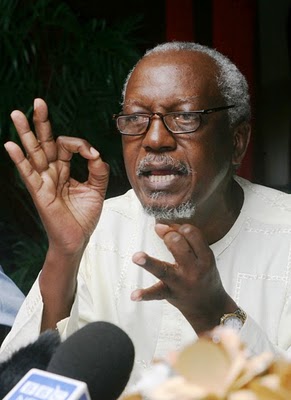
Walter Bgoya

Walter Bgoya


This is a very interesting profile, by the Ugandan writer A.K. Kazia, of the Tanzanian publisher Walter Bgoya, published with the heading A luta continua! in the July 2016 edition of the New African (UK). Extract: [Walter Bgoya was born in 1942] in the placid northwestern Tanzanian district of Ngara, on the border of Rwanda and Burundi … Leaving Ngara extruded him, as with so many of his generation, into the wider world of black struggle… The years he was a civil servant, from 1965 to 1972, would be the most intense years of his life… In his 20s, Walter would meet and become friends with founding Angolan president, Agostinho Neto, get on first-name basis with Samora Machel, and beyond expectations, find himself, as Tanzania’s Charge d’Affaires in Addis Ababa, playing host to the warring parties of the Biafran war … [H]ow does one characterise a publisher, in East Africa of all places, that issues Tax Dispute Resolutions under the same logo as War and Peace in Contemporary Eritrean Poetry? Add to these a war-chest of titles covering topics from anthropology, law, children’s books, culture and arts, health, political economics, biography, history. The common thread that connects all these, is the idea of Africa. There are the titles that overtly say so: New Imperialism by Wole Soyinka, and The Long Road to Socialism by Samir Amin (both based on the Mwalimu Julius Nyerere lectures) … Straight up, Mkuki na Nyota is a refuge for liberation-era thinkers in East Africa scarcely able to find a publisher in Kampala or Nairobi. The subject matter of these books is what the University of Nairobi’s Dr. Tom Odhiambo calls “local knowledge.” “Even when [Bgoya] was at the [Tanzanian Publishing House], the idea was that whatever you publish has to be the local in conversation with the global.” The white hair, the stately bearing, and the crackly, charismatic voice punctuated with French and Kiswahili expressions and inflected with Nyerere aphorisms, a Tanzanian pastime, do not conceal the youthful energy of Bgoya, now 73. For the 18 years that he ran the Tanzania Publishing House, books became an extension of the struggle, the years in which the dives of Dar es Salaam jumped to the sounds of liberation: these were the acronym-days of FRETLIMO, FRELIMO, SWAPO, MPLA, FRITLIN, POLISARIO, ZANU, ZAPU, ANC… Mkuki na Nyota was conceived in crisis. Structural Adjustment Policies, the austerity programme to which indebted African governments signed up under duress, gutted the Tanzania Publishing House (TPH) … Out of a job and still not fifty, Walter decided to go it alone. Employing his daughters as secretaries, he issued a children’s book, Karibu Tusome (Let Us Read). As luck would have it, a new literacy project in Tanzania, promised to buy two-thirds of the titles produced to promote reading. They took 2000 copies of the book, and hence launched Mkuki na Nyota… Tanzania offered more opportunities for a publisher than many African countries. Its language policy favouring Kiswahili, was perhaps its greatest strength… Tanzania made Mkuki na Nyota; Tanzania needs Mkuki na Nyota. To remain the Swahili nation, it needs publishers like Walter…
SPORT

by Philip Richards

Rio Olympics 2016

Tanzania’s delegation to the 2016 Rio Olympic Games in August will comprise of seven athletes, reports Daily News (July 2016). The country will be represented by 4 track-and-field athletes who will compete in the marathon, two swimmers and a Judoka. TOC Secretary General Filbert Bayi named the marathon athletes as Fabiano Joseph (men), Said Makula (men), Alphonce Felix Simbu (men) and Sara Ramadhan (women). The other three athletes who have booked their tickets to Rio are swimmers Hilal Hilal Hemed and Magdalena Moshi, both to compete in the 50m freestyle category and Andrew Mlugu in judo.

Although seven is a small number, it is an improvement on the numbers sent to London 2012. However, it continues to be disappointing that so relatively few athletes are competing given the obvious potential, especially when neighbouring Kenya is sending around 100 athletes. Furthermore, boxing is not represented as it was in 2012 due to financial difficulties experienced in sending boxers to qualifying events.
Tanzania has failed to win Olympic medal since the 1980 Summer Olympics in Moscow, where the country won 2 silvers – Bayi himself in the steeplechase as well as long-distance runner Suleiman Nyambui.

Despite the challenges, let us wish Team Tanzania well!

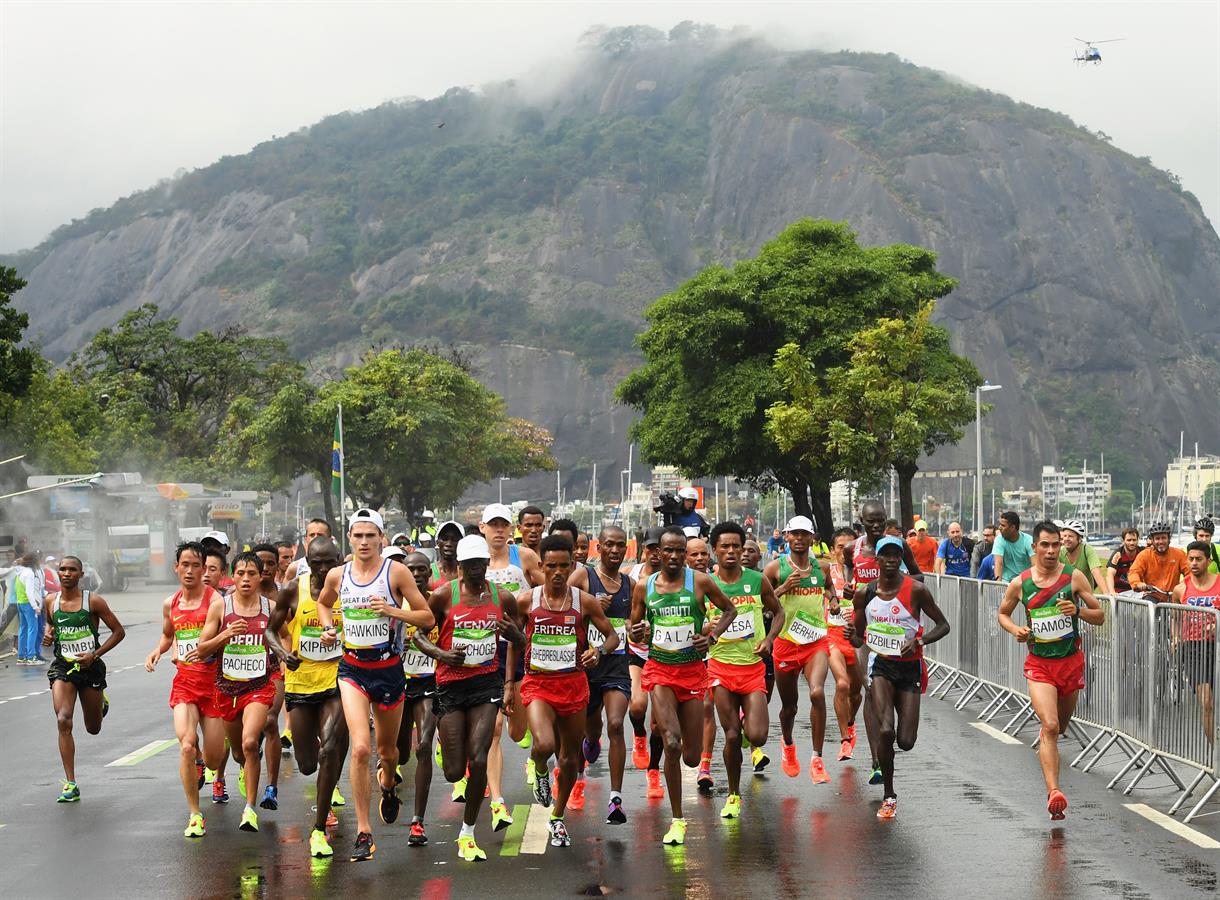
STOP PRESS: The stand-out performance among Tanzania’s Olympic team was undoubtedly Alphonce Felix Simbu in the men’s marathon. His time of two hours and eleven minutes earned him fifth place, two and a half minutes behind the race winner, Eliud Kichoge of Kenya.

Alphonce Felix Simbu (extreme left) in the Rio marathon

Alphonce Felix Simbu (extreme left) in the Rio marathon

Swimming
Even if Tanzanian swimmers do not return home from Rio, the sport is poised for brighter future following efforts by some schools and stake­holders to groom talent and find quality coaches. A good example is the ongoing swimming summer camp run by Dar es Salaam Swimming Club, and conducted by experts from Dubai-based Hamilton Aquatics. (Daily News)

Football
Whilst the eyes of the world have inevitably been on Euro 2016 in France, congratulations must go to Young Africans who sealed a 26th domestic title with two matches to go, after beating Mbeya City 2-0 at the Sokoine Memorial Stadium in Mbeya in July. (The Citizen)

OBITUARIES

by Ben Taylor

Beatrice Shellukindo, former Member of Parliament and Member of the East African Legislative Assembly (EALA), passed away in Arusha on July 2, 2016.

She served in the First EALA from November 2001 to October 2005, then resigned from the Assembly after winning the Parliamentary seat in Kilindi Constituency in Tanga, representing CCM. She served as an MP for ten years, then declined to stand again in 2015, citing ill health.
“The late Hon Shelukindo was a great leader, mentor and a courageous legislator who spoke her mind in both Houses (EALA and Parliament of Tanzania). It is a big loss to the United Republic of Tanzania and the EAC region. I proffer my condolences and that of the EALA Members to the family, friends and to her Parliamentary colleagues,” said the EALA Speaker, Rt Hon Daniel Fred Kidega.

“In Parliament she will be remembered for uncovering the misuse of public funds and the way ministries were lobbying MPs to have their budgets endorsed in the House,” said Said Yakub, an officer of parlia­ment. “Such malpractice no longer exists, thanks to Beatrice.”

In a statement, President Magufuli paid tribute to Mrs Shellukindo. “The nation has lost one of its bravest leaders, who tirelessly fought for the people’s interests irrespective of the circumstances,” he said.

REVIEWS

by Martin Walsh

CRACKS IN THE DOME: FRACTURED HISTORIES OF EMPIRE IN THE ZANZIBAR MUSEUM, 1897-1964. Sarah Longair. Ashgate, Farnham, 2015. xvi + 322 pp. (hardback). ISBN 9781472437877. £75.

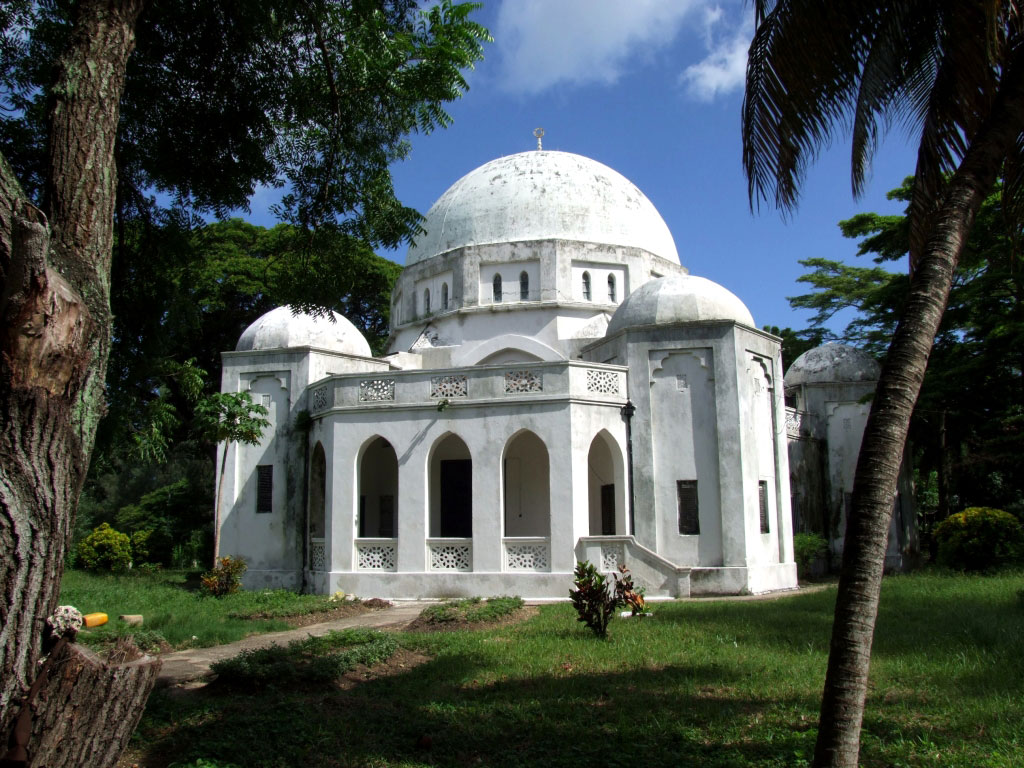
Beit-el-Amani in 2010 - photo Jonathan Stonehouse (wikimedia)

Beit-el-Amani in 2010 – photo Jonathan Stonehouse (wikimedia)

Museums are extraordinary institutions, and it is not surprising that they are sometimes likened to places of worship. The Zanzibar Museum is no exception. It was opened in 1925 as the Peace Memorial Museum, named in commemoration of those who had lost their lives in the First World War. Its faux Arabic name, Beit el-Amani, was clearly intended to echo those of Zanzibar’s royal palaces, most notably the Beit el-Ajaib or House of Wonders. It was built in hybrid Saracenic and Byzantine style with a large dome, leading locals to dub it ‘Msikiti wa Bwana Sinclair’, ‘Mr Sinclair’s Mosque’, after its British architect. In the early days it was also referred to as ‘Nyumba ya Mizimu’, ‘the House of Spirits’, a fair rationalisation of its apparent purposes. It is now generally known as ‘Makumbusho’ (sometimes ‘Makumbusho ya kale’), the contemporary Swahili term for museums as sites of historical memory.

Sarah Longair’s Cracks in the Dome is a compelling account of the Zanzibar Museum’s rise and fall, weaving together critical history and biography to show how its functions were contested and ultimately undermined by officialdom in the colonial period. Following an introduction that provides historical and interpretive context, the first two chapters examine the prehistory and construction of the museum in detail. Three central chapters describe the museum in its heyday, when it was curated by Dr Alfred Henry Spurrier (1925­35) and Ailsa Nicol Smith (1935-42), both of whom were driven, in their different ways, to innovate and make the museum into an educational resource that was of value to the whole community. Smith in particular was frustrated by the lack of funds and colleagues who shared her vision, and eventually resigned her post. A final chapter outlines the resulting decline of interest in the development of the museum, and its replacement by a decolonisation-inspired focus on the selection and collection of the materials that were to be housed in the Zanzibar National Archives – and have made the writing of this history possible.

Although the archives survived, the museum did not fare well after the Zanzibar Revolution. The building and displays fell into disrepair, with the natural history specimens in the museum annexe looking particularly worse for wear. More recently, though, funds have been found to repair and restore the museum, and it was re-inaugurated under its original names on the 18th of May this year, International Museum Day. The Peace Memorial Museum is not quite what it was in its first two decades – some its contents, including the library, are now in the House of Wonders, itself closed for repair – but it is encouraging to see that its educational potential is being recognised once again. Let’s hope that history doesn’t repeat itself, at least not in all of the ways that this fascinating study reveals.

Martin Walsh

HOW CAN TANZANIA MOVE FROM POVERTY TO PROSPERITY?
Lucian A. Msambichaka, John K. Mduma, Onesmo Selejio and Oswald .J. Mashindano (editors). Dar es Salaam University Press, Dar es Salaam, 2015. xxiv + 436 pp. (hardback). ISBN 978 9976 60 586 0. (no price given).

It is most welcome to find no fewer than 22 Tanzanians, mainly economists from the University of Dar es Salaam, engaging seriously with the challenges Tanzania faces in seeking to move towards middle income status. The broad approach is to frame the problem as a need to achieve structural transformation by moving away from relatively low productivity activities (notably agriculture, which currently occupies some 70% of the labour force) towards higher productivity activities (particularly manufacturing industry, currently about 10%).

Following an Introduction, the book is arranged in four parts: I. ‘Why Industrial Transformation Has Failed in the Past’ (Chapters 2-5); II. ‘Lessons from Other Countries’ (Chapters 6-12); ‘Utilising Natural Resources for Socio-economic Transformation’ (Chapters 13-15); IV. ‘Synthesis’ (Chapters. 16-20), leading to the final Chapter 21 ‘The Way Forward: Lessons and Recommendations’. In this review I will briefly summarise the key points emerging from the various contributions and then consider how far the final chapter offers a coherent blueprint for Tanzania to indeed progress from poverty to prosperity.

In Part I, the editors kick off (in Chapter 2) with a rather critical review of previous industrialisation efforts. There follows a substantial contribution (Chapter 3) by Joseph Simbakalia, an engineer and Director General of the Export Processing Zones Authority (EPZA). Flora Kessy (Chapter 4) reviews poverty reduction strategies, concluding that there was a set-back during the low growth period during the 1980s and 1990s, while subsequent better economic performance has been accompanied by rising inequalities. David Nyange (Chapter 5) then considers the contribution agriculture might make to economic transformation and job creation. He notes in particular the negative impact of rapid population growth but also potential positives if agriculture can respond to rising demand from urban areas and if more agro-processing can be developed. Overall this part of the book provides a useful overview. However, I missed any reference to John Sutton’s An Enterprise Map of Tanzania (2012), which documents major elements of the industrial development that has been achieved despite the difficulties.

In Part II we find a search for lessons from the experience of other countries: Vietnam (Blandina Kilama, Chapter 6); South Korea (the Editors, Chapter 7); Japan (Faustine Bee, Chapter 8); Brazil, India & South Africa (Jehovaness Aikaeli, Chapter 9); China (Suleiman Serera, Chapter 10); Malaysia, Singapore & Dubai (Abu Mvungi and Riziki Nyello, Chapter 11). The emphasis here is on how these countries have achieved industrialisation starting from a low base. While the disappointing results of some countries’ socialist industrial policies are noted, there is a divergence of opinion as to whether market liberalisation, central planning, strong leadership or other factors are what drives success, possibly because the range of countries considered is perhaps too diverse and not all appear immediately relevant to Tanzania’s own predicament. Also in this section is Chapter 12 by Damian Gabagambi and Andrew Coulson who argue persuasively for a more positive view of small farms in the Tanzanian context.

Part III addresses the potential of natural resources to drive economic transformation, with Tanzania’s recent natural gas discoveries in mind. Joseph Simbakalia (Chapter 13) considers how to avoid the ‘resource curse’, pointing to opportunities to develop upstream and downstream linkages, if Tanzania can address skill shortages and other constraints. Aloyce Hepelwa (Chapter 14) reaches similar conclusions, viewing Tanzania in a world energy market context. However, neither of them comments on the still considerable problems to be overcome in converting discoveries to viable production, not least the current weakening in world energy markets, with the risk of counting chickens not yet hatched. Nor do they give consideration to possible lessons to be learned from Tanzania’s own experience with gold and gemstone mining. Also in this section, Kenneth Mdadila (Chapter 15) reviews world industrialisation from a historical perspective, perhaps better read in conjunction with Part II.

Part IV explores a wider range of factors which may have a bearing on Tanzania’s economic transformation. Raphael Chibunda (Chapter 16) makes the case for a National Science, Technology and Innovation System for Tanzania. Jehovaness Aikaeli and Barney Laseko (Chapter 17) suggest that tackling informality in its various forms is hampered by lack of systems for registering people, land and businesses, although they may underestimate the size of the task. Reinforcing this point, Bashiru Ally (Chapter 18) documents the rise in land conflicts in Tanzania despite government reform efforts. Ally sees this as primarily a rural issue but equally important may be how to manage the acquisition of land to meet the needs of expanding urban areas. In a thoughtful contribution, Joel Silas (Chapter 19) takes up the theme of the impact of population growth on socio-economic development, concluding that policies to reduce fertility are needed if Tanzania is to reap any demographic dividend. Finally, Christian Gama (Chapter 20) argues that economic diplomacy also has a contribution to make.

Which brings us to the final chapter, ‘The Way Forward’. This is difficult to summarise. Nine ‘Key Observations’ lead to 15 ‘Key Messages’ and then 29 ‘Recommendations’, covering ‘Strategic Thinking’ (4), ‘Policy’ (13), ‘Good Governance’ (2) and ‘Human Capital and Infrastructure’ (10). Most of the points have some validity but many of the recommendations are pitched at a rather high general level and so need further fleshing out to become operational. The rather large number of observations, key messages and recommendations also suggest that prioritisation has proved difficult – indeed, in the Introduction, the editors state that “they are all of equal weight and importance”! Given that resources and government capacity are limited, the government may need to focus, as far as industrial policy is concerned, on those things that only government can do – macro-economic stability, good governance (including appropriate decentralisation), law and order and infrastructure provision, thereby creating a framework within which domestic as well as foreign enterprise can prosper. Related to this, it is only intermittently that one glimpses ‘the real Tanzania’ beneath the generalities, and what should be the proper balance between industry and agriculture remains unclear. To make an even greater impact, the authors perhaps need in future work to grapple more directly with the current situation in Tanzania so that their recommendations can be more precisely targeted.

Nevertheless, the volume provides much food for thought and it is to be hoped that Tanzania’s policy makers will take notice of it.
Hugh Wenban-Smith

Hugh Wenban-Smith was born in Chunya and went to Mbeya School. His career was as a government economist (mainly in Britain, but with periods in Zambia and India). He is now an independent research economist, with particular interests in infrastructure, urbanisation and transport.

THE WINDS AND WOUNDS OF CHANGE: THE MEMOIRS OF DICK EBERLIE. PART 3: 1961-65. Dick Eberlie. Privately printed, 2016. viii + 266 pp. (paperback). Available from the author.

This is the third volume of Dick Eberlie’s memoirs and the second dealing with Tanganyika, subsequently mainland Tanzania (Part 2, dealing with the period 1950-60, was reviewed in TA 111). Returning from UK leave in January 1961, Eberlie had hoped to be posted as a District officer to a rural district, instead of which he found himself pen-pushing in Dar es Salaam. This was a time when government and politics were moving rapidly. Sir Richard Turnbull, having been appointed Governor, was negotiating with both Julius Nyerere and the Colonial Office. It emerged in the end that Nyerere was pushing against an open door to achieve independence for the country.

With all the changes in government, many European civil servants were departing. So Eberlie, served in different ministries – Commerce and Industry, and Legal Affairs. During this time, he volunteered to help young District Officers pass their law exams; indeed references to his voluntary work occur throughout these memoirs, as, for example, when helping the Society for the Blind to raise funds, and later on, as editorial member of the Tanzania Society.
At last he got away from the enclosed atmosphere of Dar es Salaam and was posted as Staff Officer in Morogoro, effectively acting as Deputy to the Provincial Commissioner and being closely involved in the organisation of famine relief and local government developments. Pleased to be posted to Kisarawe again, he put much energy into applying government policies to ensure that famine relief was regulated and basic funds or food-in-kind paid out, as well as carrying out court and administrative duties.

Amidst all this vital work Eberlie was quite suddenly called to Dar is Salaam to be Aide de Camp (ADC) to the Governor, who, together with Lady Turnbull, he had already had contact with. Events crowded in as Tanzania became a Republic, Turnbull’s office closed, Eberlie’s parents came on a memorable visit, and Eberlie himself left the country when his job ended. There is some account of the Zanzibar Revolution and then the Tanganyika army mutiny in 1964. Characteristically, Eberlie offered himself as acting ADC to the British Army commander who had just landed to restore order in Dar.

Eberlie, however, had been invited by the Tea Growers Association to be its Assistant Secretary and completed a first contract with them. Despite being hospitalised in London mid-term, he was offered a new contract, which he reluctantly declined. Later he accepted an invitation to be Private Secretary to his old boss, Turnbull, who was then Governor of Aden. In an Appendix there is a detailed and interesting description of the tea growers scattered about the Usambara Mountains, Mufindi, Njombe, Tukuyu and Mount Rungwe. Being the third largest employer of labour in Tanzania, the tea producers were up against many difficulties including the changing political climate and Union pressures.

The book ends with a gloomy epilogue assessing the Tanzanian government at that time. But there is a good selection of maps and illustrations, all attractively wrapped in a panorama of Dar es Salaam harbour and redolent of his sailing and social days there.
Simon Hardwick

Simon Hardwick was an Administrative Officer in Tanzania, 1957-68, and Chairman of the Britain-Tanzania Society, 1995-2000.

MAGUFULI’S “CLEANSING” OPERATION

by David Brewin

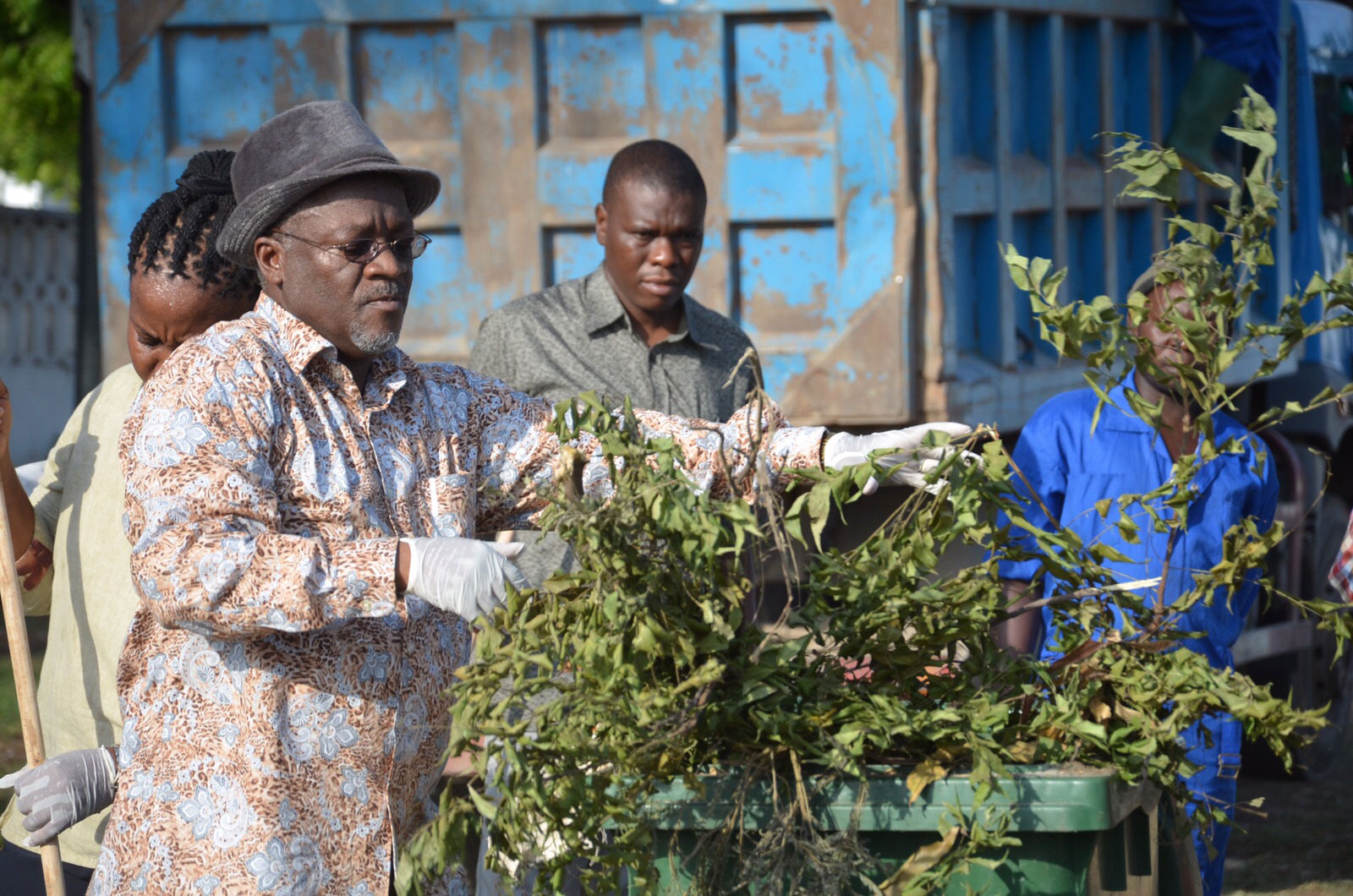
President Magufuli helps clean the street outside State House in Dec 2015 (photo State House)

President Magufuli helps clean the street outside State House in Dec 2015 (photo State House)

The seemingly tireless new President Magufuli of Tanzania has started his term of office with a number of spectacular measures most of which are not only proving extremely popular in Tanzania but also attracting interest in other East African countries and beyond.

It could be described as a huge ‘cleansing’ operation in which the main features include: a drive to eliminate corruption (in response to widespread demands from the electorate during the November 2015 elections); a cutting out of elements of low priority in the expenditure of government funds; and a better work ethic amongst government employees.

The President has changed so many policies and practices since taking office in November 2015 that it is difficult for a small journal like ‘Tanzanian Affairs’ to cover them adequately. He is, of course, operating through, and with the help of ministers, regional commissioners and others, who have been either kept on or brought in as replacements for those removed in various purges of existing personnel.

Changes under the new President
The following is a list of some of the President’s changes. Some were not carried out by him directly but by subordinates. It is clear however where the inspiration for them came from.

President Magufuli:

• issued a 7-day ultimatum to businessmen who have evaded tax, to pay up or risk arrest and court charges – “pay now so that we can leave you in peace”;

• ordered police to lock up 20 state employees who turned up late for a meeting in Dar es Salaam;

• made surprise visits to ministries and hospitals, and fired several civil servants after finding citizens waiting for assistance being unattended to;

• reduced the budget allocation for a government cocktail party by 90% because “it makes no sense to have an expensive party when patients are sleeping on the floor in government hospitals”;

• banned unnecessary foreign trips by government officials;

• dismissed several top government officials including the Director of Prevention and Combating of Corruption Bureau because of inefficiency, plus four other senior officials for defying the government’s ban on foreign travel as part of the new austerity measures;

• dismissed the Head of the Tanzanian Ports Authority and the top official in the Ministry of Transport over allegations of corruption and tax evasion;

• ordered an official delegation to the recent Commonwealth conference to be reduced in size from 55 officials to just 4; this has come as a shock to many government officials who have often used foreign trips as a means of subsidising their incomes;

• on the day of the inauguration of the new parliament, cut the cost of
the reception from some $350,000 to $10,000; the money saved, some of which was probably contributed by individuals and/or institutions was to be sent to the National Hospital in Dar es Salaam;

• arrested illegal immigrants from different countries for allegedly working without work permits and engaging in work that could be done by Tanzanians: 25 of these were Chinese, 5 Congolese, 3 Ghanaians, 3 Nigerians, 3 Somalis and 1 from the Ivory Coast; two Tanzanians were arrested while they were allegedly in the process of transporting 6 girls to the Middle East;

• planned a special court to fast-track the prosecution of those accused of corruption;

• warmly welcomed the President of the Socialist Republic of Vietnam, Comrade Truong Tan Sang on a four-day state visit to Tanzania;

• on arrival at a regular meeting of the EAC Heads of State, questioned the rationale of holding such meetings at exclusive resorts when there were offices in each of the member countries; “I do not want to be a parasite” and added that he would be as ‘hands-on’ in the affairs of the EAC as he had been with Tanzanian public affairs; he added: “there is no justification for the summit to be held at a luxurious Safari Lodge at a cost of $45 for each delegate per-day”; during the meeting he brought what was described as ‘rare urgency’ to the proceedings; he was not, he said, a ‘protocol person’ and he hoped that the EAC heads of state would make hard decisions rather quickly;

• assured residents of Mwanza and Kagera regions that his government would purchase a new ship to operate between the two ports in the next financial year in accordance with his election pledge;

• directed the staff of the government newspapers “the Daily News” and “Habari Leo” to emphasise the various measures he was advocating and become leaders in the fight against networks connecting local and international drug dealers; “Those who have too much wealth must explain their sources,” he added;

• made it clear that he would deal with ethical failings by ministers through the ethics secretaries in his office;

• arranged for the Permanent Secretary in the Ministry of Education, Science and Technology to oversee the printing of two million new authorised text-books in view of the poor quality, especially the col-ours used and poor page layout, in existing books; and to direct the publisher to remove the books from the government warehouse under government supervision; the ministry should ensure that the copies are destroyed and not sold on the market;

• took steps to revoke the establishment of the Arusha campus of the St. Joseph University in Tanzania;

• during the inauguration of a new 240 megawatt electric power plant project – which is using a new technology under which electricity will be generated from natural gas and the heat obtained from the plant will be used to heat water – instructed TANESCO to come up with constructive ideas on how businesses could set up their own electricity plants and stop paying for expensive hired plants; he said that there had to be a point when the country could produce its own reliable electricity and be able to sell the surplus to other countries; he went on to say; “experts or consultants who advise us to hire power plants instead of buying our own are not fit for the job and their employment should be terminated”; The President thanked Japan, the World Bank, the African Development Bank and other development partners for their help; The Japanese Ambassador to Tanzania, Masharu Yoshida, said that this project would be the first of its kind in East Africa;

• during his swearing in ceremony gave authorities 15 days to eliminate ghost workers (people who do not exist but receive a salary – at least 1,680 ghost workers have now been removed). He said that the youth in the country should work instead of playing games, such as pool, during the day, while leaving adults to work on the land.

• appointed Mr Hamza Johari as the new Director General of the Tanzanian Civil Aviation Authority (TCAA); the previous holder of the post had been suspended for massive financial and procurement irregularities;

• condemned the killing of a British conservationist after his helicopter was shot down while he was chasing suspected poachers in the Maswa Game Reserve;

• at the opening of a new Police Station at Tengeru near Arusha it was announced that no more firearm licences would be issued until all existing licences had been checked;

• the Minister of State in the President’s directed ministries to open registers in which public officials will declare all gifts of a value exceeding TSh 50,000 ($23) they receive; the Commissioner of the Ethics Secretariat commented that, although the law was specific on the matter, he had not come across any gift declaration by any civil servant!

Dr. Magufuli and his family are said to live modestly. His wife is a primary school teacher and the children go to state schools. It is understood that the President travelled abroad only 5 times during the 20 years he was in the Cabinet.

ZANZIBAR ELECTION RE-RUN

by David Brewin

The elections on the mainland of Tanzania in October 2015 went well and the results seem to have been accepted by the people as having been free and fair. A detailed account of what happened and the subsequent inauguration of the new government of Tanzania were fully explained in Tanzanian Affairs No. 113.

In Zanzibar, however, elections are traditionally highly contentious and this one was no exception.

As counting of the votes was still going on, Chairman of the Zanzibar Electoral Commission (ZEC) Jecha Salim Jecha, stopped the counting and declared that the election was annulled because there had been ‘rigging’. He said that there had been irregularities on the northern island of Pemba – a stronghold of the main opposition Civic United Front (CUF) party – which had won all the seats there in the 2010 election. In some constituencies the number of voters had been greater than the number of people on the register, Jecha said, adding that there had also been fighting between members of the ZEC Council which rendered the results invalid.

The CUF opposition party declared that it had won the election by a small majority and therefore that its leader, the then First Vice-President of Zanzibar Seif Sharriff Hamad, was the new President of Zanzibar. The making of such an announcement goes against the Zanzibar Constitution which states that the results can be published only by the ZEC.

Hamad (who was also the First Vice-President of Zanzibar under the unity government), had made three previous attempts to obtain power in elections in Zanzibar, the fairness of which had been questioned at the time by several observers.

The ZEC, which includes personnel from CUF and from the ruling Chama cha Mapinduzi (CCM) party, then announced that there would be a second election, which was held on March 20th, 2016.

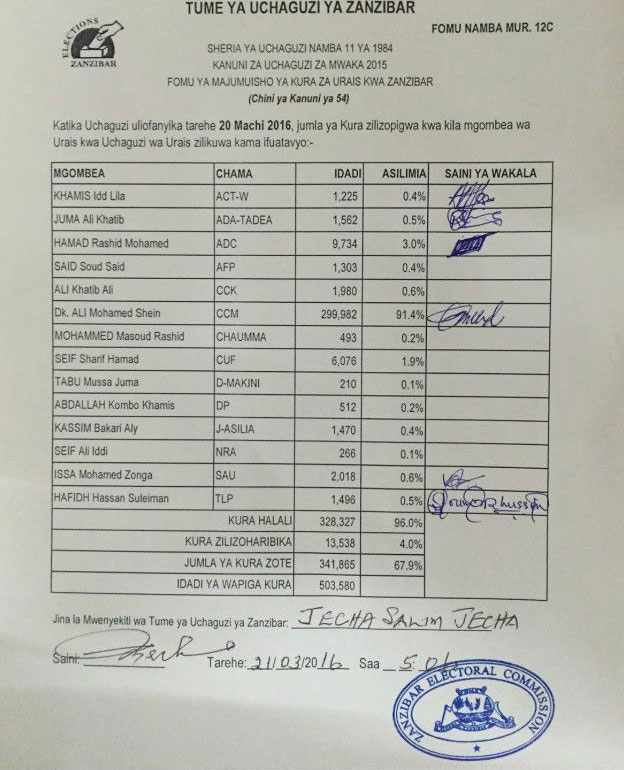
Formal issue of results from the re-run election

Formal issue of results from the re-run election

Translation of image above: “Mgombea” means candidate; “Chama” means party; “Idadi” – number of votes cast; “Asilimia” – percentage of votes. “Kura zilizo harabika” – spoilt votes

CUF and several very small opposition parties declared that they would not take part in this second election because it was illegal and unconstitutional. Three other small parties however took part in the election.

Before and during the second election Hamad was said to have been travelling in Saudi Arabia, Oman and Dar es Salaam for medical treatment.

Needless to say, the turnout in this second election was very different from that of the first, because of the CUF boycott. Its actual vote plummeted, and the CCM Presidential Candidate, Dr Ali Mohamed Shein, was re-elected with a huge majority.

The balance of power
For the last three years in Zanzibar, the opposition CUF party shared power, apparently amicably, with the CCM party in a Government of National Unity.

After the 2015 election in Zanzibar, CUF proposed an international mediator to help resolve the deadlock which had arisen in the Isles, but this was not accepted by the CCM. CUF then declared that it would not take part in the second election and later threatened to launch a ‘civil disobedience campaign’ against the government.

As this second election had approached, army and police forces were strengthened by the arrival in Zanzibar of reinforcements from the mainland which ensured that the election passed peacefully.

At the end of the second Zanzibar elections, the position of the CUF Party has been greatly weakened in the Zanzibar House of Assembly.

Paradoxically, however, it has strengthened its position in the National Assembly in Dar es Salaam by winning 42 seats – more than ever before. (Elections to National Assembly seats were not subject to the ZEC annulment, and so were not re-run in March).

The main opposition CHADEMA party on the mainland has also been strengthened by gains it made in new areas where it had not been present before [TA No. 113].

However, CCM now occupies 188 of the 256 contested seats in the National Assembly plus a large group of seats reserved for women, so that the CCM majority has risen to 252 seats out of the total of 364. The combined opposition parties are therefore still a long way from achieving real power in the two branches of parliament.

Furthermore, it is the President who exercises most of the power overall.

The new Zanzibar Government

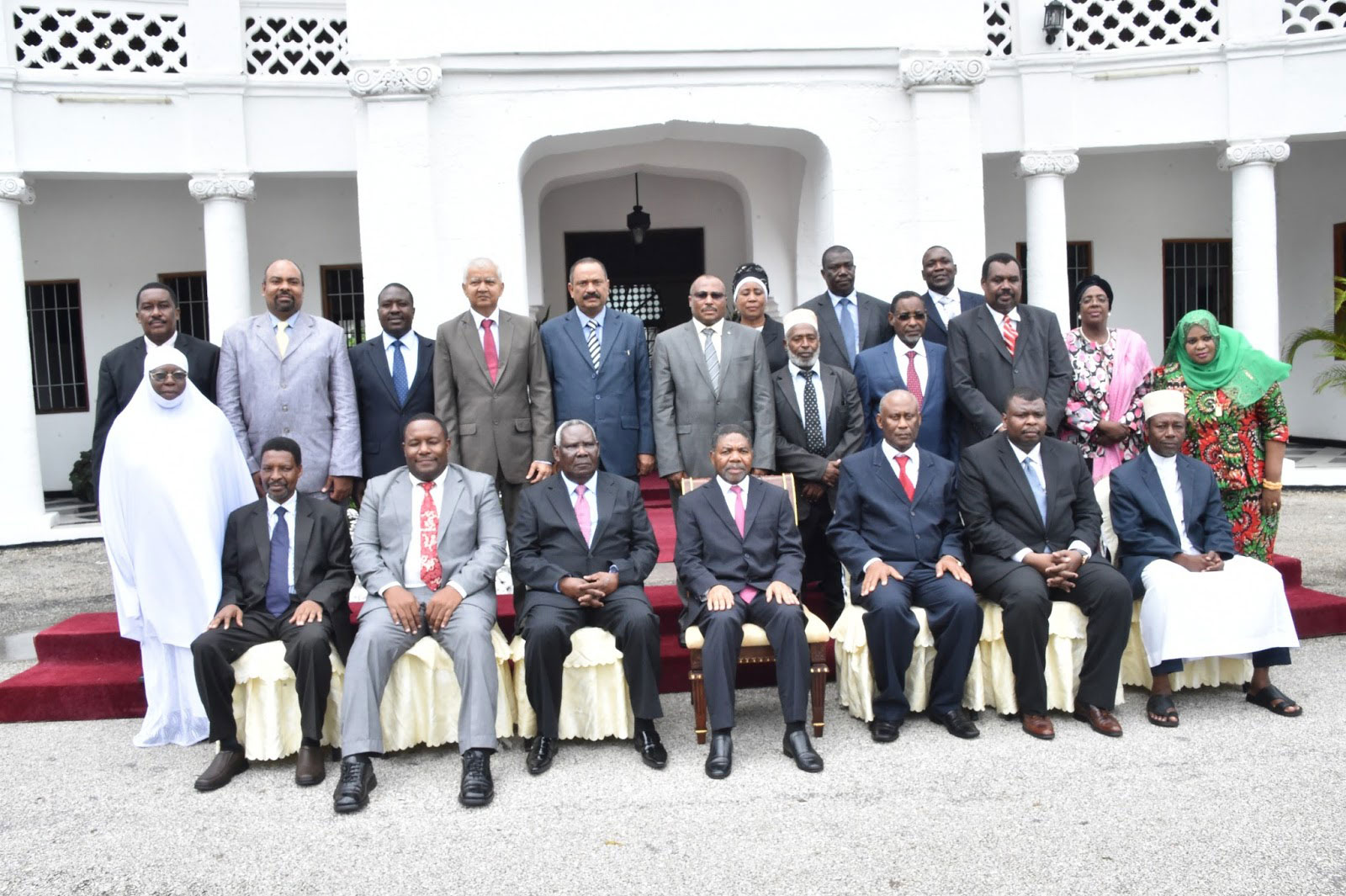
Dr Shein and the new cabinet

Dr Shein and the new cabinet

Dr Shein announced the names of his new 15-member cabinet on April 9, two and a half weeks after being sworn-in as President of Zanzibar. He instructed them to work hard to respond to the expectations of the electorate or risk losing their jobs. He emphasized the importance of ‘good performance, transparency, accountability, and honesty.’ and went on to say: “We are committed to bringing changes in the islands – increasing revenue collection, minimising expenditure, increasing transparency and fighting corruption and laziness.”

The cabinet, constitutionally known as the ‘Revolutionary Council’ (RC) includes MPs from three small parties not previously involved in government including Mr Hama Rashid, the leader of the Alliance for Democratic Change (ADC), who becomes Minister for Agriculture, Natural Resources, Livestock, and Fishing. Juma Ali Khatib from the ADA-TADEA party and Said Soud Said from the Alliance for Farmers Party (AFP) have been appointed members of the Revolutionary Council or cabinet ministers without portfolio. Mr Khatib and Mr Said are new faces in the cabinet while Mr Rashid is a veteran politician who served as minister during the First Phase Union Government under Mwalimu Julius Nyerere. He was later expelled from the CCM and joined CUF until 2015 when he was expelled and joined the ADC.

Other appointees include Issa Haji Ussi (Minister of State – State House and Revolutionary Council) who had been Deputy Minister for Infrastructure and Communication; veteran Cabinet member Haroun Ali Suleiman has this time been picked as Minister of State responsible for the Constitution, Legal Affairs, the Civil Service, and Good Governance); Haji Omar Kheir, who retains his position as Minister of State (Regional Administration, Local Government and SMZ Units) and, Mohamed Aboud Mohamed who becomes Minister of State in the Second Vice-President’s Office.

Both Mr Haji and Mr Aboud have retained their positions while the former Principal Secretary (PS) in the Second Vice-President’s Office, Dr Khalid Salum Mohamed, becomes the new Minister for Finance and Development Planning.

Also in the list are Mahmoud Thabit Kombo, former Deputy Minister for Health, who has been promoted to full minister in the same ministry, and Ms Riziki Pembe Juma who takes over as Minister for Education and Vocational Training. Ms Amina Salum Ali, former Finance Minister under Dr Salmin Amour’s government in 1996 and recently retired African Union Ambassador to the United Nations, has been appointed Minister for Trade, Industries, and Marketing. Ambassador Ali Abeid Karume, son of the first Isles President of Zanzibar; Sheikh Abeid Amani Karume, becomes the new Minister for Infrastructure, Communications
and Transport.

Other appointees are Mr Rashid Ali Juma, formerly Director of the Zanzibar Municipal Council as Minister for Information, Tourism, Culture, and Sports; and Ms Maudline Castico, CCM cadre and publicist, who becomes Minister for Labour, Economic Empowerment, the Elderly plus Youth, Women, and Children, and Ms Salama Aboud Talib, who takes over as Minister for Land, Water, Energy, and Environment.

There are five Deputy Ministers who are all new faces.

Dr Shein told reporters that he had not violated the constitution by appointing three members from the Opposition to his cabinet. His new government, he said, should not be mistaken for a Government of National Unity (GNU). “It has not been possible for me to form a GNU because all the parties which took part in the re-run elections, failed to qualify.”

NEW BRITISH HIGH COMMISSIONER

by Ben Taylor

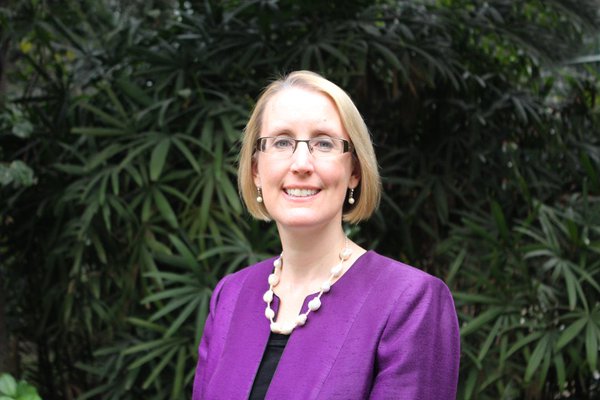
Sarah Cooke

Sarah Cooke

Sarah Cooke, pictured, has been appointed British High Commissioner to the United Republic of Tanzania in succession to Dianna Melrose, who will be leaving the Diplomatic Service. Sarah will take up her appointment in July 2016.

This was announced by the Foreign and Commonwealth Office in early February, and was followed by rumours that the current High Commissioner had been recalled at the request of the Tanzanian government. The FCO later issued a second statement, denying that this was the case.

“Contrary to some media reports, the British High Commissioner, Dianna Melrose, will not be ending her mission in Tanzania until the end of July 2016, at the normal conclusion of her posting,” read the statement.

Sarah Cooke has worked for the Department for International Development for the past 11 years, since 2012 as Country Representative for DfID in Bangladesh. This will be her first posting in the Diplomatic Service.

Relations between the diplomatic community and the Tanzanian government have been tense since the disputed Zanzibar elections, and perceived interference of diplomats in domestic matters. See Foreign Relations section for further details.

FOREIGN RELATIONS

by David Brewin

Reactions to the Zanzibar election results
Following the second Zanzibar elections, relations between Tanzania and the western powers (the USA and EU) have cooled.

Among the many changes being proposed and/or implemented under the new Magufuli regime, the government has announced restrictions on the movement of diplomatic personnel and consular staff as well as the staff of international aid, other aid agencies and other organisations.
In future, they will have to obtain government clearance for all their planned activities, including any meetings with leaders of various political parties. They will also have to seek permission from the Ministry of Foreign affairs before travelling upcountry and meeting local government authorities. The government said that this is normal diplomatic practice.

The government was not pleased by the action of 17 Western countries
in issuing a statement asking President Magufuli to intervene in solving the electoral controversy in Zanzibar.

Burundi Refugees
The post election stalemate in Burundi continues to cause concern in Tanzania because of the number of refugees crossing over the border from Burundi. Some 85,000 are understood to have been registered. Some of the old refugee camps in Tanzania are being used again but there is overcrowding and a lack of hygiene as there is an acute water shortage in the border area. The refugees are said to have no fire wood and their make-shift shelters cannot withstand rain storms. A statement by the UN Office in Tanzania has said that $11 million have been allocated to respond to urgent needs.

The media
At almost the same time as The East African was being allowed to be sold again in Tanzania, another ban was imposed on the Swahili weekly newspaper Mawio, which was accused of publishing seditious material. The new Information Minister Nape Nnauye said that the paper had published alarming and inciting content over the elections.

International praise for the President
Tanzania’s new president has been receiving plaudits from around the world for what he has achieved in attacking corruption and reducing unnecessary government expenditure in a very short period of time.

The founding Father of the Country, Mwalimu Julius Nyerere, who ruled Tanzania in the days when Apartheid still existed in South Africa, always tended to put foreign policy at the top of his list of priorities as he used his influence to bring about the fall of the Portuguese Empire in Mozambique and Angola, and brought China into Africa to help build the Tazara railway. Succeeding Presidents followed his example by making sure that Tanzania’s voice was heard around the world. In the first days of President Magufuli’s rule, however, he has indicated that he has other immediate priorities.

Since his inauguration, there have been four global summits and a mini- SADC summit, none of which he attended. There have also been the Commonwealth Heads of State and Government Summit (CHOGM) held in Malta in November 2015; the Paris Climate Change Summit in December 2015; the Africa-China Summit in South Africa in December 2015; and the African Union Summit in January 2016. The first two were attended by the Tanzanian ambassadors in London and Paris respectively. The other two were attended by the new Tanzanian Vice-President, Samia Suluhu Hassan. A mini summit of the SADC organ on peace and security in Botswana in December, was attended by Prime Minister Kassim Majaliwa. By the President not attending the CHOGM summit in Malta and cutting the size of Tanzania’s delegation from 55 to only 4, the government saved an estimated TSh 750 million.

As regards the African Union (AU) two summits are held each year compared with its predecessor (the OAU) which held only one. A Tanzanian proposal to reduce it to once every two years was rejected by other members.

President Magufuli did not attend his regular annual meeting with members of the diplomatic corps at State House in Dar es Salaam in February 2016, although he was represented by his Minister for Foreign Affairs.

As far as Zanzibar is concerned, the President has presided over several meetings to try and resolve the situation but the participants were unable to reach a compromise solution.

Foreign aid
The results of the second Zanzibar election have caused much dismay in America and Europe and the Millennium Challenge Corporation (MCC), which controls most of America’s $472,000 aid programme (this year), immediately stopped aid. This had to be done because, under US law, these funds can only be provided to countries with clearly democratically elected governments.

Finance Minister Philip Mpango reacted by saying that the government had anticipated the move by the MCC and had worked out alternatives. Dr. Mpango stated that Tanzania was looking for other funding for the projects and added that when President Magufuli took office he had laid emphasis on revenue collection with the aim of reducing dependency on foreign aid.

He said that he hoped to engage in discussions with the MCC in order to know why it had made its decision and what Tanzania should do in order to be reconsidered.

The MCC also sought assurances from Tanzania that the new Cyber Crimes Act would not be used to limit freedom of expression and association.

The US claimed that Tanzania had moved forward with a new election in Zanzibar that was neither inclusive nor representative, despite the repeated concerns expressed by the US government and the international community. Tanzania had also not taken measures to ensure that freedom of expression and association were respected in the implementation of the Cyber Crimes Act.

Expulsion of Foreign Teachers
It is reported that an estimated 5,000 teachers said to be illegal immigrants, most of whom came from the East African region, are to be expelled from the country. This has caused concern amongst educators. Private schools are largely dependent on foreign teachers, particularly for English and Science, and these expulsions are expected to have a major negative impact on private English Medium schools.

BUSINESS & THE ECONOMY

by Ben Taylor

Standard Bank case
Late in 2015, a landmark judgement in the UK courts saw Standard Bank fined US$25m and ordered to pay the Tanzanian government US$7m in compensation. The “deferred prosecution agreement” (DPA) suspended a case against Standard Bank for its alleged failure to prevent bribery. It relates to a $6m payment made in 2013 by Stanbic Bank Tanzania, then a sister company of Standard Bank, to a local agent, Enterprise Growth Market Advisors (EGMA), associated with Tanzania’s US$600m private bond placement.

The judge in the case, Lord Justice Leveson, concluded that Standard Bank “did not have adequate measures in place” to guard against corruption, and did not conduct sufficient due diligence in relation to EGMA.

EGMA was paid $6m for assistance in arranging the bond issue, though there was no evidence that the firm actually provided any services. One of EGMA’s directors was Harry Kitilya, then Commissioner General of the Tanzania Revenue Authority, a potential conflict of interest. The payment to EGMA was financed by raising the cost of the service provided by Standard Bank to the Tanzanian Government from 1.4% to 2.4% ($8.4m to $14.4m) of the total bond issue.

This is the first use of a DPA in UK courts. It allows for criminal proceedings against a company to be suspended provided that the company meets certain conditions. A prosecution may follow if the conditions are not met within three years, otherwise the Serious Fraud Office (SFO) will discontinue proceedings.

The case was initiated by Standard Bank itself reporting concerns to the UK authorities, when close to $6m in cash was withdrawn from EGMA’s account over nine days in March 2013. Observers are speculating whether the firm really decided of its own accord to self-report in this way, or whether they did so under pressure. Tanzanian opposition MP, Zitto Kabwe, argued that Standard Bank could have falsified information given to the SFO in order to reduce the fine.

The case raises difficult questions for the Magufuli administration, which has in other cases acted swiftly and decisively against corruption. The DPA does not prevent Tanzanian authorities from investigating further or from bringing a case against Standard Bank, Stanbic, EGMA or government officials involved in the bond issue.

In January, Valentino Mlowola, Director General of the Prevention and Combatting of Corruption Bureau (PCCB), said investigations into the Standard Bank case were at “final stages,” and promised that “soon you will see grand corruption suspects taken to court.” This has not yet happened.

Meanwhile, Tanzania has a debt of $600m, which may not have been negotiated on favourable terms. Standard Bank and Stanbic Bank were appointed to manage the bond placement following a closed bidding process, and the placement attracted a 6% interest rate – substantially higher than the 4% achieved by Zambia and Ghana. Corruption Watch UK estimate that the potential cost to Tanzania could be as much as $80m over the life of the bond.

Tax cut
On Workers Day, May 1, just as Tanzanian Affairs was going to press, President Magufuli announced a reduction in the basic rate of income tax. The rate for monthly salaries between TSh 170,000 and 360,000 has been cut from 11% to 9%. The higher rates for incomes above TSh 360,000 are unchanged. As a result, a worker on a monthly salary of TSh 360,000 or above will be better off by TSh 3,800 each month, or TSh 45,600 over the course of a year.

Announcing the change, President Magufuli stated that the move aims at alleviating the burden of tax on workers. “I promised during my campaign to reduce pay as you earn tax to single digits. Now I declare to reduce it from 11% to 9%. I know this percentage will create a gap in our revenue, but we shall see how to fill it,” said President Magufuli.

Professor Haji Semboja of the University of Dar es Salaam said that the amount returned to workers as tax reduction and its impact on economy was minimal. “The government has increased workers’ purchasing power by 2% … it’s something … but not that much.” Professor Honest Ngowi of Mzumbe University, said the 2% tax-cut on s alaries at the end of day was likely to be chopped off by inflation, exchange rate and consumable tax increase in the 2016/17 budget.

The Daily News newspaper, however, in an editorial, stated that they “warmly welcome the PAYE relief not necessarily because of the impact they will bring on the workers’ earnings, but as a concrete message that the future of the workers in the country is bright.”