DAR ES SALAAM WATER – WHAT TO DO?

On the 13th of May the Government terminated its contract with City Water Services for the management of Dar es Salaam’s water supply. The contract, in which the British firm Biwater was involved, was terminated on the grounds that the firm had failed to deliver services as per the contract. City Water claimed that the original bid documents were misleading and inaccurate. For detailed background see Tanzanian Affairs No. 80.
Dr. Brian Mathew looks here at the issues that now face the body – DAWASCO – which has taken over responsibity for water supplies and offers a four-part solution.

The problems of Dar es Salaam’s water supply are in many ways similar to problems of urban water supply systems across Africa. Systems installed largely in the 1950’s and 60’s now are not only suffering from under maintenance and old age, but also the challenge of supplying water to populations vastly larger than they were originally set up to serve.
The overall figures for Dar es Salaam, a city of 3.5 million people, give an idea of the problem. 281 million litres is pumped into the system every day, while the estimated total demand is 400 million litres per day. Of the 281 million litres that are pumped as little as 16% is delivered to paying customers, the rest is lost to illegal connections and leakages. The solution often adopted by water companies of concentrating, first on cutting off non payers and illegal connections, and secondly installing water meters for those that do have registered and paid for pipe connections, has unseen consequences for the vast majority of the population that have to rely on water vendors, or walking to buy their water. These consequences are economic and social, are of great importance to ordinary people and follow the predicable laws of supply and demand. Where water meters are fitted, for example, the householder with a water connection suddenly becomes much more aware of the cost of the water he or she is receiving and then selling on. The tap owner, if he is to continue supplying water to his neighbours, has to monitor the use of his tap to match its use with income if he is to avoid his water bill going through the roof. As a result he often stops selling water; it is simply too much bother to keep an eye on the tap all day especially if you have a job; it is easier to lock the tap up and refuse water to those who come rather than risk making a loss. The consequences, for the 75+% of the population who depend for their water on informal arrangements such as these is real hardship. With further to travel to find water the price also goes up for both vendors and end users.
The solution of privatisation for city water supplies, favoured by donors as a free market approach to urban development, can make the situation worse, especially when efforts made for short term financial prudence come into conflict with the bigger needs of a thirsty and growing urban population. So what is the solution? Continue reading

REVIEWS

Edited by John Cooper-Poole (UK) and Marion Doro (USA)

SACRED TREES, BITTER HARVESTS – GLOBALIZING COFFEE IN N.W. TANZANIA. Brad Weiss. Greenwood Publishing Group, June 2003. ISBN p/b 0 325 070970 £15.99. h/b 0 325 070954 £36.99. pp216.

Brad Weiss explores the ethnography of coffee in Northwest Tanzania, weaving the story of its historical significance with the changing social political and economic processes taking place at the beginning of the twentieth century. While this book is surely an ethnography of coffee and coffee growing – its cultural, political as well as material significance – it also belongs in a whole line of literature exploring colonial encounters. In this case, the analysis is of local encounters between Haya communities and powerful outsiders – the White Fathers, coffee traders and others who act as supporters of change at the turn of the century. This is an anthropological monograph, a book as much about the Haya people themselves, about the relational elements of product practices frequently interpreted as simply ‘technical’ – the cultural, political as well as the material significance of coffee and coffee growing – as well as a study of political, social and economic processes – of power and how it is sustained and maintained. Continue reading

ELEVEN CCM CANDIDATES FIGHT FOR PRESIDENCY

President Benjamin Mkapa will retire gracefully, as has become the custom amongst presidents in Tanzania, at the end of his second term and a new president will be elected on October 30, 2005.

During recent weeks, in an atmosphere of increased political excitement, eleven leading politicians, seeking to obtain the coveted nomination as candidate of the ruling Chama cha Mapinduzi (CCM) Party have been criss-crossing the country in search of support from party members. The weakness of most of the 16 opposition parties (compared with the 294 political parties which took part in the British general election!) and their apparent determination not to cooperate to beat CCM almost guarantees that there will be another CCM president – the fourth since independence in 1961. Continue reading

ZANZIBAR

The political situation in Zanzibar is, as usual, much more tense than on the mainland. Although the remarkable Muafaka accord signed in October 10, 2001, set the stage for peaceful elections, rivalry between the two main parties, CCM and CUF, has reached a peak already, well ahead of the elections.

In the 1995 elections CCM won the presidentials by 51% against 49% for CUF. In 2000 CCM won by 67% to CUF’s 33%. Both elections were criticized by foreign observers and subsequent by-elections indicated that the 2000 parliamentary election had almost certainly been rigged. Subsequent riots resulted in the death of some 30 people. Continue reading

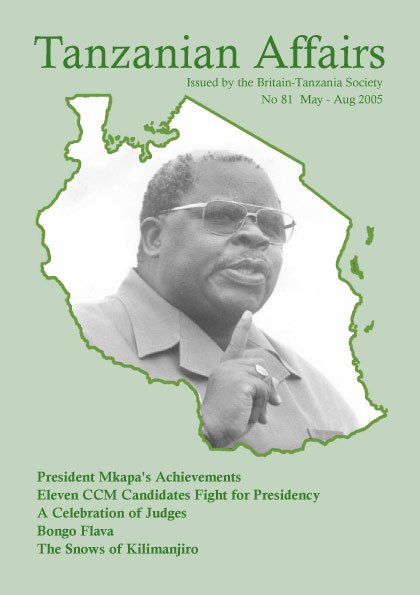
PRESIDENT MKAPA’S ACHIEVEMENTS

It is now perhaps an appropriate time, as his two terms of office draw to a close, to make a note of some of President Mkapa’s achievements.

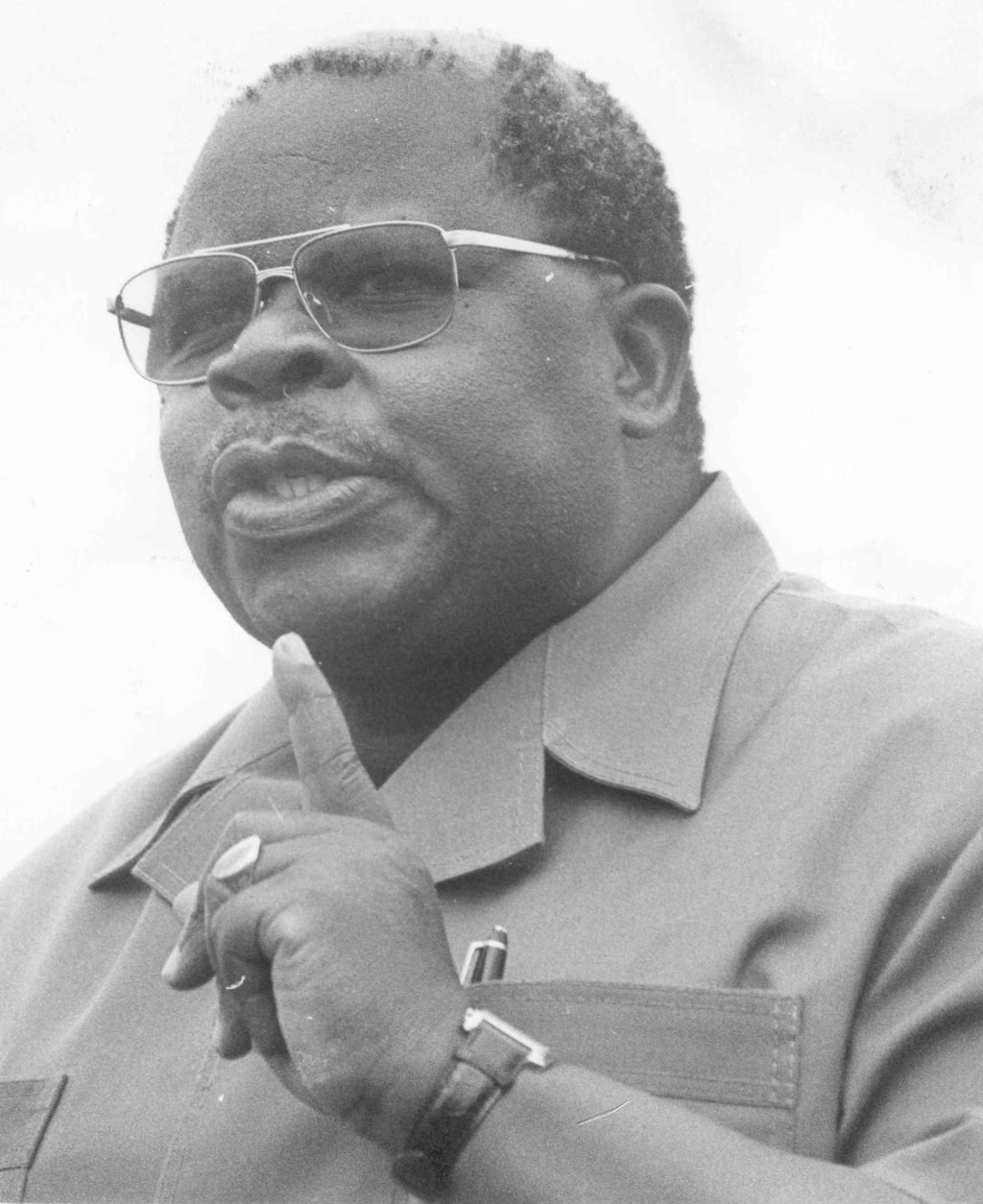
MkapaPresident Mkapa

Firstly, he has restored the dignity of Tanzania’s national currency. When he took over the presidency, the Tanzania Shilling was depreciating much more rapidly than it is doing now, and was treated with disdain by visitors and citizens alike. Continue reading

BUSINESS & THE ECONOMY

Exchange rates: £1 = Shs 2,010
$1 = Shs 1,110

In its third review of Tanzania’s ECONOMIC PERFORMANCE under the three year Poverty Reduction and Growth Facility (PRGF) arrangement, reported in the Guardian, Agustin Carstens, the Deputy Managing Director of the IMF said that the results were excellent. Tanzania had made further strides in enhancing macroeconomic stability and addressing key impediments to growth through the accelerated pursuit of structural reforms. The report said the completion of the review enabled a further release of about $4.2million bringing total disbursements under the programme to the equivalent $17 million. Continue reading

A CELEBRATION OF JUDGES

Under the bright morning sunshine a colourful but dignified procession of judges in scarlet robes led by Chief Justice Samatta, followed by magistrates and lawyers in black, followed the Police Band along the Dar es Salaam waterfront from the old Forodhani Hotel, newly refurbished as the temporary home of the Court of Appeal, to (fortunately covered) stands erected in front of the High Court, to be greeted by an audience of invited guests. These included eleven African Chief Justices (from Botswana to Nigeria, Egypt to Zimbabwe). Distinguished Tanzanians present included Chief Fundikira, Minister for Justice in the 1960s.
This celebration of the Silver Jubilee of the Tanzanian Court of Appeal on September 15, 2004 was especially blest: before President Mkapa arrived much – needed, torrential rain set in, floating the red carpets, soaking the National Service dancers and almost drowning out the speeches. The President restated Tanzania’s commitment to the rule of law and independence of the judges and welcomed judicial efforts to combat corruption. He asked the judges to find ways to improve access to justice for all by reducing the cost and complexity of litigation.
The ceremony was followed by a reception in the High Court where a remarkable exhibition depicted the judicial history of Tanzania. Among the significant cases recalled was the trial of Julius Nyerere for criminal libel in 1958 – see reviews below.
The conference (supported financially by the Venice Commission of the Council of Europe) then proceeded to discuss judicial activities. Tanzanians can take pride in the quality and commitment of their judges, who also show on such occasions a rare and welcome capacity for honest self – appraisal and an openness to criticism of their judgments.
On the last day the foreign guests were treated to a delightful visit to Zanzibar, starting in the old High Court where, in 1897, the first East African Court of Appeal had been inaugurated.
At a celebratory dinner Chief Justice Samatta invited all present to return for the 50th anniversary of the court in 2029.

Jim Read

BONGO FLAVA

Tune in to any radio station in East Africa and the chances are that you will be listening to “Bongo Flava”. This is used to describe the very popular music currently coming out of Dar-es-Salaam, almost all sung in Swahili but in a wide varety of styles from rap to soul music and with unique locally developed flavours. Some of the groups such as Watatuzi Family seem to draw from Taarab and Mchiriku music styles while others are closer to reggae.

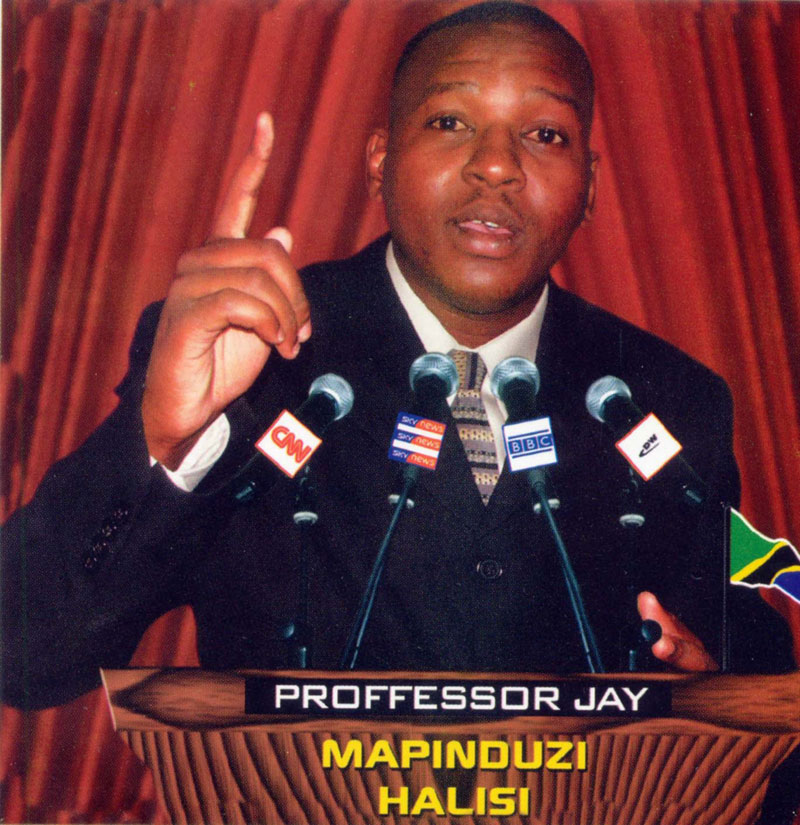
Professor JayProfessor Jay

However, the originators of Bongo Flava are undoubtedly the Rap and Hip Hop artists. This stems from back to the early 1990s when The Hard Blasterz Crew and others started recording rap music. While rap in America grew from the streets with disenchanted and disempowered rappers, in Tanzania the early rappers tended to be from well off families, who thought it fashionable to follow US trends. Continue reading

AIDS – 93% NOT AFFECTED

A recent Daily News article under this heading wanted to emphasise the positive. It was reporting on a study commissioned by the Tanzania Commission for Aids on the transmission of HIV/AIDS which revealed that only 7% of Tanzanians have been affected while 93% are still safe. It wrote that these findings also indicated a positive sexual behavioural change, and that Tanzanians’ awareness of the virus transmission and prevention was close to 100%. For example 76% of women were aware that food sharing could not transmit AIDS compared with 58% in 1999. “Young women and men are now waiting longer before having first sex and fewer of them have multiple partners,” TACAIDS Chairman Herman Lupogo, was quoted as saying. He added that HIV/AIDS prevalence nationwide was twice as high in urban as in rural areas, with Mbeya and Iringa regions topping the infection rate at 13%. The most vulnerable people were the wealthier and the highly educated.

Others are less upbeat – The Danish Ambassador Mr. Peter Lysholt Hansen has been quoted as saying “The figure of just eight percent is an illusion. I am convinced the real figure is higher.” The WHO/UNAIDS 2004 report on the global epidemic estimates that in 2003 some 160,000 people died in Tanzania as a direct result of AIDS and that there were 1.6 million people living with HIV, around 9% of the population. According to UNAIDS statistics, life expectancy at birth in 2005 has fallen to 43.9 years, there are thought to be 980,000 children orphaned as a
result of AIDS, and more than 50 percent of all hospital beds are occupied by people with HIV/AIDS, according to the Ministry of Health.