TANZANIA AND OBAMA

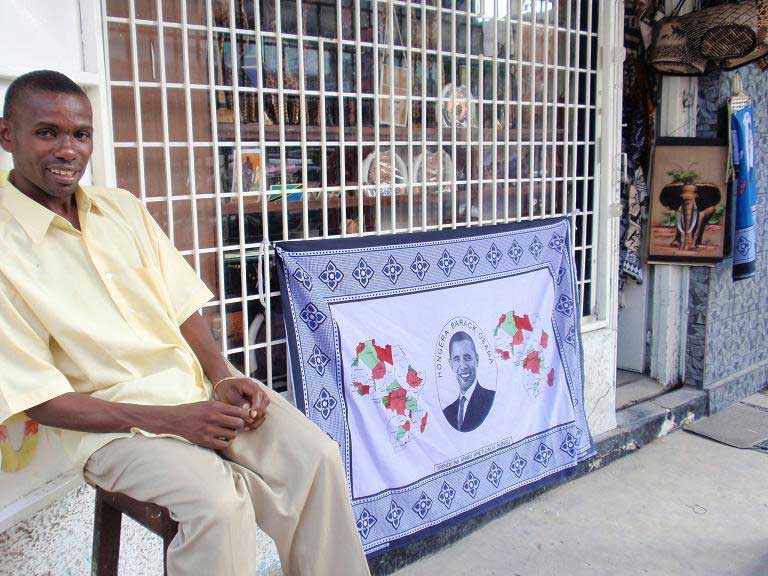
obama_kanga
Kanga on sale in Dar-es-Salaam

‘We share America’s excitement in Obama’ wrote the Tanzanian Guardian’s editor, the morning after the historic American election results came out. The paper went on: ‘Americans have spoken – and spoken well. The world is genuinely excited for the United States, whose election has made history by producing a black president, and for the world as a whole….Indeed President-elect Barack Obama’s victory is not only an inspiration to millions of people all over the world but also has special resonance with the people of Africa, where his Kenyan father originated.

Another significant fact is that Americans have taken us through a major lesson in democracy – and this is that, despite the intensity of the contest and the stakes for the contestants, they have come out of it gracefully and truly tested.

One lesson that African politicians must take note of comes from the telephone call made to President-elect Obama by his main rival, Republican Party candidate John McCain. In that call, McCain acknowledged defeat with dignity and went on to concede the historic significance of Obama’s victory to the American people and their country`s politics. “I urge all Americans who supported me to join me in not just congratulating him (Obama) but offering our next president our goodwill, `” McCain stated.

That is how politicians in Africa should conduct themselves if our democracy is to grow to maturity and stabilise the continent……We wish the new US president and the American people well.
KITCHEN PARTIES (BRIDAL SHOWERS)

IRIN, the humanitarian news and analysis service of the UN Office for the Coordination of Humanitarian Affairs wrote in November about ‘Kitchen parties’ (bridal showers) now becoming popular in Dar es Salaam. Extracts:

Tips for managing domestic arguments and ensuring a happy sex life are just some of the bits of wisdom passed on at kitchen parties. No subject is taboo as the guests prepare brides-to-be for life as a wife….

Scores of elegantly attired female guests attended a recent kitchen party for a 25-year-old banker where the only men were the cameramen and disc-jockey. Gifts, mainly domestic utensils and kitchen equipment, were piled on an elevated platform where the bride-to-be patiently awaited her lesson. A procession of relatives and friends, each with years of marriage experience, took their turns on the microphone.

“If he comes home late, ask the house-girl [domestic worker] to open the door to show him you’re upset,” one elder suggested. “You are the one to wash the bed sheets clean and white,” another guest reminded her.

Continue reading

ALBINO ATROCITIES CONTINUE

albino
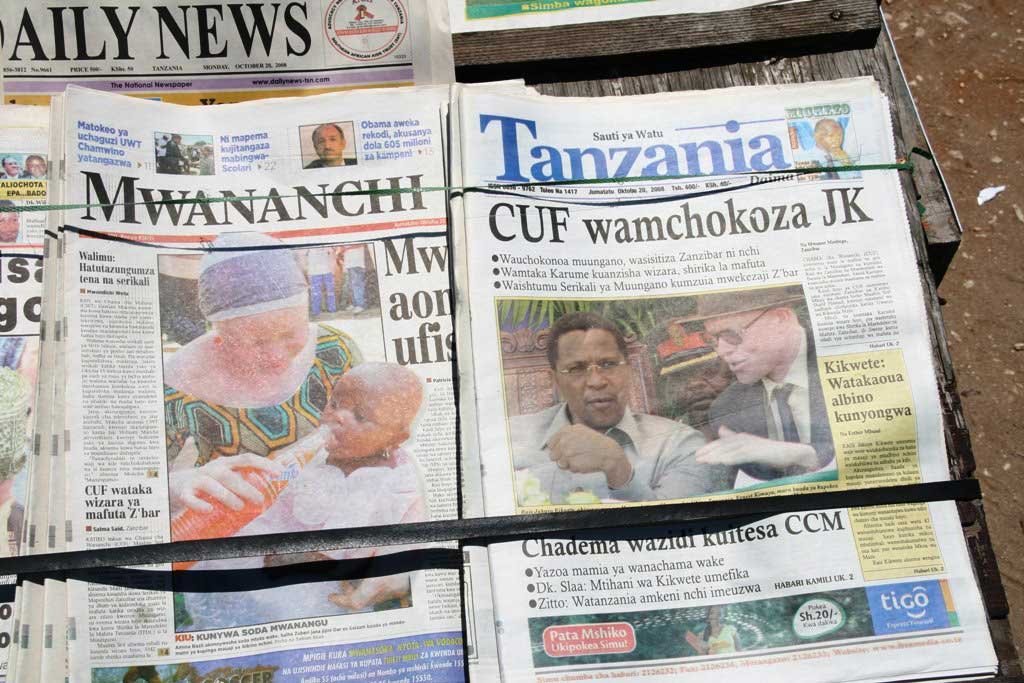
The issue received widespread coverage in the Tanzanian press

Police have said that they have taken to court all people suspected of being involved in the killing of albinos and the subsequent sale of parts of their bodies to be used by witchdoctors. However a Police spokesperson said it was near impossible to control elements bent on perpetrating the killing of albinos “if the communities continue harbouring these murderers and their accomplices.”
Mwanza Regional Police Commander Jamal Rwambow said that 11 albinos – five men, a woman and five children – had been murdered in his region. He added that 28 suspects had been arrested and charged in court.
Six suspects were arraigned in Mara, two in Mbeya and one in Shinyanga.

Tanzania has more than 8,000 registered albinos. Addressing a rally organised by the Tanzania Albino Society, President Kikwete said the government would stand firm in its efforts to ensure the safety of albinos and would not tolerate anyone bent on harming them – Guardian.
More incidents reported

In November however a more sinister development was reported in the Guardian. There were two attempts to catch albino children. In Kibondo District attackers forced a woman to take them to her home, to look for her nine-year-old daughter. The girl was not in the house and so the men attacked the mother. In the second attack, a gang of four men broke into a house at the Lugufu camp in Kigoma, which hosts refugees from the Democratic Republic of Congo, looking for a child with albinism. The child, aged two, escaped kidnap after falling under the bed unnoticed.

Police in south-western Tanzania then arrested a man who was attempting to sell his albino wife to Congolese traders.

The BBC’s Vicky Ntetema in Dar es Salaam said that the attacks appeared to have spread from north-western Tanzania, where they were first reported.

On November 22 the Shinyanga Regional Police Commander was reported to have said that a clandestine albino killing network had been discovered but some traditional healers in Kahama alleged that some members of the police force had taken over TShs 30m/- from them in return for not arresting them. Healers were allegedly being forced to pay between TShs 500,000/- and 1m/- or risk arrest. Bullying was said to be involved as those without money were taken for questioning.

WHO CONCEIVED/LED THE WAY TO UJAMAA?

A contribution by Lawrence Cockcroft with the assistance of Gerald Belkin, and Ralph Ibbott.

In responding to a call from the late Julius Nyerere in 1960 to people to work hard and work together on farming in the interest of the country’s development, a small group of the TANU Party Youth League (TYL) led by Ntimbanjayo John Millinga (see obituary below) established, in the Litowa valley in Songea District, what became known later as the Ruvuma Development Association (RDA). Millinga had a vision of developing a village where its families, by working together, would improve their lives and provide a better future for their children.

From this small start in 1961 other groups came for advice and as a result the RDA was formed. All members had agreed that a large part of the work would be carried out communally. In 1966 Griff Cunningham, the Principal of Kivukoni College wrote, “An unique set of circumstances prevailed in the RDA, for the founder and chief sustaining drive behind the settlements is undoubtedly Ntimbanjayo Millinga…(who) has provided a genuinely charismatic leadership from the beginning and has, by his messianic zeal, created a small group of disciples.”

The RDA type villages came to be known as ujamaa villages which soon attracted considerable attention. President Nyerere became very interested. He began to see it as a pattern for the rural development of Tanzania. In the villages and the association there was always much practical discussion, which often led to new enterprises. From past experience, the people knew that if their children went far enough in the school system, they generally went off to work in the big city. This led to them setting up a school at Litowa for the children from all the RDA villages. Millinga’s position had enabled him to select a fine person to be head of this school and to get the authority from Nyerere for them to develop their own curriculum suitable for the needs of the villages.

Discussions also led to the questioning of the law which only allowed the sale of people’s excess maize to the local inefficient co-operative which sold maize flour at more than three times the price at which it purchased the grain. A better price for them would mean earning more development capital. This led to them buying out the Songea grain mill. President Nyerere helped with this purchase by donating Tsh 90,000/- Later the association also purchased the timber mill. Continue reading

FAITH NEWS

The IOC controversy

Something of a hornets nest was stirred up by Foreign Affairs Minister Bernard Membe when he dared to intervene in a Muslim-Christian dispute.

The Muslim people of Zanzibar have been pressing for years for Tanzania (or, at least Zanzibar by itself) to join the Organisation of the Muslim Conference (OIC). The Minister hinted that there might be some economic advantages in joining, even though Tanzania was a secular country. (For background see TA No 89).

The debate then escalated. On October 24 the Christian Council of Tanzania (CCT) called for the Minister’s resignation. His proposal would violate the country`s constitution. CCT Deputy Chairman Bishop Peter Kitula said section 19 (2) of the Union Constitution spelt out that Tanzania was a secular state and that religious issues were separated from all duties of running the country. He said the section was completely against the OIC charter (revised in March 2008) whose Section 1 (11) states: `to amend, promote, and preserve Islamic teachings and values based on modernisation and tolerance, promote Islamic culture and safeguard Islamic heritage. “We do not want religiosity here and we are not talking of any particular religion but there are people who have a hidden agenda while knowing that our constitution does not allow that.” he said. Continue reading

TANZANITE IN ALASKA

tanzanite
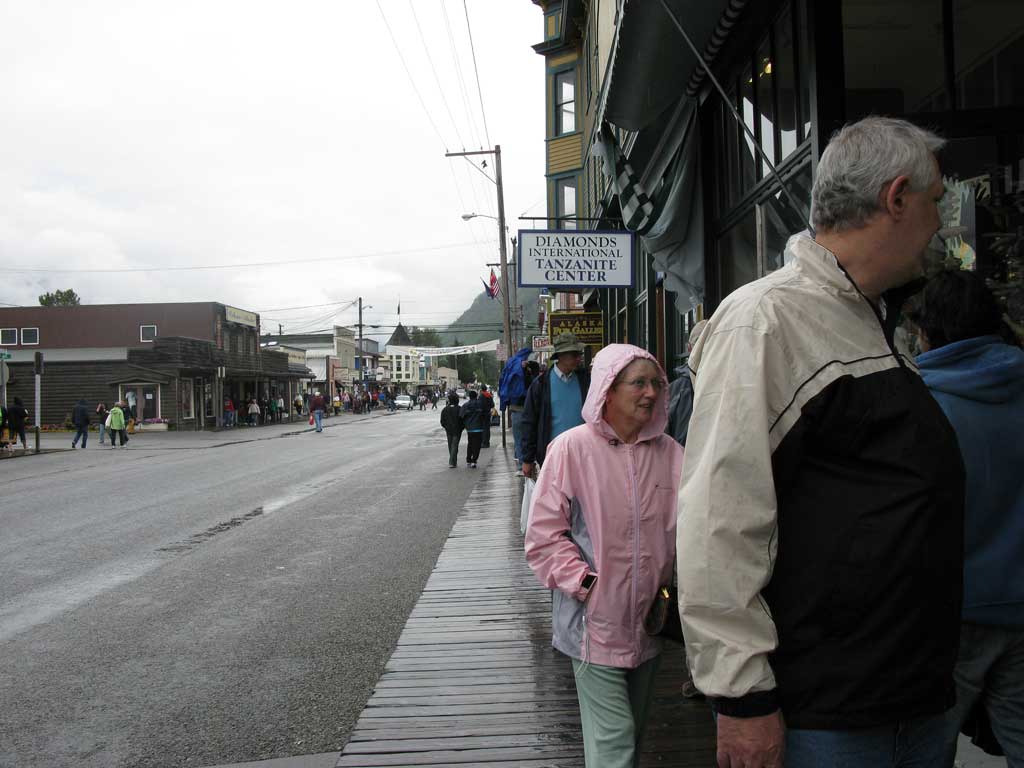
Tanzanite on sale in Skagway (photo by the author)

There appears to be more Tanzanite in Alaska than in Tanzania! Judging by the range of jewellery and gemstones on offer on the cruise ship from Vancouver exploring the Inner Passage and the many shops lining the streets of Skagway and Juneau in Alaska, Tanzanite is apparently the number one gemstone in vogue at present. Whereas it is good to see a mineral product of Tanzania being exported for sale, the almost profligate quantity of Tanzanite being marketed raises the question, for how long can this continue? Is the Tanzanian economy gaining a fair income from its sale?

Minerals, notably gold and diamonds, have been a major revenue earner for Tanzania for decades. How relevant it was to be able to include some geology alongside and within the chemistry teaching at St Andrew’s College/Minaki Secondary School in the 1960s. I recall a colleague, Matthew Ole-Kasaro, jokingly recall how he and his friends used to play football in his home Arusha region with pebbles of minerals that by 1970 were becoming recognised as semi-precious stones. For more information on Tanzanite, see the website: www.tanzanitefoundation.org
David and Jackie Morgan

A new museum called the ‘Tanzanite Experience’ has been opened in Arusha. It is the first ever facility dedicated to Tanzanite which is found only in Manyara Region. The museum will collect, document, preserve, exhibit and interpret material connected with Tanzanite mining. Interactive media will be deployed to present the fascinating story of the rare violet-blue gemstone including sophisticated processing, cutting and polishing, all of which are being done within the country. Tanzanite One Limited, the largest miner of the rare gemstone, is supporting the project – Guardian.

THE CREDIT CRUNCH & TANZANIA

by Joseph Kilasara
It is stimulus time. Finance ministers in the developed world are reaching for their red boxes trying to tighten or loosen some economic bolts and nuts in order to stimulate their faltering economies.

Reacting to the fallout from the credit crunch, President Kikwete pleaded with them not to touch the aid nut or perhaps try to loosen it a bit further. He went on to point out how our economy could be affected by the fall in future aid pledges, tourism related revenues, fall in demand of exports, increased borrowing costs of foreign loans as well as fall in foreign direct investments as capital markets in the developed world keep turning south.

For his part Governor Ndulu of the Tanzania Central Bank (BoT) assured the nation that the financial stability of the banking system is sound as demonstrated by an increase in private credit lending of up to 48% by September 2008. The banks are also not exposed to the secondary debt market championed in the northern world which has all but dried up and are said to be well capitalised to meet their maturing obligations. With a foreign exchange reserve of about $2.7bn, which is equivalent to about 5 months worth of importation, $1.6bn foreign currency deposits of Tanzania residents and $600m in commercial bank net foreign assets the BoT forecasts that going forward the economy is well cushioned against the potential fallout from the crisis and its ensuing recession.

Despite the Governor’s bold assurance and his immediate follow-up warning to banks against currency speculation, one could sympathize with the banks for making a quantitative interpretation of some of his statements such as: “The robustness of the foreign reserves is important for the stability of the Tanzania Shilling and confidence in the economy” and cause the US dollar to rise against the Shilling from 1,160 to 1,310 in four weeks. Blaming this fall on speculation is much the same as when naked short-sellers were blamed for the falling share price of the UK bank HBOS when its capital was actually inadequate.

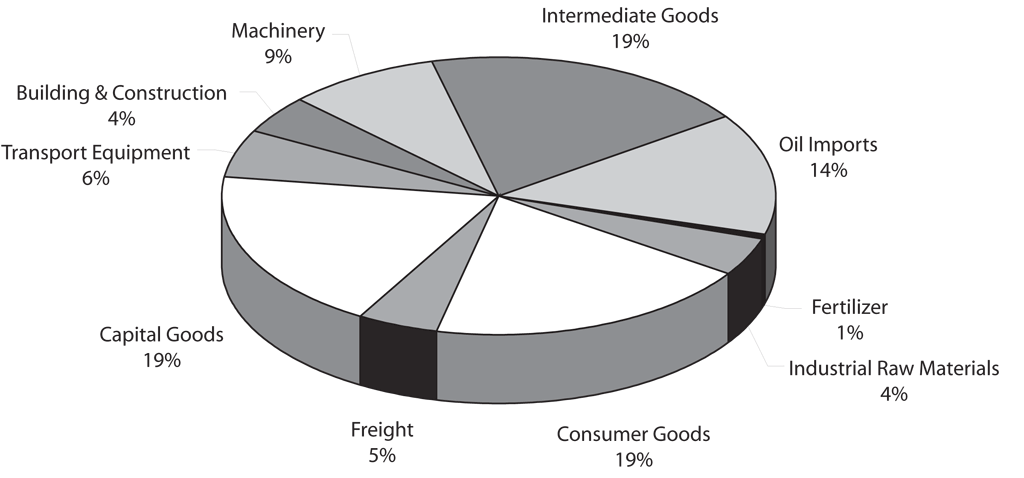
Financing of the current account deficit which jumped by 49.1% in 2007 to $2,056.2m equivalent to about 17% of GDP is also a major cause of concern. At this rate of increase the reserve cushion looks very flat. Looking at BoT figures for the year up to August 2008, the structure of imports, where 38% comprise consumer goods and intermediate goods excluding oil means despite being endowed with an abundant level of resources and generous donors we are still borrowing substantially to pay for our daily consumption (see chart).
chart3

Breakdown of Imports into Tanzania by value
Continue reading

BUSINESS & THE ECONOMY

Exchange rates £1 – TShs 1,994
$1 – TShs 1,259

While western banks are reeling under the financial crisis Tanzanian banks reported a good year in 2007/8. On average, profit before and after tax for each bank increased by about 60% according to the Tanzania Banking Sector 2007 Performance Review by Ernst & Young. All the other banks, the report said, showed significant improvements and of the five loss-making banks of 2006 all recorded profits in 2007.
Among the commercial banks, Citibank recorded the highest interest income while the Dar es Salaam Community Bank was the highest among the non-commercial banks.

As at 31st December 2007 the banking sector comprised 23 commercial banks, three non-bank financial institutions and seven regional unit banks/financial institutions. The industry averages for return on average assets and return on average equity were 3% and 27% respectively, as in 2006. Standard Chartered Bank was the best individual performer in both cases with 8% and 61% respectively. Only one bank recorded a loss before and after tax – Sunday Observer.

Frank Mwakumbe writing in the Guardian noted that almost all banks experiencing the financial crisis in the USA operated as publicly traded companies and were privately owned and managed. He felt that this was a cause for caution about the privatisation process in Tanzania. A study by the ‘African Forum and Network on Debt and Development’ (AFRODAD) on Tanzanian’s experience with privatisation policies published in 2001 had summarised the benefits of privatisation, tersely: ‘Well performing privatised enterprises can contribute meaningfully to government revenue and to the economy as a whole in the form of taxes, increased production of quality goods and services, creation of more employment opportunities and introduction of modern technology. Continue reading

“WILDEBEESTS WILL VOTE FOR YOU”

There was a sharp debate in parliament when MP’s and others were invited to comment on the new ‘Wildlife Act 2008.’

“This Bill favours wildlife protection more than human beings” according to one participant.” “If you MP’s let it pass and become law, you must recruit wildebeests to vote for you come 2010” a village chairman said. The Bill would undermine indigenous Maasai people residing adjacent to the controlled areas in the vast districts of Simanjiro, Monduli, Longido and Ngorongoro. Mbakule Laizer from Longido was concerned by a certain section on the Bill that directed investors within the Wildlife Management Areas to pay fees direct to the Wildlife Division contrary to the previous system where they used to pay the respective village authorities. “We have spent a considerable time in our life to conserve the wildlife believing that one day we will reap the benefits of our efforts, but now when the government wants to rob us of the fees, I fear the move will spark off a dispute” one participant said amid applause from the floor.

The Chairman of the House Committee on Land, Natural Resources and Environment said it was unfair for villagers to threaten to deny MP’s their votes in the forthcoming general elections. “We have brought the Bill before you so that you can suggest what is to be removed or added, and we are ready to take you views in order to come up with a fair Wildlife Act at the end of the day,” he said – Guardian.

STUDENTS STRIKE

In November some 16,000 Government-sponsored University of Dar es Salaam students and most other university undergraduate students were suspended indefinitely following their boycotting of classes in protest against loan fund allocations. They demanded that the government, through the ‘Higher Education Students Loans Board’ give them 100% loans instead of basing the loans they get on the financial status of their families, parents or guardians. The government decided to be tough and the affected universities were then closed. This seemed to exacerbate the situation with opposition parties condemning the government’s actions.

student
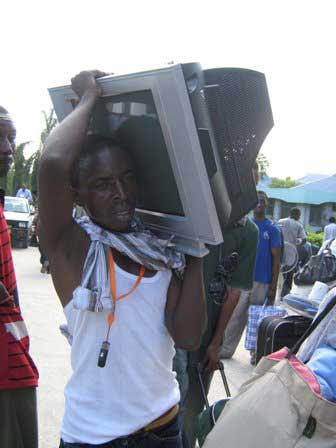
Tony Zakaria, a columnist writing in the government-owned Daily News was not impressed by the behaviour of the students. Extracts: ‘The pictures of students and teachers (also threatening to strike) on TV screens and on newspaper pages in the past few weeks have been colourful to say the least. Students dragging others from buses or classrooms to force them to join the strikes amounts to violence. So does the action of striking teachers throwing chairs at their leaders in a meeting hall…. teachers have been going to school but doing zero teaching in class….. Are they being paid salaries at the end of each month to silently ‘teach’ from their offices? We have seen hordes of pseudo-intellectuals on TV… struggling to juggle TVs, DVD players, impressive music systems and their suitcases large and small, as they scrambled to leave campus after they were booted out…The defiant, fire-breathing future intellectuals have vowed to fight on and strike again upon being reinstated at some unknown future date. You want to know how they spend their money, loaned or otherwise? Visit Mabibo hostel or any other dormitories of these potential future servants of the public. TV antennae growing like a forest of potted plants on windows for all to see. A cacophony of sound that passes for music …. will assail your ears, unless you are deaf to the obvious…. When do they seriously study, these music and vision lovers?’