ENERGY & MINERALS

by Ben Taylor
Progress in LNG plant negotiations
Negotiations between Tanzania’s Ministry of Energy and Equinor and two multinational oil companies – Shell and Equinor – on the proposed liquid natural gas (LNG) processing plant in Lindi region are said to have made good progress. However, the target date set by President Samia Suluhu Hassan for conclusion of the negotiations – December 2022 – was missed. The Minister for Energy, January Makamba, explained that the delay in concluding talks was solely due to the Christmas holidays.

Talks between the government’s negotiation team and Shell and Equinor and their partners were revived in 2021 after having been stalled for some time. The two sides are said to have agreed on key issues, and have signed an initial Host Government Agreement (HGA).

In June 2022, President Hassan witnessed the signing of the initial HGA, and directed the team to complete discussions on the remaining areas before the end of December. “We would have finished drafting the agreement,” said Mr Makamba, “but our partners are now taking leave during Christmas.” He added that the drafting will resume in the new year. Mr Makamba said the negotiations have been complex and have taken considerable time. “I was in Arusha for four days, and we were meeting from 7:00 in the morning to close to midnight,” he explained.

The investing companies are optimistic about the project’s execution after the discussions conclude. “From Equinor’s side, we are encouraged by the progress we have seen in the talks between the LNG investors and the government. While we are still working on finalising the agreement to progress our LNG project in Tanzania, we have now agreed on the key items and have entered the drafting stage,” reads a statement.

To date, the government in partnership with oil and gas companies have discovered a total of 57.54 trillion cubic feet (TCF) of natural gas in various blocks. This includes 10.41 TCF from onshore wells and 47.13 TCF discovered offshore. Natural gas is currently used mainly for electricity generation, industrial and domestic activities as well as powering vehicles. Around 60% of the electricity consumed in Tanzania is generated using natural gas, with the rest coming from other sources such as hydropower plants, oil, solar and biomass.

The planned LNG plant in Lindi will facilitate the export of the natural gas to the world market. The agreements to be signed after the current negotiations include the final Host Government Agreement, which spells out terms of the project, the project law and the benefit-sharing agreement. A final investment decision could be reached in 2025, potentially allowing exports to start before 2030.

Earlier, a new report by Stanbic Bank Tanzania has suggested that the Liquefied Natural Gas (LNG) project can potentially raise Tanzania’s Gross Domestic Product (GDP) by over USD $7bn (TSh 16 trillion) per annum and earn the government $2bn in revenue. “It is believed that, upon completion, Tanzania LNG will be the largest energy project in Africa’s history in terms of capital investment. It would increase Tanzania’s GDP by $7 billion per annum,” Stanbic Bank Tanzania said in a statement yesterday. Tanzania’s GDP in 2020 was estimated at USD $62 billion, according to the World Bank.

The magnitude of the economic impact is correlated with the expected future price of LNG. The Bank accounted for this by modelling different future price scenarios, ranging from $5.50 MMBTU to $12.00 MMBTU. “It represents a transformational economic impact; between 270,000 and 600,000 direct and indirect employment opportunities during the lifespan of the project; between $2 billion to $6 billion in fiscal contributions to the government of Tanzania per year; and between $3 billion to $8 billion per annum in balance of payments contributions,” the statement reads.

In his remarks at the report launch, Mr Makamba said the report insights were critical in providing an overall understanding of the macroeconomic impact of the project. He also affirmed the government’s commitment to finalizing the project and tapping into the wider opportunities provided by alternative energy sources. “We will be unapologetic in the extraction and consumption of gas energy that exists in our country,” said Mr Makamba. “In Africa, if we are to extract all gas resources, we will contribute just 3 to 3.5 percent of global greenhouse gas emissions. Tanzania is building a robust gas economy, and not just limited to liquefied.”

The Minister said the envisaged LNG project with its huge financial and economic impact to the nation would bring about changes on the way public and private institutions would operate. “It can’t be business as usual. It is huge investment, something never done before. Public and private institutions will be required to be able to execute their jobs on top global levels,” he said. (The Citizen, Daily News)

Gold miners launch legal action against Barrick Gold
A group of Tanzanian villagers is suing Canadian mining giant Barrick Gold over alleged police killings, torture and other abuses at North Mara gold mine in Tanzania. Further, the families of two miners allegedly killed at the mine in 2019 have launched a legal claim against the London Bullion Market Authority (LBMA) for certifying its gold as free from major human rights abuses.

The first claim, filed in the Superior Court of Justice in Ontario, Canada, accuses mining of being complicit in extrajudicial killings by police guarding its North Mara facility.

The miner has faced similar charges various times in recent years. In 2013, twelve villagers living in the neighbourhood of North Mara sued the company, then known as African Barrick Gold (ABG), in a UK court for the death of their six relatives, whom they said were shot by police in 2011. In 2015, the company agreed to an out of court settlement to compensate the villagers for undisclosed amounts of money.

This time, the plaintiffs include relatives of five men killed by police assigned to the mine, according to the filing. Nine of the plaintiffs say they were themselves beaten or shot by the police. The claim states that residents routinely enter “waste rock areas” at North Mara to retrieve rocks with trace amounts of gold, which they process and sell.

It also claims that Barrick “has had effective and practical control” over police stationed at the mine and that the company’s security agreements with the police effectively make them the mine’s “private and heavily armed security force.”

In the second case, the law firm Leigh Day has filed a legal claim at the High Court in London alleging that the LBMA has been wrongly certifying that gold originating from North Mara gold mine was free from major human rights abuses. According to a statement, the two men died while working at the mine. “The claimants assert that despite a publicly recognised pattern of systemic human rights abuses associated with the mine over many years, the LBMA has continued to certify gold from the mine under its LBMA Responsible Gold Standard,” the law firm claimed.

According to Leigh Day, the first miner died in July, 2019 after being shot by security staff at the facility while the second miner died in December of the same year after being shot by Tanzanian police. The claim, filed in the Superior Court of Justice in Ontario, Canada on Wednesday, accuses the world’s second-biggest gold miner of being complicit in extrajudicial killings by police guarding its North Mara facility, located about 30km (18 miles) from the border with Kenya.

Barrick Gold Corporation has refuted the allegations, saying Barrick had frequently made it clear that North Mara’s security personnel are unarmed and that the mine does not supervise, direct, control or instruct any mission, assignment or function of the Tanzanian police force, which is a state institution.

Barrick president and chief executive Mark Bristow said the group was proud of its human rights record around the world and of North Mara’s strong working relationship with the communities around the mine. He said many of the mine’s employees have been drawn from the surrounding villages and in line with Barrick’s other operations, North Mara prioritises local employment and procurement.

“While the vast majority of local residents are law-abiding, there are rogue bands, armed and well-organised, who from time to time invade North Mara to steal gold-bearing rock, presenting a serious risk to the safety of mine personnel and community members in the process,” said Mr Bristow.

“As recently as last month, North Mara was attacked by an armed force of almost 100 men. Despite the police’s attempts to repel them, 71 managed to scale the site’s nine-metre-high perimeter wall and engaged with the mine’s unarmed security personnel. The policemen eventually removed them, but one of the intruders died as a result of his injuries. “Two of the policemen were also injured. Barrick made a public announcement about the incident at the time. This was far from being a one-off occurrence and North Mara lives with the constant threat of such invasions.”

A spokesperson for the company also told Reuters news agency that the Canadian legal action “is riddled with inaccuracies,” and that it “attempts to advance claims against Barrick Gold Corporation in Ontario based on alleged actions of the Tanzanian police, even though Barrick exercises no control or direction of any nature over the Tanzanian police.” “We intend to vigorously defend against these allegations in the appropriate forum,” she said.

Tanzania’s deputy minister of Minerals, Dr Stephen Kiruswa, said the accusations were stirred up by “groups which want to get money from global NGOs,” playing down the seriousness of the legal action. “We have met residents near the mine and they are happy with the support of the miner to community life,” he said, adding that there were no any human rights abuses. (The Citizen, Al Jazeera, Reuters)

Tanzania, Uganda hit back at EU on oil pipeline plan
The governments of Tanzania and Uganda have responded in robust terms to criticism of the East Africa Crude Oil Pipeline (EACOP) project from the European Union Parliament.

In September, the EU Parliament adopted a resolution raising concerns of human rights violations, major environmental and climate risks posed by the execution of the EACOP project. According to the resolution, more than 100,000 persons are being forcibly evicted to make space for the pipeline, and they are being deprived of the use of their land and thus also their livelihood before receiving compensation.

The resolution calls “for the EU and the international community to exert maximum pressure on Ugandan and Tanzanian authorities, as well as the project promoters and stakeholders, to protect the environment and to put an end to the extractive activities in protected and sensitive ecosystems.” It further calls for efforts to use “the best available means to preserve the culture, health, and future of the communities affected and to explore alternatives in line with international climate and biodiversity commitments.”

Responding to the resolution, January Makamba, Tanzania’s Energy Minister said that the overall pipeline route has been designed to minimise environmental and social impacts. “Some physical displacement (loss of shelter) and economic impact (full or partial loss of farmland) is unavoidable,” he admitted, but added that “land acquisition is compliant with both the Laws of Tanzania and the Performance Standards of the International Finance Corporation (World Bank).” “We offer a choice between replacement housing (generally of higher standard than the existing dwelling) and cash compensation. Around 85% of the affected people have elected for replacement housing, and construction of these replacement houses is ongoing.”

Mr Makamba insisted that “no land will be accessed by the project until compensation has been paid and notice to vacate has been given. In fact, those affected will also be entitled to transitional food support and have access to livelihood restoration programmes. The land acquisition process is expected to be completed in mid-2023.”

Finally, he noted that “the pipeline will be monitored by a state of the art fibre-optic cable to detect both temperature changes and vibrations and it will be executed in an exemplary manner in terms of transparency, shared prosperity and sustainable development including the environment and respect for human rights.”

Responses in Uganda were less diplomatically expressed. The Deputy Speaker of the Ugandan Parliament, Thomas Tayebwa, described the resolutions as “deliberate misinformation.” “These are projects which were approved by the Parliament of a sovereign country,” he said, “and anything to do with challenging their approval is an affront to the independence of this House and we cannot take it lightly.”

“The EU bile against the project”, he went on, “betrays neo-colonial attitudes and imperialism of the EU Parliament”.
He further derided the EU Parliament for closing an eye to the EU’s own emissions. According to Mr Tayebwa, EACOP will only represent 0.5%, yet the EU with just 10% of the world population is responsible for 20% of emissions, and member countries are exploring plans to deepen fossil-fuel extraction.
HYDROPOWER & ENERGY

by Dr Hildebrand Shayo

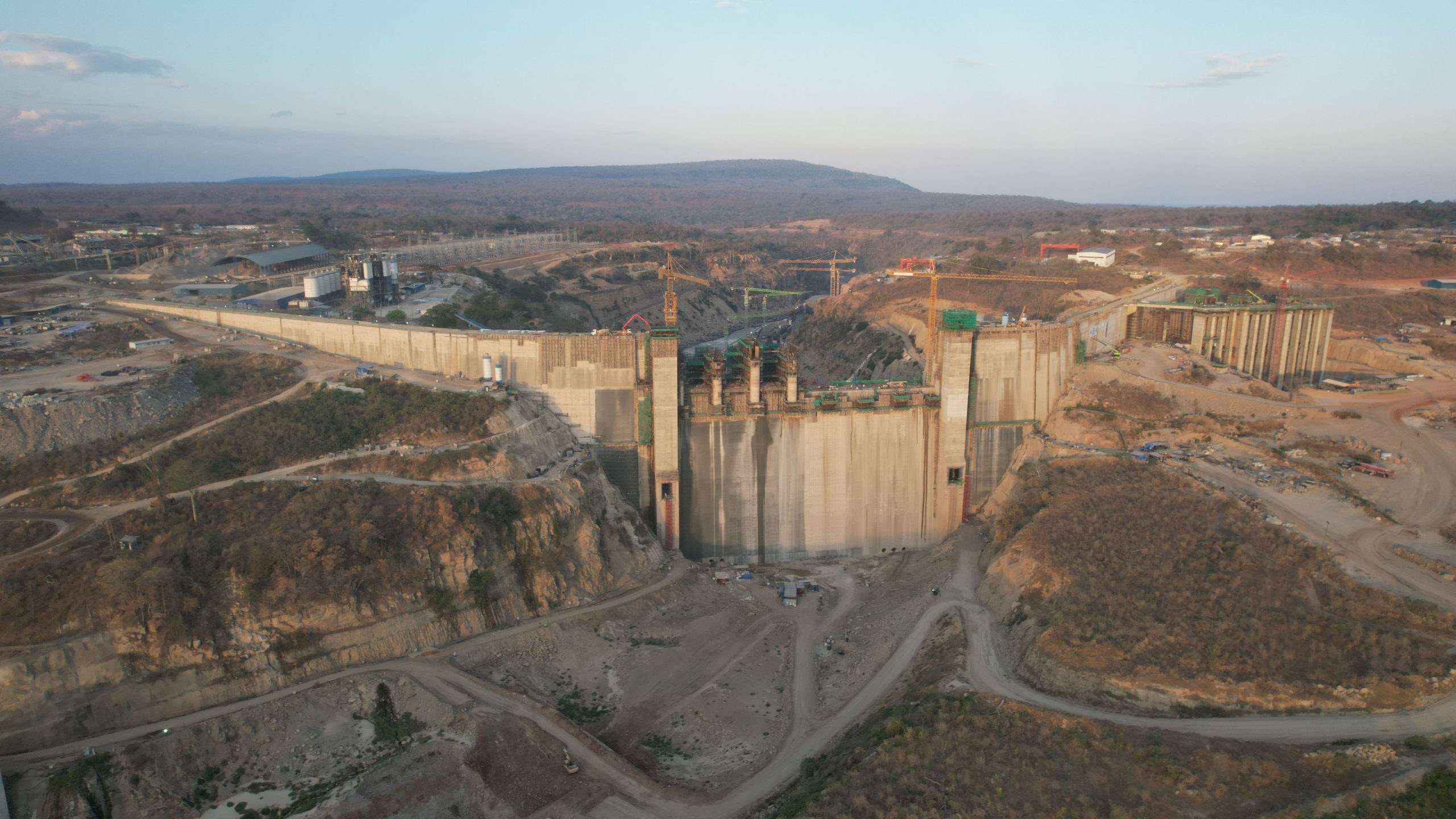
Julius Nyerere Hydropower Plant (formerly known as Stiegler’s Gorge) near completion (Photo Elsewedy Electric)

JNHPP Hydropower moves forward but major challenges for Tanzania’s energy sector remain
Large-scale hydropower development in Tanzania has, until recently, largely been government led. The Electricity Act of 2008 and the subsequent feed-in tariff policy has since endorsed stimulated private sector investment in electricity generation in the country.

The Act provides rules for power generation, storage, and distribution of electricity in Tanzania. A section devoted to rural electrification assigns duties to the Minister responsible for electricity matters and the Energy and Water Utilities Regulatory Authority (EWURA).

To enhance efficiency, Tanzania has been endeavouring to reform the electricity sector. This process began during the third phase of government under President Benjamin Mkapa. Nevertheless, the overall restructuring of the sector into three largely separate sub-sectors – a power generation, transmission and distribution – has not yet been achieved. This is largely due to the slow pace of reforms and the myriad forms of resistance faced. For one, energy is also a national security matter.

Let us ask what the main challenges are for Tanzania’s energy sector that each policymaker needs to be grappling with, even as the Julius Nyerere Hydropower Plant (JNHPP) is near completion [previously known as Stiegler’s Gorge – see https://www.tzaffairs.org/?s=stiegler&submit=Search]. In the context of how this sector is important to the growth of the economy, only a few will be highlighted here to help draw attention to where perhaps should focus when it is about the energy sector to make decisions better for the development of the nation.

Energy use in cooking and transport is the number one challenge in my view. If no action is taken, this can have a wide bearing on the environment and climate-related effects. Biomass fuels in the form of firewood and charcoal and liquid petroleum gas (LPG) are the main cooking fuels in urban Tanzania, with LPG slowly replacing biomass in rural and suburban areas.

It is regrettable most Tanzanians don’t appreciate that importing LPG for cooking and petroleum products for transport is precipitously draining Tanzania’s foreign currency reserves. Thus, moving to clean energy sources, especially electricity, for cooking and transporting clean cooking energy should be an important policy goal of the Government of Tanzania. To reduce the use of charcoal, which has contributed hugely to deforestation would be a big benefit to the country.

According to the latest Tanzania power system master plan, Tanzania’s electricity demand will expand at an annual rate of 13.8% during 2022–2030, rising from 10,176 GWh in 2022 to 28,664 GWh in 2030. This growth indicates that hydropower will continue to play a dominant role in Tanzania’s electricity system.

As President Samia Suluhu Hassan graced JNHPP water filling for the generation of 2,115MW of electricity upon completion on 22nd December 2022, Tanzania’s total power installed capacity by 2021 was 1,606MW. Tanzania’s electricity generation, according to the Ministry of Energy and Minerals, currently comes mostly from natural gas (48%), trailed by hydropower (31%), petrol (18%), solar (1%), and biofuels (1%) supplemented by power imports power from Uganda (10 MW), Zambia (5 MW), and Kenya (1 MW).

Ministry of Energy and Minerals data reveals that the average electricity consumption per capita in Tanzania is 108kWh per year, compared to Sub-Saharan Africa’s average consumption of 550kWh per year, and 2,500kWh average world consumption per year. Provided the demand for electricity in Tanzania is projected to be growing at 10-15% per year, with currently only 24% of the total population having access to electricity, urgent action needs to be taken that include Government plans to increase Tanzania’s generation capacity to 10,000 MW by 2025. To achieve this goal, the Government of Tanzania has embarked on reforming the electricity supply industry mainly by attracting private capital to the industry to invest in other energy sources.

Whilst the initiative to attract private capital is gaining momentum, the hydropower sector needs to be equipped for the technical, financial, social and environmental challenges that lie ahead.

For instance, there is currently excess electricity during the rainy season and insufficient electricity generation during the dry season. In the past this has resulted in significant electricity power rationing. Smoothing Tanzanian’s electricity generation curve by consuming or selling surplus electricity during the rainy season and increasing generation during the dry season, in order to reduce fuel imports for generators and meet Tanzania’s rising electricity demand is a major policy challenge facing hydropower development especially as the nation aligns itself for industrialisation.

This implies that to meet Tanzania’s mounting electricity demand, as calls to industrialise and increase value addition processing mount, accelerated development of its hydropower and power mix sources from potential unexplored sources is fundamental. From an investment and business point of view, it is generally acknowledged that there has been underinvestment not only in a generation but maintenance of infrastructure that occasionally when executed triggers among other things power rationing due to major maintenance.

In addition, another challenge is on what can be viewed as administrative and bureaucratic vested interests and inadequacies. Less-than-attractive (to power generators) electricity prices that are not deemed to be adequate to support system cost and capital expansion are a major cause of underinvestment. Insufficient investment in transmission lines is a critical obstacle for hydropower development; thus a further policy goal for Tanzania should be to attract investment by initiating efficiency and economic principles into the sector while trying to avoid politicisation of the energy sector.

Worldwide in recent years, there has been an increase in extremely unstable weather patterns and events, like flooding. Further, high sediment load caused by farming along water sources, landslide-induced destruction of water sources through animal husbandry and farming through unplanned irrigation schemes etc. This has the potential to severely reduce the base flow available to hydropower projects in the long run. The effect in addition to inadequate maintenance will thus be to increase both capital and operational costs, and loss of revenue from plant stoppages. Hence, increasing the resilience of hydropower plants is another policy goal for Tanzania to achieve its full potential in the energy sector’s goal.

Further, Tanzania’s electricity sector in my opinion experiences some governance problems. Tanesco, the national electricity utility and the sole buyer of electricity, can be frequently a victim of political interference. Electricity prices and power purchase agreements can often be driven by factors other than scientific or business economic principles.

Tanzania has much to benefit if it can export surplus electricity to other SADC region members. This can only happen if there are robust long-term plans to develop all potential energy sources. If achieved, Tanzania could increase its gross domestic product immensely and relieve itself from depending on donor handouts and going for development loans that sometimes can have unfavourable terms.

CONSTITUTIONAL REFORM

by Ben Taylor
President Hassan gives her backing to calls for a new national Constitution
The government’s task force on political reform, formed by President Samia Suluhu Hassan to address concerns that the country’s democratic process had eroded in recent years, has rejected the idea of drafting a new constitution before the next election in 2025.

The taskforce did, however, accept some opposition demands, including to establish the electoral commission as a more independent body and lifting the ban on political rallies.

In its final report delivered to President Samia Suluhu Hassan in October, the taskforce also suggested that the entire constitutional overhaul that has also been a key opposition agenda might still take longer to be sorted out.

Prof Rwekaza Mukandala, the taskforce’s chairman, said the six-month process they had been through of collecting public views had revealed “deep divisions” among Tanzanians over whether to adopt a new constitution or simply amend the current one dating back to 1977. “A good number of interviewees highlighted the costs involved in preparing a fresh Katiba Mpya (new constitution), and others said previous drafts could be used as a starting point even though the last one is already eight years old and was prepared two elections ago,” he said.

The task force proposed a further process of national dialogue to agree on key issues in the current constitution that need to be reviewed or changed, citing the Union structure between Tanzania mainland and Zanzibar as a significant example. The President should then appoint a new panel to use the recommendations from the dialogue to draft another constitution, whether new or based on previous drafts, which will eventually be presented to parliament for endorsement. Prof Mukandala did not give any timelines for this potentially lengthy process to be completed.

Speaking after the task force’s presentation, President Suluhu avoided mentioning the constitution issue directly but noted that the recommendations included such a large number of law changes and new task forces that it could take the government some time to get everything organised. She also said the task force’s proposals, while useful as a whole, should not be construed as “directives to the government”.

Prof Mukandala said the National Electoral Commission should not be answerable to any government agency. Instead, he concluded, an “independent” committee led by the Chief Justice should be formed to vet applications for selection of NEC commissioners. All citizens should be eligible to apply but the committee’s recommendations should still be submitted to the president who will have the final say on the NEC’s actual composition, Prof Mukandala’s team proposed.

The taskforce further proposed that all future NEC decisions, including presidential election results, be allowed to be challenged in court. This would mark a significant change, as currently Tanzania’s presidential election results are legally not challengeable in court once the electoral commission declares them.

On political rallies, it said parties across the spectrum should be allowed to resume both public and internal meetings without hassle, and recommended that the laws governing political party activities and police operations should be amended accordingly.

President Hassan gave her backing to this proposal. “As things stand,” she said, “the current laws give the police leeway to intervene as they see fit. But these are laws that can be fixed quickly. Even we in government will receive credit if political rallies are allowed again,” she said.

Nevertheless, in the event the President acted even without amending the law. In early January 2023 she announced at a meeting with political party leaders from across the political spectrum that “permission for political meetings will be granted; our duty as the government is to protect them. Hold your meetings safely, but you have to adhere to the rules and regulations,” she said.

Speaking at the same event about a possible new constitution, the President said she will soon revive the process that had been stalled for eight years in order to write a constitution that will be in line with the current needs of the nation’s development. “Soon we will form a committee that will include all groups in the community,” she said. “The committee will advise us on what to do and how to get a new constitution for the people.”

At the time of writing, the way forward remains unclear. There is clearly more openness to the idea of a new constitution among the current government than was the case under President Magufuli, but the process has thus far only been discussed in unspecific terms, and it will likely face the same challenges that undermined the previous attempt.

Finding acceptable members to form whatever team or committee or taskforce will be one such challenge. Will it be dominated by politicians, already committed to particular ideas and showing little inclination to compromise? Further, picking any of the previous draft versions of the constitution will be interpreted as a victory for one or other group. It will be very challenging to prevent the battle lines that were previously drawn from quickly being re-established. For a process that is intended to produce a document that unites the country, keeping everyone on board with both the process and the outcome will not be easy.

BUSINESS & THE ECONOMY

by Ben Taylor
Pro-business moves by President Hassan
President Samia Suluhu Hassan’s business-friendly outlook is sending positive signals across the globe, with Moody’s Investors Service chang­ing Tanzania’s outlook from stable to positive.

“The outlook change to positive reflects Moody’s view that political risks have lessened under the government’s new approach to promot­ing economic development and engagement with the international community,” Moody’s says in its latest change on Tanzania’s rating which was published in October.

Ratings such as those for Moody’s are used by investors globally in deciding on where and why they should invest their money in any particular economy.

President Hassan took over at a time when relations between the gov­ernment and some investors were somewhat uneasy. The sentiment then was that the country was excessively regulating foreign investors, and that Tanzania’s business climate had abruptly become unpredict­able.

As a result, despite promoting industrialisation, a report by the United Nations Conference on Trade and Development (UNCTAD) found that inflows of foreign direct investment (FDI) decreased by 24% between 2015 and 2017.

Later, relations between the government and the International Monetary Fund (IMF) soured when the latter criticised the former for its unpre­dictable economic policies and unreliable statistics. An IMF report in 2019 warned Tanzania of unpredictable and interventionist policies that worsen the investment climate and could lead to meagre [or even nega­tive] growth, was blocked from being published in the country.

But almost 18 months since the change of guard at State House, Moody’s said the government’s efforts to improve the business and investment climate and attract FDI, most notably in the mining and hydrocarbon industries, offers the prospect for higher potential growth and improv­ing international competitiveness. “Tanzania’s re-engagement with the IMF also has the potential to support higher government revenue generation capacity and unlock greater concessional financing from development partners, supporting debt affordability and increased social spending,” Moody’s said. “Initial steps to improve the business and investment climate include relaxing regulations for foreign work permits, streamlining VAT refunds, and tabling legislation that supports local businesses,” Moody’s noted.

Government officials and some analysts say the government has indeed managed to effectively tell the world that Tanzania was open for invest­ments and that its policies were predictable. “This change is a clear indication that the government’s efforts to create an enabling business environment were being noticed….This will instil confidence to investors that their money will be safe when they invest in Tanzania,” said the Deputy Minister for Investment, Industry and Trade, Mr Exaud Kigahe.

He said the government will keep on creating a friendly-business and investment climate to convince investors that investing in Tanzania could make them be sure of their tomorrow.

Dr Daud Ndaki, an economist from Mzumbe University, echoed this view, noting that the sixth phase government has achieved a remark­able milestone in building investors’ confidence. “This is a positive development. With this positive outlook, we are likely to attract more investors,” he said.

Separately, World Bank Vice-President Victoria Kwakwa praised President Hassan’s “economic miracle,” where key macro indicators showed a strong post Covid-19 position compared to many countries.

Indeed, growth data showed a healthy 5.4% annualised growth rate early in 2022, ahead of earlier projections. The Bank of Tanzania said money supply and private sector credit growth continued to rise swiftly, with the trend being attributed to monetary and fiscal policy accommodation, an improved business environment and recovery of private sector activities from the effects of Covid-19.

Private sector credit growth improved significantly in July and August, reaching around 20%, compared with the projection of 10.7% for 2022/23.
Further, Tanzania appears to have dodged the worst inflationary impacts of the war in Ukraine. Official estimates saw inflation reach 4.6% in August 2022, well below the double-digit figures seen in many countries, and below Tanzania’s own upper-range ceiling of 5%.

Economist and business analyst, Dr Donath Olomi, said there is positive change in perception towards investment and the business environment in Tanzania, which has been influenced by President Samia Suluhu Hassan’s government. “The economic potential has yet to be fulfilled, but we have come far, and there is this confidence as far as doing business in Tanzania is con­cerned. Trust has recovered, and the trajectory is good,” he said.


Census data published

Population census data


November 2022 saw the publication of the first findings from the 2022 national Population and Housing Census. The main headlines were drawn by the overall total population figure of 61.7 million, up by more than a third from 44.9 million in 2012, representing an annual growth rate of 3.2% since the previous census.

The population of Dar es Salaam has risen a little more slowly over the same period, from 4.4 million in 2012 to 5.4 million in 2022, an annual growth rate of 2.1%. Mwanza meanwhile has grown from 2.8 million to 3.7 million, an annual growth rate of 2.9%.

The overall population figure for 2022 is a little lower than the United Nations Population Division had projected (63.6 million at the end of 2021). Nevertheless, the annual growth rate over the past ten years is considerably higher than had been the case in the previous decade (3.2%, up from 2.7%).

In launching the initial report, President Samia Suluhu Hassan said it was estimated that by 2025 Tanzania will be home to 68 million people and that by 2050 there will be 151 million in the country.

Commenting on the figures, some economists said that rapid popula­tion growth makes it more difficult for low-income and lower-middle­income countries like Tanzania to afford the increase in public expendi­tures on a per capita basis. This, they say, makes it increasingly difficult to eradicate poverty, end hunger and malnutrition, and ensure univer­sal access to health care, education, water and other essential services.

Dr Wilhelm Ngasamiaku, an economist from the University of Dar es Salaam, said it will be important for the economic strategies of the coun­try to take into account the age structure of the population. “In previous census for example, we have seen that people below 18 years account for the majority of the population. This means as a coun­try, you must invest more on social services as demand for health and education will increase,” he said. “But if the majority is in the working age group, 15-59 years, it means we are going to need to re-strategise economically to make sure we create more decent job opportunities,” added Dr Ngasamiaku.

Others say a large population translates into more workers and more consumers who make a good market for locally-produced products for the general good of the economy.

Dr Lutengano Mwinuka, an agricultural trade economist from the University of Dodoma (UDOM), said the population growth provides an opportunity by providing a bigger pool of human capital. “For instance, in agriculture we have a lot of unutilised land across the coun­try. From the census data we can identify the size of the working age group and skills composition and thus we can appropriately develop economic development strategies,” he said.

The initial census data released in November does not include the age profile of the population. This data is expected to be released in 2023.

TOURISM & ENVIRONMENTAL CONSERVATION

by James L.Laizer

Carbon credits – an emerging hope for conservation in Tanzania
Tanzanian communities have started to earn income from carbon credits based on conservation projects they implement. Most recently, eight village communities – Lugonesi, Mwese, Lwega, Bujombe, Kapanga, Katuma, Mpembe and Kagunga – in Katavi Region, Tanganyika District, were reported to have received TSh 4.2 billion in carbon credit sales in December 2022 on top of TSh 2.3 billion received in the last eight months, taking their total income from carbon credits in 2022 to TSh 6.5 billion. The payments were received after carbon credits accumulated from forestry protection were sold to the voluntary carbon market. Carbon credits were made possible through technical support of an investor, Carbon-Tanzania, that entered a contract with village governments in 2017 to protect the Village Land Forest Reserve, thus generating certified carbon credits. The contract required the eight village communities to engage with Carbon-Tanzania in protecting their forests using the Reduce Emissions from Deforestation and Forest Degradation (REDD+) system under the Ntakata Mountain Project.

These payments indicate the broader potential of rural villages to earn carbon credit funds through the effective implementation of conservations projects in Village Land Forest Reserves. By scaling-up similar projects in Tanzania, rural villages will not just enhance conservation and contribute to the global fight against climate change but will also ensure income generation and associated benefits to forest-owning communities across the country.

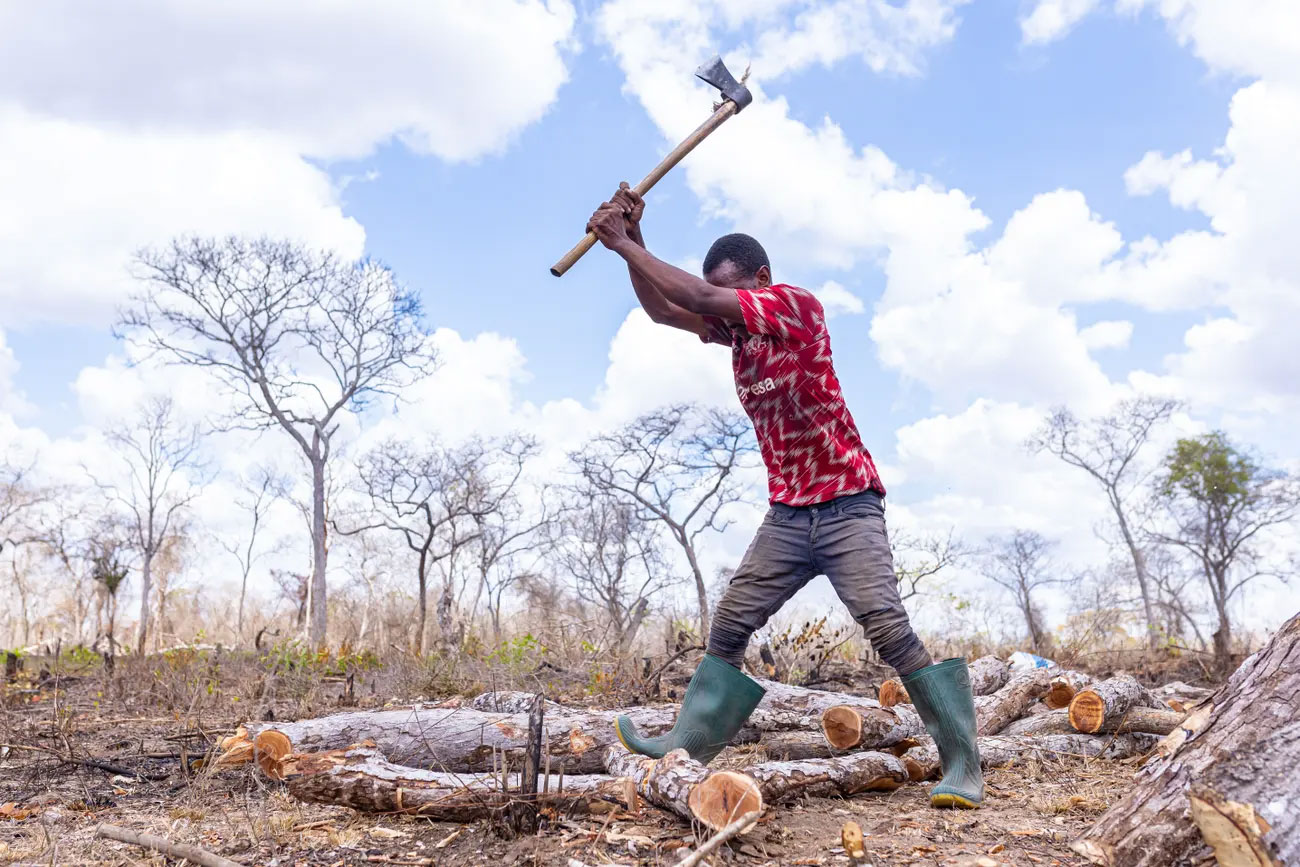
The main factor contributing to deforestation in Tanzania is unstainable agricultural practices that involve forest clearance due to shifting cultivation. Deforestation causes carbon dioxide to be released into the atmosphere. Prevention measures thus result in emissions reduction which gain value as carbon credits.
Carbon-Tanzania is a leading investor amongst others with knowledge of carbon credit systems in Tanzania. They are focused on supporting and advising communities to enter into selling of credits on the voluntary carbon market, therefore providing communities with access to the global financial system. In 2021, communities earned over $1.5

million in carbon credit revenues which is equivalent to over TSh 3.4 billion. In December 2022, the Prime Minister of Tanzania Hon. Majaliwa Kassim Majaliwa handed over a ‘dummy cheque’ to the beneficiaries’ villages and commended them for ensuring sustainable management of resources. Additionally, the prime minister advised the beneficiaries’ villages to make good use of the funds by investing in development projects that will benefit the communities longer term, especially in provision of health services. The PM specifically suggested the use of carbon funds for the construction of the Kagunga Dispensary, estimated to cost about TSh 180 million.

Thus far, the funds generated from carbon credit sales are said to have been used mainly for social service provision in the areas of education, markets, local government office support and health. According to the Tanganyika District Executive Director, Mr. Shaban Juma, Tsh 1.85 billion of carbon revenues were spent on community social service provision projects in 2021. However, he also mentioned key challenges facing carbon credit projects in the District of Tanganyika, including low understanding among citizens and related incidents such as wildfires, trees felling, livestock grazing and crop farming in the village land forest reserves.

According to Carbon-Tanzania’s CEO Mr. Mark Baker, the Ntakata Mountains Project covers 217,000 hectares of Miombo woodland in the Greater Mahale Ecosystem in western Tanzania, engaging over 38,000 people from the eight villages. The project also supports the protection of key habitats for endangered wildlife species including the eastern chimpanzees, wild dogs, Egyptian and lappet-faced vultures and vulnerable species such as elephants, ground hornbills, martial eagles, giraffes, pangolins, leopards and lions. The project also created important connectivity between the Greater Mahale ecosystem and Katavi National Park and allows a free movement of elephant and other wildlife within the ecosystem.

More effort required to lift tourist numbers to the peak in Tanzania
In October 2022, the Tanzania Vice President Hon. Phillip Mpango challenged public and private players to come up with promotion strategies that would attract more tourists. He expressed dissatisfaction with the contribution of the tourism sector to the national economy, calling for increased efforts to capitalise on the country’s natural resources. The target is to achieve USD $6bn in tourism earnings by 2025, requiring an increase in tourists to five million. He encouraged promotion of domestic tourism to attract recommendations to help address factors hampering tourism in the country.

The Tanzania Private Sector Foundation (TPSF) chairperson, Angelina Ngalula, notes that policies to ensure business continuity should be revisited to foster sustainable private sector development and build an enabling environment for entrepreneurship. Other areas that require government intervention and facilitation include the transition from the informal to the formal economy that are key to a human-centred, inclusive, shift to eco-tourism which is a fast-growing industry focused on conservation and job creation to locals as well as sustainable and resilient recovery of the tourism sector.

A call to protect wildlife
In December, environmental charity WWF launched the “Living Planet Report 2022,” in Dar es Salaam. This called for action to protect wildlife whose population globally has dropped at an alarming rate of 69% over the last 50 years. This assessment highlights “devastating” losses to nature due to human activity. During the launch, Marco Lambertini, outgoing Director General of WWF International, said WWF was extremely concerned by the new data that shows a great fall in wildlife populations, in particular in tropical regions like Tanzania that are home to some of the most biodiverse landscapes in the world.

Tanzania is estimated to have been losing 469,000 hectares of vegetation cover per year. WWF Country Director Amani Ngusaru said Tanzania should protect the environment by adopting sustainable practices in agriculture, forestry, fishing, energy, mining and construction to control climate change. According to Dr. Ngusaru, Tanzania experiences climate change impacts in form of drought, floods, and loss of land. The report clearly indicates early warning and immediate action for conservation and restoration in Tanzania and other tropical countries is necessary.

EDUCATION

by Angela Ilomo

Stakeholders propose sweeping changes in the education policy
For a long time now, graduates from universities have been under the microscope due to their lack of capacity to undertake self-employment and demonstration of poor working skills, a cry that prompted President Hassan to issue directives to the ministry to review the Education policy. The President’s goal is to ensure that at whatever level a young person achieves in education, he or she will be able to have skills that will enable him or her to either get employed or go for self-employment. (The Citizen)

New report pokes holes in TZ curricula, expert speak out
The new research reveals that although civic education and civics are part of school curriculum, there has been lack of adequate research and empirical evidence on how the content, quality of teaching and learning materials may empower youth with knowledge and skills to engage in democratic processes as required. A lead researcher, Dr Perpetua Kalimasi said that democratisation process calls for an in-depth review of the civic education curriculum starting from the primary level of education. (The Citizen)

Standard 7 results reopens the language debate
Tanzania’s education system has been under scrutiny due to a number of challenges, with the confusion over the language of instruction from primary to university level taking toll. Kiswahili has been used as a language of instruction at the primary school level with the argument being to make students understand better and more easily. When it comes to secondary school, however, it switches to English, a language of instruction used mainly up to university level. In this regard, it leads to poor performance in the subject by students who head to secondary school where the English language is the medium of instruction. (The Citizen)

Free education policy goes to test as Std VII pupils sit exam
Exam candidates from public schools involve the first batch of beneficiaries of the free education policy that came into effect in 2016 after it was endorsed in 2014.
“Removing the burden of school fees paved the way for me to focus on buying additional books for my children. This relief will definitely be reflected in the children’s examination results,” says Mr. Juma Nzali a parent whose child will sit for the exam to The Citizen over the phone. (The Citizen)

Over 1 million pupils pass Std 7 exam
The National Examination Council of Tanzania (NECTA) on Thursday released the 2022 Primary School Leaving Examinations (PSLE) results indicating that the number of candidates who passed the exams has increased by 18.24 in comparison to last year. Acting Executive Secretary, Mr. Athumani Amasi explained that 558,825 of those who passed were girls, while the remaining 514,577 were boys. (The Daily News)

How Gender-based violence impacts negatively on girls’ education
The Minister for Community Development, Gender, Women and Special Groups, Dr Dorothy Gwajima, said that based on studies conducted in the country it shows that 60 per cent of acts of violence against children occur at home and the remaining percentage takes place in other areas. Many girls face various challenges based on gender and protection matters including Mwanahawa Mohamed (16), a student at Kikanda Secondary School located in Kilwa District of Lindi region. Despite having a dream of becoming a doctor in the future, her educational journey is not easy, since she encountered many challenges that would have forced other students to give up or fail, but she has not. (The Daily News)

Education Policy under review
The process of reviewing the policy and curricula follows directives issued by President Samia during her maiden speech in Parliament last year. With education stakeholders insisting that ETP of 2014 was outdated, this was among reasons that prompted President Samia to direct a review of the education policy and curricula to strengthen the quality of education in the country. (The Daily News)

HEALTH

by Ben Taylor

Universal Health Insurance bill delayed
In November, Parliament postponed the tabling of the Universal Health Coverage Bill for and moved it the Standing Committee for Social Services and Community Development for further consultations. This followed concerns raised by members of parliament and stakeholders that the bill had several significant shortcomings.

The government initially brought the bill before the house in September. At this point, a spokesperson for the Ministry of Health stated that the bill will “answer the call to provide equitable and decent healthcare for all.” She added that “the process started in 2016, we’ve not only learned from challenges by the National health Insurance Fund (NHIF), but also from other countries that have established sustainable universal health insurance.”

Health minister Ummy Mwalimu said the government aimed, through the bill, to make health insurance both compulsory and affordable to all. To make it affordable, she explained that contributions to insurance schemes would be made four times a year rather than in one annual lump sum, that the elderly and most vulnerable would be identified using existing methods and would be enrolled in health insurance at no cost, and that the government would set a standard benefit package and reasonable contribution rates so that nobody would be excluded. “We will come up with standard benefit packages,” said the minister. The contribution to be unveiled later on, will be reasonable. The govern­ment’s goal is to cut the burden on citizens,” she insisted.

Ms Mwalimu also allayed fears over rumours that force would be applied to make Tanzanians comply with the UHI. “No one will be fined or jailed for not having health insurance,” she said.

Instead, according to the bill, it will be compulsory for citizens to have health insurance whenever other public services. This includes seek­ing a driving licence, motor vehicle insurance, admitting children for advanced secondary education or colleges, provision of a passport, Taxpayers Identification Number (TIN), business licence, visa, sim card registration and provision of a national identification card. “The lesson that we have drawn from Ghana, Rwanda and Ethiopia is that for citizens to join the Universal Health Insurance, we must attach it to social services,” explained the minister.

The minister said it would not be compulsory for Tanzanians to register with the National Health Insurance Fund (NHIF), but could decide to join private insurance companies if they preferred. Employees in the public and private sector will be enrolled in health insurance by their employers no more than 30 days after commencing their employment contract. For the basic benefits bundle, employers will be required to remit six percent of each employees’ salary, of which employers will contribute half or more with the remaining amount to be continued by the employee.

Those who are self-employed or work in the informal sector, includ­ing small-scale agriculture, will be required to register themselves for health insurance, either under the state-owned National Health Insurance Fund (NHIF) or a private provider.

The bill also affirms the Tanzania Insurance Regulatory Authority (TIRA) as the sole regulatory body mandated to regulate insurance activities in the country. According to the bill, “the authority will have three obligations: registration of health insurance schemes, monitoring the quality of services provided by contracted services providers and ensuring health insurances provide basic benefits bundles as provided by the act.”

The bill drew both praise and criticism from stakeholders. Executive Director of the Legal and Human Rights Centre (LHRC), Anna Henga, said they “commend the government for coming up with the bill which aims at ensuring that all citizens have access to health services, thus reducing the burden and costs of treatment incurred by people who have no health insurance.” However, she also pointed out that “there are sections of the bill which deny some people their rights.” She said the law targets poor people but it has not specified the criteria for a poor person, and noted that in denying people access to other services if they have not joined the health insurance, the law would deprive them of their rights.

At present, according to official data, around 15% of Tanzanian citizens are members of a health insurance scheme, dominated by the govern­ment-run NHIF and supplemented by a handful of private providers who largely serve those in formal employment. This leaves the vast majority of citizens lacking health insurance and vulnerable to serious financial shocks in case of illness or injury.

Earlier in 2022, a study by the National Institute for Medical Research (NIMR) found that 73% of Tanzanians expressed their willingness to pay for health insurance. “They say each Tanzanian is capable of contributing TSh 65,000 per year for the purpose and in return, they will access health services at all health facilities in the country including the Muhimbili National Hospital and Bugando Zonal Referral Hospital among others,” said the minister at the report’s launch in May.

Later, in August, alarms were raised that the NHIF was vulnerable to collapse, particularly in view of the ongoing increase in non-commu­nicable disease in Tanzania. “Our health insurance [NHIF] could soon collapse as it is overwhelmed by a rise in claims which are related to non-communicable disease (NCD),” warned the minister.

Insurance and social security experts told The Citizen newspaper that as a short-term measure, the government should bailout the fund. They also said that its benefits and price level should also be restructured while health insurance must be made compulsory for all Tanzanians.

In explaining the delay to the bill, the Minister said the bill would return with some major changes, including removal of conditions that were made mandatory for someone to have health insurance in order to access services such as travel documents, Taxpayer Identification Number (TIN), sim card registration and national ID.

The changes will include introduction of two levels of insurance cover­age: one that will enable beneficiaries to receive treatment at public and private hospitals all over the country, and a second that will comprise a low cost basic bundle that will enable beneficiaries to be treated at dispensaries, health centres and district hospitals, with contributions expected to be in the range of TSh 50,000-60,000.

The Minister added that a further change would be to allow more family members to be included on one family member’s insurance.

Tanzania praised for work combatting HIV/AIDS, re-doubles efforts
In launching a new report in Dar es Salaam in November, the Executive Director of the United Nations Programme on HIV/AIDS (UNAIDS), Winnie Byanyima, commended Tanzania for its achievement in reduc­ing HIV infections. Between 2010 and 2021, she noted, the number of new HIV infections and AIDS-related deaths in Tanzania had fallen by 50%.

“The country’s new generation has no idea what AIDS looks like because Tanzania has managed to get 80% of HIV patients on treat­ment,” she said.

Tanzania’s Health Deputy Minister Godwin Mollel said, “Tanzania is estimated to have 1.7 million people living with HIV, 1.5 million have been reached [with anti-retroviral therapy]. By 2026, the ministry aims to have attained the “three 95s,” meaning “identifying 95% of people living with HIV, dispensing medicines to 95% of them, and curbing infections by 95%.”

President Samia Suluhu Hassan was similarly ambitious. In launching Tanzania’s fifth multisectoral strategic framework for HIV and AIDS in December, she announced that Tanzania seeks to achieve “three zeros”: zero new HIV infections, zero discrimination, and zero AIDS-Related deaths, by 2026. The global target is to achieve the three zeros by 2030.

She added that studies have shown that despite overall progress, new infections among those aged 15-24 years are on the rise. She emphasised that more effort should be made to reduce this, otherwise it would be virtually impossible to end HIV/AIDS. “If these young people are affected now, they will be provided with all the medical attention they need, which includes prescribing them with antiretrovirals, but our quest to end HIV/AIDS will be tougher.”

“We need to put in more effort by creating awareness. Let’s campaign by providing them with skills to reduce new infections. Let’s work together as we have been doing and make some notable achievements,” the President said.

Ms Byanyima pointed out another weak spot, noting that girls and women are three times more likely to be infected with HIV than boys and men of the same age. “In fact, out of four people who are infected, three are girls or women,” she said. “In Tanzania, we estimated that 54,000 were infected last year. Those aged 14-24 made up about 30%, with 74% of those being girls or young women. We have a problem there, but we know the solution – educa­tion, which is a powerful equalizer.”

TRANSPORT

by Ben Taylor

Fatal air crash raises tough questions

Rescue operations underway some time after the crash.

At 8.53am on Sunday November 6, 2022, a Precision Air passenger flight crashed into Lake Victoria while approaching Bukoba Airport in bad weather. The flight from Dar es Salaam to Bukoba had 39 passengers and four crew members on board, of whom 24 survived and 19 died.

Fishermen in canoes were the first to arrive on the scene and were reportedly crucial in rescuing those who survived the crash. One in particular, Jackson Majaliwa, 20, was celebrated for his heroic role in rushing to the scene and opening the rear door by smashing it with a rowing oar, thus helping passengers seated in the rear of the plane to be rescued.

Speaking the following day, Prime Minister Kassim Majaliwa said President Samia Suluhu Hassan was happy to hear of the efforts made by the fisherman to save lives and ordered that he be recruited to the fire and rescue brigade. He said the fisherman will be trained so that he can participate in various rescue operations.

Kagera regional commissioner Albert Chalamila awarded him with TSh 1 million. “I congratulate this young fisherman who bravely used a paddle to open the door of the plane and managed to save the 24 passengers inside the plane,” said Chalamila.

A report issued three weeks later by the Air Accident Investigation Branch criticised emergency services, describing them as unprepared, ill-equipped and slow to respond.

According to the report, the fire station in Bukoba was equipped with one fire engine and manned by ten firemen who were trained only to carry out rescue operations on land. The firemen were not equipped for offshore operations which were required after the plane crashed into the lake.

The police marine unit was notified 15 minutes after the crash, but only arrived at the scene some hours later as its sole rescue boat was elsewhere on patrol when the accident occurred. When it arrived, divers were unable immediately launch a search and rescue operation because they lacked oxygen, and the vessel did not have enough fuel.

The government said it has heard the concerns regarding emergency services and that it would work on them. “The government, under President Samia Suluhu Hassan, is taking these suggestions and we are going to work on them,” the Minister for Defence and National Service, Mr Innocent Bashungwa, said.

He said the government, through the Disaster Management Department and the Ministry of Defence and National Service, as well as other securities agencies, would come up with ways of working with the private sector to improve rescue operations.

“We are going to make sure we have a database of rescue equipment in government as well as those available in the private sector so that when a disaster occurs, we have the ability and readiness to handle it,” said Mr Bashungwa.

SPORT

by Philip Richards

“Serengeti Girls” under 17 national team record historic victory

Christer Bahera in the Tanzanian U17 football team “Serengeti Girls” during their win over France (Photo @FIFAWWC).

Tanzania’s under-17 women’s national football team, known as the “Serengeti Girls”, shocked the football World in October when they beat France 2-1 at the U17 World Cup finals in India. The match was played at the Pandit Jawaharlal Nehru Stadium in Margao, Goa.

Serengeti Girls’ goals were scored by Diana Mnally in the 16th minute and Christer Bahera who scored second from the spot in 56th minute.

Marking the first appearance by any team representing Tanzania at a FIFA tournament, Serengeti Girls lost their opening match 4-0 to Japan. Then followed their victory over France and a 1-1 draw with Canada in the final group game. This was enough to see them qualify for the quarter-finals, where they were overpowered 3-0 by a strong Colombia side, with two Tanzanian players shown red cards during the game.

The players received a heroic reception when they landed back in Tanzania after the tournament.

Their coach Bakari Shime believes their success in India could be a turning point in a country where the female game is yet to be widely accepted. “Reaching the quarter-finals is a huge achievement in our history and in our country,” he told BBC Sport. “We hope that this tournament will increase support in Tanzania.”

In 2021, Tanzania’s first female President Samia Suluhu Hassan drew criticism after saying the country’s female footballers had “flat chests” and were unattractive for marriage.

TANZANIA IN THE INTERNATIONAL MEDIA

by Donovan McGrath

What the price of Zanzibari coconuts says about African development
(Economist online – UK) Islanders are chopping down trees as cities expand. Extract continues: Musa Haidar holds a coconut to his ear and shakes it from side to side. Its sloshing pleases the market trader, who puts the large brown ovoid back atop the pile at his stall on the outskirts of Zanzibar City, the main one on the east African island. His customers are less happy, however. A coconut going for 500 Tanzanian shillings ($0.20) a few years ago today sells for 1,500 shillings. That makes it more expensive to whip up curries or other dishes using coconut milk. “The prices you see,” says Mr Haidar, “they’re not normal. Coconuts have become expensive for local people.” Why have prices gone nuts? “People are chopping, chopping,” explains Omar Yusuf Juma, another coconut seller, swinging his machete for effect. A count in 2013-14 found just 3.4m coconut trees, down from 5.7m in the late 1990s. Since hungry Zanzibaris still demand creamy fish curries and beans in coconut milk, falling supply has led to higher prices. Nuts from the mainland are pricier because of high transport costs. The felling of coconut trees reflects how Zanzibar and the rest of Africa are urbanizing… As Zanzibar City has spread farther into erstwhile countryside, when people move to their new plots they chop down the coconut trees to make space for their new homes. Moreover, some houses, as well as many island hotels, have furniture made from coconut wood. Emmanuel Elias, a carpenter, explains that it is cheaper than imported alternatives. By law farmers cannot chop down fruit-bearing trees for furniture; in practice it is hard to stop them… (20 December 2022)

What Tanzania tells us about Africa’s population explosion as the world hits 8bn people
(Guardian online – UK) Dar es Salaam, which is heading for megacity status, typifies a region growing three times faster than the global average. Extract continues: As the global population reaches 8 billion … the effects of Tanzania’s rapid growth are evident. The population has increased by 37% over the past decade to almost 63 million according to the latest UN figures, and, projections suggest, is expected to grow between 2% and 3% a year until 2050. Tanzania will be one of eight countries responsible for more than half of the increase in global population over the next three decades: five of those countries will be in Africa… Dar es Salaam, the former Tanzanian capital, is one of the world’s fastest growing cities, and the number of people in the economic hub is expected to double by 2050 to more than 10 million, ranking it alongside such megacities as Kinshasa in the Democratic Republic of the Congo, Lagos in Nigeria and Cairo in Egypt. The country’s leaders have raised alarm at the numbers… [President] Samia Suluhu Hassan, called for better family planning, saying the high number of births will put pressure on education, healthcare and food… Hassan’s predecessor, John Magufuli, who died in 2021, had discouraged the use of contraceptives, saying Tanzania needed more people… For years, Magufuli suspended significant donor funding for family planning. “Family planning was not appreciated for that period of time,” said Suzana Mkanzabi, executive director of Umati, a sexual and reproductive health rights organization, adding that support for family planning has improved significantly under the new administration. But Magufuli’s policies will have a long-term impact… Tanzanian women have an average of four or five children – the global average is two. Larger families are culturally valued, and among poorer families, children provide security in old age in a country with few social protections. But with nearly half of the population under 15 or above 65, Tanzania is grappling with high dependency rates. It has fewer tax-paying citizens … The UN cites rapid population growth as a “cause” and “consequence” of slow progress development… As Tanzania grapples with its population spike, family planning will probably become a higher priority for the government. It currently spends only about 14bn shillings (£5m) on birth control each year, relying on dwindling donor resources to fill the gap. The government has pledged to increase that amount by 10% a year by 2030. Rights groups say that much more needs to be done. (15 November 2022)

‘Means of survival’: Tanzania’s booming charcoal trade drives unchecked deforestation

Cleared forest on the edge of Ruhoi reserve in eastern Tanzania. Photograph: Imani Nsamila/the Guardian

(Guardian online – UK) Extract: Large swathes of Ruhoi forest reserve in eastern Tanzania now lay bare … The forest is being cut down at an alarming rate to meet the growing demand for charcoal in the nearby city of Dar es Salaam. As a result of high gas prices, about 90% of Tanzanian households now use charcoal or firewood to cook, which is fueling rapid deforestation across the country. Between 2015 and 2020, the country lost almost 470,000 hectares (1.16. acres) of forest a year, according to the UN Food and Agriculture Organization. The situation mirrors what is happening across much of Africa, where wood collection and charcoal production account for nearly half of the continent’s forest degradation. Deforestation is contributing to the climate crisis, says Saidi Mayoga, an army reserve officer who patrols Ruhoi’s 79,000-hectare reserve. “We’ve had a real problem with the heat and there’s very little rain.” For many loggers, however, environmental concerns take a back seat to more immediate economic needs. Almost 45% of Tanzanians live on about $2 (1.70) a day. “If I clear all the trees over here,” says Muharram Bakari, an illegal logger, pointing to the edges of the reserve, “I’ll just have to find another forest where I can harvest [them].” … Loggers can earn about 8,500 Tanzanian Shillings (£3) for a large bag of charcoal from brokers, who then sell it to wholesalers at a profit. But it’s the wholesalers who make the most money. They can sell the bag for up to 82,000 shillings in Dar es Salaam: almost 10 times the price it was bought for. As well as supporting families, the charcoal trade provides the government with a significant income stream. Local leaders say this is one of the biggest barriers to conservation efforts. According to government sources, the Tanzania Forest Services Agency makes about 11,300 shillings from the sale of a bag of charcoal. In 2019, earnings from the forestry sector – which includes trade in charcoal, firewood, logs, poles, honey, seeds and seedlings – contributed about 3% to GDP, with charcoal accounting for 44% of that figure. As such, the government gives out permits to loggers and has set targets on the number of bags each area of the country needs to produce each year. “We are being told on the one hand, that we need to meet certain thresholds of charcoal production, and on the other, to protect the forests,” says Mayoga. There are few checks by local or central government on how many trees are felled… Sixbert Mwanga, the executive director of Climate Action Network Tanzania, says: “If someone has a permit to harvest five tonnes, there is no mechanism to crosscheck whether that person has harvested five tonnes or 25, especially at the source.” The government attempted to ban charcoal production and trade in 2006, in an effort to reduce deforestation, but failed… However, the country’s leaders are now exploring ways to address the issue at its roots, by reducing the country’s dependency on biomass fuels… (13 December 2022)

Tanzania drops murder charges against 24 Maasai leaders
(Guardian online – UK) Extract: The officer died in June during protests against government plans to evict them from their ancestral land in Loliondo, in Ngorongoro District, to make way for conservation and a luxury hunting reserve… [C]harges for trespassing were dropped against 62 Maasai involved in the protests. The men’s lawyer, Paul Kisabo, said their detention was “politically motivated” and that there was “no legal justification” for it. “The charges and detainment were a misuse of the public system,” he said, adding that the director of public prosecutions gave no explanation for the decision to drop the charges. Muleya Mwananyanda, Amnesty International’s regional director for east and southern Africa, said: “They should never have been arrested in the first place. Their only ‘crime’ was exercising their right to protest while security forces tried to seize land from them in the name of ‘conservation’.” Reports from the Tanzania Human Rights Defenders coalition said the Maasai leaders were taken into custody under false pretences, interrogated and then detained in an Arusha prison… The land in Loliondo has been subjected to a long dispute between the Maasai and the Tanzanian government. The government says that it falls within the boundaries of the Serengeti national park, and that the Maasai’s growing population is encroaching on its wildlife habitat. The Maasai dispute both claims… (25 November 2022)

Tanzania’s president calls for better birth control in country
(Guardian online – UK) Extract: Samia Suluhu Hassan, the president of Tanzania, has called for better birth control in the east African country in a dramatic reversal of the stance of her authoritarian predecessor, John Magufuli… Magufuli had described users of contraceptive as “lazy” and said that birth control was unnecessary because “education is now free” and food cheap. A committed Roman Catholic, the former president also banned young women from returning to school after pregnancy. Samia’s call for more birth control came after a visit to the west of Tanzania, where she learned that more than 1,000 children had been born in a single clinic in one month… Low levels of contraceptive use is one reason for high birth rates in Tanzania, where women have almost five children each on average, according to the World Bank. The number has dropped dramatically over recent years, down from nearly six 20 years ago and seven in 1980, but is still considered far too high… (19 October 2022)

‘Monstrous’ east African oil project will emit vast amounts of carbon, data shows
(Guardian online – UK) Extract: An oil pipeline under construction in east Africa will produce vast amounts of carbon dioxide, according to new analysis. The project will result in 379m tonnes of climate-heating pollution, according to an expert assessment, more than 25 times the combined annual emissions of Uganda and Tanzania, the host nations. The East African crude oil pipeline (EACOP) will transport oil drilled in a biodiverse national park in Uganda more than 870 miles to a port in Tanzania for export. The main backers of the multibillion dollar project are the French oil company TotalEnergies and the China National Offshore Oil Corporation (CNOOC)… Richard Heede, at [the Climate Accountability Institute], said: “It is time for TotalEnergies to abandon the monstrous EACOP that promises to worsen the climate crisis, waste billions of dollars that could be used for good, bring mayhem to human settlements and wildlife along the pipeline’s path.” Heede described EACOP as a “mid-sized carbon bomb”… [T]he Guardian revealed that world’s biggest fossil fuel firms were quietly planning scores of carbon bomb oil and gas projects that would drive the climate past internationally agreed temperature limits, with catastrophic global impacts. Omar Elmavi, coordinator of the Stop EACOP campaign, said: “EACOP and the associated oilfields in Uganda are a climate bomb that is being camouflaged … as an economic enabler to Uganda and Tanzania. It is for the benefit of people, nature and climate to stop this project.” … Some African countries argue they have the right to use fossil fuels to grow their economies, as rich western nations have done… EU lawmakers called for EACOP to be stopped … (27 October 2022)

Kate Ritchie awards Ramadhani brothers the Golden Buzzer after breath taking acrobatic act on Australia’s Got Talent leaves judges stunned
(Daily Mail online – UK) Extract: On … Australia’s Got Talent, two acrobats left the judges stunned and saw them awarded the Golden Buzzer. Tanzanian-based performers Ibrahim and Fadi Ramadhani, known as the Ramadhani Brothers, wowed the audience with a death-defying acrobatic act. The judges were visibly shocked by their feats, with Kate Ritchie grabbing her face in amazement… Kate was unable to keep her excitement to herself, slamming the Golden Buzzer and pushing the acrobats through to the Semi Final. ‘I can’t even string a sentence together because I’ve never seen anything like it ever in my life,’ Kate said to the pair… Ibrahim, 36, and Fadi, 26, have previously said they hope to win AGT and help children in their community. The pair are also aiming for a Guinness World Record for the most consecutive stairs climbed while balancing a person on the head… (16 October 2022)

State Department BLOCKED arrest of Peace Corps worker in Tanzania over drunk driving spree that left woman dead after he spent night with prostitute: US officials ‘thought he had diplomatic immunity’
(Daily Mail online – UK) Extract: Bombshell documents have revealed how the State Department blocked the arrest of a Peace Corps worker who left one woman dead and another seriously injured after a drunk driving spree – by claiming he had diplomatic immunity when he didn’t. John Peterson was ushered back to the US hours after fatally slamming his Toyota Rav4 into street-food seller Rabia Issa on the morning of August 24 2019, avoiding arrest by authorities in Dar es Salaam. He had spent the night before with a prostitute before embarking on the drink-driving spree, which also saw Peterson strike and injure a second woman. Now hundreds of pages of documents seen by USA Today give the clearest picture yet of the carnage Peterson caused and how the State Department falsely claimed he had diplomatic immunity from a breathalyser test after the drunken rampage. Peace Corps workers are not automatically granted diplomatic immunity while working abroad, unlike State Department workers. The US State Department claims its officials were confused about a diplomatic identification card he was issued by the Tanzanian government… Peterson was driving a sex worker he had paid $50 in exchange for oral sex from his US government-rented home back to her neighbourhood shortly after 5am when he claims a woman suddenly jumped in front of the car. Tanzanian authorities claim the unnamed victim was left ‘crushed and severely injured’ by the impact. That unidentified woman was not killed, with the woman Peterson did kill struck shortly afterwards. Escaping an angry crowd around his car after the first impact, Peterson claims he was heading for the nearby US embassy when he barrelled off the street and fatally struck another woman. That victim was Rabia Issa, a married mom-of-three who was setting up her food stall for the day. Her body was thrown over the hood of Peterson’s car, which continued to smash through a fence and other roadside stands. Despite the multiple collisions, Peterson carried on about half a mile further before his vehicle slammed into a light pole and came to a final stop. Furious bystanders gathered around the car and a tow truck repeatedly lifted and dropped the mangled Toyota Rav4 while a blood-soaked Peterson was still inside. Issa’s devastated brother even reached through the window and punched Peterson in the face. At the police station, Tanzanian police prepared a breathalyser test and shoved the tube into Peterson’s mouth while he resisted. However the US embassy staffers that joined Peterson at the station insisted he was a diplomat who did not have to comply, sensational records obtained by USA Today show. Peterson was told he was free to go as long as he returned to the station two days later. But Peterson was quickly flown back to America on the grounds that he needed surgery to his injured hand. This was despite one embassy worker noticing Peterson did not have immunity before his flight and raising it as a ‘point of clarification’ with an agency worker. He faced a grilling from federal state department investigators. But they could not charge him over lack of evidence, because other state department colleagues had allowed Peterson to leave the country before Tanzanian police could complete their investigation…. Vedant Patel, a State Department spokesman, blamed the confusion over Peterson’s immunity on a diplomatic identification card Peterson had been issued by the Tanzanian government… Peterson even continued to collect pay checks from Peace Corps for 18 months. His salary, unused vacation time and bonuses totalled more than $258,000. His victims – who signed settlements with Peace Corps to receive pay-outs for not making legal claims against the company of Peterson – received a lot less. Rabia Issa’s family were paid just $13,000. Her death certificate recorded just one word for her cause of death – ‘unnatural’. The first woman Peterson hit was paid roughly $6,500. The sex worker received about $2,200. (25 October 2022)

Tanzania scraps independence celebration, diverts funds to kids
(Al Jazeera online – UAE) Extract: Tanzania’s President Samia Suluhu Hassan has cancelled Independence Day celebrations … and directed that the budget instead be used to build dormitories for children with special needs. The 61st Independence Day event was to cost $445,000, money that will be used to build eight dormitories in primary schools around the country. Tanzania’s Minister of State, George Simbachawene … said that instead of having parades and other national celebrations, the East African country will commemorate Independence Day by having public dialogues on development… This is not, however, the first time Tanzania has cancelled the celebrations. In 2015, then-President John Magufuli cancelled celebrations and diverted funds towards the building of a road in the commercial capital, Dar es Salaam. In 2020, he did the same and directed that the budget be used to buy medical facilities… (6 December 2022)