FOREIGN RELATIONS

by David Brewin

Anti-corruption Summit

Prime Minister Kassim Majaliwa (fourth right) with Prime Minister Cameron at Lancaster House May 2016 (Photo: Prime Minister’s Office)

Prime Minister Kassim Majaliwa (fourth right) with Prime Minister Cameron at Lancaster House May 2016 (Photo: Prime Minister’s Office)

Prime Minister David Cameron hosted a landmark international Anti-Corruption Summit in London in July which was attended by repre­sentatives from 40 countries. The UK Government had applauded the strong anti-corruption drive by the Tanzanian government and invited President Magufuli to participate. However, he had a prior engagement in Kampala at the inauguration of Ugandan President Museveni for another term in office. He sent a strong delegation to London led by Prime Minister Kassim Majaliwa. Apparently only one other African country was invited to the summit: Nigeria.

The meeting agreed the first ever ‘Global Declaration Against Corruption’, and those present committed themselves to work together to expose, punish and drive it out. The Summit Communiqué stated that “no country is immune from corruption and governments needed to work together, and with partners from business and civil society to tackle it successfully”. The Communiqué included concrete actions aimed at exposing corruption; punishing the corrupt; supporting those who have suffered and driving it out. In addition to the Communiqué, countries made specific commitments in their country statements.

A new partnership between Tanzania and the UK’s National Crime Agency was launched to share expertise in audit, financial regulation and anti-corruption investigation. The UK Crown Prosecution Service agreed to assist in establishing Tanzania’s Special Anti-Corruption Division of the High Court. The UK Department for International Development agreed to support Tanzania’s institutions of accountabil­ity, including the PCCB and the National Audit Office.

Rwanda and Tanzania

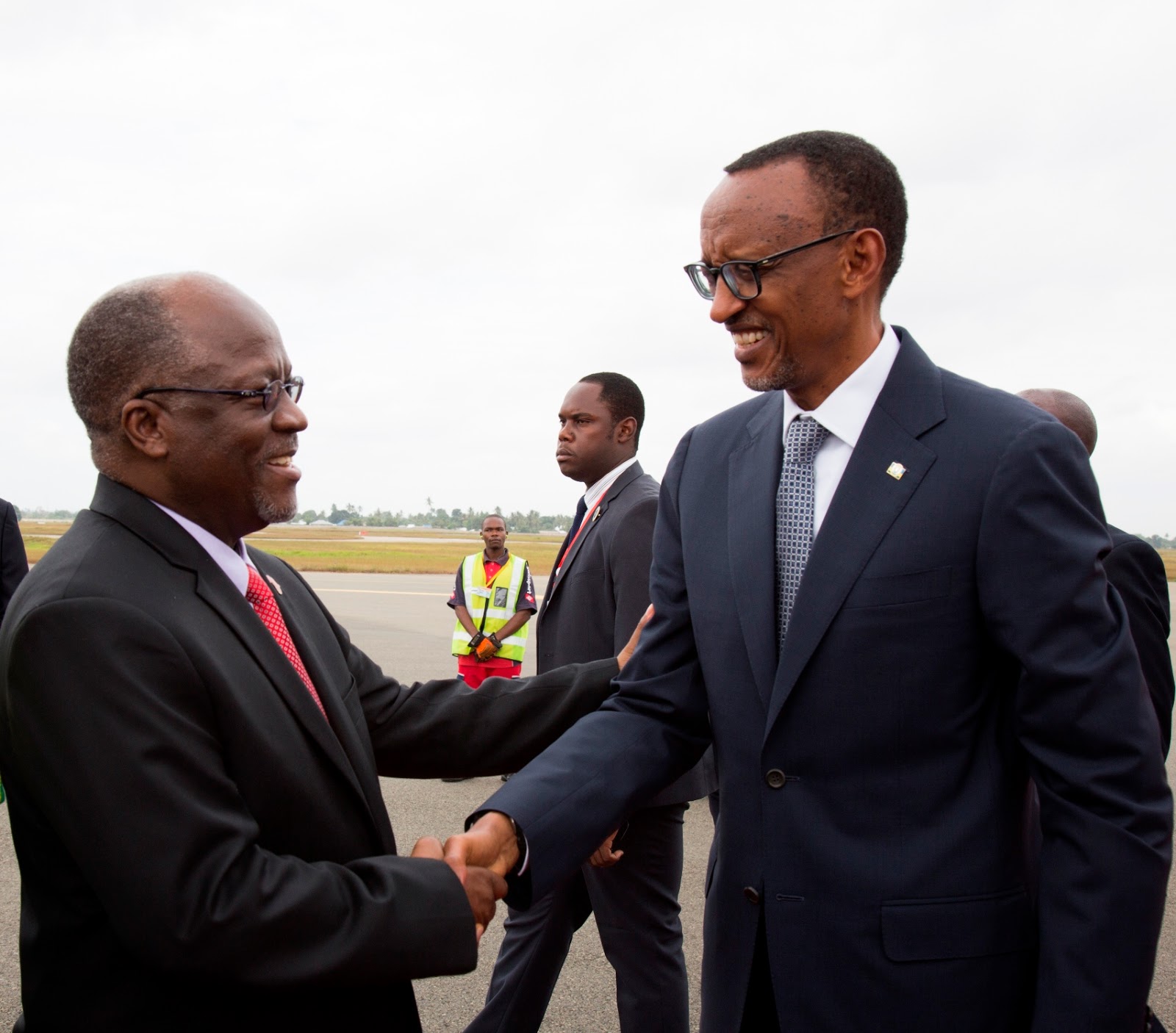
PHOTO President Magufuli greets Rwandan President Paul Kagame as he arrives in Dar-es-Salaam on his maiden state visit (Photo: State House)

PHOTO President Magufuli greets Rwandan President Paul Kagame as he arrives in Dar-es-Salaam on his maiden state visit (Photo: State House)

The visit by President Magufuli in May to Rwanda attracted large friendly crowds. At the same time a first ‘Tanzania-Rwanda Trade Forum’ was held in Kigali. It lasted for a week and has apparently sweetened relations between the two countries. It also gave Rwandan President Paul Kagame the chance to call on Tanzania to do something about the theft of Rwandan minerals being exported via Tanzania to the outside world. Dar es Salaam remains the main port for land-locked Rwanda, handling 70% of the country’s imports and over 90% of its exports.

Tanzania has installed cameras and boosted security at the port. Rwandan traders who were not allowed access to the container station now have complete access. Rwandan minerals are stored in a special parking zone and transporters are also allowed access to the yards where the containers are held. Minerals are escorted by armed security personnel from the time they arrive to the time they leave the port.

Human trafficking
According to a spokesperson of the Ministry of Foreign Affairs and East African Co-operation, the recent action amongst East African states to stop human trafficking of young women between 18 and 24 years old, who are seeking work in the Far East and Middle East, is not working properly.

After imposing restrictions on Tanzanian jobseekers at all Tanzanian International Airports, a syndicate of human traffickers began arrang­ing flights of young girls through Kenyan and Ugandan airports.

Between March and May, Tanzanian embassies in India, Malaysia and Oman made efforts to repatriate girls who had been forced to work in brothels.

In Britain, newly appointed Prime Minister Theresa May indicated that she wanted to give top priority to stopping human trafficking world­wide.

BREXIT
The result of Britain’s decision to leave the European Union caused sur­prise and some consternation in Tanzania. Bank of Tanzania’s Governor Benno Ndulu said that Brexit was likely to affect markets but it was a bit early to say and they were following developments very closely.

ZANZIBAR

by David Brewin

After the independence of Zanzibar in 1964 and the subsequent violent revolution, a pattern was established under which the Zanzibar government was re-elected every five years. There were only two significant parties – the ruling CCM or ‘revolutionary party’ which was the majority party in the main and larger Unguja island and the only significant opposition party – the Civic United Front (CUF) which always won a few seats in the House of Representatives in Unguja but had overwhelming support in the other smaller island of Pemba.

Zanzibaris tend to take elections very seriously and the atmosphere during elections is usually intense. In each election a few incidents of violence were witnessed. The CCM won each time, usually with a very small majority and always with complaints from CUF that the CCM had rigged the elections.

After the elections of 2010, the two parties finally came together in a ‘Government of National Unity’ which reduced much of the interparty animosity.

However, during the largely peaceful 2015 elections, the Zanzibar Electoral Commission (ZEC) suddenly stopped the counting of votes saying that there had been irregularities, especially in Pemba. Both sides claimed to have won [see TA 113 and 114].

The CCM then said that there would be another election on March 20th 2016. CUF decided to boycott this and were joined by a group of very small parties. CUF wanted the results of the previous (2015) election to be accepted.

In the second election the number of people voting was only about 15% of the electorate and CCM got an unprecedented 91% of the vote. Nine out of 14 small parties joined CUF’s boycott. Another new feature was that three smaller, previously hardly known parties, won seats and subsequently supported the CCM in the Zanzibar House of Representatives, enabling it to claim an element of legitimacy for a continuation of its rule.

CUF’s difficult position
CUF is now in a very difficult position as it has no MPs in the House of Representatives and the population of Zanzibar is only about 1.5 million compared with the massive 45 million on the mainland supported by a substantial army.­

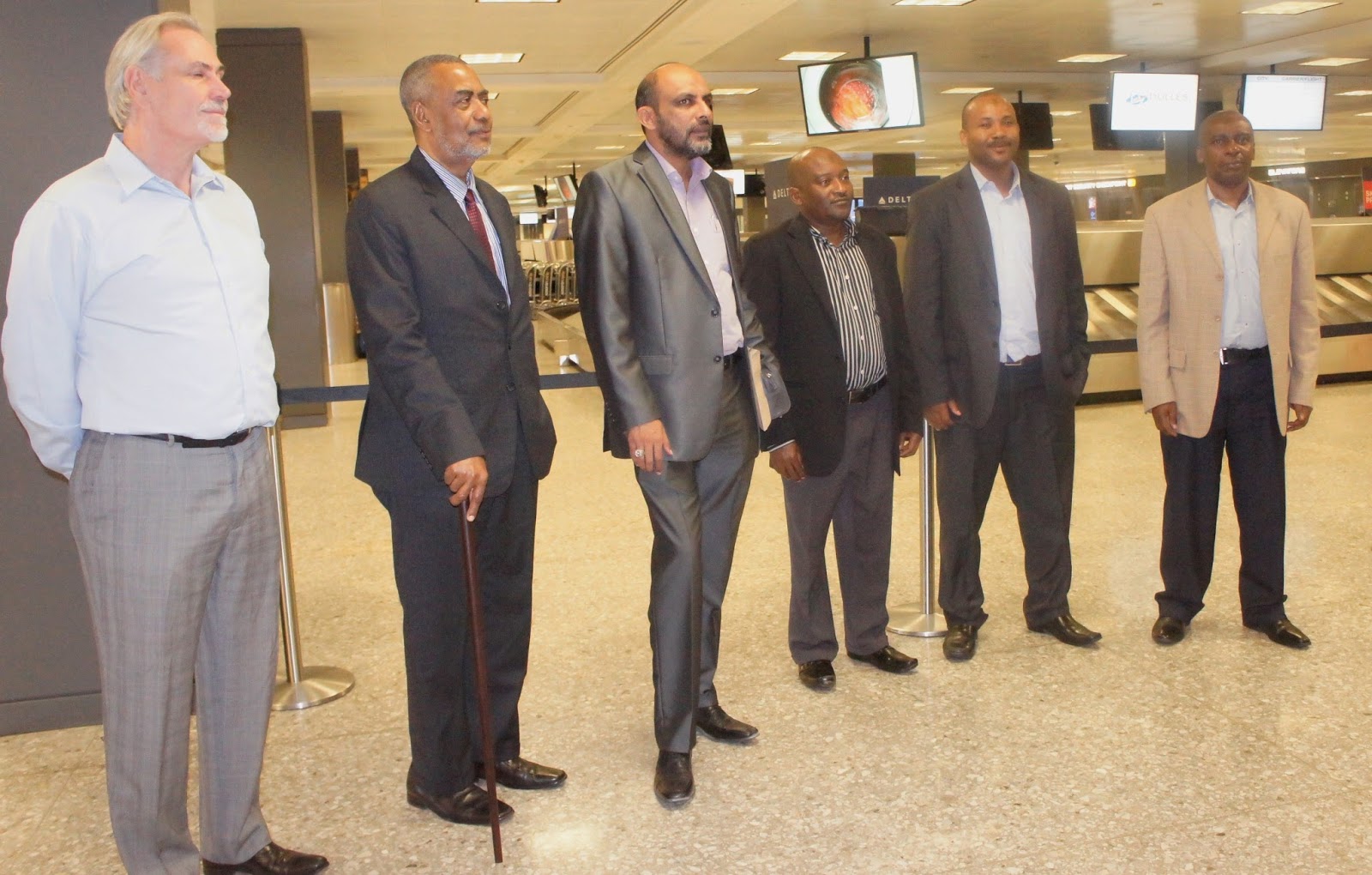
The CUF delegation with Seif Sharrif Hamad (second left) and Ismail Jussa (third left) arriving at Dules airport Washington DC on June 11.

The CUF delegation with Seif Sharrif Hamad (second left) and Ismail Jussa (third left) arriving at Dules airport Washington DC on June 11.

CUF is taking various actions to help it to survive; It is trying to launch a campaign of civil disobedience and has produced a report titled: “Human Rights Violations by Security Organs against the Opposition in Zanzibar 2015-2016.”

It said that it was going to file a case at the High Court against the Inspector General of Police and the Minister for Home Affairs for what it termed as ‘atrocities committed by police and other security organs against its supporters during the election’. Taking journalists through the report, CUF’s Acting Director for Human Rights, Ms Pavu Juma Abdallah, said that more than a thousand people had been directly affected by the ‘atrocities’ which she said had been committed during the election campaign. She added that it had all started on March 24 last year, when a CUF office in Dimani was torched. Five days later a militia attacked CUF supporters on their way from a rally in Makunduchi. A number of CUF supporters were said to have fallen victim to a wave of attacks including from uniformed police officers and other security operatives, which left six people with gunshot wounds. According to her, the data that CUF collected from the ground indicated that 300 people had been arrested by security officials. Some hundreds were said to have been beaten, 70 houses belonging to CUF supporters were destroyed. CUF said that it would use these figures to speed up the pro­cesses of helping The Hague-based International Criminal Court (ICC) to open investigations against “all those who perpetuated the atroci­ties.” CUF intends to send evidence to President Magufuli, and all local and international human rights organisations to give them a first-hand account of the alleged abuses.

In July-August, there was a visit by a CUF delegation, led by Secretary General Seif Sharrif Hamad, to the USA, Canada, Britain and other European countries to explain the dangers which might lie ahead. He repeatedly warned of unrest in the isles if the present situation contin­ued; Radicals would find an opening in Zanzibar, an archipelago with a 98% Muslim population.

Zitto Kabwe, MP for Kigoma and the leader of the small opposition ACT-Wazalendo Party, told The African Report that Zanzibar was “boiling”. There was is no legitimate government in Zanzibar and “I am worried that people will go to the streets”.

Many political analysts said that leaving CUF, which had been a pow­erful opposition force in the past 20 years, out of politics, could have serious repercussions on democracy and peace.

A statement issued by 16 high commissioners and ambassadors to Tanzania, condemned the ZEC decision to annul the Zanzibar election.

European Union reactions
The European Union clearly had some difficulty in reacting to the Zanzibar election results. Eventually it decided to maintain minimal contact with the government of Zanzibar’s President Ali Mohammed Shein because of the decision of the ZEC to annul the election results without providing evidence to justify “this unprecedented decision”.

The second election was boycotted by 9 out of 14 political parties, which had participated in the November 2015 poll.

Nape Nnauye, the ruling CCM party’s Publicity and Ideology Secretary, said that his party would go to the second polls regardless of any boy­cotting because ‘not all political parties have been fielding candidates in every election’.

CONSTITUTION

by Enos Bukuku

The implementation of a new Tanzanian constitution has been left in limbo since April 2015 when the draft constitution was supposed to be put to a national referendum.

We now have some news which suggests that there is still a possibility that Tanzania will have a new constitution. President Magufuli announced on 23rd June that the government would ensure that the constitution making process would continue where it left off and that the final draft “Katiba” would be presented to the nation in the refer­endum.

This move has surprised many observers, who thought that the govern­ment had given up on passing the largely controversial and divisive draft. There had been suggestions that the government would go back and arrange for a further redraft of the constitution which would look more like the previous draft created by the Warioba-led Constitution Review Commission (CRC).

There has been no date given for the referendum and so it is not yet certain that it will take place this year, if at all. However, the longer the process takes, the more criticism and opposition the current draft constitution will face. This in turn will make it less likely that it will be voted for.

Already Joseph Warioba has warned the government that its attempts to stamp out corruption would be difficult without a supportive constitu­tion, and that some sections of the previous draft, now removed, con­tained provisions which could be used in Magufuli’s war on corruption.

Regarding democracy, veteran political journalist Jenerali Ulimwengu has been more outspoken and is quoted as saying, “Despite the actions that President Magufuli is taking and has been commended for, if you look at the bigger picture we have now gone back 50 years in democracy issues…..He (Kikwete) should come and explain ….if former ministers were taken to court for causing a loss to the government, Honourable Jakaya Kikwete should also be taken to court to answer charges for occasioning a huge loss to the government and destroying the hopes of citizens…by failure to get a new constitution”.

It is only a matter of time before Chadema and other opposition parties start attacking the government on constitutional matters.

Magufuli is between a rock and a hard place. The current draft constitu­tion has cost over TSh 116 billion (around $50 million) and counting. To go back and make further amendment will only add to the huge cost and will not guarantee a new agreed draft. To do nothing would be to waste the money spent so far. To push ahead with the current draft will antagonise the opposition. It is well known that the President does not like to waste money. We therefore wait for news of a referendum.

AGRICULTURE

by David Brewin

Sisal revival
Fifty years ago Tanzania was the biggest producer of sisal in the world – some 300,000 tons per annum. Much of the landscape in Tanga Region and parts of the then Central Region was dominated by huge estates, often owned by private individuals or companies, under the manage­ment of Asians, Greeks and other Europeans. Most of the very hard work on the estates was done by thousands of contract labourers from Rwanda and Burundi.

Sisal is a species of agave native to southern Mexico but widely culti­vated in many other countries. It yields a stiff fibre used in making rope and twine, and now has many other uses including paper, cloth, wall coverings, carpets, and dartboards.

The industry largely collapsed in the fifties when Tanzania’s socialist government nationalised virtually all but one of the estates (Amani), there was a rapid expansion in the use of combine harvesters interna­tionally (sisal twine was no longer needed) and artificial substitutes began to be manufactured at lower cost. The Greeks returned home.

Then, in this century, the industry began to revive slowly as demand increased and new uses were found for the fibre. The government has now set new production targets and planting has started again. Yunus Mssika, Senior Quality Assurance Officer at the Tanzania Sisal Board (TSB) announced recently that the country planned to increase production to reach 100,000 metric tons by 2021.

All this is part of a 10-year Sisal Crop Development Plan started in 2012 aimed at increasing production of various sisal products, to increase uti­lisation of the sisal plant, to increase the country’s export market share, to undertake research and development of products and markets and to increase the participation of smallholder and out-grower farmers in the industry. The plan envisages putting in place biogas plants that will produce fuel for electricity generation on 14 estates.

According to the latest available statistics from the UN Food and Agriculture Organization (FAO), in 2013, global production of sisal reached 281,000 tons – 53% were produced by Brazil, 12% by Tanzania, 9% Kenya, 6% Madagascar and 5% by China. Currently a ton of sisal trades between $1,900 and $2,200. Prices have stabilized since 2010, fol­lowing increased investments in the crop in Tanzania.

Sugar take-over by Magufuli
Following a major upheaval in the sugar market during recent months and evidence of many questionable practices, the existing private sec­tor sale monopoly (controlled by a small group of people known as the ‘sugar barons’), President Magufuli’s government has taken over control of all sugar imports into the country – mostly from Thailand, Brazil, India and Indonesia. The result was, inevitably, a rise in prices, and serious shortages soon developed.

The President has also launched a major enquiry into the industry, espe­cially into patterns of consumption and the extent of illegal smuggling to avoid tax. The Tanzania Sugar Board quickly arranged for the importation of 12,000 tonnes of sugar to relieve the shortages.

It seems the basic problem is that Tanzania is not producing enough sugar to satisfy local demand. This stands at 420,000 tonnes per year while local production was only 304,000 tonnes in 2015.

In a further development Minister for Agriculture, Mwigulu Nchemba, announced that the government had set aside 294,000 hectares to be allocated to companies looking to develop sugarcane plantations. The Minister said that the land would be allocated to investors through a tendering process, to be coordinated by the Tanzania Investment Centre.

In the light of this, Oman’s Minister for Industry and Trade visited Tanzania recently to lobby for his country to be given permission to invest in the establishment of new sugar estates and put aside a sum of up to $25 million as capital.

Live Animal Exports
In late May the government banned the export of wild animals outside the country for the next three years, until proper procedures can be put in place to ensure that only approved animals are transported.

Rise in Water Level of Lake Victoria
Following a long period of destruction of forests and poor agricultural practices exacerbated by recent heavy rains, the level of water in Lake Victoria is reported to have risen by a metre.

Over-fishing and oxygen depletion are said to be threatening its biodiversity with more than 200 indigenous species facing possible extinction. The members of the Lake Victoria Basin Commission, at a recent meeting in Entebbe, Uganda, studied ways in which these trends could be reversed.

Repossessing Idle Land
The country is in the process of conducting a nationwide audit to identify undeveloped parcels of land exceeding 50 acres with the aim of repossessing them. Minister for Lands, Housing and Human Settlements, William Lukuvi, said recently that ownership of idle land would be revoked and the land reallocated as part of wider efforts to end long-standing land disputes and ensure equitable distribution.

Ban on Shisha smoking
In early July Prime Minister Kassim Majaliwa announced a ban on ‘shisha smoking’ in the country and asked clerics, parents and leaders to fight against dealers and smokers. All places that sell shisha were to be closed. ‘Shisha’ is a molasses-based tobacco concoction smoked in a water pipe known as a ‘hookah’. The directive was issued at the Khoja Shia Ithnasheri Mosque in Gandhi Street in Dar es Salaam. He said that shisha was killing the future of the country by wreaking havoc on the mental health of young people. The smoking habit has been gaining popularity among the youth with many believing that it is less harmful than cigarettes. Research conducted by the World Health Organisation (WHO) however, estimates that the volume of smoke inhaled during an hour long session is equivalent to smoking between 100 and 200 cigarettes.

ENERGY & MINERALS

by Roger Nellist

Tanzania’s unexpected helium discovery
In June scientists from the UK (Oxford and Durham Universities) and Norway announced the discovery of a large reserve of helium gas in the geo-thermally active Tanzanian Rift Valley. Their study estimates a probable helium reserve of 54 billion cubic feet in just one part of the Rift Valley, enough to satisfy global consumption of the gas for nearly 7 years. This is an exciting find – described as a “game-changer” – since global helium supplies are running out and the price of helium has risen by 500% over the last 15 years. Helium is the second most abundant element in the universe but is exceedingly rare on earth. It is used in specialist applications like hospital MRI scanners, super magnets, particle accelerators, military equipment and spacecraft. The scientists believe there is enough helium in this one Rift Valley location to fill at least 1.2 million MRI scanners. The find is bound to intensify exploration efforts in the Rift Valley.

LNG plant discussions
Tanzania believes that the prolonged fall in oil and gas prices represents an opportunity (for gas-driven development), rather than a threat, and in June convened a meeting between the country’s gas discoverers – Statoil, Exxon Mobil, Ophir Energy, Shell and TPDC – to start framing possible commercial and technical terms to govern the planned onshore liquefied natural gas (LNG) export terminal at Lindi. The parties have yet to take a decision on the huge investment and those terms – to be defined in a Hosting Government Agreement (HGA) – will be a vital consideration influencing it. Government has allocated 19,000 hectares of land in Lindi for the LNG export terminal and its associated industrial infrastructure.

CGT due on Shell’s acquisition of BG Group

In February 2016 Shell acquired the BG Group (with assets valued at $55 billion) in the world’s biggest energy deal in a decade. Importantly, the deal gives Shell a majority stake in BG’s gas discovery blocks in southern Tanzania and hence a substantial interest in the planned LNG project. For Tanzania the deal offers access to Shell’s worldwide experience, technology, networks and markets for the country’s gas. However, the government and Shell are apparently now in dispute over the amount of capital gains tax (CGT) that should be paid on the sale of the BG Group’s Tanzanian assets. It is reported that the Tanzanian Revenue Authority (TRA) is seeking US$520 million in CGT, an amount that Shell rejects and it has appealed to the tax tribunal. Sensitive discussions are still ongoing but there is concern that a lengthy dispute could delay the LNG plant.

Uganda – Tanga oil pipeline
TPDC has announced that the company to be formed to raise funding, procure goods and services and then to operate the oil export pipe­line between Kabale in Uganda and Tanga Port will be known as the Pipeline Company (PIPECO). The stakeholders in the pipeline are the governments of Tanzania and Uganda and the three companies that have made the oil discoveries in Uganda: Total (of France), Tullow Oil (of UK) and the China National Offshore Oil Corporation. Details of the likely pipeline costs, timing and throughput were given in TA114. Information subsequently released includes the pipe’s routing in Tanzania (it will pass through Kagera, Geita, Shinyanga, Tabora and Singida to Tanga), the expected funding arrangements (the stakeholders will provide 40% of the funding and PIPECO will raise 60% in loans) and that Uganda will be charged a transit fee of just over $12 for each barrel of crude transported. Contract negotiations are ongoing. A final investment decision is expected by mid-2017. Meanwhile, the Tanga Regional Commissioner has urged farmers to start planning the expan­sion of their fruit, vegetable and poultry production in anticipation of the increased demand that the pipeline construction and operation will generate.

KILAMCO fertiliser project resurrected
TPDC also announced a new joint venture between itself (holding a 20% stake) and three companies from Germany, Denmark and Pakistan to establish a gas-powered fertiliser manufacturing facility at Kilwa Masoko in Lindi Region. The plant will produce 3,850 tonnes daily for Tanzanian farmers and also for export. It will also create jobs in the region. TPDC has begun the process for compensating the small num­ber of residents who have encroached on the 820-acre site that it has owned since 1989 – when plans for a similar KILAMCO project were first developed as the primary use for Songo Songo gas. (That project was shelved because of TPDC’s inability to raise enough equity finance and also because of concerns about the project’s long-term viability given the world surplus of fertiliser).

More CNG fuelling points in Dar
In a move to expand significantly the number of vehicles in Dar beyond the current 40 that are powered by compressed natural gas (CNG), TPDC will build five more CNG fuelling stations in the city. Presently there are only two CNG points, at Ubungo and at TPDC’s Mikocheni estate. CNG is much cheaper, cleaner and healthier than using petrol and diesel but the initial vehicle conversion cost is high.

Many more rural power connections
In June the World Bank approved a US$200 million soft loan to enable
2.5 million rural Tanzanian households to be connected to the national grid. The programme will also help increase the number of small renewable energy projects in rural areas, providing power to homes and businesses. In 2014 nationwide electricity connectivity was 36%. The government aims to increase this to 50% by 2025 and 75% by 2033.

Corporate tax payments by mining companies
A report by the Tanzania Extractive Industries Transparency Initiative covering 2013-2014 reveals that 13 big mining companies have not paid any corporate tax since they began mining operations in the country. The companies cite as reasons their accumulated losses resulting from high prior-year mining expenditures as well as tax holidays allowed under Mining Development Agreements. “No corporate tax has been paid because no corporate profits have been earned” said one company executive. They also say they have paid mining royalties and certain other mining taxes. However, President Magufuli has recently questioned why foreign mining companies who claim they have not made a profit for years are still hanging around an unprofitable mine. Perhaps things are changing, though. The Tanzania Mineral Audit Agency signals an improved scenario for 2015, with major mines having paid almost US$50 million in corporate tax. Under the Norwegian aid programme the government has benefited over the last three years from capacity-building support in the specialist areas of petroleum and mineral taxation. This has helped TRA reduce the declared losses of major mining companies.

Mixed news for small-scale miners
The Deputy Minister of Energy and Minerals, Medard Kalemani, told Parliament in Dodoma that his Ministry had opened offices in most regions of Tanzania so as to take its services closer to small-scale miners. He also said that such miners will benefit from TSh 6.8 billion in subsidies next financial year. Meanwhile, regional authorities in Geita have revoked 132 licenses of small-scale miners for failure to comply with mining laws (including non-payment of royalties) and have warned more may be revoked.

TOURISM & ENVIRONMENTAL CONSERVATION

by Mark Gillies

Value Added?
This June a familiar shadow fell across Tanzania’s tourism industry. For the past few years, in the run up to the annual budget, the Tanzania Government has threatened to remove the VAT exemption that previously applied to many aspects of the tourism industry’s goods and services. And every year, following a good argument and representations from tourism players to the highest levels of government, the threat has fallen away.

Until this year. As reported by Hugh Morris in The Daily Telegraph on 7th July, on 23rd June, Tanzanian tourism operators were notified by the Ministry for Natural Resources and Tourism that the exemption would be removed from 1 July.

The reaction from tourism operators was immediate as representatives of the industry pushed behind the scenes and in public for the government to reassess its position, citing the potential harm the changes will cause to the Tanzanian tourism industry and the potential result of making the country and uncompetitive and unattractive destination for long haul tourists.

The East African on 18th June contained a statement from the 330-member Tanzania Association of Tour Operators (TATO) that said the country was already charging 7% more than other regional states due to multiple taxes and that imposing the proposed VAT would cripple the $2 billion worth industry. Going onto explain how tour operators in Tanzania are currently subjected to 32 different taxes, 12 being business registration and regulatory licence fees, 11 annual duties for tourist vehicles and nine other miscellaneous fees.

Despite on-going protests and negative international publicity, by mid-July, no government climb down was announced and Tanzanian tour operators engaged in a confusing intercourse with their international agents with neither sure who was charging what and whether to pass on additional costs to final client. Cancellations began to be reported and Prof. Maghembe, the embattled Minister for Natural Resources and Tourism moved to allay fears about a fall in visitor numbers by saying to reporters (The Citizen on 15th July), “Go and see for yourself the long lines of vehicles bringing tourists into Ngorongoro and Serengeti. It does not in any way point to a decline.”

As the story developed and opposition seemed to grow, sources began
to indicate that the government would consider a compromise and reports began to circulate of leading industry figures considering approaching President Magufuli to plead their case.

If these stories suggested a conclusion to the story (for another year), they were wrong. On 19th July, the Citizen reported how President Magufuli used an address to newly promoted police officers to scotch any rumours of compromise and reiterated that all charges due must be paid saying that it was better to have 500,000 tourists who paid the correct charges, rather than 1,000,000 who do not.

President Magufuli has made probity and clarity of procedure the mark of his nascent presidency and his comments are understandable in that context. However, it is also not difficult to understand the frustration of all Tanzanians working in the highly competitive African tourism industry. They know that the Okavango Delta or the Maasai Mara, to name but two, have as much draw as the Serengeti or the Ngorongoro Crater to many tourists who still regard Africa as a single country. The costs of going on safari are rising across the continent and so the end price of a package is assuming ever-increasing importance. The fear is that Kenya, which recently restored the VAT exemption on various tourism goods and services, will take a painfully large slice of tourist pie that had, until this year, been feeding so many Tanzanians.

A declining Tanzanian tourism industry will have three potentially serious consequences. The first consequence will be a significant drop in foreign currency earnings that will directly impact the national finances. The second will be loss of jobs as drivers’ services go unrequired and camps close. The third will be a setback for the cause of Tanzanian wildlife conservation – still, itself, reeling from the horrendous poaching epidemic of the last few years. In many parks and reserves it is only the presence of camps and the tourists they attract that protects these vital areas from poaching, habitat loss and unrestrained development. If camps don’t attract tourists then they become financially unviable and close, leaving the land vulnerable.

It is therefore understandable that many in the Tanzanian tourism and conservation sectors are despondent, but they are also frustrated, asking themselves why impose a new tax when so many existing ones go unpaid by so many?

HEALTH

by Ben Taylor

Health sector budget criticised
Health sector analysts and advocates took issue with the 2016/17 budget of the Ministry of Health, Community Development, Gender, Elderly and Children, as tabled by the Minister, Ummy Mwalimu, in parliament. The budget totals TSh 845bn (£300m), of which TSh 518bn was allocated to development expenditure and TSh 278bn for recurrent costs.

This represents a small overall increase on the Ministry’s 2015/16 budget, which totalled TSh 785bn, but analysts pointed out that under President Magufuli, two Ministries had been incorporated into one, with the Ministry of Health and Social Welfare having been merged with the Ministry of Gender, Women and Children.

The executive director of Sikika, a local health advocacy NGO, Irenei Kiria, said the budget would not help tackle a number of challenges facing the sector including shortage of drugs in health facilities. “The budget is not enough to significantly cut the drug shortage. The minister says TSh 251 billion from the development fund have been allocated to purchase medicine and other medical supplies but we should remember that the ministry also owes the Medical Stores Department about TSh 131 billion,” he said.

Meshack Mollel, the Advocacy and Resource Mobilisation manager for UMATI, an NGO dealing with sexual and reproductive health education, information and services, challenged the government to meet the Abuja Protocol that requires every country under the agreement to allocate at least 15% of its annual budget to the health sector. This means the budget should have been about TSh 4 trillion. “In this budget we should not expect any big things in the health sector,” he said.

Gloria Shechambo of the Tanzania Gender Network Program (TGNP) praised the decision to allocate more funds into development projects than the recurrent budget, but added that the key challenge was the timely release of funds by the Treasury. “The government’s plans to offer to Tanzanians universal health coverage should prompt improvement in financial allocations to the sector, otherwise the plans will remain a far-fetched dream,” she said.

First ever heart bypass survey in East Africa

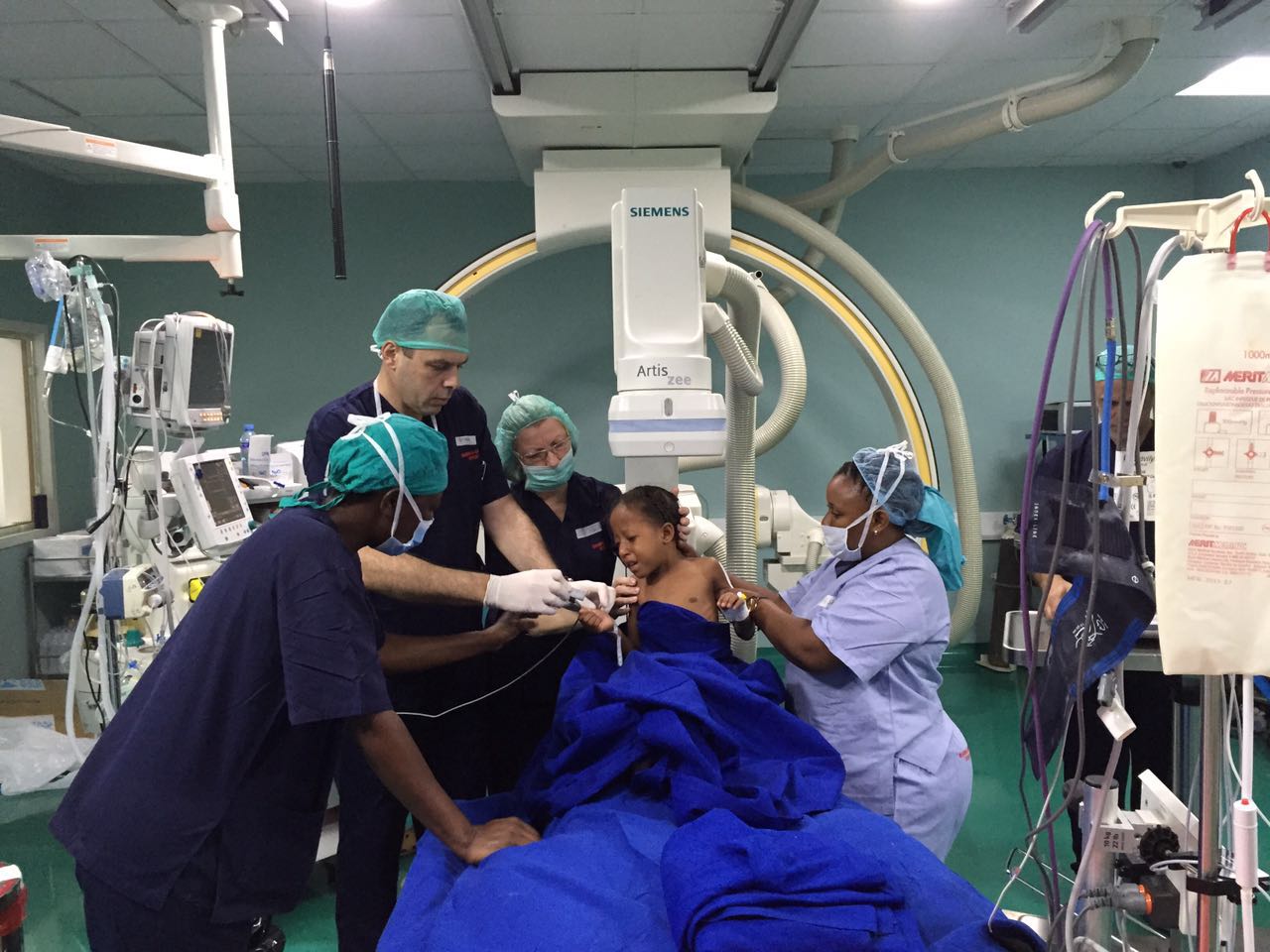
The operating theatre at JKCI photo www.saveachilds.heart

The operating theatre at JKCI photo www.saveachilds.heart


The first ever heart bypass surgery in East Africa has been conducted in Tanzania, at the Jakaya Kikwete Cardiac Institute (JKCI).

A visiting team of doctors from BLK Hospital in New Delhi, India, and doctors from JKCI carried out the two-day joint exercise in May 2016, according to Head of the Cardiology Unit at the JKCI, Dr Peter Kisenge. Dr Kisenge told a news conference in Dar es Salaam that in those two days, his institute would help the country to save TSh 180m, the amount that would have been spent if the 18 patients had opted to travel outside the country for treatment.

“Performing a heart by-pass surgery costs TSh 27m for a single patient abroad and if a patient decides to undergo such surgery in Tanzania, he/ she will have to pay between TSh 8m and TSh 10m’’ he said.

The Indian hospital will provide training to doctors from Tanzania in New Delhi, and will regularly send teams from India to Tanzania to work with cardiologists at JKCI and to perform complicated surgeries.

“We are optimistic that the Tanzanian doctors will be able to learn more from us as we will similarly be able to learn as well from them through this partnership,’’ said Dr Subhash Chandra, the Chairman and Head of Cardiology Heart Centre at BLK Hospital.

Previously the JKCI carried out surgery using a heart lung machine that requires cardiologists to stop patients from breathing until the process is completed.

Missed targets on non-communicable disease
Tanzania has failed to meet targets set in 2011 to control and pre­vent chronic and non-communicable diseases (NCDs), according to a new report by the Tanzania Non-Communicable Diseases Alliance (TANCDA).

The missed targets include a 25% reduction in risks of premature mortality from cardiovascular, cancer, diabetes and chronic respiratory diseases, and a 30% reduction in tobacco use.

TANCDA Chairman, Dr Tatizo Waane told The Citizen that Tanzania has failed to meet the targets because NDCs receive fewer resources.

EDUCATION

by Ben Taylor

Crackdown on under-qualified students in higher education, alleged corruption in student loans
Thousands of university students have been expelled, after a review found that they did not possess the correct qualifications for admission to their courses. In one case – the University of Dodoma (UDOM)’s special teacher training diploma course – over seven thousand students were expelled in a single day, leaving just 382 students in place on the course, less than 5% of the original number.

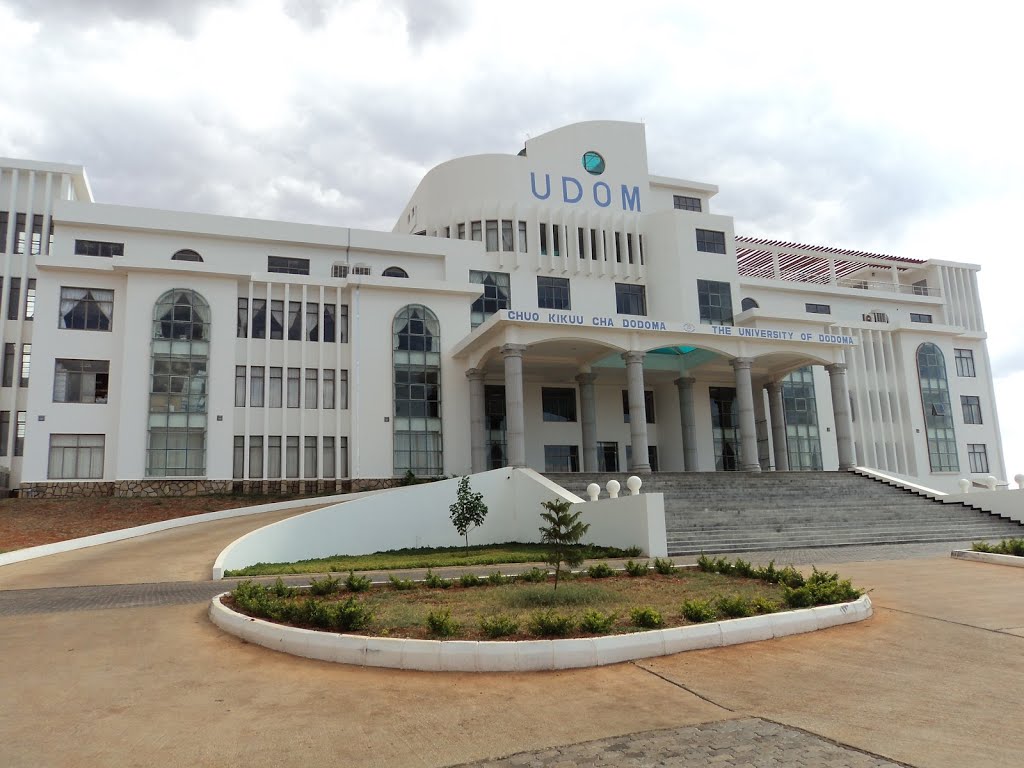
University of Dodoma (UDOM) administrative offices

University of Dodoma (UDOM) administrative offices

The Minister for Education, Science, Technology and Vocational Training, Prof Joyce Ndalichako, explained that a vetting exercise had established that the 382 students allowed back were the only ones who were actually qualified for admission to the university’s special diploma. The rest had been wrongfully enrolled, she added.

“Since the (admissions) review established that 382 students passed at least two science subjects with divisions I and II … these are the only students who will be allowed to re-join UDOM and complete their studies at the university,” she said.

The special teacher training program was aimed at reducing a shortage of science, mathematics and technology teachers countrywide.

The chairperson of the University of Dodoma Academic Staff Association (UDOMASA), Edson Baradyana, was critical of the government move to expel the students. He put the blame on the government officials who spearheaded the teacher training programme. “This was the government’s plan from the outset and they stated the required qualifications for admission to the programme, so the university should not bear the blame,” he said.

According to Baradyana, there could be some confusion over the grading system used by the government team that carried out the verification exercise. He suggested that those enrolled in first year were admitted using GPA qualifications, but the government had since reverted back to the old division system.

He added that since he had been personally involved in the initial admission process, he could vouch for it. He added that government officials previously did not listen to warnings from UDOM academicians that the teacher training programme was flawed in the first place.

Earlier, it had emerged that 1,000 O-level students were wrongfully enrolled to pursue undergraduate degrees over the past two to three years without passing through A-level education. The parliamentary Social Development and Services Committee announced in the National Assembly that the students were admitted to various universities and colleges in the 2013/2014 academic year contrary to admissions guidelines issued by the state-run Tanzania Commission for Universities (TCU).

This news came just a day after President John Magufuli disbanded the TCU’s governing board and sacked or suspended several top commission officials over a related student enrolment scam discovered at the privately-owned St Joseph University in Tanzania. 489 students from St Joseph’s were expelled as a result.

The shadow education minister Susan Lyimo questioned the government’s decision, calling for an explanation from government as to why TCU and the education ministry appeared to have cleared the university of any wrongdoing last year, only to take action now. “Who is going to compensate these students for wasting their time, and what is the fate of these institutions?” she asked

The scandal also spread to the Higher Education Student Loans Board (HESLB), which was accused of issuing loans to “ghost students” and underqualified students.

A special audit, conducted by the Controller and Auditor General (CAG), found that TSh 23bn (£8m) in loans supposedly issued by the HESLB could not be accounted for. This includes loans issued to non-existent students, unrecorded repayments by former students, and accounts showing amounts owed by some students to be half the value of the loans issued.
There are also cases of one student’s name appearing among loan beneficiaries in more than one institution of higher learning, and one bank account being used by more than one student to receive loans from HESLB, according to Minister Ndalichako. A total of 2,619 students with loans totalling TSh 14.4bn appeared to have used the same Form Four index number to receive the loans while with two different colleges, she said.

She directed the board management to close the loopholes in the loans issuance and debt collection systems, and to provide an explanation on 168 suspected fake University of Dar es Salaam students who appeared to have received TSh 531.3m in loans and another 919 from the University of Dodoma who apparently received TSh 2.5bn. Both universities have reported that they had no record of the students.

The audit also found serious weaknesses in HESLB’s procedures for recovering loans from graduated students. Over 100,000 students with loans taken out since 1994 have not begun to repay the loans.

Primary school enrolment soars
President Magufuli announced that the response to the abolishment of school fees had been a massive increase in enrolment, stating that pupil enrolment in Standard 1 has soared from 1,282,000 in 2015 to 1,896,584 pupils in 2016. He reiterated the government’s intention to offer free and quality education to all Tanzanian children, stressing that his administration would make sure that the goal is achieved.

He made the announcement while handing over 60,000 desks to MPs, paid for by the National Assembly reducing its expenditure for four months. He also noted that the rise in enrolment raised new challenges for the sector, notably a shortage of 1,400,000 desks, as well as shortages of classrooms and staff houses.

“It is quite clear that there are many challenges facing the education sector. We are doing everything in our power to resolve them,” he said.

Foundations initiative bears fruit
A new study found that basic Kiswahili literacy among Standard 2 and 3 primary school pupils has improved over the last three years. A pre­liminary report of the National Early Grade Reading Assessment found that targets set for 2015 under the “Big Results Now” initiative had been “met and surpassed”.

The aim was to reduce the number of pupils scoring zero on word read­ing to 26%, and this target was exceeded with only 18% scoring zero in the recent tests. On oral reading fluency, only 16% of pupils scored zero, significantly better than the target of 26%. Similarly, in reading comprehension, only 26% scored zero against the 37% target.

TRANSPORT

by Ben Taylor

Rwanda rail route in development
The government has set aside US$ 460m for the construction of the Dar es Salaam-Isaka-Kigali/Keza-Musongati (DIKKM) project. The standard gauge railway project is planned to be completed by March 2018 and is estimated to cost US$ 5.2 billion.

President Magufuli also announced that the government was to allocate space for an inland container depot (ICD) specifically for Rwandan cargo, to reduce bureaucracy. He explained that 70% of Rwanda’s goods pass through Dar es Salaam port, and assured his Rwandan counterpart that corruption problems at the port had been addressed. The plan involves opening a Tanzania Ports Authority (TPA) office in Rwanda, so that cargo clearance can be done in Kigali.

The president also explained that Tanzania was committed to collabo­rating with the Burundian government, adding that Burundi had also expressed its willingness to send experts to Tanzania for sharing experi­ences with a view to strengthening mutual relations. (The Guardian)

New aircraft for Air Tanzania
President Magufuli has announced that his government will purchase new aircraft for the struggling national airline, Air Tanzania. Two Bombardier D8 Q400 planes are to be purchased to operate both domestic and regional routes, said the President.

Deputy Minister of Transport, Dr Charles Tizeba, told parliament in Dodoma that the government would put down US$ 3.34m as initial payment for purchase of the two airplanes, and that the market price of each of the aircraft was US$35m. He added that the balance of the sale price would be obtained from the planes’ operations and would be fully paid in a period of 10 years. (The Guardian)

BRT mass transit buses begin operations
The long awaited Dar es Salaam Bus Rapid Transit (BRT) buses began operations in the city in May 2016, with 105 buses operating along dedicated lanes along Morogoro Road and various connecting routes. Prices are set at TSh 200 for students and between Tsh 400 and TSh 800 for regular-price passengers.

The World Bank-financed project is designed to provide relief to 300,000 daily commuters, at a cost of $290m. Official estimates showed that traffic congestion has been costing the nation over TSh 400bn annually in lost working hours and extra fuel consumption.

The service’s first days of operation saw huge demand, resulting in long queues for ticket purchases and to board buses. However, as operators and passengers alike have become familiar with how the system works, the severity of these challenges has reduced. In particular, adoption of an electronic-ticketing system – several weeks after the launch of the buses – has reportedly reduced both confusion and waiting times considerably.

A second set of challenges emerged when drivers threatened strike action due to pay and conditions. Many claimed that they had not been issued contracts, or that the contract terms were not consistent with those previously announced. Much of the confusion appeared to relate to a series of performance-based bonus payments, depending on drivers’ punctuality and fuel efficiency, among other factors.

Finally, the buses were beset by an unfortunate series of accidents, with 34 of the buses reportedly involved in accidents within the first two weeks of operations. A spokesperson of UDART, the bus company, Deusdedith Bugwaya blamed the accidents on civilian drivers of cars and motorbikes crossing the dedicated bus lanes. The cost of the bus repairs was estimated at TSh 100m (£35,000).

Nevertheless, anecdotal reports suggest that the buses have already overcome these teething troubles and have made a positive impact on traffic congestion in the city. (The Citizen; The Guardian; Daily News).

Drivers’ doubts on Nyerere Bridge

Initial excitement at the official opening of Nyerere Bridge, linking Dar es Salaam city centre with Kigamboni, has been tempered by disappointment at higher-than-expected toll rates for bridge users. While it had previously been reported that the toll would be set at the same rate as the Kigamboni ferry crossing, this proved incorrect.

According to the newly announced toll rates, motor cycles are charged TSh 600, Bajajis and saloon cars TSh 1,500, pick-up vehicles below two tonnes and station wagons TSh 2,000, passenger vehicles TSh 3,000 (maximum 15 seats), TSh 5,000 (maximum 29 seats) and TSh 7,000 (above 29 seats). Cyclists and pedestrians are allowed to cross the bridge free of charge.

Daladala commuter buses’ operators are most upset by the prices, and baulked at having to pay up to TSh 70,000 per day (£25) for multiple crossings. Some such buses are reported to have started dropping passengers on one side of the bridge, forcing them to walk the 680m length of the bridge and find another bus on the other side. An average of 8,000-10,000 vehicles per day are using the bridge, according to Project Manager, Gerald Sondo, and the National Social Security Fund (NSSF) reported takings reached TSh 1bn (£350,000) in the first month of operations.

The bridge, which opened on May 14, 2016, was jointed financed by NSSF and the government, at a total cost of $143m. (The Guardian)

Uber launches in Dar es Salaam
Uber, the taxi service that uses mobile phone technology and which has revolutionised urban travel around the world, launched in Dar es Salaam in June 2016. As is the case in many other countries, Uber charges customers a fare that is a fraction of the price charged by tradi­tional taxi operators.

In Dar es Salaam, Uber advertises a fare of TSh 13,000 (approximately £4.50) for a journey between the airport and the city centre, less than a third of the equivalent price (TSh 40-50,000) for a traditional taxi. Furthermore, Uber allows customers to pay either using mobile money (such as m-pesa) or credit card, in addition to payment by cash.

These fares are low even by regional standards. Equivalent prices for similar journeys using the Uber service in Nairobi and Mombasa, where the firm has faced strong resistance from taxi drivers, are around double the cost of Uber fares in Dar es Salaam.

Early days of the service’s operations in Tanzania were marked by uncertainty among Uber drivers, unfamiliar with new operating methods and doubts at the low prices, and fear among other taxi drivers that their prices would be undercut. Reports of Uber drivers requesting top-ups to the official price were widespread, and many customers cited problems with requested drivers not arriving for pick up as agreed.

Nevertheless, Uber has not increased its fares in Dar es Salaam in the two months since its launch. (The Citizen; The Guardian)

BUSINESS & THE ECONOMY

by Ben Taylor

Tanzania pull-outs of EU-EAC Economic Partnership Agreement, Brexit cited
Tanzania has decided not to sign the proposed Economic Partnership Agreement (EPA), which would have opened up trade between the European Union (EU) and the East African Community (EAC). Dr Aziz Mlima, permanent secretary in the Ministry of Foreign Affairs, made the announcement in early July.

“Our experts have analysed the pact and established that it will not be to our local industry’s benefit. Signing this pact at the moment would expose young EAC countries to harsh economic conditions in post-Brexit Europe,” explained Dr Mlima.

Minister for Trade, Industries and Investment Charles Mwijage said Britain was Tanzania’s key trade partner in Europe. “Internationally, we trade with Britain, China, India and South Africa. When you don’t have Britain in a deal with Europe, what do you have? We have to think it over and this can take any duration to decide,” he said.

The move appears to fit with President Magufuli’s economic policies, which include a greater focus on raising tax revenues and on protecting local industry. A few weeks before the decision on the EPA was announced, the President gave a speech in which he called for imported good to be subject to higher taxes in order to protect local producers.

“We have every reason to protect our industries,” he said. “They generate direct employment for our people and provide our farmers with reliable markets for their produce. The government collects revenue from them and they play a key role in spurring economic development. That is the direction I want to take, and I know the Minister for Industry, Trade and Investment (Mr Charles Mwijage) is here…this is what I want him to do.”

Former Tanzanian President, Benjamin Mkapa, expanded on the decision in an essay published various Tanzanian and regional newspapers.

“If we sign the EPA, we would still get the same duty-free access, but in return, we would have to open up our markets also for EU exports,” he explained. “Tanzania would reduce to zero tariffs on 90% of all its industrial goods trade with the EU i.e. duty-free access on almost all EU’s non-agricultural products into the country. Such a high level of liberalisation vis-a-vis a very competitive partner is likely to put our existing local industries in jeopardy and discourage the development of new industries.”

“As a Least Developed Country (LDC), Tanzania already enjoys the Everything but Arms (EBA) preference scheme provided by the European Union i.e. we can already export duty-free and quota-free to the EU market without providing the EU with similar market access terms.”
Kenya, Rwanda and Burundi were ready to sign the Economic Partnership Agreement (EPA) with the EU, but Uganda indicated that no agreement should be signed without full agreement of all EAC member states. World Trade Organisation rules do not allow countries aligned to a trade bloc to sign up individually.

In the short term at least, Kenya is seen as the biggest loser from Tanzania’s decision, as the country’s middle-income status means Kenya does not currently have the same tariff-free access to European markets that the other EAC members enjoy. Nevertheless, at current growth rates, Tanzania will itself achieve middle-income status within the next couple of years.

Austerity budget
Dr Philip Mpango, the aptly-named Minister of Finance and Planning presented an austerity budget to parliament in June. The budget scrapped a wide range of tax exemptions while increasing taxes on sugar, cement imports and beverages, and doubled down on President John Magufuli’s cost-cutting measures with tight restrictions on ministries’ and departments’ operating costs.

Tabling the TSh 29.54tn (US$14bn) budget for the 2016/17 financial year in Parliament, Dr Mpango introduced income tax on the gratuity that MPs earn after every five years and offered relief to small-scale farmers and other low-income earners by scrapping various “nuisance taxes”.
The budget also aims to support the president’s industrialisation strategy, by increasing import taxes on various manufactured goods, including cement, sugar, corrugated iron sheets, and second-hand clothes and shoes.

Dr Mpango, a former World Bank economist, told the house that in the 2016/17 Budget, TSh 17.8tn (60% of the total) would come from domestic sources, TSh 5.37tn (18% of the total) from domestic loans and the sale of Treasury papers, TSh 3.6tn (12%) from foreign aid and development grants, and TSh 665bn (2%) from local government authorities’ sources. Finally, the government plans to borrow TSh 2.1tn (7%) from foreign commercial sources for infrastructure projects.

Some business leaders and economists reacted to the budget with a note of caution, recognising the value of the budget as a bold attempt speed up industrialisation, but arguing that “too much focus” on the private sector in revenue collection could hit investment.

The decision to target key and fast growing sectors of the economy, particularly telecommunications, banking and tourism, will adversely affect the economy, they argued. Further, they also warned that strong enforcement of cost-cutting measures in the budget could hurt businesses and narrow the tax base.

“The newly introduced taxes will hit the banking and tourism sectors hard. These are key sectors of the economy that have yet to reach their full potential. Imposing 18% VAT on tourism services will only succeed in benefiting our closest competitor, Kenya,” said Ernst & Young Executive Director for Tax, Laurian Justinian [see also Tourism & Conservation section].

Elsewhere in the budget, Dr Mpango said that Tanzania’s economy will grow by 7.2% in 2016, and the inflation rate, at 5.1% in April this year, will remain between 5% and 8%. Domestic revenue will reach 16.9% of GDP in the 2016/2017 financial year, up from 14.8% in 2015/2016.

However, President Magufuli took issue with official inflation figures, arguing that they appear to be at odds with the economic reality on the ground as many Tanzanians complain about the rising cost of living. “[We’re told] Tanzania’s inflation rate has fallen from around 30% in the 1990s to 5%. But is this really reflected in the lives of Tanzanians?” he queried. “We can just celebrate these statistical data, but in reality people might feel that the inflation rate has actually increased to 70%,” the president added.

Volumes down at Dar port, but revenues rise
The Commissioner General of the Tanzania Revenue Authority (TRA), Alphayo Kidata, said revenue from the Port of Dar es Salaam has increased in the last two months despite the burdens of a reduction in trade volumes. He said this after the Tanzania Ports Authority (TPA) reported a decline by more than 50% in the freight transported to neighbouring DR Congo and Zambia.

Kidata cited global economic problems, in particular in China, as the main reason for the reduction in volume, adding that a similar effect could also be seen in Mombasa, Beira and Durban.

However, he stressed that despite the decrease in cargo, revenue at the port has increased because they have closed loopholes for importers, ensuring that all appropriate duties are now paid.

The Commissioner said TRA were previously collecting TSh 200-300bn per month from the port but after controlling loopholes, TRA collected TSh 458bn in April of this year, and TSh 517bn (US$250m) in June.
Dr Philip Mpango, the aptly-named Minister of Finance and Planning, told parliament in April that from October 2015 to March of this year cargo had declined at the port, with the number containers from Congo dropping from 5,529 to 4,092. He added that freight to Malawi fell from 337 to 265 containers, while the number heading to Zambia declined from 6,859 to 4,448.

Later, analysts noted that the Dar es Salaam port risks handling the lowest number of vessels in its history this year. Several logistics firms opted to bypass the city after Value Added Tax (VAT) was imposed on transit goods.

Cargo firms took issue with the imposition of VAT, which came even after the Prime Minister, Kassim Majaliwa, agreed that it was standard practice worldwide not to charge VAT on transit goods. A meeting between TRA and the Tanzania Freight Forwarders Association (TAFFA) was postponed when TAFFA representatives were not satisfied with TRA sending a junior representative to the meeting.

Tanzania Economic Update (TEU) published
The World Bank published the latest in their bi-annual series of economic updates, with a mix of praise and criticism for Tanzania’s economy.

The report commended the new government’s measures to strengthen fiscal management and curb corruption, saying they have started to yield results with tax revenue collection exceeding targets.

Nevertheless, the report called for a greater focus on strengthening the private sector, calling for adoption of Public-Private Partnerships as a new source of finance for development projects. “Tanzania needs to improve overall business environment, including through improved access to finance and electricity, for private sector development,” said Emmanuel Mungunasi, WB Senior Economist and co-author of the report. “Further development of the private sector will be key to accessing the needed resources including financing and creating more employment opportunities which are critical for poverty reduction.”

The Bank’s Country Representative, Bella Bird, also noted that Tanzania had been very generous in recent years with tax exemptions, and praised President Magufuli’s commitment to limiting such exemptions.

Critics took issue with some aspects of the report, notably a warning that over-dependence on China as an economic partner could leave Tanzania vulnerable to faltering growth in the East Asian giant.

“The saviour of industrial policy is China and other developed nations of the East. We stand to gain from China’s relocation plans. It is the right time to grab the opportunities,” said Prof Humphrey Moshi of the University of Dar es Salaam.

Standard Bank compensation payment
The outgoing British High Commissioner to Tanzania, Ms Diana Melrose, announced on Twitter that the UK has transferred US$ 7m to the Tanzanian government, paid by Standard Bank as a compensation payment as a result of its failure to prevent bribery in Tanzania. In November 2015, a UK court ordered the bank to pay a fine of US$ 25m, plus this compensation payment to the Tanzanian government. [See TA114 for details of the case].