OBITUARIES

by Ben Taylor

The third President of Tanzania, Benjamin William Mkapa, passed away late in the evening of Thursday 23rd July, 2020, after suffering a heart attack at the age of 81.

Mkapa was born in 1938 to a poor family in Mtwara region. He earned a degree in English at Makerere College in Uganda in 1959, after which he went on to study at Columbia University in New York. He later worked as a journalist, including as Editor of The Nationalist and Uhuru (both owned by TANU) and became the founding editor of the state-owned Daily News in 1972, before being appointed the press secretary for the country’s first President, Mwalimu Julius Nyerere, in 1974.

Under President Nyerere and President Ali Hassan Mwinyi, Mkapa held several cabinet posts, including Minister of Foreign Affairs, Minister of Information and Minister for Science, Technology and Higher Education. He also served as Tanzania’s ambassador to the United States.

However, he was, to many, a surprise choice to be the ruling party’s presidential candidate in 1995. Jakaya Kikwete and Edward Lowassa were the favourites for this position, along with Salim Ahmed Salim, who was seen as Nyerere’s preferred choice. Salim declined to run for personal reasons, and Nyerere intervened against Lowassa, citing concerns about the sources of his wealth. This left Kikwete as the strong favourite, at least until a second intervention by Nyerere promoted the less well known Mkapa as a more experienced and responsible figure. In the final round Mkapa won the internal party vote over Kikwete by the narrow margin of 689 votes to 639.

Nyerere campaigned hard for Mkapa in the 1995 election – Tanzania’s first multi-party election since the early 1960s – to the extent that some newspapers treated Nyerere as if he were the nominee, side-lining Mkapa somewhat in their reporting. Mkapa won the election with 62%, well ahead of his closest rival Augustino Mrema on 28%.

As President, Mkapa was noted for continuing President Mwinyi efforts to open up the economy, and most particularly for the large-scale privatisation of state-owned industry and parastatals. He is credited/blamed (delete according to political leanings) for boosting tax collection, instituting austerity measures to curb wasteful expenditure and opening doors to foreign investors. A sleight of hand involving revised definitions allowed Mkapa to do this without either CCM or Tanzania officially abandoning Ujamaa, though it was clear that in practice economic policy under Mkapa owed little to Nyerere’s ideology.

These reforms were welcomed by the World Bank and International Monetary Fund and partly resulted in the cancellation of Tanzania’s foreign debts. Nevertheless, the privatisations in particular were much criticised within Tanzania, and Mkapa later stated that although he had good intentions the policy was not well executed.

Privatisation also led to one of two corruption scandals that tarnished Mkapa’s legacy. It has been widely reported – and denied – that he improperly appropriated to himself and his former finance Minister Daniel Yona the lucrative Kiwira coal mine in Mbeya.

The second scandal was his association with the controversial USD$40m radar system purchased by Tanzania from BAE, said to be incompatible with Tanzania’s needs at the time and which involved a $12m payment to a middleman for “marketing purposes”. This case attracted the ire of the UK International Development Secretary at the time, Clare Short.

President Mkapa also attracted international criticism for his handling of the 2000 elections in Zanzibar, where a CCM President was elected for Zanzibar despite evidence that the opposition party candidate, Seif Sharif Hamad had more votes. The polls were described by Commonwealth observers as a “shambles.” In the aftermath, the army and police shot into crowds of protestors, killing at least 35 and wounding more than 600, and those forces, accompanied by ruling party officials and militias, went on a house-to-house rampage, arresting, beating, and sexually abusing residents, according to Human Rights Watch. Approximately 2,000 temporarily fled to Kenya.

Nevertheless, Mkapa was generally a popular President, and, after stepping down following two terms in 2005, became a respected elder statesman in regional politics. Most prominently, he attempted to act as mediator between Burundi’s government and opposition groups after a disputed 2015 election plunged the country into crisis, though talks went nowhere as the government repeatedly refused to take part.

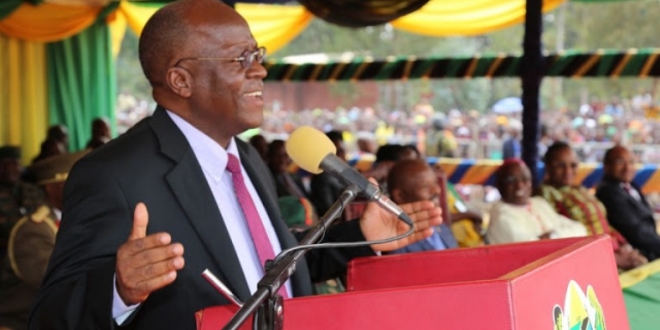
President Magufuli led tributes to the former President. “I will remember him for his great love for the nation, his piety, hard work and performance in building the economy,” he said, and declared a seven-day mourning period, with all flags flown at half-mast.

Kenya’s President Uhuru Kenyatta sent a message of condolences and mourned the departed Tanzanian leader as an “outstanding East African who worked tirelessly for the integration, peace and progress of the region.”

Justice Augustino Ramadhani, former Chief Justice of Tanzania, died at the Aga Khan hospital in Dar es Salaam in April after a long illness.
Justice Ramadhani’s CV is long and impressive. Most prominently, he has been one of Tanzania’s foremost judges for many years, having served as Chief Justice of both Zanzibar (1978-1979 and 1980-1989) and Tanzania (2007-2010), as well as a judge of the East African Court of Justice (EACJ; 2001-2007) and a judge of the African Court on Human and Peoples’ Rights (ACHPR; 2010-2016) including three years as President of the Court.

But he was also ordained as an Anglican Priest in 2013, where he had previously served as Provincial Registrar of the Anglican Church of Tanzania (2000-2007), and was appointed to lead St Albans Cathedral Church in Dar es Salaam in 2017.

He served as vice chairman of the National Electoral Commission (1993­2003), vice chairman of the Zanzibar Electoral Commission (2002-2007) and deputy chairman of the Warioba Commission on Constitutional Reform (2012).

And if that wasn’t enough, after obtaining his first degree in 1970, Ramadhani joined the Tanzania People’s Defence Force (JWTZ), reaching the rank of Brigadier General. His roles included JWTZ lawyer, head of Mugulani Camp in Dar es Salaam and head of JWTZ’s Faru Brigade in Tabora. He was involved in the war against Uganda under Idi Amin and then became Judge of the military court in Uganda.

He played piano, and in his youth was a talented basketball player. Born on Zanzibar in 1945, the grandson of Rev Cecil Majaliwa, first African priest of the Universities’ Mission to Central Africa, both his parents were teachers. Ramadhani went to primary school in Mpwapwa before attending the prestigious Tabora Boys High School. At the age of 15, he lost his father to a train crash in Manchester, UK.

He married Lieutenant Colonel Saada Mbarouk, a Muslim, in November 1975. They had four children, Francis, Bridget, Marine and Matthew.

Briefly, in 2015, Ramadhani’s name was discussed as a potential President of Tanzania, with various newspapers reporting that he was President Kiketwe’s preferred choice as a successor. As a Zanzibari Christian with broad experience and a reputation for integrity, it is easy to see the appeal. He submitted his nomination, but the party committees did not put him on the five-person shortlist.

In his various roles as a jurist, Ramadhani was seen as a passionate protector of the rule of law, and in later years, of democratic rights and freedoms. He was disappointed and privately critical of the country’s direction under President Magufuli.

Nevertheless, President Magufuli led the tributes. “I have received with great sadness the news of the death of the late Chief Justice Augustino Ramadhani,” he said in a statement. “I wish to express my sincere condolences to you, the family of the deceased, all the honourable judges and the staff of the Judiciary of Tanzania.”

Experienced diplomat and serving Minister of Constitutional and Legal Affairs, Augustine Mahiga, died on May 1, 2020 in Dodoma after a short illness, at the age of 74.

Mahiga served as Tanzania’s Minister of Foreign Affairs for four years under President Magufuli (2015–2019) before moving to his final cabinet
Obituaries 47

position. He previously served his country as an army colonel, head of the Tanzania Intelligence and Security Service (TISS), and Permanent Representative of Tanzania to the United Nations from 2003 to 2010. From 2010 to 2013 he was the UN Special Representative and Head of the United Nations Political Office for Somalia.

Mahiga was born in Tosamaganga, Iringa in 1945. He studied in Tosamaganga from Primary level up to High School, then earned a BA in Education at the University of East Africa in Dar es Salaam. He later attained a master’s degree from the University of Toronto and in 1975 a PhD in International Relations from the same institution.
“Despite his advanced age, experience and the high positions he held in government and internationally, Dr Mahiga was a humble and obedient person in the way he fulfilled his responsibilities,’’ said President Magufuli in a statement.

Opposition MP, Zitto Kabwe paid tribute, describing Mahiga as “an outstanding diplomat”.

The outgoing British High Commissioner to Tanzania, Sarah Cooke, described Mahiga as “a wise and experienced diplomat who was a close partner and friend of the UK. My thoughts and prayers are with his family at this very sad time,’’ she posted on Twitter.

Judge Mark Bomani has passed away in early September at the age of
88. He had been receiving treatment for the past month at the Muhimbili National Hospital in Dar es Salaam.

Bomani served as Tanzania’s Attorney General from 1965 to 1976, the first indigenous Tanzania to hold the position, succeeding Roland Brown. He played a big role in advising President Nyerere on the appointment of the first indigenous Chief Justice Francis Nyalali and other judges of the High Court of Tanganyika, currently the High Court of Tanzania.
After serving in the government, Judge Bomani became a senior legal advisory in the United Nations between 1976 and 1990, working towards Namibian independence from South Africa and working to devise an independent legal system for the country. He was also the chief aide to both Julius Nyerere and Nelson Mandela on peace negotiations during the first Burundian Civil War.

In 1993, he chaired the Legal Sector Task Force, which resulted in a comprehensive report on legal sector reform in Tanzania. And in 2007 he was entrusted by President Kikwete to chair a Commission on the operations of the Mining Industry in Tanzania, with a broad scope that encompassed economic benefits, governance of the sector and alleged human rights abuses.

He was also briefly a Commissioner on the National Electoral Commission
– a position he resigned in 1995 in order to seek the CCM nomination as Presidential Candidate. This controversy is still cited today as evidence that the electoral commission is not truly independent.
At various times he was Chair of the Tanzania Broadcasting Corporation (TBC), the Tanzania Extractive Industries Transparency Initiative (TEITI) and the Media Council of Tanzania (MCT).

“I send my heartfelt condolences to the late Bomani’s family and all who in one way or another have been touched by the demised of the retired judge,” said President Magufuli on Twitter.

Former Industry and Trade Minister Iddi Simba passed away in February while receiving medical treatment at the Muhimbili National Hospital’s Jakaya Kikwete Cardiac Institute (JKCI).

Simba, described as “Tanzania’s staunchest proponent of indigenisation policy” and one of Tanzania’s foremost “intellectuals of capital”. He served as Minister of Commerce and then of Industry and Trade under President Mkapa, and as Chair of the Confederation of Tanzanian Industry (CTI), as well as holding senior positions with the African Development Bank and the World Bank.

Born in 1935, Simba grew up in Dar es Salaam where he received his primary and secondary education. He then attended the elite Tabora Boys School and became one of the first university graduates in post­colonial Tanganyika after obtaining a Bachelor of Science in Agriculture in 1961 from Panjab University in Pakistan.

Mr Simba is credited to have conceived the concept of indigenisation, a policy that sought to integrate Tanzanians of Africans descent into the modern economy and economically empower poor Tanzanians. In 1999, he told a gathering of members of the CTI that foreign companies which want to invest in Tanzania will be compelled to identify local partners. “If they cannot do so, the government will help them identify partners because we are now aiming at localising and promoting local participation in investments,” he said.

In June 2003, he published a twenty-page booklet titled A Concept of Indigenisation (Dhana ya Uzawa). The publication prompted the leadership of the ruling CCM, a party which Mr Simba was serving as a member of its National Executive Committee (NEC), to ban its members from using the term indigenisation (uzawa) on the grounds that it had no relation to the party’s 2000 election manifesto.

President Mkapa led the tributes to Mr Simba: “He always held to his position and he lived to be a good fighter for the advancement of the private sector,” said Mr Mkapa.

The last surviving member of the first cabinet of independent Tanganyika, Job Lusinde, died in July at the age of 89.
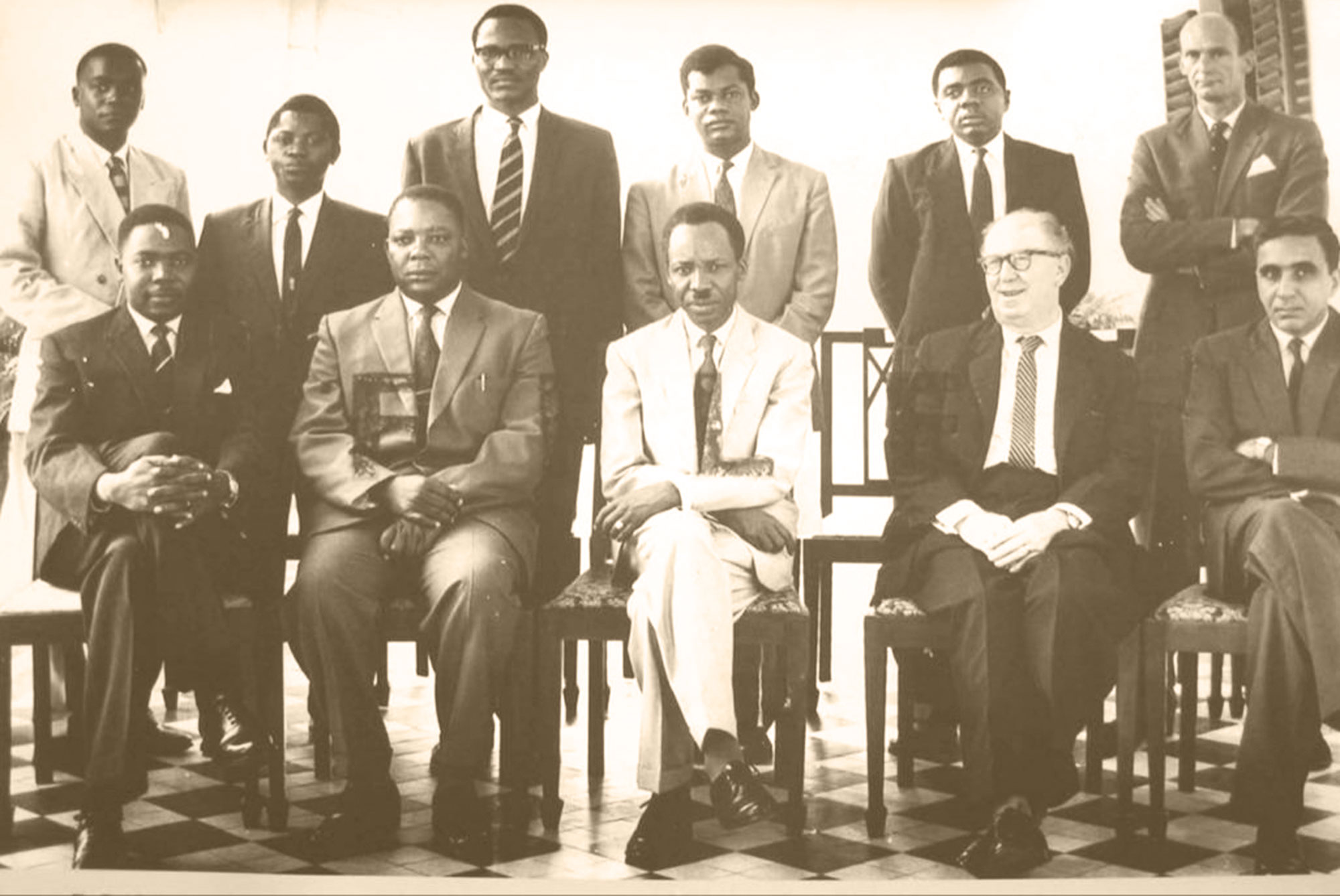
Job Lusinde (standing extreme left) in first cabinet of independent Tanganyika

After early schooling in Dodoma, Lusinde studied at Tabora Boys High School and Makerere University. He returned to Dodoma as a teacher, then served as District Executive Director where he drew the attention of the future President Nyerere.

At a time of the mutiny by soldiers in January 1964, Lusinde was Minister for Home Affairs. Alongside Oscar Kambona, the powerful Defence Minister, he calmed the soldiers who were demanding fast pace of Africanisation. Lusinde was awoken by the rioting soldiers in the early hours and ordered to show where President Nyerere and his vice Rashid Kawawa were hiding. He managed to get into the State House where he found Mama Maria Nyerere and Sophia Kawawa safe. From there, it is said, he communicated directly with all the ministers, pleading with them to stay indoors for their safety. The confusion as to the whereabouts of Nyerere and Kawawa ended after Lusinde, Kambona and Bhoke Munanka traced them in Kigamboni.

For many years, he held the Communications, Transport and Works dockets. In this role, he oversaw several large infrastructure projects including negotiations and construction of the Tanzania-Zambia

Railway (TAZARA), the Tanzania-Zambia Pipeline (TANZAM) and the highway to Zambia. He stood side by side with Mwalimu Nyerere as the President inaugurated one project after another.

He lost his seat in parliament in 1975, after which he served as Tanzania’s Ambassador in China and High Commissioner in Kenya, and later as chair of the Tanzania National Parks Authority (TANAPA).

“There was no blemish on his performance,” said Former Dodoma Mayor Peter Mavunde. “He strived to discharge his roles to utmost perfection. He was my role model, I did not expect that one day I would become a politician, but under his watch, I matured steadily, ultimately becoming a mayor for Dodoma. Many politicians benefited from his wisdom.”

Former personal assistant to Mwalimu Julius Nyerere, Annar Cassam, died in Geneva in July after a long illness.
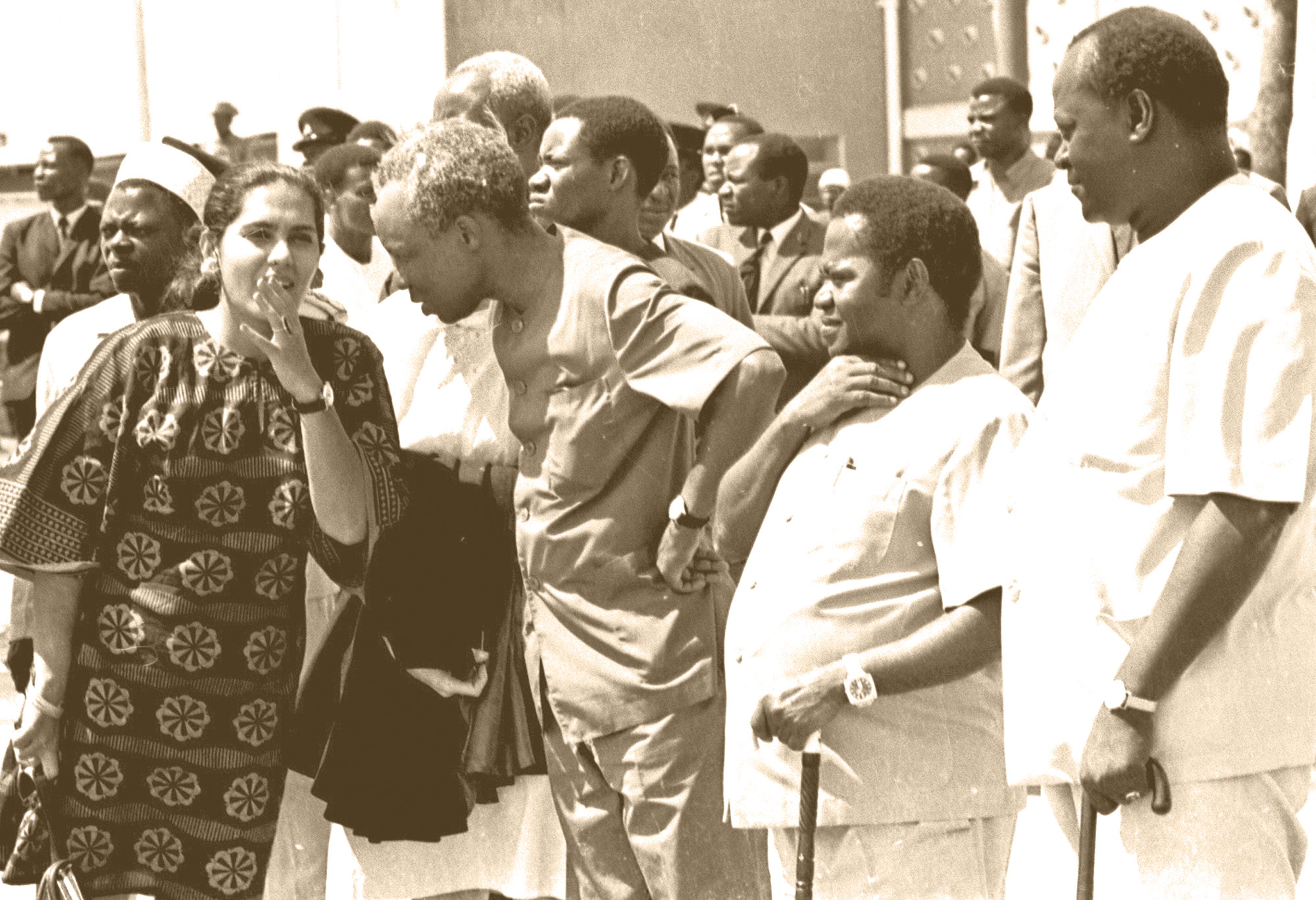
Annar Cassam with President Nyerere


Cassam was never a well-known figure in Tanzania, despite the role she played – certainly far less well-known than Joan Wicken. And yet she played a major role in Nyerere’s presidency, particularly in foreign affairs.

She first saw and heard Nyerere as a student at the London School of Economics (LSE) in the 1960s. After specialising in international law, she went on to Geneva on a fellowship at the International Commission of Jurists until she was asked to return to Tanzania in the 1970s to work at the Foreign Affairs Ministry.

Dar es Salaam was then the headquarters of the African Liberation Committee (ALC) and Tanzania was instrumental in supporting Southern African Liberation Movements. Nyerere invested a lot of time, effort and attention on this, and with her expertise, Cassam ended up working closely with him at State House.

Her role included helping him with translations of all French correspondence, to be with the President when he was meeting French speaking leaders, and to represent the president in meetings with key local actors including revolutionary-minded scholars at the University of Dar es Salaam.

After President Nyerere’s retirement, Cassam left Tanzania to work in Geneva for the United Nations. She maintained a close interest in Tanzania and in Nyerere’s legacy, however, including co-editing a book on Nyerere’s role in Africa’s liberation struggles, published in 2010.

Her co-editor on that book, Chambi Chachage, paid tribute. “One of the lessons I learned from her is the importance of not mincing words and not refraining from challenging the ideas of others, especially when they depart from historical facts,” he wrote. “It was indeed an honour and a privilege to collaborate with someone who christened herself my ‘old shangazi’.”

COVID-19 HITS TANZANIA

by Ben Taylor

First cases of Covid-19 in Tanzania
[Editor’s note: As this is a fast-changing situation, the details provided here are likely to be somewhat out of date by the time this issue reaches readers. Nevertheless, every effort has been made to ensure the details were correct at the time of writing (April 24).]

The first recognised case of Covid-19 in Tanzania was recorded on March 16 in Arusha, a Tanzanian woman who had recently returned from Belgium. Two further cases were recorded two days later, one in Dar and the other in Zanzibar, both foreign nationals. Three more followed the day after that.

The government acted swiftly, closing all schools with immediate effect on March 17 and universities from the following day. Major sporting events were also suspended. A contact-tracing and testing system – designed with a potential Ebola outbreak in mind – was put in place.

Nevertheless, the number of cases crept upwards over the following days and weeks. The first death was recorded on March 31.

Initially, cases were limited to those having recently arrived in the country from countries where the outbreak was already more widespread. However, on April 9, the Minister of Health, Ummy Mwalimu announced that the first recorded case of local transmission had been detected around the start of the month.

At the time of writing, the number of recorded cases has begun to rise more quickly, reaching 284 cases and ten deaths as announced by the government on April 22, up from 32 cases ten days earlier.

As has been the case across much of the world, the government has struggled to find the right response to an unprecedented and overwhelmingly difficult situation.

Even before the first cases were recorded in Tanzania, the President and the Minister of Health had both begun urging Tanzanians to take precautions – handwashing with soap, social distancing where possible and refraining from handshakes.

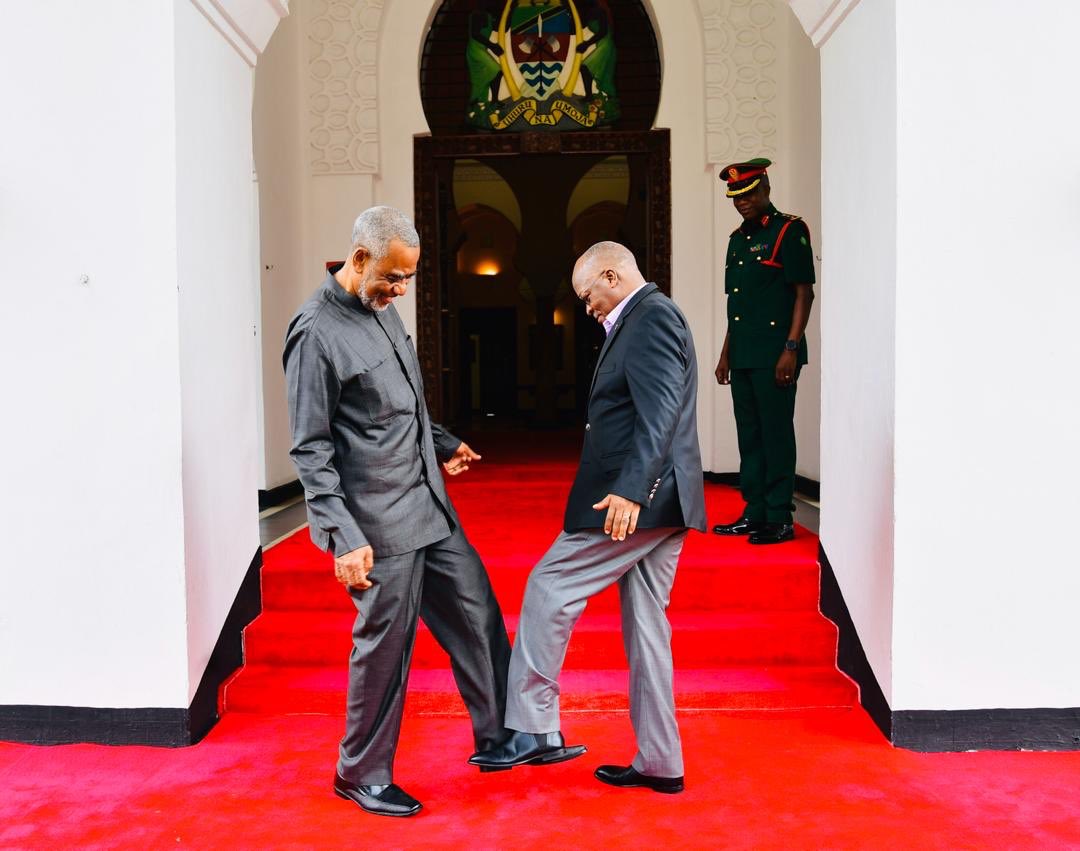
Maalim Seif Sharif Hamad (left) and President Magufuli tap feet in greeting on March 3rd – photo State House


President Magufuli himself set a public example when meeting with opposition leader Maalim Seif Sharif Hamad (of ACT Wazalendo) on March 3: rather than shake hands, they tapped feet. The photo featured prominently in news coverage, and did much to raise public awareness of the virus.

On March 13, the President urged the media to dedicate time alongside their news coverage to educate the public about the virus.

More substantive policy measures, however, have been more piecemeal. After the closure of schools and universities, the next major policy response came on March 23, when it was announced that all international arrivals into Tanzania from Covid-19-affected countries would have to undergo 14 days quarantine in designated hotels (at their own cost). This prompted distress from many returning Tanzanian citizens, who complained that the designated hotels were tourist-class hotels at prices beyond anything they would usually pay.

Three weeks later, the Tanzania Civil Aviation Authority suspended all international commercial passenger flights to and from Tanzania until further notice, though in reality almost all such flights had already ceased operating due to restriction in other countries and measures taken by airlines for commercial reasons.

A faith-based response
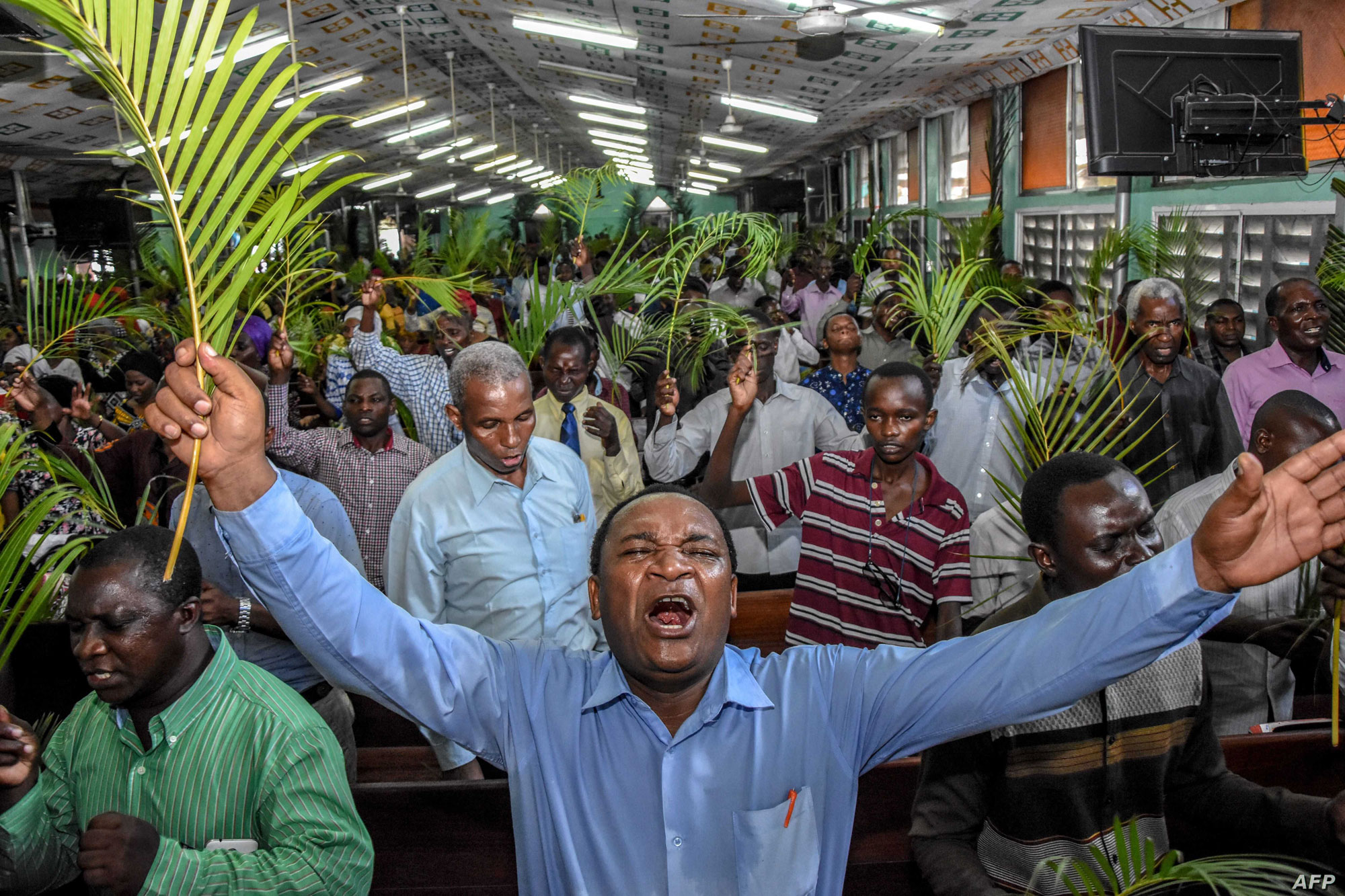
The government also urged people to remain at home as much as possible, travel less on public transport and refrain from socialising. The message was somewhat undermined, however, by repeated public statements by the President and other national figures encouraging people to continue to attend their churches and mosques as normal, as the country needed their prayers.

The President, speaking while attending a Sunday service on March 22, said the virus was “satanic” and “it cannot survive in the body of Jesus. It will burn.”

This approach drew criticism both within and outside the country. Opposition leader, Zitto Kabwe, accused the government of “a lack of seriousness” and the President of being in “a state of denial.”

Nevertheless, the President doubled down on the message. Shortly before Easter he stated that “this is the time to build our faith and continue praying to God and not depending on facemasks. Don’t stop going to churches and mosques for prayers. I’m sure this is just a change of wind and it will go like others have gone.” And on April 16, the President called for three days of national prayer, saying God would protect Tanzanians from the virus.

Social distancing not in evidence at Palm Sunday mass in Full Gospel Bible Fellowship Church in Dar es Salaam

This earned the President a spot in a list of the “Notorious Nine” world leaders who “responded to the coronavirus with denial, duplicity and ineptitude,” compiled by a Canadian newspaper, the Globe and Mail. “Tanzania today remains the only country where the government has recommended church attendance as a way of combatting the virus,” the paper reported.

The Prime Minister, Kassim Majaliwa, has differed only a little in his stance. “Prayers in houses of worship are desirable,” he said, “but we also need to take necessary precautions.” He added, however, that as even wealthy countries have not been spared the pandemic, “it is time we sought divine intervention”.

On April 22, the President extended his advice a little beyond prayer
– to incorporate tradition medicine using steam inhalation. This, he said, was “scientifically very clear, because vapour is above 100 degrees centigrade and the virus will disintegrate,” before suggesting that concoctions made of Neem trees, onions and other ingredients could be beneficial, though without specifying whether as prevention or as treatment.

Scientists have concluded that this would have no positive effect, could cause burns and might make people more vulnerable to infection or to infections causing more severe problems. A Reuters fact check (not responding to President Magufuli, but to earlier online posts claiming steam inhalation as a cure), concluded that the idea was false, and indeed dangerous. Similarly, a BBC factcheck concluded that “any attempt to inhale steam at this temperature, would be extremely dangerous … and your lungs would certainly be irreparably damaged before reaching a temperature high enough to deactivate the virus.” Scientifically, it is very clear.

After making this suggestion, the president concluded that “we will beat Corona by working together, by putting an end to fear, by putting God first, and will beat Corona as we have been able to win other wars.”

No lockdown, “never”
The President has also shunned all calls for a lockdown. “Let us continue working hard to build our nation,” he said in mid-April. “Coronavirus is not and should not be a reason for us not working. Farmers should utilise the ongoing rains effectively, industrial owners should continue producing and I don’t expect any development project to stop.”

Some minimal social distancing measures were put in place. In addition to the closure of schools, universities and sporting events, this includes attempts to prevent overcrowding on public transport – no more passengers permitted than the number of seats – and some restrictions (later relaxed) on travel between Dar es Salaam and up-country locations. Many rural communities have put in place their own measures to fine or quarantine anyone arriving from Dar es Salaam – as many have done, recognising the lower risk associated with lower population densities and the possibility of growing your own food. The April 26 Union Day public celebrations have been cancelled, as has the Uhuru Torch race.

Opposition leaders say the country needs to take more urgent action to avoid potential disaster. Freeman Mbowe, the chairman of the largest opposition party, Chadema, posted on Twitter: “No lockdown because he (President Magufuli) wants to save the economy and his flagship infrastructure projects. The lives of our people cannot be repaired but the economy can! Lockdown or get locked out!”

The President has repeatedly resisted all such calls. On April 22, speaking in his hometown of Chato to security force leaders, he addressed the issue again: “There are those who have suggested that we lockdown Dar es Salaam. This is not possible,” he said. “Dar es Salaam is where we collect almost 80 per cent of the country’s revenue, we can continue taking measures to curb the virus but not by locking down Dar es Salaam. Never!”

At the time of writing, the truth is that social distancing has not become part of life for many in Dar es Salaam or other urban areas of Tanzania. Markets, public transport and bars remain crowded, as well as places of worship.

And the government faces some impossible choices in this regard. While a small number of Dar es Salaam residents – primarily those in middle class jobs – are able to work from home, the reality for many is that this would spell rapid and severe economic distress. Tanzania lacks the economic capacity to provide either direct financial assistance or food aid to the millions who would need it.

There is considerable debate about whether a lockdown might not be the best response in many African countries, where populations are both extremely young and financially vulnerable. Melissa Leach, the Director of the Institute for Development Studies (IDS) and James Fairhead, an environmental and medical anthropologist, both at the University of Sussex, have written that “the best policies for countries with young populations may not be lockdowns.”

Around 3% of Tanzania’s population is aged 65 or above, compared to around 18% in the UK and 20% in Italy.

“There may be better ways to save lives such as physically shielding and supporting the most vulnerable while allowing the wider population to gain immunity, whether through a vaccine when it arrives or by virtue of enough people catching and recovering from the virus itself,” they wrote. “Poor countries are much less able to cushion the potentially devastating economic impacts produced by lockdowns. This is if they are feasible in the first place. Effective lockdowns are near impossible in crowded low-income settlements that lack taps and sewers.”

“Today, some version of the lockdown has become most countries’ response to the Covid-19 pandemic. In years to come, we may look back on this moment as one in which an ideological practice emanating from older and wealthier countries was misguidedly “copy and pasted” by elites in younger and poorer societies, leading to marginal benefits in tackling the coronavirus but with the effect of increasing poverty and mortality among the poor.”

Nevertheless, most of Tanzania’s neighbours have opted for forms of lockdown that go well beyond anything being done in Tanzania. In Uganda, the country has been in strict lockdown since March 30. Movement is restricted, public gatherings are suspended and all but a small number of essential businesses are closed. This is enforced in Kampala and other urban centres by a heavy police presence on the streets. In Kenya, the government has not gone quite so far, though did introduce a nationwide 7pm-5am curfew and the closure of all bars and restaurants in late March, followed by a ban on movement in and out of Nairobi and other major urban centres in early April.

Health services
Much of Tanzania’s epidemic preparations have been with Ebola in mind, with contact tracing and testing and isolation of patients of a relatively small number of patients. It is not designed to cope with the large numbers of patients the current pandemic has seen around the world, nor with asymptomatic carriers.

The number of ventilators available is low (the precise number is unknown), stocks of protective equipment for health workers are minimal, even supplies of running water and electricity are unreliable in many hospitals. Five hundred ventilators were donated by Chinese entrepreneur, Jack Ma, on April 8, and several local business figures have donated masks, gowns and other equipment. Doctors have complained about a shortage of protective equipment.

Initially, all positive Covid-19 cases in Tanzania were being isolated in selected hospitals, including those with few or no symptoms. Since April 19, this is primarily the Amana Hospital in Ilala, Dar es Salaam. All other patients at the hospital were transferred elsewhere. Muhimbili National Hospital has been directed to refer all Covid-19 patients to Amana, and to focus exclusively on other medical needs. There have been some efforts to increase capacity at Amana and supply it with new equipment.

There have also been reports of unrest among patients in isolation at Amana. On April 24, it was reported that some patients had staged a breakout. Different reports stated this was either due to dissatisfaction at the poor standard of care being provided to more serious cases or due to frustration among patients with no symptoms that they were being kept for an unnecessarily long time against their will. Similar events were seen the same day in Nairobi, Kenya.

International support, and concern
Various donor agencies have pledged additional financial assistance to Tanzania to cope with the pandemic, though details in most cases are scarce. The government of Ireland responded very quickly, providing €1.5 million to support the national response seven days after the first case was announced. Tanzania has been promised part of a €1.2 billion package set up by the French government to support Covid-19-responses across Africa. The British government has pledged some direct support to Tanzania (“an initial” £2.7 million), but has put large amounts toward international efforts towards vaccine development (£544 million) and the work of international agencies (£200 million) including the World Health Organisation (WHO), UNICEF and the World Food Programme in combatting the pandemic. The EU has raised over €15 billion to support the global response, though this is likely to focus most on supporting economic mitigation and recovery. The US government has committed around $1.5m towards the Tanzanian response.

On April 22, President Magufuli thanked the World Bank for making loans available for financing the response, but suggested that the Bank should instead cancel debts owed by Tanzania and other developing countries. “Now is the right time for the World Bank, which has been touched by the crisis and has good intentions to assist us, to forgive part of the debts we owe, so that the money we are paying each month, and the interest, can be put towards responding to the Coronavirus crisis. This is my request, and I request also that other African countries should join in this call.

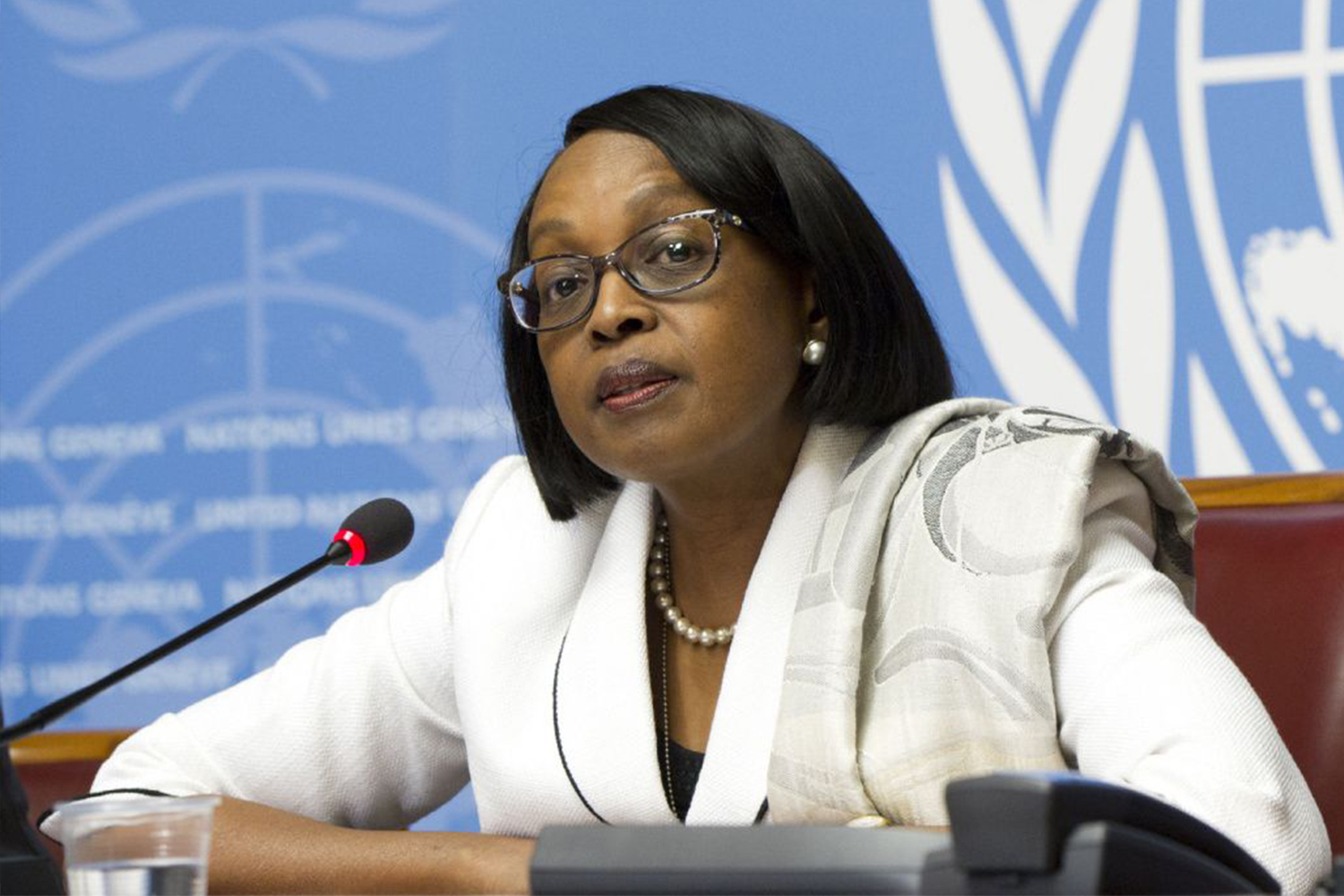
WHO Regional Director for Africa Matshidiso Moeti who also urged countries not to let Covid-19 eclipse other health issues.


On April 24, the WHO Regional Director for Africa Matshidiso Moeti said there were concerns about the rise of cases reported in Tanzania in the previous few days. “Certainly in Tanzania we have observed that physical distancing, including the prohibition of mass gatherings, took some time to happen and we believe that these might have been probable factors that led to a rapid increase in cases there.”

Uncertainty and trepidation
The coming months hold a high level of risk and uncertainty for the whole world, with every country facing its own unique challenges according to the local context – and a degree of luck. For Tanzania, it now seems unlikely that the outbreak will be contained, and therefore probable that the virus will spread rapidly in low income neighbourhoods of Dar es Salaam, as well as other towns and cities. It seems unlikely that health services will be able to respond effectively. And it seems likely that the economic consequences – lockdown or no lockdown – will be severe for many, with urban areas again likely to be hardest hit.

Lower population densities in rural areas may offer some protection – both reducing the chance of infections reaching rural communities and slowing the spread within such areas. In rural areas, households are also more likely to be able to produce a greater proportion of the food they need. The young age of the population may offer some protection, if fewer of those who contract the virus suffer severe symptoms, though this may also contribute to faster spread among asymptomatic carriers.

The truth is, however, that this situation is unprecedented in modern times. Nobody truly knows how it will play out, nor what the cost in lives will be, nor the impact on food security and the wider economy.

POLITICS

by Ben Taylor

Election year
With the Covid-19 pandemic raging across the globe, any major event scheduled for 2020 is vulnerable to cancellation or postponement, but no such decision has yet been taken with regard to Tanzania’s general elections, set for October. Local councillors, MPs and the President will all be up for re-election.

The subject of possible postponement has come up in the media – including an insightful blogpost by Dr Victoria Lihiru of the Law Department at the Open University of Tanzania that looked at the legality of a delay. Dr Lihiru concluded that it would require a constitutional amendment. The only constitutional provisions allowing for postponement of elections apply only if the country is at war. This would need to be supported by two thirds of MPs.

Nevertheless, the starting assumption must be that the election will go ahead.

Free, fair, open and transparent?
Prior to the arrival of the Coronavirus in Tanzania, the coming elections were at the top of the public agenda. In his annual New Year Sherry Party for diplomats in Tanzania, President Magufuli stressed that the elections would be open, transparent, free and fair.

“A general election is mandatory for any democratic nation like Tanzania. Therefore, the government is determined to embrace justice, transparency and freedom during the election,” he said. He added that the government will allow international agencies and observers to come and monitor the polls.

The assurance came just a few weeks after opposition parties, civil society organisations (CSOs) and the international community concluded that local government elections held last November were not free and fair. The main opposition parties boycotted the election protesting what they termed as unfair disqualification of their nominees.

These same groups reacted to the President’s statement with some scepticism. James Mbatia, national chairman of opposition party NCCR Mageuzi said the President had to delivery on such commitments.

“Making promises is one thing but implementing them is totally different; the President should set the ball rolling,” said Mr Mbatia.

Executive Director of the Legal and Human Rights Centre, Anna Henga, said she welcomed this assurance positively, but added that “in my honest opinion, we still have to address the challenges in the electoral system. For example, Opposition politicians have for a long time complained that our electoral system wasn’t free and fair, while we (CSOs) were locked out of the November 2019 civic polls as well as in some of by-elections held recently, this must be sorted out.” Prof Bakari argued that there were signs that the October general election wouldn’t be free and fair basing on the experience on last November civic polls.

CCM’s Secretariat of Political Affairs and International Relations director, Ngemela Lubinga, said that since this statement came from the Head of State, all would be well. “The Head of State has never disappointed us. There is no need to worry. Those who are sceptic of his assurance should understand that he will address any challenges before the general election, if there is any,” said Mr Lubinga.

Nevertheless, opposition party’s concerns appeared reasonable in early March, when CCM Secretary General, Dr Bashiru Ally gave an interview in which he stated that ruling parties only had themselves to blame if they failed to use their control of state apparatus to ensure victory at the polls.

“It’s obvious that CCM intends to use state powers in the forthcoming elections,” said General Secretary of Chadema, John Mnyika, in response. Mr Mnyika also pointed to the government’s refusal to listen to calls for reform of the National Electoral Commission (NEC).

Such calls had grown louder since the new year. Another opposition party, ACT Wazalendo, launched a nationwide campaign in March to push for the establishment of a truly independent NEC. This added weight to similar calls already emanating from CSOs and other opposition parties. Chadema wrote to the President in January asking for, among other things, the formation of an autonomous electoral commission.

Former Foreign Secretary, Bernard Membe, who was expelled from CCM in February for perceived disloyalty, in March joined calls for reform of NEC. “I said it in the [CCM] Ethics Committee and let me say it again: The prevailing political climate calls for an electoral commission which is independent, representative and transparent at both the national and district level [sic]. I, therefore, strongly support all the voices to that effect.”

The Prime Minister, Kassim Majaliwa, told Parliament in February this year that the current electoral commission was already “very independent” as he rejected pleas for formation of independent electoral body.

The independence (or otherwise) of the Commission has become a key point of contention, prompted in part by how NEC acted during the 2019 civic polls and in part by the appointment of Dr Wilson Mahera, a perceived CCM-loyalist as Director of NEC in October 2019. Dr Mahera is a known CCM member who has previously vied for positions within CCM leadership at local level. His previous post was as Acting Executive Director of Arusha District Council, before which he served as Associate Professor of Mathematics at the University of Dar es Salaam. No reason was given from removing the previous NEC Director, Dr Athuman Kihamia, who served just over a year.

Chadema, ACT Wazalendo and LHRC all expressed concern at the appointment of Dr Mahera. Chadema have argued that it is unconstitutional, since the constitution prohibits any person who is a member of a political party from being involved in the administration of elections. For a similar reason, in 2019, the High Court ruled that District Executive Directors could no longer act as returning officers in elections, though the decision was later overturned on appeal.

Chadema leaders found guilty
Eight senior figures in Chadema, including the party’s national chair, Freeman Mbowe were found guilty of sedition in early March, and sentenced to a collective total fine of TSh 350 million or to each serve five months in prison. Alongside Mr Mbowe were John Mnyika, Ester Matiko, John Heche, Peter Msigwa, Halima Mdee and Ester Bulaya, all prominent Chadema MPs, the party’s Deputy Secretary for Zanzibar, Salum Mwalimu, and former General Secretary Dr Vincent Mashinji, who had since defected to CCM.
14 Politics

The nine had been charged with offences including unlawful assembly, rioting, and making seditious statements in February 2018 during a by-election campaign in Kinondoni constituency in Dar es Salaam. They had denied the charges.

Chadema started a campaign to raise funds immediately after the magistrate’s pronouncement at the Kisutu Resident Magistrate court. Within days, the funds to pay the fines were raised from supporters and all the leaders were released. CCM members similarly raised funds to secure the release of Dr Mashinji.

Under Tanzanian law, any statement made with the intention to “raise discontent or disaffection amongst people or sections of people of the United Republic” is considered to be seditious.

The other main opposition party, ACT Wazalendo, has also faced similar legal difficulties. In February, the High Court judged that the party’s leader, Zitto Kabwe, had a case to answer for allegedly seditious statements made in October 2018. He is expected to face trial later in the year.

Sim card switch-off
Tightened restrictions on mobile phone sim card registration, enforced from January, led to a massive switch off of improperly registered sim cards.

The Tanzania Communications Regulatory Authority (TCRA) began enforcing guidelines that only people who registered their sim cards using National Identification Authority (Nida) identity cards could continue to use their sim cards. Everyone else had their sim cards disconnected from the network.

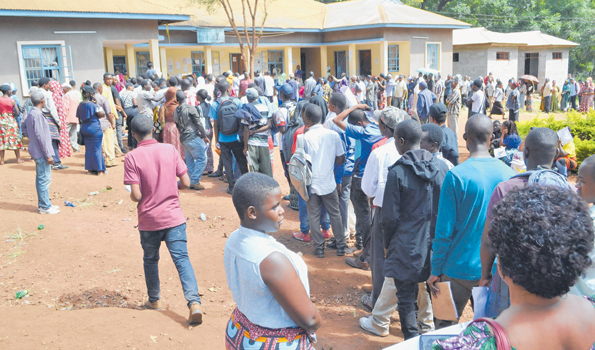
However, as not all mobile phone users had a national ID card, this has brought Nida in the spotlight. Long queues were seen at its offices across the country, with some accusing it of inefficiency and mediocrity.

Though the law does not state exactly what forms of identity document are required for sim card registration, a variety of documents such as driving licence, passport and even workers IDs were previously being accepted as proof of identity. But new TCRA guidelines insist that anyone registering a sim card “shall be required to present his Nida ID and fingerprint verification” for the registration.

Large queues of people outside Nida offices trying to obtain ID cards with which to register their sim cards. (Citizen website)


The initial deadline for re-registration in compliance with the new guidance was December 31, but this was later extended for twenty days. By January 19, a total of 28.4 million sim cards had registered using official ID cards, leaving over 20 million at risk of being disconnected.

After January 20, the switch off was rolled out gradually. Exact numbers are not yet known, but it is thought that over seven million were disconnected.

The largest mobile phone network in Tanzania, Vodacom Tanzania Plc, issued a profit warning in response to the situation. Around 5 million subscribers (around one third of the firm’s total) did not meet the new registration requirements in time, though many were later able to do so.

“The significant number of barred customers will affect revenue growth. The revenue impact, with the increased compliance cost, will also adversely affect our operating profits,” Vodacom said in their statement.

ENERGY & MINERALS

by Roger Nellist

Historic mining agreement signed in January 2020
On Friday 24 January the Tanzanian Government signed an historic mining agreement with Barrick Gold, finally putting an end to the three or more years of acrimonious relations with Barrick’s former subsidiary (Acacia Mining, now wound up) and establishing the arrangements under which the new joint venture, Twiga Minerals Corporation (TMC), will operate in the country. In a televised ceremony in State House, witnessed by President Magufuli and Barrick’s President and CEO Mark Bristow, nine detailed agreements were signed which establish the terms under which the parties can go forward together with confidence. Amongst other things, they provide for a 16% free-carried interest shareholding for government in TMC (with representation on the joint management committee) and for the economic benefits to be split 50/50 after recovery of costs.

TMC will now operate the three gold mines at Bulyanhulu, North Mara and Buzwagi which together generate Tanzania’s biggest export earnings. After the signature Bristow said: “Reflecting our confidence in the potential of this highly prospective gold region, we have budgeted $50 million for exploration here in 2020 alone and are looking at various opportunities to sustain and expand our operations”. Barrick will also invest $40 million to upgrade the road between Bulyanhulu and Mwanza as well as building a housing estate and related infrastructure. In partnership with the University of Dar es Salaam they will also be supporting a $10 million programme to upgrade mining skills in Tanzania.

In welcoming the new deal, President Magufuli clarified that the many metal concentrate containers stored for the last two years at Dar es Salaam’s port will be sold by TMC to willing buyers and the profits shared. He said they are worth millions of dollars.

The nine agreements which cement this deal comprise: Framework Agreement, Twiga Shareholders Agreement, Bulyanhulu Shareholders Agreement, North Mara Shareholders Agreement, Buzwagi Shareholders Agreement, Bulyanhulu Development Agreement, North Mara Development Agreement, Pangea Development Agreement, and the Management & Administrative Service Agreement.

The new deal hopefully puts an end to a protracted period of enormous disruption in Tanzania’s mineral sector. The new terms are expected to improve Tanzania’s revenues from the gold mining operations. However, the detailed terms of those agreements were not made public and, in a session of the National Assembly in Dodoma a few days after their signature, Opposition MPs called for them to be made so. Chadema’s Shadow Minister of Minerals demanded that the government explain what the 16% and 50/50 split provisions actually mean for Tanzania. He also pressed Government to explain what has happened to the earlier claim for Barrick to pay unpaid tax of $190 billion. It is reported that the Government made major concessions to Barrick during the “arduous and frustrating” negotiations – allowing international arbitration, permitting the export of mineral concentrates again and waiving the requirement for the mining company to establish ore beneficiation facilities in the country. The offering of significant concessions by both parties during a major negotiation is, of course, the essence of the process by which an agreement can be concluded that, overall, is satisfactory to both sides.

Cooking with LPG rather than wood and charcoal
With Tanzania having lost eight million hectares of forest between 1990 and 2010 to firewood and charcoal for burning, the Government has embarked on a plan to raise to 50% the number of Tanzanian households using instead Liquefied Petroleum Gas (LPG) for cooking. The plan was unveiled in mid-February by the Tanzanian Environment Minister, Hon Mussa Zungu. Government wants to build further on the increasing use of LPG witnessed in recent years, and also to introduce more competition into LPG supply so as to reduce its price to households.

Data shows that marketing companies imported 8,000 tonnes of LPG in 2008. The volume had grown to 120,000 tonnes by 2017/18 and Government expects this to rise to 145,000 tonnes annually. Currently, 50% of the LPG imports are consumed in Dar es Salaam and the Coastal Zone; the Northern Zone consumes 23%, the Lakes Zone 12% and the Southern Highland Zone 8%.

Contract reviews and delays
Investor representatives, analysts, commentators and Government officials continue to look forward to the resumption of negotiations concerning the Host Government Agreement that will kickstart the mega Liquefied Natural Gas (LNG) project in Lindi. Those crucial negotiations are being held up whilst Government continues to review and renegotiate the country’s existing Petroleum Production Sharing Agreements, to bring their terms into line with the new natural wealth and resource legislation enacted in 2017.

The Ministry of Trade, Industry and Investment has stated that it is undertaking a similar review of the contracts governing the associated Mchuchuma coal mining and power generation project and the Liganga iron ore project. Those complex projects, said to be worth $3 billion, have so far taken nine years and are still not ready. The current contract reviews are introducing yet another delay. The implementing partner and investor – Tanzania China International Mineral Resource Ltd – has already invested considerable funds in the projects (which were originally expected to be implemented by 2016) and has completed necessary geological, technical and environmental impact work. However, it is understood there have been wrangles over certain tax exemptions on imported project equipment and supplies as well as the provision of other incentives. The investor says the projects are beset by burdensome red tape. However, construction is under way and reports indicate that the project could create 35,000 direct and indirect jobs. It has an expected lifespan of between 50 and 100 years.

TOURISM & ENVIRONMENTAL CONSERVATION

by Paul Harrison

Green Mile Safaris loses hunting concession
In January 2020, after several years of disputes which peaked in late 2019, the Ministry of Natural Resources and Tourism (MNRT) revoked the hunting concession of Abu Dhabi ba sed Green Mile Safaris and closed down the camp. The company had previously lost the licence to hunt in August 2019, having been accused of both violating hunting practices as well as not paying revenues to local communities. According to the Citizen, reports from Longido District at the time suggest that four company employees were arrested for allegedly failing to leave the camp. The hunting block then fell under the management of Tanzania Wildlife Management Authority. The move reflects an increasingly no-nonsense approach to the sport hunting industry in Tanzania, with ongoing attempts to clean up irregularities. It also reflects momentum to reduce hunting areas and convert reserves to national parks that can support increased photographic tourism.

Tanzania national parks taking regionalisation seriously

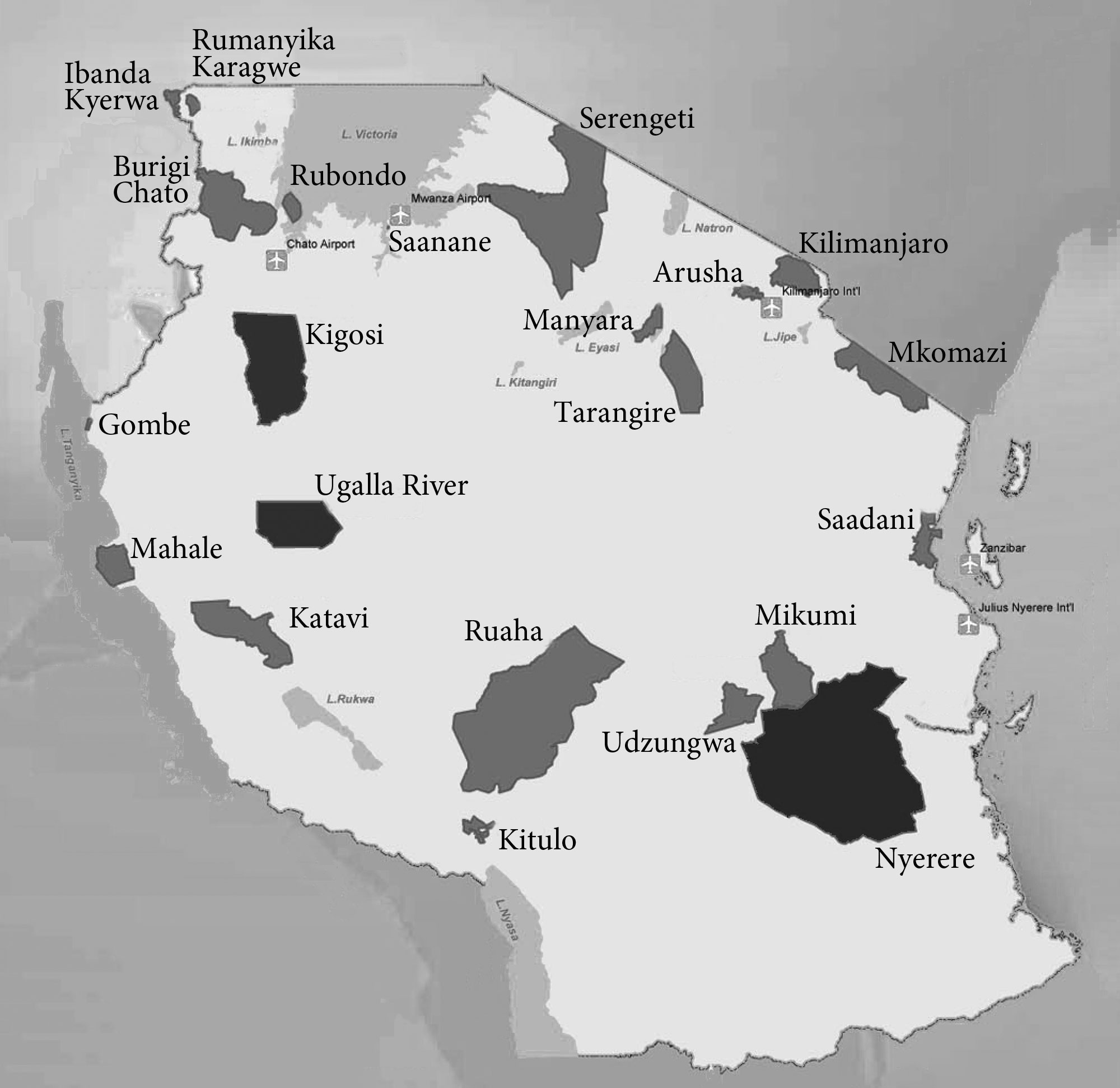
Map showing the latest game reserves to be upgraded to national parks in black – Nyerere (occupying part of the Selous Game Reserve), Ugalla River and Kigosi. (TANAPA tanzaniaparks.go.tz)

A boost in the portfolio of Tanzania National Parks (TANAPA) to 22 parks has led management to take their position seriously and seize the opportunity, resources permitting. Whilst the area known as the northern circuit (Serengeti, Ngorongoro, Manyara, Arusha, Meru, Kilimanjaro) has been receiving the bulk of the benefit of tourism numbers and revenue, the newly developed ‘western circuit’ (the new parks of the north-west of the country, alongside places like Mahale, and Gombe Stream parks), the ‘eastern circuit’ (Usambara Mountains and Saadani parks in particular) and the ‘southern circuit’ (Katavi, Ruaha, Udzungwa parks, plus Selous game reserve/Nyerere national park) still lack funding and investment.

The national parks estate is thus divided in terms of investment between the wealthier north and everywhere else. TANAPA have worked with the Tanzania Tourist Board (TTB) and wider Ministry to try and attract tourism to these lesser known sites. The new focus on regionalisation should start a rebalancing, but it will take time. With the impact of the Covid-19 pandemic, such plans will likely go on the backburner, yet remain important in the longer term.

After a strong start for tourism in 2020, Covid-19 brings the industry to a standstill
The Tanzania Tourist Board (TTB) have rebranded Tanzania as ‘Unforgettable.’ Several short promotional films were launched around February time. However, as momentum for #TanzaniaUnforgettable started to grow, boosting an already solid performance from the tourism sector, the global lockdown against the Covid-19 pandemic began. The TTB quickly relaunched their main film short at the beginning of April, changing the voiceover message from one of ‘welcome now’, to one of ‘stay safe—and we shall see you later’. The Covid-19 pandemic has affected the global economy in unprecedented ways. The tourism sector in Tanzania has not been spared, with tourism now at a complete standstill.

In early March, as reported in The Citizen, the Government of Zanzibar banned visitors from Italy to the archipelago, despite the considerable importance of the Italian market to Zanzibar’s predominantly beach tourism. Tanzania decided to halt tourism promotional work and provisional bookings began to be cancelled. By the end of March, the Serengeti was all but closed. Bookings were cancelled, vehicles grounded, camps and hotels shut, staff were sent home. Zanzibar’s hotels were almost all closed. Mount Kilimanjaro’s constant stream of hikers had stopped. Conference centres like the Arusha International and the Julius Nyerere International in Dar es Salaam, amongst other businesses affected by tourism and business travel, have also shut for the time being. Parks are receiving zero visitors and therefore have no income. This is a major setback in several sectors including park management, air transport, hotels and hospitality, and for tour companies.

The effects to the industry are considerable and will become more pronounced over time as companies need to decide whether to keep staff or indeed to keep going at all. The government’s flexibility towards the private sector in these pressing times will be important, though is not as yet a given.

Growing risk of threats to wildlife from poaching as tourism oversight drops.
Inevitably, this will have a negative impact on conserving Tanzania’s biodiversity. Tanzanian authorities and conservationists fear that a that whilst tourism drops, there will be no such operational pause for poaching and wildlife trafficking. Indeed, the lack of eyes on the ground (tourists and guides as well as fewer guards) may well open up new opportunities for poaching and trafficking. The increase of unemployment in the formal and informal sectors can also fuel the problem of illegal offtake of natural resources as an alternative means of livelihood.

Monitoring on the ground has reduced yet ports remain open and smuggling modes will continue, with some adaptations. A key question is whether demand will continue with slumped economies, reduced buying power and greater pressure on countries like China, internally and externally, to crack down on illegal wildlife trade. Given the well-publicised apparent links between the rise of Covid-19 and some unregulated, unsafe ‘wet markets’ that have been selling wildlife, there may be a crackdown on illegal and unregulated wildlife trade. The government of Tanzania will want to keep a close eye on the potential rise in poaching, especially given recent successes to counter it.

EDUCATION

by Naomi Rouse

World Bank approves controversial $500m education loan to Tanzania
A $500m World Bank loan has been issued to Tanzania as funding for the Secondary Education Quality Improvement Programme (SEQUIP). The loan was previously delayed following campaigns by opposition MP Zitto Kabwe and various civil society organisations for the World Bank to withhold the loan due to the government’s discriminatory policy of expelling pregnant schoolgirls.

Jaime Saavedra, global director for education for the World Bank said “Tanzania, like many countries around the world is suffering from a learning crisis, where children are either not in school, or are in school but not learning. Of 100 children who start school in Tanzania, less than half will finish primary and only three will complete their upper secondary schooling.”

The loan will fund improvements to secondary education, with two thirds of the loan dedicated to creating safe and quality learning environments for girls, benefitting an estimated 6.5 million secondary school students.

Zitto Kabwe, leader of the alliance for change and transparency party (ACT), received death threats after asking the World Bank to suspend the $500m education loan until “checks and balances” including a free press, free and fair elections, and the reinstatement of the Controller and Auditor General, were restored in the country.

In Parliament on 1 February, Abdallah Bulembo, from the ruling Chama Cha Mapinduzi (CCM), said: “There is one man who took our issues outside the country, he should not be allowed back but should be killed where he is. What Mr Zitto Kabwe has been doing is treason in our country.”

Kabwe said that he was taking the threats seriously, but he would not be intimidated. “I have no regrets,” he is reported as saying. In a letter to World Bank president David Malpass, seen by the Guardian, the ACT requested assurance from the bank that any reprisals against Kabwe would “trigger a suspension of all World Bank operations and funding in the country”.

In 2017 similar threats were made against another opposition MP, Tundu Lissu, before he was shot 16 times by unknown assailants, suffer­ing life-changing injuries from which he is still recovering. No one has been arrested for the crime.

In November 2018, the bank withdrew a $300m loan to Tanzania for secondary education, partly because of the country’s mistreatment of pregnant schoolgirls, as well as threats against members of the LGBT+ community.

Since John Magufuli became president in 2015, the government has forced girls to undergo pregnancy tests and excluded thousands of them from school. Press freedoms and opposition activity have also been restricted.

Tanzania’s education minister, Joyce Ndalichako, has asserted Tanzania’s commitment to the education of all girls, saying: “The target [of the loan] is to reach more than 6.5 million secondary school students across the country, without discrimination and shall include girls who drop out of school for various reasons, including pregnancy.”

Of the 60,000 students who drop out of secondary school every year in Tanzania, 5,500 leave due to pregnancy according to World Bank data.

Tanzania’s ban on pregnant schoolgirls dates back to the 60s. Amid renewed criticism, it was reaffirmed in a 2017 speech by Tanzania’s president, John Magufuli, who stated that “as long as I am president … no pregnant student will be allowed to return to school. We cannot allow this immoral behaviour to permeate our primary and secondary schools.”

The latest government statement is that girls can continue to study in “Alternative Education Pathways”, and re-join the mainstream if they pass national exams. According the World Bank, the government has also “agreed to assess the prevalence of pregnancy testing and develop an approach to address this practice” and that the World Bank will “advocate a halt to all involuntary pregnancy testing in schools in Tanzania”.

Despite the latest statement from the government, Elín Martinez, senior researcher at Human Rights Watch, said the Tanzanian government’s position remained unchanged. She referred to a recent tweet in Swahili from Tanzania’s chief government spokesperson that indicated the government has set up parallel systems for pregnant girls.

“Tanzania will continue to arbitrarily deny pregnant girls the right to study in formal public primary and secondary schools – and they will only have an option of studying in a parallel system, which will now be built using the World Bank’s loan,” said Martínez. The World Bank has “undermined its own commitment to non-discrimination and to improving the lives of ‘marginalised groups’”. (UK Guardian)

CCM lauds education system, sneers at calls for overhauling
CCM Secretary General Dr Bashiru Ally has said those calling for over­haul of the education system do not have authoritative knowledge of the matter.

Speaking during his tour of IPP Media outlets in Dar es Salaam, Dr Bashiru argued that people don’t realise that Tanzania’s education system produces some of the most brilliant brains in the world. “Tanzanians who get an opportunity to pursue graduate or postgraduate studies abroad, who are products of the system, do very well abroad.”

He said therefore changing the education system is not a priority for the party which is currently preparing its manifesto for the October elections, with agriculture, clean water and electricity among the top priorities.

However, last month the Parliamentary Committee on Social Services and Community Development said the education being provided does not respond to massive changes in the world, including in the areas of science and technology, and recommended the formation of a commission to overhaul Tanzania’s education system from kindergarten to university. (The Citizen)

Necta releases Form two and Form Four examination results
Pass rates improved by 1.38% on the previous year, with 80% of the 422,722 candidates passing Form Four examinations. For Form Two, the pass rate was 90% for 571,137 candidates.

For Standard Four (primary school) the pass rate improved by 26%, with 1.53 million students passing.

Tunduru District achieved the best results in its region in the 2019 Standard Seven examinations, and claims that the new technique of running learning camps helped achieve their success. The district has a shortage of 1,066 teachers. The pass rate improved by 12.4% in 2019 from 79% in 2018.

At the camps, the children had electricity, water, and food, and were kept safe with guards and also supervision from parents. The camps particularly helped girls by giving them more time to study and not having to do domestic chores.

The District academic officer, Ms Loyal said they faced a challenge of some parents directing their children to perform badly, in order to force them to end their educational journey there.

Private schools took the top ten positions for Form IV examinations. Many of the all-time academic giants retained their positions from 2018. Kemebzo Secondary School (Kagera) came top, followed by Saint Francis Girls’ Secondary School (Mbeya), and Feza Boys. (The Citizen)

President Magufuli dismayed by exam results for Zanzibar schools

President Magufuli at the opening of Mwanakwerekwe School (State House)


While laying the cornerstone for the new Mwanakwerekwe Secondary School in Zanzibar City, President Magufuli called upon teachers to work hard to ensure better marks for students. “I will say this even though some may not be happy…it’s shameful to see Zanzibar schools hold last positions in national examinations,” he affirmed. (IPP Media)

TRANSPORT

by Ben Taylor

Progress with financing for Standard Gauge Railway
The government has made further progress towards raising finance for work on upgrading the Central Line railway, after signing a loan agreement with Standard Chartered Bank Tanzania for $1.46 billion.

The money will go towards the estimated $14 billion cost of the project, which involves replacing the existing colonial-era line from Dar es Salaam to Dodoma and beyond with standard gauge track. Specifically, the Ministry of Finance and Planning said in a statement that the loan would fund the section from Dar to Matukupora, near Dodoma.

“Standard Chartered Tanzania acted as global co-ordinator, bookrunner and mandated lead arranger on the facility agreement that is the largest foreign currency financing raised by the ministry of finance to date,” the statement said, adding that most of the financing would come from Sweden’s and Denmark’s export credit agencies.

The loan repayments are spread over a 20-year timespan, but no details of interest rates were made public.

Road bridge brought down by floods

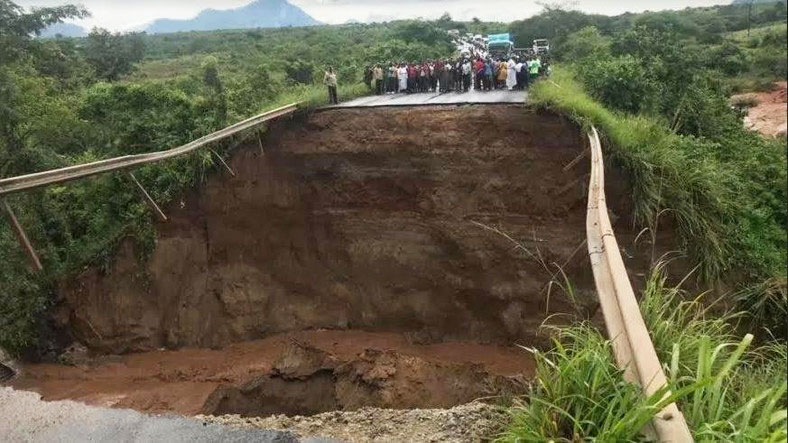
Kiegeya Bridge near Dumila destroyed by floods


Floods in early March brought down a major road bridge on the main road between Morogoro and Dodoma. This effectively left travellers and traders without a simple road connection between the country’s economic and political.

Following the collapse of the Kiegeya Bridge near Dumila, bus operators were forced to divert via Iringa to connect between Dodoma and Dar es Salaam and individual travellers had to pay higher ticket prices. Those transporting cargo by truck had to wait for a temporary bridge to be completed. This applied also to those connecting from Dar through Dodoma to other major towns including Singida, Tabora, Mwanza, Kigoma, Geita and Shinyanga, and to Rwanda and Burundi.

The Prime Minister, Kassim Majaliwa, while touring ongoing work to build a temporary replacement bridge, ordered that the acting manager for Tanzania Roads Agency (Tanroads) in Morogoro, Mr Godfrey Andalwisye, be removed from office. The Prime Minister felt that negligence by Tanroads engineers, failing to conduct routine checks on infrastructure, had contributed to the collapse of the bridge.

Mr Majaliwa asked Tanzania People’s Defence Forces (TPDF) and road engineers in Morogoro and Dodoma to join their forces and ensure that they find an alternative route so that vehicles can start passing the area as construction work on the bridge continues. A temporary crossing was brought into use a few days later.

Dar commuter rail route expansion proposed
The Tanzania Railway Corporation (TRC) has proposed expanding its network of commuter rail services in and around Dar es Salaam. Their plan involves the construction of six new lines, in addition to the three lines currently providing services to commuters on sections of the Central line and TAZARA line.

The proposed new lines would link Mikocheni-Ubungo-Tazara (route A), City Centre-airport (route B), Mwenge-Bagamoyo (route C), Pugu­Kibaha-Kunduchi (route D), Mtoni-Tabata-Ubungo-Mwenge (route E) and City Centre-Kigamboni via Nyerere Bridge (route F). A feasibility study a preliminary design were completed in December 2019, according to TRC.

TRC’s director of Corporate Planning and Investment, Ms Nzeyimana Dyegula, noted that rapid population growth in Dar es Salaam meant increasing need for commuter transport services.

“The annual population growth in Dar city is an average of 6.1%,” she explained, “with expectation of reaching around 10 million people come 2030 from current six million. The increasing population will also need transport.”

Approximately 6 million passengers (around 20,000 per day) used the existing commuter rail routes in Dar es Salaam in 2018.

Another legal and financial blow to Air Tanzania
Longstanding disputes between Tanzania and various international suppliers and financiers have caused multiple problems in recent years, hampering the revival of the Air Tanzania (ATCL) spearheaded by President Magufuli. The latest case came when a UK court ruled that ATCL will have to pay a Liberian company $30 million in compensation for an aborted aircraft leasing deal.

The case involved a 2013 aircraft-leasing deal from Willis Trading, signed by former ATCL managing director David Mattaka. UK High Court Judge Christopher Butcher ordered ATCL to pay the money plus interest that reportedly amounts to $10 million to the Liberian company.

Willis Trading went to court to enforce its claim after ATCL pulled out of the lease contract and subsequent compensation agreement in 2014. The government had challenged the deal which President Magufuli has publicly condemned.

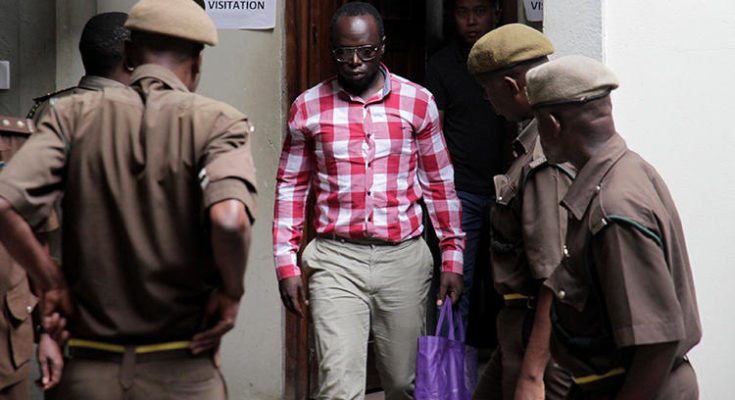
Mr Mattaka was in March 2016 charged in court with abuse of office and abuse of position for signing the lease without complying with the relevant procurement legislation. The case is still pending in court in Tanzania.

The UK court rejected ATCL’s efforts to shrug off the debt by blaming its former CEO Mattaka.

The lease agreement stems from the Tanzanian government’s 2007 decision to expand and modernize the fleet of Air Tanzania which it partially owned then. The Ministry of Infrastructure Development gave permission to Mr Mattaka to lease aircraft as an interim measure until certain Airbus aircraft were available starting in 2011.

The agreement required the airline to pay $370,000 (TSh 851m) per
month for the used Airbus airplane. But work needed to be done on the plane, which operated flights only between May and December 2008 before being grounded again for additional maintenance work.

According to the judgement, after ATCL stopped paying for the lease, which resulted in a debt due to Wallis of more than $45 million, the parties reached a settlement in August 2013, in which the government agreed to pay $42 million (TSh 96.6bn). After making six payments up until October 2014, totalling more than $26 million (TSh 59.8bn), the government stopped making payments.

Previous cases have seen new or recently-purchased Air Tanzania aircraft impounded in Canada and South Africa following court decisions in favour of companies that have financial claims against the government of Tanzania.

SPORT

by Philip Richards

Covid-19 impact on sport
As expected, Covid-19 has had a major impact on sports activity within the country. In mid-March, Prime Minister Kassim Majaliwa suspended all sporting events for 30 days as part of a joint East African approach to containing the virus (The Citizen 18/3/20).

Tanzanian Premier League
At the time of writing, it is reported that no decision has yet been made on if and when the Vodacom Premier League season will resume once the current 30 days suspension of activity expires (The Guardian 18/4/20) though one possibility being considered by the Tanzania Premier League Board is that matches will recontinue but behind closed doors (The Guardian 19/3/20). At the point of suspension of the league, Simba SC were 17 points clear of second placed Azam FC, despite a 1-0 defeat to Young Africans (Yanga) who sit in third place (The Citizen 9/3/20).

Tanzanian star joins Aston Villa

Publicity photograph to celebrate the arrival of Tanzanian Mbwana Samatta at Aston Villa football club (N. Williams/AVFC)


At the beginning of this year, the country had reason for great pride when English Premier League club Aston Villa completed an £8.5m deal for the 27-year-old Tanzanian international captain Mbwana Samatta from the Belgium club Genk, the first Tanzanian to play in the Premier League [see cover photo].

Samatta began his career in humble beginnings at Mbagala Market in the Tanzanian Second Division when he was 17 years old where he was unpaid, before moving onto African Lyon and then attracting the attention of the country’s biggest club Simba SC. His international career took off with a move to Congolese club TP Mazembe where Samatta won four successive domestic titles and lifted the 2015 Africa Champions League, before securing a big time move to Europe with Genk in January 2016.

Aston Villa, currently struggling to retain their place in the English Premier League, looked to Samatta to replace an injured striker. He made his debut in the club’s Carabao Cup semi-final win against Leicester City and followed up with his first goal in the Premier League

– the first ever Tanzanian to score in the Premier League. The goal was a header during their 2-1 win at Bournemouth and was followed up with another (diving) header in the Carabao Cup Final against Manchester City; this kept Villa in the final, and although Samatta ended up on the losing side that day, he earned the additional honour of being the first Tanzanian to score at Wembley (reported in The Guardian (UK) 28/2/20).

As the UK is hit by Covid-19 and their football season comes to a halt, the last few months must have felt like a rollercoaster for Samatta. Although he has made a positive impact at Villa, the original race to sign him from Genk included several clubs including Galatasaray; it is reported that the Turkish club may still be interested in capturing Samatta depending upon the outcome of Aston Villa’s fortunes this season and whether they retain their Premier League status (as reported in Sport Witness 29/3/20).

Samatta’s signing by Aston Villa has attracted widespread excitement within Tanzania, where the Premier League remains immensely popu­lar. He has been described as the county’s “topmost unofficial diplomat, selling Tanzania abroad”, and bars up and down the country were crammed with viewers when Villa matches were broadcast on TV. A few Tanzania fans made it to Villa Park and Wembley to watch their hero. And there have been reports of Villa fan websites and social media pages facing an avalanche of messages from fans in Tanzania – expressing their support for Samatta and for Aston Villa, and, on occasion, bemoaning the inability of his teammates to create good opportunities for him to score.

Kelvin John, hoping to follow in Mbwana Samatta’s footsteps

One to watch out for, and closely following in the footsteps of Samatta, is young talent Kelvin John, who is hoping to join Samatta’s old club Genk next year after successful trials. The 17 year old John, who counts Samatta as an “elder brother” clearly wishes to emulate the Tanzanian captain’s success in Europe, and further highlight the profile of Tanzanian football overseas (The Citizen 21/1/20).

Athletics and the Olympics
It is being reported that the postponement of this year’s Tokyo Olympic Games to the summer of 2021 has been called a “blessing in disguise” for Tanzania’s athletes by Tanzania Olympic Committee Secretary General, Filbert Bayi (Daily News 25/3/20). At the time of postponement only two Tanzanian athletes, Alphonce Simbu and Failuna Matanga had qualified for the Games for the marathon event, so there is now further opportunity for other athletes to meet the qualification criteria. As well as athletics, Bayi cited boxing, judo and volleyball and being the disci­plines that are being targeted, and that preparations for qualification will resume once the current suspension of competitive sport due to Covid-19 is lifted.

TANZANIA IN THE INTERNATIONAL MEDIA

by Donovan McGrath

Rain and a whetted appetite in Zanzibar
(New York Times – USA) A week of drizzle leads to a mysterious curio shop and a succession of feasts says travel writer Sara Khan. Extract continues: If my circumstances had not been so dire – or rather, if my circumstances had been drier – I might never have found myself at the Zanzibar Curio Shop… “Hakuna Matata” T-shirts obscured the facade, and tourists browsed among the souvenirs. In any other city, I’d have breezed past. But sodden from the fury of a downpour, I decided feigning interest in refrigerator magnets was a small price to pay for shelter. “If you want to see the real history of Zanzibar, you have to come upstairs,” said Murtaza Akerali, who, with his brother, runs the store their father opened in 1968. And so I followed him through a portal to Zanzibar of yore: Hand-carved wood-and-brass trunks teetered against one wall; vintage cigarette ads from India and political posters from Tanzania formed a retro pastiche on another… [A] wall of grandfather clocks; a cluster of rusting keys, probably belonging to earlier iterations of the brass-studded doors I had been compulsively Instagramming all over Stone Town. You have to be careful when writing about places like Zanzibar, not to reduce it to a series of prosaic meditations on brilliantly sunny skies, blindingly white beaches and beguilingly azure waters… To prevent such exaltations from finding their way into my own notebook, Zanzibar made sure I encountered nothing of the sort… The Swahili language spoken here is a composite of Bantu and Arabic, with tributes to Persian, Portuguese, English and Hindi… “Zanzibar is not just one thing – Arab, Indian, Persian or Bantu,” the fashion designer Farouque Abdela said. “It’s what they call Swahili” … You can trace the cultures that have mingled in Zanzibar through Mr. Abdela’s lineage: He is a native Zanzibari of Comoran, Indian and Arab descent … Zanzibar was, for centuries, where far-flung corners of the world converged. The region was settled by Bantus from mainland Africa, then Persians, Portuguese and Arabs, each wave leaving indelible influences on the language, dress, food and religion… “A mixture of culture, rather than food,” is how Mr. Abdela described urojo to me. The stew, popularly known as Zanzibar mix, is hearty, rainy-day food … a few chunks of mishkaki, or East African grilled meat, sliced off the skewer, were draped with Indian-inspired fried bhajias, local casava strips and chunks of potatoes … (24 February 2020) – Thanks to Elsbeth Court for this item – Editor

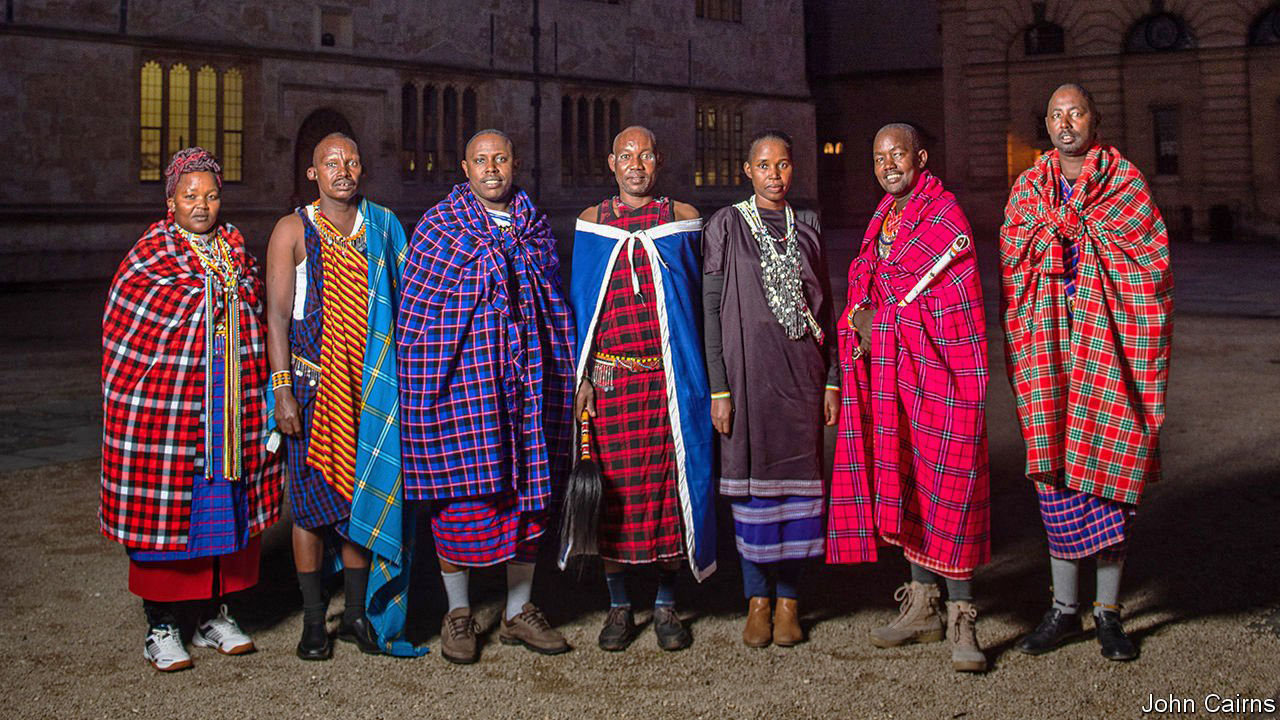
Oxford University restores Maasai artefacts

Group of Masaai during visit to Oxford University


(Economist online – UK) Men with spears come to the dreaming spires… Extract continues: Former colonial powers have tended to take a defensive attitude to requests from formerly subject peoples for the return of objects that may have been stolen. In Britain, France and elsewhere, laws prevent museums from letting stuff go. But in 2017, Emmanuel Macron, the French president, said that he wanted to see the return of pilfered artefacts to Africa within five years. Since then, the movement for restitution has gathered steam. Universities are not constrained by the legislation that binds national collections, and several have started to return objects. The Pitt Rivers, which holds Oxford University’s archaeological and anthropological collections, is the vanguard. It has returned 28 objects, all of them human remains. But Dan Hicks, curator of archaeology at the museum, believes that the movement needs to accelerate, for “museums are sites of colonial violence”. Rather than deal with national governments, which can make for tricky politics, the Pitt Rivers is engaging directly with indigenous peoples. The Maasai visit came about after Samwel Nangira, a Maasai from Tanzania, visited the Pitt Rivers when he was at a conference. He questioned the labelling of some of the objects in the museum: “what does ‘collected’ mean? Like when you find something in a forests, so not donated, and not robbed?” One of the problems with restitution claims is establishing provenance. The Maasai have come at the invitation of Laura van Broekhoven, director of the Pitt Rivers, and InsightShare, an NGO, to establish where and when the objects were taken. To that end, they have brought Lemaron ole Parit, a laibon—a spiritual leader with mystical powers. . . Sitting on the floor of Mrs van Broekhoven’s office, Mr ole Parit breathes into an enkidong vessel packed with stones and snuff tobacco. He then shakes out the stones, whose patterns reveal the artefacts’ history to him. “I’ve identified the circumstances under which objects were taken,” he explains. “The times when they were taken, and how many hands they went through.” Out of the 188 artefacts Mr ole Parit viewed, he has identified only five he thinks are culturally sensitive enough to warrant a return. Artefacts matter to the Maasai, in part because they represent the continuation of a dead person’s life. . . Mrs van Boekhoven says that the way knowledge systems are judged needs to be liberated. “Real decoloniality is to see each other’s knowledge systems as equal.” British colonial catalogues, she points out, are not models of accuracy. “All we have are labels with question-marks. It would be quite disingenuous to say, ‘Your knowledge system is inferior to ours’.” (13 February 2020)

Tanzania crush for sacred oils kills 20 worshippers
(BBC News online – UK) Extract: At least 20 people have been crushed to death and 16 others injured during an outdoor religious service in Tanzania. Worshippers were attending a Pentecostal service at a stadium in the northern town of Moshi … when the incident occurred. Moshi district commissioner Kippi Warioba said attendees rushed forward to be anointed with blessed oil… The service was held by pastor Boniface Mwamposa, who refers to himself as “the apostle”. Survivors said Mr Mwamposa told hundreds of people gathered at the service to pass through an area where “blessed oil” had been poured over the floor. The crowd rushed forward to try to step in the oil in the hope of being cured of sickness. Peter Kilewo, who attended the service, described the scene as “horrible”, telling AFP news agency that people were “trampled on mercilessly, jostling each other with elbows”… (2 February 2020)

Tanzanian journalist Erick Kabendera freed after seven months

Tanzanian investigative journalist Erick Kabendera arrives at the Kisutu Residents Magistrate Court in Dar es Salaam, Tanzania August 19, 2019. REUTERS/Emmanuel Herman – RC1314E63E80


(BBC News online – UK) Extract: Detained Tanzanian journalist Erick Kabendera has been freed seven months after he was arrested. He had been charged with money laundering, tax evasion and leading organised crime. Mr Kabendera’s release comes after he entered into a plea-bargain agreement with the prosecution. His detention was seen as an example of rising repression against the press and critics of Tanzania’s President John Magufuli who came into office in 2015…The authorities had initially said the investigative journalist was arrested over a question about his citizenship but that investigation was dropped and the financial crimes charges were brought in… The journalist, who has the reputation for holding the authorities to account in his articles, has written for several British publications, including The Independent, The Guardian and The Times, as well as for newspapers in Tanzania and the wider region. (24 February 2020)

The all-women safari camp in Tanzania
(BBC News online – UK) The Serengeti National Park in Northern Tanzania is one of the crown jewels in Tanzania’s tourism industry and famed for its safari experience. According to a report compiled for the UN Conference on Trade and Development in 2015, out of 2,000 safari guides in Tanzania, fewer than 10 were women. The Dunia Camp in Serengeti National Park is trying to solve this problem by hiring only women to fill positions. The following is an extract of a transcription of the video embedded in this article: Director of Dunia Camp, Jane Ngwatu, says she set it up to show that women are capable of doing such things – “it is not only men who can stay in the bush”. In East Africa, women usually hold the lower tiers in the tourism industry. . . At this camp the women take up all the roles, from housekeeping to security and management… (11 March 2020)

Trump Administration Adds Six Countries to Travel Ban
(New York Times online – USA) Extract: … Immigrant visas, issued to those seeking to live in the United States, will be banned for Nigeria, Myanmar, Eritrea and Kyrgyzstan. The ban will also prevent immigrants from Sudan and Tanzania from moving to the United States through the diversity visa lottery, which grants green cards to as many as 50,000 people a year… Non-immigrant visas, including those for students and certain temporary workers, as well as visas reserved for potential employees with specialized skills, will not be affected by the ban. Immigrants will be able to apply for wavers from the restrictions. The administration has said waivers are issued to those who would experience undue hardship if denied entry into the United States, although the process has been criticized as opaque… Officials with the Department of Homeland Security and the State Department who briefed reporters on the condition of anonymity said Eritrea, Tanzania and Kyrgyzstan were being added to the list because each country had either had not satisfied the administration’s information-sharing requirements related to terrorism or did not have updated passport systems… [A]n American government official said the administration planned to add Nigeria and Tanzania to the list because of the number of people coming from those countries on a visa who end up staying in the United States illegally… (3 February 2020)

Tanzanian officials force men into humiliating anal examinations to check for evidence of gay sex with one HIV-positive victim told ‘you got AIDS because your acts angered God’
(Mail online – UK) Extract: Men in Tanzania have been forced into humiliating anal tests to check for spurious evidence of gay sex, according to a damning report … The report by Human Rights Watch says the tests are a ‘medical travesty’ which can in some cases ‘rise to the level of torture’… The report, entitled If We Don’t Get Services We Will Die, outlines what it calls a ‘systematic attack’ on LGBT people under President John Magufuli’s rule since 2015. The report describes how government officials have closed down HIV testing centres and banned the distribution of lubricant which would allow safer sex. In addition, police raids on meetings and training sessions which educate people about HIV have ‘instilled fear within activist communities’. When police have arrested people for homosexuality they have sometimes ordered medics to carry out the humiliating tests to collect ‘evidence’ of gay sex. Homosexuality is illegal in Tanzania under a colonial-era law which was later amended to allow for a life sentence as punishment. ‘These exams have no scientific basis and are a form of cruel, inhuman, and degrading treatment that can amount to torture,’ Human Rights Watch said… A 24-year-old gay man, Osman, said he was ridiculed by health workers at a government hospital in Dar es Salaam after he sought treatment for HIV. ‘You’re a good boy, why do you have gay sex? That’s why you got AIDS, because those acts angered God,’ he was allegedly told. ‘They also told me to stop these games and get saved, to chase out Satan, who caused me to have sex, and to find a wife, get married, and have a family,’ Osman said… (3 February 2020)

Early Stone Age populations in Tanzania made cutting tools that were optimised for different uses 1.85 million years ago
(Mail online – UK) Extract:... The Olduvai Gorge was occupied by early humans for more than 1.8 million years, with stone tools found at a location from around 1.85-1.2 million years ago. The region has three suitable stone materials for making tools – chert, quartzite and basalt derived from lava flows – all of which were used by Stone Age populations. Researchers used modern engineering techniques to explore the material properties of flakes of each of the three stones when used as a cutting tool. They found that the three stones have varying levels of edge sharpness and durability which would make each suitable for different applications. This could explain the variation of tools found in the Olduvai Gorge – and why sharp and durable chert appears to have been preferred where available for small tools. In contrast, the durability of basalt could explain why the volcanic rock makes up so many large tools like hand-axes that would have needed to last a longer time. Archaeologist Alastair Key of the University of Kent and colleagues used modern experimental engineering techniques to assess the edge sharpness and durability of freshly-flaked samples of basalt, chert and quartzite collected from the gorge. The team did this by determining the force, work and material deformation needed when using flakes of each material to cut samples of 2 mm-diameter PVC tubing. PVC was chosen to test cutting because – as one applies a tool to it – it deforms before a physical cut develops, just like biological materials like muscular tissue. The researchers found significant differences in the physical properties of the three tool-making materials… By understanding the way that these tools work and their functional limits it allows archaeologists to build up a greater understanding of the capabilities of our earliest ancestors at the dawn of technology.’ … (8 January 2020)

U.S. bans Tanzanian official who launched anti-gay crackdown
(Reuters online – UK) Extract: The United States said … it banned from visiting the country a Tanzanian official who announced a crackdown on homosexuality in Dar es Salaam in 2018. The U.S. State Department said it was taking the action against Paul Makonda, administrative chief of the Tanzania capital, “due to his involvement in gross violations of human rights, which include the flagrant denial of the right to life, liberty, or the security of persons.” It said Makonda had “also been implicated in oppression of the political opposition, crack-downs on freedom of expression and association, and targeting of marginalized individuals.” The move bars Makonda and his immediate family members from visiting the United States… Makonda announced in 2018 that a special committee would seek to identify and punish homosexuals, prostitutes and online fraudsters in the city… Tanzanian President John Magufuli cracked down on homosexuality after winning power in 2015, and a conviction for having “carnal knowledge of any person against the order of nature” could lead to a sentence of up to 30 years in jail… (31 January 2020)