
KIMBIJI REVISITED

It’s 11 am and people say that I will easily find a daladala (minibus) going to Kimbiji -a fishing village I knew from 40 years ago. And so I did, as the buses all competed for custom at Kigomboni by the ferry. One conductor seized me and thrust me into a minibus meant for 25 and already holding 40. I am pushed up into the centre isle and soon establish myself on smiling terms with those around me -you could never do that in England. The only thing is to hang on and keep standing.

Years ago I knew this road south from Dar es Salaam and that it might take me an hour to reach Kimbiji. “Of course you’ll get there” said the taxi driver in town “Roads are much better than when you lived here.” We passed Njimwema, Vikindu, and lots of village names now forgotten.

Eventually I got a sort of seat balancing on the hump of the transmission with my feet either side of the gear lever. Later I got a real seat and found that I was next to a young lobster and crab merchant who lived in Kimbiji and kindly agreed to be my guide in case things had changed. His name he said was ‘Julius Nyerere’ and as he looked nothing like the original I asked how this was, surprised that Mwalimu should be a model for the young in 1998.

JN seemed rather spivvy for the unspoilt village I remembered, so I left this topic and concentrated on the ‘road’ which had degenerated into a series of unplumbed pools. The bus plunged into these valiantly and its sort of bonnet often disappeared, to the accompaniment of clouds of steam rising within the cabin. Eventually we came to a worse pool than usual and upon a bus coming the other way which had foundered, blocking the way. The ‘conductor’ announced he was going no further.

How far still left to walk to Kimbiji? Perhaps half an hour I was told.

There was no going back, having endured 90 minutes of rough travel So, trousers rolled, Alfred Prufrock style, and in bare feet I stepped out with a few others, grumbling about the hidden coral obstacles that struck our feet as we went. Of my guide JN there was no sign But, as we neared the village a heavy road grader overtook us and there perched high up was JN with a slightly mocking look.

He hadn’t expected me to come to his remote village and had thought that, as a European, I would be making for Ras Kutani or some such tourist spot nearby. But from that moment this young man of 22 assumed responsibility for me and took me to meet Mwinyimadi Amor, father of the village chairman and various notables.

I had only brought a small rucksack with camera and swimming trunks and began to realise that no daladala would be going back to Dar es Salaam that day as it was now 4pm, and the road was still blocked.
But the village I had known -a compact village, a dafu’s throw from the beach -had disappeared. In the 1970’s I was told it had been ordered to move -was it Ujamaa or some illusory threat from the sea? And it had settled half a mile inland. A dark tangle of mango and cashew nut trees showed where the old village had been. A maritime Dunsinane!

JN and a band of young followers recognised my desire for a swim by shouting ‘beachi’ or more likely Bichi (raw, inexperienced) and I hope that didn’t reflect my state. We all plunged in.

Back to the village. Various gatherings outside shops or ‘soda’ bars waylaid me as the light faded. Soon over 100 people had gathered round as we sat on the ground and listened to the talk of 40 years ago. Not many, sadly, are still alive to remember it. “What colour was your Landrover?” Its number? And where did you find us meeting?” and so on.

I had been 25 then – the first District Officer Mzizima, as the peri- urban area around Dar es Salaam was known. One day I travelled out to Kimbiji as part of my work and found a TANU political meeting in progress for which no permit had been issued. A ‘meeting’ was more than six people and this had 50 or more. Retreating to get advice, I was told to return to the village, close the meeting and take details of the leaders. In due course they appeared before the Resident Magistrate and I had, reluctantly, to give evidence and the leaders were duly convicted and fined. The authority of the administering government had been challenged and had to be upheld.

Periodically after that I had to return to Kimbiji and I was able to help the people in various ways and so I was forgiven. One of my last acts, with their consent, was to excise two elegant blue and white cups, possibly 18’~ century, from the ancient chimney-like graves hidden in a close thicket near the sea and present them on the village’s behalf to the National Museum. Where are they now?

All these things were mulled over and when we talked about these hidden graves they knew I knew the place and loved it, even though this time I had arrived on foot, shabby and alone.

“Chakula vipi” called JN and I was invited to select my supper in the family house – very tasty rice and beef – and then adjourn to the unlit verandah in front of his father’s house. Old Fadhili seemed to be blind and had one distorted polio leg which had never been walked on. “He is an Mchawi” said JN but this was meant to be a joke – not a withdoctor, but a dabbler in medicine, as well as being a teacher.

The village was in darkness but I could hear noise from a generator powering a large TV in the village hall. It was CNN bringing us international football from West Africa. What wonderful propaganda opportunities CNN has on a virgin audience in rural Tanzania as TV spreads and silences traditional evening conversation.

Amazing! JN has given me his room complete with large bed and mosquito net. JN said he had his sister’s room as she was away. I will never know.

In the morning I would have liked another swim but JN wanted to be off with his lobsters and crabs to sell at the ferry as he did every day and didn’t want to miss the trade. Eventually the faded blue bus – of a type that operated in Dar es Salaam many decades ago – got started with a push from all of us and back we set out on the bumpy ride to the ferry. I felt that I knew almost every pool and corner by the time we had gradually filled up with passengers. This time, sitting close behind the driver, it was my job to hold and tip up the can of diesel being gradually sucked into the engine by plastic tube. Twice we ran out and had to fill up from assignments known only to the driver.

Time to reflect on my journey. JN told me that the whole unspoilt beach on which we had bathed had been sold to ‘Europeans’ for the further development of the Ras Kutani resort. Well, at least, I thought, that sale would have brought money and benefits to the village. But no, it seemed that the land had been sold by individuals for their own benefit. Strange ways the modern socialism of Tanzania have taken.

JN was not JN at all. All young men assume these soubriqets and so I said goodbye to Mansur Fadhili who had so naturally and unaffectedly assumed responsibility for me and left me to recross the ferry and return to his village.

And Kiinbiji? Perhaps in another 40 years it will be just a by-water village like Kunduchi, cut off from and ignored by the tourist trade surrounding it, with just a few yards of shore left for fishermen to beach their outrigger ngalawas and canoes and ply their own centuries-old livelihood.

Simon Hardwick
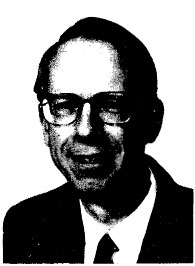
NEW BRITISH HIGH COMMISSIONER

Bruce Dinwiddy

The Head of the British Foreign and Commonwealth Office’s Southern Africa Department is the new British High Commissioner in Dar es Salaam. He is Mr Bruce Dinwiddy who began his career as an economist in Swaziland. Born in 1946, he has also served in the diplomatic service as Head of Chancery in Cairo. Counsellor in Bonn and Deputy High Commissioner in Ottawa. His recreations, listed in ‘Who’s Who’ include golf, tennis and music.

There is also a new American Ambassador in Tanzania. He is M. Charles Stith, a theologian by training.

'IT WILL WORK THIS TIME'

According to the ambassadors in Washington of Tanzania, Kenya and Uganda quoted in the ‘Business Times’ the ambitious attempt by the three nations to bring about a political and economic federation will work this time because of the emphasis being placed on the private sector and the diminished government interference in the market.

BUSINESS NEWS

Exchange rates (Early April 1998)
£1 = TShs 1,104
$1 = TShs 679

The Business Times reports that the ‘World Economic Forum Report’ in February ranked Tanzania as one of the best economic reformers in sub- Saharan Africa and said that Tanzania topped the ‘IMPROVEMENT INDEX’. IMF Senior Resident Representative in Tanzania, Festus Osunsade, commended the report as correctly ranking Tanzania. He said “Look at everyday life patterns; people are enjoying a greater choice of goods and services which means more freedom of choice, a good indicator of achieved reforms”. Another report, this time on COMPETITIVENESS, placed Tanzania 17th out of 23 African countries. First came Mauritius and Tunisia. Bottom were Nigeria and Angola.

World Bank Vice-President for Africa Jean Louis Sarbid has said at a week- long meeting of the SPECTAL PROGRAMME FOR AFRICAN AGRICULTURAL RESEARCH (SPAAR) attended by representatives from 32 African countries in Arusha in late February that he is impressed by Tanzania’s economic reforms and the positive growth in her economy. There should be an air of optimism in future he said -Daily News.

Two new privately-owned English language NEWSPAPERS were launched on February 9. They are ‘The African’ of the Habari Corporation and the ‘Daily Mail’ of the Guardian Ltd -Business Times.

TANZANIA’S STOCK EXCHANGE has been opened by President Mkapa and was scheduled to start full operations on April 15. As a test case, one listed company, Tanzania Oxygen Ltd., has sold 7.5 million shares to some 10,000 new shareholders. Investors were able to become shareholders for as little as Shs 5,000/-. President Mkapa bought 100 shares -Business Times

The government and TANESCO have got themselves into what the Business Times calls a potential disaster for the Tanzanian economy over ELECTRICITY SUPPLIES. World Bank Resident Representative Ron Brigish has expressed concern over delays in reaching agreement between the Government and foreign investors on the important Songo Songo Gas-to- Electricity project (to produce 37 megawatts of electricity) which has been holding up release of $200 million of World Bank money for the $325 million project. The Canadian investors are hesitating because of the forthcoming start of a $150 million project negotiated in 1994 between ‘Independent Power Tanzania Ltd’ (IPTL) and a Malaysian Chinese consortium (Merchmar) under which 100 megawatts of electricity would be produced (starting in mid-1998) at a cost to TANESCO of some $5 million per month, twice the current cost of electricity. Other new supplies are such that it seems unlikely that the additional power will be needed before 2004. TANESCO might have to pay for power which it would not be using and the cost could escalate over time. The Songo Songo scheme is front loaded by comparison.

As this issue of TA goes to press the Business Times has proposed three possible scenarios to deal with what it describes as ‘the mess’:

1) cancel or try to renegotiate the project as recommended by the Bank; the Malaysian bank financing the project however has recently had to be bailed out by the Malaysian government and does not want to hear any bad news from Africa; on March 17 IPTL issued a statement saying that the government should not try to renegotiate. It could cost Tanzania up to $300 million to do so, but the Business Times believes that IPTL could already be in breach of contract and that renegotiation would be possible;

2) do nothing and go ahead with the contract; TANESCO might soon find itself unable to pay and, if the government then bailed it out using IMF funds, relations with the Bank and IMF could deteriorate seriously;

3) sell the individual 10 megawatt generators to the mining industry which has an enormous demand for power; the industry could buy them outright or let IPTL use them to provide electricity on a commercial basis.

The MUFINDI TEA COMPANY, formerly owned by Lonrho and now owned by the Harare-based African Plantation Corporation LDC, has decided to grow coffee as well as tea and has been allocated 1,200 acres in addition to its existing 828 hectares. 80,000 coffee seedlings are ready for planting next season -Daily News.

The CONTROLLER AND AUDITOR GENERAL has reported that 64 out of 103 local authorities mismanaged about Shs 3.5 billion between 1993 and 1996. The mismanagement was done through unauthorised expenditure, questionable payments improperly vouched and unvouched expenditures -Daily News.

ALLIANCE AIR’S newly appointed Executive Director John Murray quoted in Business in Africa (November-December) has said that, in spite of some operational hiccups, load factors on the Heathrow route from Tanzania and Uganda were up to 55 tons a week and passenger bookings and passenger bookings were averaging 70%. The setting up of a new airline ‘Alliance Express Rwanda’ has been agreed and other deals are being discussed with Zambia and the Congo. Alliance is using Kilimanjaro as well as Dar es Salaam airport.

Two Tanzanian hotels have been accepted into the prestigious UK ‘SWL HOTELS OF THE WORLD’ an exclusive international marketing and reservations company -the Zanzibar Serena Inn and the Kirawira Tented Camp in the Serengeti National Park -Daily News.

Dar es salaam’s 34-year old KILIMANJARO HOTEL, which has been running at only 15% bed occupancy during the last two years, was plunged into crisis in February when the staff went on strike and locked out the management demanding payment of their salaries and an end to alleged embezzlement of funds. On March 6 the Board of Directors, with government support, suspended all 400 workers -Daily News..

The TANZANIA SISAL AUTHORITY is being sold for $6.5 million to Katani Ltd which is owned by Messrs Grecian Investments and Wigglesworth and Company both of the UK. The assets involved include eight sisal estates, Tanzania Cordage and Kilosa Carpet Company. The company has promised to rehabilitate the estates and to invest some $28 million in six months time. The divestiture of TSA began in 1993 and 10 estates have already been sold to Tanzanian investors for a cost of Shs 1.2 billion. There has been a revival in the sisal industry as new uses have been found for the fibres (for the making of alcohol, medicines, animal feeds and the generation of electricity) and as environmentalists have turned away from using synthetic materials like nylon and polyesters -Daily News.

Tanzanians are enjoying a new stronger BEER -when they can get it! It is called ‘Kick’ and is the latest production from Associated Breweries Ltd. Demand is said to be far greater than supply. Brew Master Bakari Machumu said that ‘Kick’ is left to mature for 28 days compared with 14 days for most other brews. -Business Times.

The TAZARA Railway Authority generated Shs 12.68 billion during the 1997198 fiscal year compared with Shs 9.9 billion the previous year. The rehabilitation programme has increased the number of freight wagons from 1,122 to 2,280 and passenger wagons from 70 to 79 -Daily News.

AID

The UN’s Annual Development Cooperation Report for 1996 revealed that the total aid received by Tanzania in 1996 was $906.4 million (65% in the form of grants) l 1.4% higher than in the previous year and equivalent to $3 1.16 per person compared with $28.8 the previous year. Japan was the leading bilateral donor followed by Denmark, Sweden, Norway and the Netherlands. Bilateral donors provided 53.% of the aid, multilateral agencies led by the World Bank provided 44.4%. Transport (14.7%) and public administration (12.3%) were the sectors which benefited most.

Recent aid includes: UNDP -$66 million for equipment to be used in the fight against ALDS in Zanzibar. The WORLD FOOD PROGRAMME (for nine months starting in December 1997) -$33 million for relief food in 48 districts. DENMARK -Shs 30 billion for rehabilitation of the Dar es Salaam-Chalinze Road and improvements to the Wami Bridge. NORWAY -Shs 2.67 billion for a 33/11 Kilovolt sub-station at Changombe to alleviate low voltage problems and Shs 355 million for research work at the Sokoine University of Agriculture JAPAN -$181,000 for improvements to the Dodoma water supply and rehabilitation of the Malangali Secondary School and $80,000 to ESAURP for a programme of education in democracy. GERMANY -S11s 3.5 million for medicine to fight cholera in Zanzibar. BRITAIN -a patrol boat (Shs 10 million) to be used against drug trafficking and dynamite fishing. SOUTH AFRICA -two tons of construction equipment and four tons of medical supplies to alleviate damaged caused by the floods in January. The EU -Shs 22 billion for rehabilitation of 2,700 kms of roads in Rungwe and Iringa regions. FINLAND -Shs 296 million for local govemnent reform. BELGIUM -Shs 5 1 billion to repair damage on the Central railway and Shs 16 billion for banana and water projects in the Kagera Region. FRANCE -Shs 10 million to help combat cholera in Kagera, Maswa and Zanzibar. The WORLD BANK/IDA -$21.8 million for agricultural research. AFRICAN DEVELOPMENT BANK -Shs 2.55 billion for health rehabilitation projects.

ON THE TAZARA IN 1998

In the late sixties I travelled on the so called ‘hell run’ from Lusaka to Dar es Salaam in an empty truck with copper bars slung underneath. Once we had passed Mbeya the roadside was littered with crashed trucks, especially where it wound through the hills.

Later, I was full of admiration as the Chinese constructed the TAZARA (Tanzania-Zambia Railway Authority) railway as an alternative. It was an amazing engineering feat and it was therefore with a sense of long deferred pleasure that I boarded the night train from Dar es Salaam to Mbeya in January this year.

Buying a ticket was a typical Tanzanian experience. With only five people ahead of me in the queue, I assumed that it would be a matter of minutes. However, the ticket clerk had to deal with the next customer, two telephones and colleagues who constantly interrupted him. The queue was also typically Tanzanian. Everyone tries to get as near to the action as possible so that you get a ‘flat’ queue with everyone leaning on the front counter. After 50 minutes I reached the centre of the ‘queue’ and managed to purchase a first class single to Mbeya for Shs 19,400 – about £20. This placed me in a compartment with three other passengers – they have to be of the same sex -with four ample sized bunk beds. It was very comfortable and far more spacious than my recollection of British Rail’s cramped sleepers.

The day after I bought my ticket I reported one hour before, as requested, but there was much hanging about drinking sodas and observing fellow passengers before we left. We were due to depart at 5.30 and in fact left at 6 pm which seemed pretty good. The organisation at the station was impressive and each carriage had a smartly uniformed attendant waiting to guide passengers to their seats. All the first and second class attendants were young and attractive women who were polite and efficient. I later heard a complaint for an older male attendant from the third class coaches who said that these young women had been selected for their looks alone and didn’t carry out their full range of duties.

There seemed to be a disadvantage in being an internal (Tanzanian) passenger. Three new carriages reserved for passengers going to Zambia had showers. They made our carriages, with squatting type toilets, seem very scruffy.
Leaving at 6 pm meant that we passed through the Selous Game Reserve in the dark but darkness had its compensations. Excellent meals were served for Shs 2,000 (£2); beer was Shs 600 and sodas Shs 250. The most popular meal was chicken and chips but there was also fish and rice, all served with a cabbage and tomato salad with a banana on the side.

A comfortable night’s sleep was interrupted by a sudden halt at Mlimba station, at the foot of the escarpment some 300 kms from Mbeya. This was 3.30 am. I peered out of the window and went back to sleep again. Two hours later I awoke to find that we were still at Mlimba. Obviously something was up. However, as on our own railways, no information was given out. We learnt later that a single wagon carrying track ballast on the train ahead had come off the track on a steep bend. We were to stay there until 3 pm that afternoon! Mlimba station (1930’s Chinese style) was set in a pleasant landscape on the edge of the town. There were birds and butterflies and there ought to have been monkeys but I didn’t see any. During the day a distinct feeling of comradeship developed amongst the passengers, rather like being on a long cruise on board slip.

Eventually we pulled out of the station, this time with two diesel engines, and there was now the opportunity to appreciate the superb engineering feat of the Chinese. The single line track was bordered by well constructed drainage channels, the cuttings were lined with stone blocks: some sloping up to 50 feet in height. The most impressive thing was the excellent state of the track maintenance some 25 years after construction.
Once we reached the top of the escarpment, the train picked up speed and lived up to its ‘express’ tag. We reached Mbeya at lam, some 31 hours after leaving Dar es Salaam.

The final event in this mini-saga seems to bear out my experience in Tanzania – that things often turn out alright in the end. I arrived at the Holiday Inn -a basic hotel recommended by the ‘Lonely Planet Guide’ -at 1.30 am. I hadn’t booked but the security guard quickly came to the door and was soon joined by his mate. I was made most welcome, given a room and asked if I would like some tea and food. I settled for the tea and sat quietly reflecting on the equivalent scenario had this been a British hotel in the middle of the night.

Tony Janes

AFTERWARDS

Lucretia Gaurwa writing in the Daily News (January 28) described what happened at the famous Benaco (Ngara) camp for 700,000 Rwandan refugees when they all suddenly went home last year. First, a month after they had gone, there was what was called the ‘Green harvest’ when people came from all sides to enjoy a free harvest of thousands of tons of beans, maize, potatoes, sorghum and millet the refugees had been cultivating.

The refugees had originally arrived in April 1994. Some small traders made a fortune by acquiring (often illegally) low-priced handouts like corn oil, flow, blankets and cement which had been received from donor agencies and then selling them to markets in distant districts at high prices. Local citizens benefited from the establishment of clean water supplies, health centres and other improved infrastructure.

But when they all left, the writer of the article said that Oxfam removed water installations and the price of clean water quickly jumped from Shs30 for a 20 litre can to Shs 700. The German-aided hospital was removed to new Burundi/Zaire refugee camps in Kigoma regon, leaving residents of Benaco to travel 32 kms to the hospital in Ngara town. A large number of people had been employed during the residence of the refugees but when the refugees left some of these people became criminals. On July 25 1996 the authorities decided to expel all them; all temporary structures covered by UN sheetings suspected to be harbouring bandits were demolished; unlicensed kiosks were closed; mud houses without doors were demolished; and Benaco returned to its condition before the refugees came. But now many of these people have come back again. Some are putting up permanent houses.

NEWS MISCELLANY

Mwalimu Nyerere (at a press conference on January 22) “We must get rid of ridiculous issues like poverty, hunger and disease. We behave like a bunch of parasites in the world. I want to see Africa unite to get rid of these problems.”

Extract from the British New Year Honours List 1998: ‘ORDER OF ST. MICHAEL AND ST GEORGE. KCMG. Huddleston, The Most Reverend Archbishop Ernest Urban Trevor, for services to UK-South African Relations.’

Fears that the killing on June 30 1996 of former Director of Intelligence General Imran Kombe (Ta No. 57) might have had political motives were put to rest during the trial of the five policemen charged with his murder. His wife said in court that when she heard news about a Nissan vehicle which had been stolen (and for which apparently a substantial reward was being offered) and noted that this vehicle was very similar to the Nissan owned by the Kombes, she went to Oyster Bay Police Station in Dar es Salaam to get a certificate stating that it was not the stolen vehicle. She feared hassle on the way to Moshi. On arrival in Moshi they went off to a village to talk to some potential workers for their farm when they came up against a vehicle, moving slowly as if on a surveillance mission, and then they heard a gunshot from the rear. Mrs Kombe fled to a nearby house thinking that they were being attacked by bandits. General Kombe was shot dead. Two of the five policemen on trial admitted that they had fired 16 shots at the tyres to stop the vehicle but claimed that, because of the rough terrain and the 25 m distance, it was not easy to hit the target. They had killed General Kombe by accident. They had mistaken him for a dangerous suspect, Ernest Mushi (alias White), who was suspected of having stolen the vehicle they were looking for. They said that they had been told by the driver of the Nissan stolen in Dar es Salaam, who was with them as a guide, that the Kombe vehicle was the one stolen in Dar es Salaam. The driver died subsequently in police custody. Two of the five policemen were sentenced to death by hanging. The other three were released for lack of evidence; the judge said that he believed that they were innocent as they never left their vehicle and the senior one had instructed the other two to stay in the car but they did not.

Archbishop Polycarp Pengo of Dar es Salaam has been consecrated the new Cardinal of Tanzania at a ceremony in Rome. On his return to Tanzania on March 1st he was given a tumultuous reception from thousands of people lining the streets from the airport to St Joseph’s Cathedral. And Bishop Donald Mtetemela has been elected to be the 4th Archbishop of the Anglican Church of the Province of Tanzania (Thank you Roger Bowen, for sending the latter news item -Editor).

A controversial proposed new ‘Sexual Offences Special Provisions Act (1998)’ now before parliament, provides for anyone found guilty of rape to be liable to life imprisonment, corporal punishment, a fine and compensation to the victim, ‘as may be decided by the court’. Procuring for prostitution and sexual harassment could mean from 5 to 30 years in prison.

The Daily News has published figures of the number of government sponsored students studying abroad following an exercise by the Ministry of Education to remove the names of ‘ghost’ students who had been abusing the system. There are 744 such students overseas including 113 in the UK, 252 in Russia, 78 in India, 98 in the USA, 40 in Poland, 38 in Bulgaria, 24 in Cuba, 24 in China, 12 in Canada, 17 in Hungary, 1 in Germany, 4 in Australia, 5 in Belgium and one in Sweden.

The British Council is supporting the ‘Amani Arts Environment Education’, a new foundation promoting community participation in the ethics of the care of the earth and its inhabitants. “The Amani Ensemble” last year launched the ‘Roho za Watoto’ project, a musical collaboration between British and Tanzanian musicians, primary schools and street children in Dar es Salaam and Bagamoyo. A link is being established with the Guildhall School of Music and Drama in London – Action Africa, a British Council Africa Newsletter.

The government has temporarily suspended the issue or renewal of hunting permits pending the establishment of new, fair and transparent processing procedures. Future permits will be charged according to the importance of an area and the type and number of animals to be found there -Daily News.

Animal lovers have been expressing outrage following the news in the Swahili newspaper Majira that a primary court magistrate in Sumbawanga had sentenced the owner of a dog which he had named ‘immigration’ to a six months suspended sentence and had also ordered the dog to be destroyed. Animal lovers pointed out that the dog had no say in the choice of its name. Apparently the owner had named the dog out of spite and had been parading it outside the immigration office on a daily basis boasting about its name. The story received international publicity when the Dar es Salaam ‘Daily Mail’ reported that the dog had been expecting puppies and had been bludgeoned to death because the police could not spare a bullet to shoot it. Defending his decision Magistrate Onesmo Zunda said that he had done what he did in order to avoid a breach of the peace in the village. He was unable to cite the law which allowed him to pass this death sentence! Government officials ordered an enquiry. A reader in the ‘Business Times’ recalled another case where an animal was deprived of justice. In 1974 a cow which escaped the ‘slaughter machine’ at the Tanganyika Packers meat factory in Kawe ran off to seek justice in the garden of Judge Manning nearby. ‘Regrettably’, the reader’s letter went, on ‘it was barbarically shot dead in the compound of that custodian of justice’.

The British archaeologist Mark Cotton has discovered the remains of an underground mosque built with poles and timber near Chake Chake in Pemba which is believed to date back to the 6th century AD. Until recently historians believed that the Kizimkazi Mosque, 60 kms south of Zanzibar town, built 1,000 years ago, was the oldest mosque in East Africa -Business Times.

President Mandela has donated $608,000 to the Mwalimu Nyerere Foundation which was launched in August 1996 to promote peace and development through unity. The Anglo-American Corporation of South Africa has donated $50,000 -Daily News.

OBITUARIES

THE RIGHT REVEREND EDMUND CAPPER OBE (89) spent 25 years in Tanganyika serving as Bishop of Masasi. From 1958 to 1962 he was Provost of the Collegiate Church of St Albans in Dar es Salaam. He confirmed an old man who remembered Livingstone pass by on his last journey of exploration, shortly before he was found dead at Chitambo. In the absence of clergy many village churches were run by African lay catechists. At one such church Stradling announced that he would sing Evensong, and that the catechist was to read the lessons. Just as the service was starting the catechist said in an agitated whisper. “Whatever shall I do? A goat has eaten the first lesson” (Thank you Randal Sadlier and Paul Marchant for sending this information from the Times and the Daily Telegraph – Editor)

JULIA CARTER died on January lst. She and husband Roger, who were married for 57 years, spent five of those years in Tanzania and when they returned to Britain they started the Britain-Tanzania Society. Julia served as Trustee of the society’s Development Trust. The March 27th issue of ‘The Friend’ described her as a deeply caring person with a natural ability to stand alongside others, to share their pleasures and achievements and to understand their problems and anxieties. She worked for a time in family planning in Tanzania and a former Tanzanian High Commissioner wrote ‘we have always regarded Julia as part of us’. A large number of members of the Society, including representatives from the High Commission, were among the 180 friends present to celebrate her life at a memorial meeting held in Settle on January 14th.

The April issue of the journal ‘White Fathers-White Sisters’ contained two obituaries. FATHER ARNOLD GROL (74) who, during a long period of missionary work in Tanzania supervised the construction of the Sumbawanga Cathedral, has died of a heart attack; SISTER MARGARET TANSEY (83) who died on December 18 served for 30 years in Tanzania including a period when she ran the student’s hostel at Kipalapala (Thank you John Sankey for this information -Editor).

RICHARD A JOSSAUME FIAGE was an agricultural engineer much involved in the Groundnut Scheme in Tanzania in the late 1940’s. He kept careful records of his experiences and his son Chris has donated his collection of slides, photos, cine films and books to the Institute of Agricultural Engineers – they are held at the Cranfield University (Silsoe College) Library.

MRS CHRISTINA MUGAYA BURITO NYERERE, the mother of Mwalimu Julius Nyerere, has died at the age of 104. Mwalimu has been quoted as saying that even on his 75th birthday she still treated him as her child.

EMIL SENGATI (70) who died after a long illness on March 8, was a long time civil servant and was the first African to hold the post of Town Clerk before independence.

BISHOP MAURICE SOSELEJE (80) of Masasi Anglican diocese, one of the first Tanzanian church leaders, died on January 10.

(Apologies for the error in the last issue. Dr Joseph Taylor OBE FRCS was mistakenly referred to as Dr David Taylor -Editor).

A DAY IN THE LIFE OF WADI MOJA

Yesterday a lorry carrying eighty-odd people to a football match overturned. Three were killed and a fair number were brought here. Wadi Moja (Ward One); which already has its fair share of problems, resembled a battlefield. There were sixty-odd patients, four nurses, me and one clean sheet. Hamna shida. This is Africa.

Waiting patiently in the corridor for admission were ten men, most of whom were bleeding from somewhere. All the usual chores – operation cases etc., plus relatives milling around, did not alter the admitting nurse’s usual polite greetings in any way. Each individual was greeted in the same manner -just as they would have been if there had been only one of them and the whole afternoon stretching ahead. “Habari za leo? “Nzuri.” Habari za Nyumbani? ” “Salama “. Even – honestly -“Habari za afya?” “Nzuri kidogo”. “Nzuri kidogo?” Now this answer is from a man with blood pouring from his chin and his leg in plaster from toe to groin! Each of the ten men got the same treatment. No hurry or panic on wadi moja.

After all had been admitted, some two to a bed, some on the floor of the corridor, and the afternoon shift had been given the report, the now off-duty nurses tied on their kangas and wandered off home. After all, one day is much like any other on wadi moja.
Jean Cooper

Glossary: Hamna shida -No problem. Habari za leo? -How are things? Habari za Nyumbani? -How are things at home? Habari za afya? -How are you feeling? Or how is your health? Nzuri -Good. Kidogo -small or a little.

(Jean Cooper, author of the above article is a VS0 volunteer working at Nyangao in Mtwara Region. VSO’s programme in Tanzania opened in 1961 and today around 110 volunteers are working in the country. Fourteen new volunteers will be going there in June followed by another 30 in September. Volunteers are involved in education, technical training, community development and agriculture as well as health. As a charity, VS0 is fortunate in receiving a large grant from the British Government. However, it still needs to raise over £4 million this year. One of the most enjoyable and rewarding ways of supporting VS0 is through sponsoring a volunteer. VS0 has various schemes, For example, if you contribute £15 per month you can share sponsorship of a volunteer, choose the region where your volunteer works and expect about two letters a year from the volunteer. Another scheme costs £300 per year but if you contribute £1,000 per year you will be able to choose a specific volunteer according to his/her skill, meet the volunteer (if possible), and receive letters, reports and photographs. Details from Anne Harrison or June Quayle, on 0181 780 7200 or write to them at VSO, 317 Putney Bridge Road, London SW13 2PN e-Mail XXX Editor)