AIR TANZANIA RESUMES FLIGHTS

Air Tanzania (ATCL) have resumed flights on the Kigoma-Dar es Salaam route following the successful repair of one of its planes. The Dash 8 plane was grounded at Kigoma Airport after one of its cockpit windshields developed a crack while airborne. The plane had flown for about 30 minutes but landed safely at the airport after the mishap.

The airline may be about to have a new lease of life following a recent visit by President Kikwete to Oman. It is believed that the Omani Development and Investment Company has agreed in principle to invest $100 million (TShs160 billion) in ATCL. Sheikh Salim Al Harthy, Chairman of Al Hayat said: “We thank His Majesty Sultan Qaboos Bin Said of Oman and President of Tanzania (Jakaya) Kikwete for the chance they have offered us as we plan to build an airline training cen­tre, good offices for ATCL, to buy planes and engage in other develop­ment activities. (The Citizen)

SWISS BANK ACCOUNTS

Swiss Ambassador Olivier Chave has revealed that the Swiss National Bank have found certain ‘shadowy individuals’ who have spirited TShs303.7 billion ($178 million) out of Tanzania to what were described as ‘Alpine offshore havens with a reputation for secrecy.’ During a courtesy call on CHADEMA Deputy leader, Zitto Kabwe, in January this year, he said that if Tanzanian officials provided evidence that the money had been fraudulently obtained, the Swiss national authorities would wire it straight back to Tanzania. “We have done that several times – we once returned cash stashed in our banks by former Nigerian president Sani Abacha,” he said, and added that Tanzania could also recover back taxes on the money.

Needless to say this soon created a storm in Parliament. Mr Kabwe said he thought that the Tanzanian authorities did not really want to get the money back. The Kigoma North MP then tabled a private motion proposing the formation of a select committee to probe the matter, but the motion was rejected. According to the Citizen, MPs began to sling accusations and there was apparently a threat that Mr Kabwe would name and shame the thirteen individuals allegedly involved.

The Speaker of the National Assembly Anne Makinda brought the debate to an abrupt end with the assertion: “Government will use its organs to establish the truth, with assistance from international inves­tigators.”

Prime Minister Mizengo Pinda was adamant that the issue be handled carefully because it was “sensitive.” He assured the public that govern­ment would do all it could to expose the faces behind the Swiss billions. Anti-corruption chief Edward Hosea said his office would do whatever it could to figure out whose cash was hidden in Swiss bank accounts.

TANZANIA & MALAWI – LATEST

‘Biased and false’
As the long standing dispute on the ownership of Lake Nyasa between Tanzania and Malawi continued, Tanzania dismissed as “biased and false” a CNN programme which claimed that Tanzania’s border with Malawi lies on the shores of Lake Nyasa. Tanzanian officials said that the broadcast had supported Malawi’s position on the dispute and did not augur well for efforts to settle the matter amicably. The government sent a protest note to the US-based television network on the reports, which it considered to be prejudiced, according to Director of the Tanzania Information Services, Assah Mwambene.

Asked whether the government had consulted US ambassador to Tanzania, Alfonso Lenhardt, he said that Tanzania believed CNN to be an independent media house guided by an editorial policy which the US government had no mandate to influence.

The border row between the two countries follows claims by Malawi that it owns all of the northern part of Lake Nyasa, in accordance with the Heligoland Treaty of 1890 between the colonial powers Germany and Britain. Tanzania argues that, in accordance with international customary law, the border between the two countries is in the middle of the lake.

“Everything is compromised” – President Banda
After failing to reach agreement in 2012 (see TA 103 & TA 104) the two countries agreed that they would submit a letter to former Mozambican President Joaquim Chissano, who chairs the African Forum of former Heads of State within the Southern African Development Community, asking him to arbitrate the matter.

In the latest development, Malawi President Joyce Banda said that Malawi was giving up on mediation efforts and would take to the courts to settle the dispute. “We should not waste time on this (media­tion),” she said in Lilongwe after returning from visits to the US and Britain. She said that the mediation bid by ex-President Chisano was “compromised because information submitted by Malawi was leaked to Tanzania”.

She accused the executive secretary of the forum, John Tesha, a Tanzanian national, of passing some vital information to his home coun­try. “After surrendering our documents, we were told that they were leaked to Tanzania before the Tanzanians surrendered theirs,” Banda said. “We feel everything is compromised,” President Banda had earlier said the dispute had dragged on for too long and she was considering taking it to the International Court of Justice for arbitration.

VOLUNTEERING CHANGED MY LIFE

by Samia Khatun

In August 2012 I quit my well-paid full-time research job to volunteer with the Voluntary Services Overseas International Citizen Service (VSO ICS) programme. Practically every person asked me the same question: “Are you mad – in this economic climate?” and before depart­ing this question replayed over and over again in the back of my mind. Now I have the answer to this question. “No, I am not mad and would do it all over again” – and here is why.

Having completed my Masters in International Development, I decided to pursue a career in Development Research which took me from work­ing for a small grant awarding trust to a large international research consultancy. Working from the luxury of a London office, I felt discon­nected and far removed from the realities of international development, which is why I decided to volunteer.

I believe that it was fate that I ended up going to Tanzania. I applied online not knowing which country I would be going to if my applica­tion was successful. A few days later, I was invited to an assessment day, which included a group task and an individual interview. The first task of the day was to imagine that there was a world map on the floor and each applicant was asked to stand anywhere on the map and explain their choice of country. I stood in Tanzania, and when probed as to the reason, I replied that I would like to go there sometime.

At the end of the assessment day the coordinator told us that she would be in touch and that they had spaces in Nepal, Nigeria and Tanzania. You can’t imagine my excitement hearing that Tanzania was an option, and when I was later informed that I had been placed in the Tanzania programme, I could not believe my luck.

The scheme, funded by DfID, is aimed at 18-25 year olds and groups of volunteers are placed in a community for three months, living in host homes and working in cross-cultural counterpart pairs. I found out I would be travelling to Kamachumu, a rural village in Muleba district in Kagera region in north west Tanzania. If you google Kamachumu you don’t get a lot of information, and I thought “what have I let myself in for?” The nearest town, Bukoba, is one and a half hours away on the daladala (I will not be complaining about overcrowding on the British underground again!).

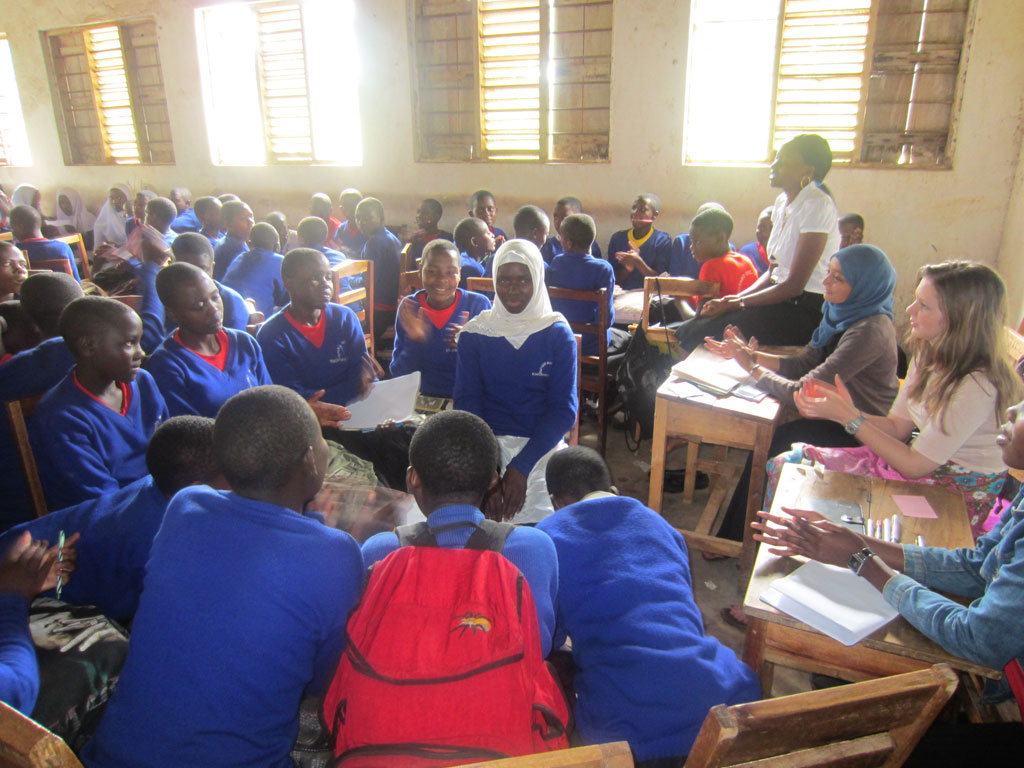
Samia (second from right wearing headscarf) with fellow VSO ICS volunteers Flora John Moshi and Catriona Mckayand at a sexual and reproductive health session at Rutabo Secondary School

Samia (second from right wearing headscarf) with fellow VSO ICS volunteers Flora John Moshi and Catriona Mckayand at a sexual and reproductive health session at Rutabo Secondary School

My host home was relatively small with just my host mother and father, as their sons live and work in Dar es Salam. Other volunteers were placed in host homes with up to four generations living under one roof. My host mother was keen for us to have a full experience and involved us in family life as much as possible; I experienced the birth of a new­born baby, a visit to see grandparents and the death of a family friend.

During the placement we worked with a grassroots NGO called KAVIPE (Kamachumu Vision for Poverty Eradication) on different projects including agriculture, youth, environment, gender and health. I was placed on the health programme. The two main goals of the health team were: (1) to reduce stigma associated with HIV/AIDs and (2) to increase awareness of sound sexual and reproductive health practice amongst women. Kamachumu is home to Ndolage Hospital where the first HIV/AIDs cases in Tanzania were discovered in 1983.

The experience was not without its challenges. For example, I don’t think any volunteer will ever get use to the chorus of “Mzungu” (white person/ foreigner) every time you take a step out of the comfort of your host home, nor the relaxed attitude to time keeping (a big issue for us Brits who are sticklers for ensuring meetings start in a timely fashion) and not knowing the local language, but these are what you would call minor concerns in the grand scheme of things.

Another challenge for me personally was the food, the staple food in Kamachumu is bananas, we would have fried bananas at breakfast, matoke (steamed green bananas) for lunch, grilled bananas at tea and endless sweet bananas as a treat between meals! Whilst I grumbled about the amount of bananas, the community was worried about Banana Xanthomonus Wilt (BXW) more commonly referred to as ‘banana disease’, which threatens the food security of the region and the live­lihoods/income of many farmers. There is currently no chemical or biological treatment or cure for the disease, which has left researchers puzzled. I soon stopped the grumbling and began to have a new found appreciation for bananas.

Despite the challenges, the particular skills that I will take away include working cross-culturally, team work, critical thinking, adaptability, project planning and delivery. I learnt so much about the different types of development, from international development to community development, but more importantly personal development. I was able to experience the beauty that is Tanzania with its luscious greenery, marvellous array of colourful birds, and vibrant culture and make plenty of lifelong friends. I believe this experience has given me a better insight into what it means to really work in international development and will provide me with a clearer perspective on what we are actually hoping to achieve.

Prior to joining the scheme, I wondered whether this would be a life-changing experience. To sum up, yes, it has definitely opened my eyes and I think that all young people in the UK would benefit from taking part and should be encouraged to do so – not just to improve their CVs by enhancing their skills but also to experience something that will stay with them forever. Whilst I didn’t get to see the ndovu (elephants), twiga (giraffes) and simba (lions) of the Serengeti, it was a wholly worthwhile experience and one that I would do again in a flash.

Samia Khatun holds an MSc in Political Economy of Development from SOAS, a BSc Honours degree in Politics and Economics from Brunel University, and is a Trustee of the Hilden Charitable Fund. Prior to volunteering in Tanzania, she worked at InterMedia, a C4D research consultancy with clients including the Bill & Melinda Gates Foundation, Deutsche Welle and BBC Media Action Swahili.

BUILDING COLLAPSE

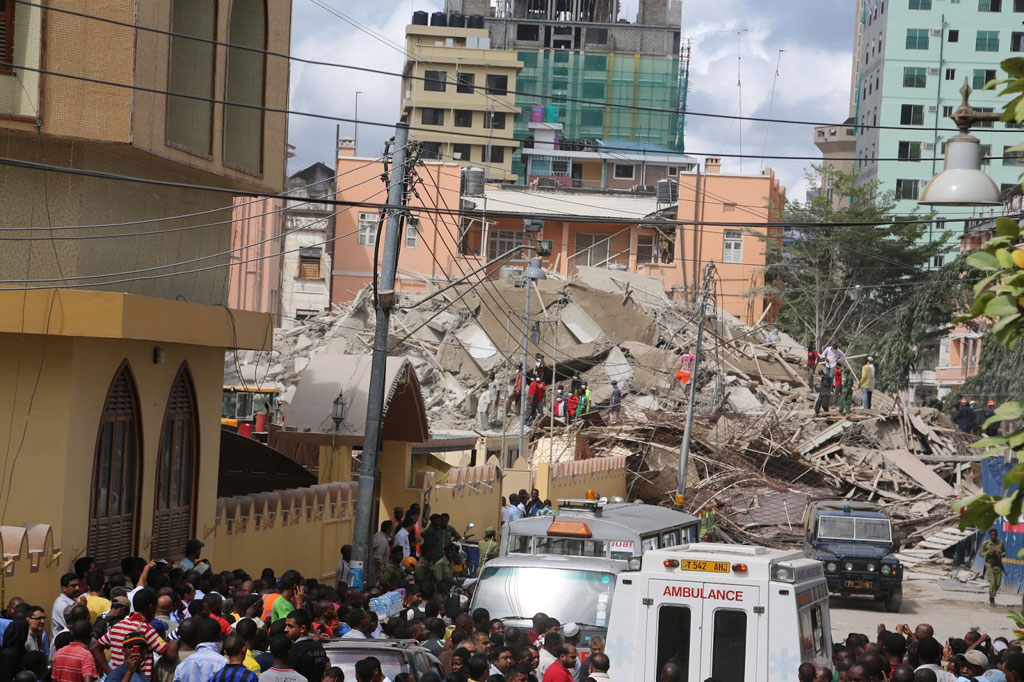
Thirty six people lost their lives on Good Friday when a 16 storey build­ing under construction in central Dar es Salaam collapsed. The residen­tial building was at the junction of Indira Gandhi and Morogoro roads and near to a mosque. Emergency personnel were quickly on the scene and rescued 18 people from the rubble. President Kikwete also visited the site and sent his condolences to the bereaved. Subsequently eleven people including Assistant Registrar with Architects and Quantity Surveyors Registration Board, Albert Munuo, Raza Hussein Ladha (the building owner), the construction company’s owner, Ibrahim Kisoki and AQSRB Principal Enforcement Officer, Joseph Ringo were charged with 24 counts including manslaughter.

Scene following the collapse of the building  www.michuzijr.blogspot.com

Scene following the collapse of the building www.michuzijr.blogspot.com

The Minister for Lands, Housing and Human Settlements Development, Professor Anna Tibaijuka, ordered the NHC and its partner Ladha to immediately demolish a nearby tower which was also under construc­tion by the same firm Lucky Construction Limited. She also announced moves to audit all high rise buildings under construction, following reports that the developer of the tower had been given a permit for ten floors but was in fact planning to build nineteen.

RADIOS BANNED

The Tanzania Communications Regulatory Authority (TCRA) has banned the Morogoro-based radio station Imaan FM and the Mwanza­ based Neema FM Radio for six months for broadcasting inflamma­tory statements that “violated the law and broadcasting ethics”. The Authority also fined Clouds FM Radio TShs 5 million for holding a dis­cussion that “promoted and supported homosexuality” in the country through its morning programme, Power Breakfast.

OPENING DOORS

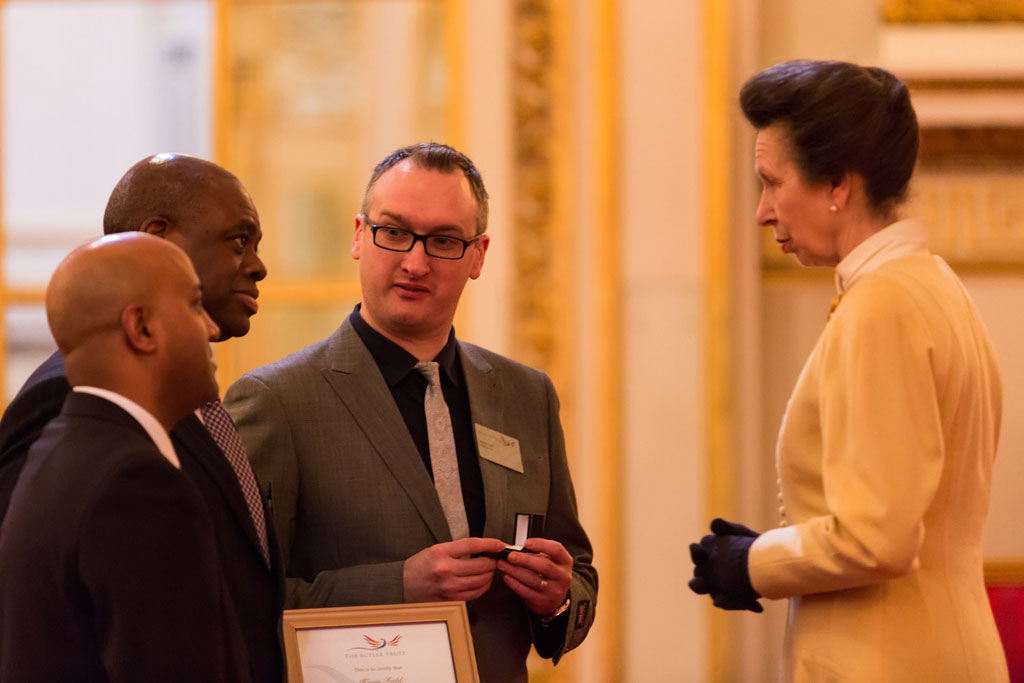
Donovan (second left) in conversation with Princess Anne

Donovan (second left) in conversation with Princess Anne

Tanzanian Affairs co-editor Donovan McGrath was invited to Buckingham Palace on 11 March to receive a Butler Trust Award from Princess Anne in recognition of his work with Radio Wanno, Wandsworth Prison’s community radio station. Together with fellow radio tutor Simon Sujeewon and project manager Kevin Field, Donovan runs a Radio Production course for inmates. This course is oversub­scribed and has the best attendance record of any course at the prison.

The prisoners learn how to use sophisticated audio editing software and develop their literacy and IT skills while writing scripts for radio programmes. Many have barriers to learning, such as dyslexia, language problems and learning difficulties, or are tackling addiction, but at the project they find friendship and support as well as learning new skills. Students have credited the programme with giving them ‘endless opportunities’ and changing their mindset.

AWARD FOR PROF. MWAIKAMBO

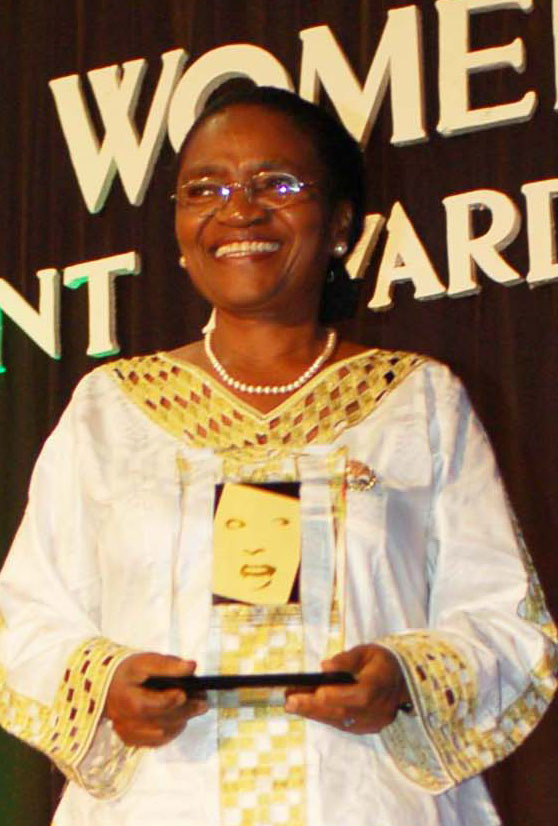
Prof. Mwaikambo receiving a Tanzanian Woman of Achievement Award in 2009

Prof. Mwaikambo receiving a
Tanzanian Woman of Achievement
Award in 2009


Britain Tanzania Society’s veteran Vice-President Prof Esther Mwaikambo has been awarded the 2013 Dr Martin Luther King Jr Drum Major for Justice award at a ceremony in the US Embassy in Dar es Salaam. She is a Senior Professor of Paediatrics and Child Health at the Hubert Kariuki Memorial University in Dar es Salaam and was the first Tanzanian female medical doctor. Her career spans over 40 years in public service and car­ries with it a longstanding concern on health issues, worker-patient rela­tionships, ethical conduct of health personnel, promotion of human rights in the delivery of the services and most importantly; a good clinical prac­tice. She has published more than 100 research papers in the areas of medi­cine and maternal care and has the dis­tinction of having founded and served as the Chairperson of the Medical Women Association of Tanzania from 1997 until 2006.

BUSINESS & THE ECONOMY

By Paul Gooday & James Pringle

Strong economic growth predicted
Tanzania’s economy is expected to see higher growth than other countries in East Africa. This is according to two new surveys by the World Bank and investment firm PineBridge, which highlighted the services and construction sectors and increasing global demand for gold as the key drivers of growth. PineBridge predicted the Tanzanian economy will grow by 7% in 2013, com­pared to 4.5-6.5% for other countries in the East African Community. (East African)

According to the Standard Chartered Bank Economic Outlook for Tanzania, developments in the energy sector will continue to bolster economic growth both in 2013 and over the medium term, driven by the discoveries of natural gas reserves off the coast of Tanzania estimated at 28.9 trillion cubic feet. The continued growth in agriculture, a successful cotton crop and investment in infrastructure should further brighten the economic outlook, combined with the expected increase in receipts from tourism, gold and manufactured goods.

Tanzania is included in Standard Chartered Bank’s ‘7% club’ – a list of coun­tries with GDP growth strong enough to make the economy double in a decade. (www.tanzaniainvest.com)

Inflation
The rate of inflation for January 2013 has decreased to 10.9% from 21.1% recorded in December 2012. The decrease is explained by the speed of price increases in commodities decreasing compared to December 2012. The infla­tion rate for food and non-alcoholic beverages decreased to 11.9% in January 2013 from 13.1 % recorded in December 2012. (www.nbs.gov.tz)

IMF Verdict
An International Monetary Fund (IMF) mission, led by Mr. Paolo Mauro visited Dar es Salaam from 21 February to 6 March and issued this statement: “Tanzania’s economy has continued to perform robustly. Economic growth is projected at about 7% in 2013. Inflation has continued to fall, albeit more slowly than envisaged, and is projected to be in the single digits by mid-2013.

Economic policy will aim at further moderating inflation, preserving a sustain­able debt outlook, and increasing foreign reserves, which will be facilitated by further enhancing exchange rate flexibility.
The mission was encouraged by the authorities’ readiness to moderately tighten monetary policy to meet their inflation objective of 7% by end-2013. It supported the authorities’ aim for a further reduction in the budget deficit in 2013/14, based on revenue targets, and also transparent support to the power sector. (IMF press release, www.imf.org)

IMF Loan imminent
Tanzania has indicated that it will borrow $114m from the International Monetary Fund, under the standby credit line agreed in 2012. This credit is intended to provide a financial cushion against a reduction in external demand and access to global finance.

The high cost of imports of machinery for oil and gas exploration, and the Eurozone crisis, have had a negative impact on Tanzania’s balance of pay­ments. The IMF loan will act as a buffer against this problem, and will strengthen Tanzania’s position as it prepares to borrow upwards of $600m from the international debt market. (The East African)

Chinese President visits Tanzania, announces $10bn port in Bagamoyo
The recently appointed Chinese President, Xi Jinping, visited Tanzania in late March. He signed a range of economic partnership agreements and announced a $10bn project in Bagamoyo to construct a new port, complete with transport links and an industrial zone. Other agreements covered improvements to Tanzanian hospitals and the building of a Chinese cultural centre.

This was only the second country President Xi has visited since becoming President, after Russia, and was the first stop of a three-country tour of Africa. In a speech given to launch the Julius Nyerere Conference Centre in Dar es Salaam, built with Chinese support, President Xi spoke of the long history of China’s good relations with Tanzania. Details of the Bagamoyo port project have not been released, but according to the Economist Intelligence Unit the scale of the investment suggests a port 20 times the size of Dar es Salaam port. The terms of the Chinese finance for the port, and its operations, are not yet known, but it is expected to become operational by 2017.

A report in the Telegraph noted that China is the second-largest foreign investor in Tanzania, with stakes in agriculture, coal, iron ore and infrastructure, and quoted China expert Jonathan Holslag, head of research at the Brussels Insitute of Contemporary China Studies, as saying that Mr Xi was keen “to showcase that China’s approach to Africa is different from the West,” and that “…China is reviving [their] partnership with Tanzania by investing heavily in its infrastruc­ture”, such as railways that could provide a vital link to Chinese-run mines in the Democratic Republic of Congo.

Later in President Xi’s tour, he joined other leaders of the BRICS grouping (Brazil, Russia, India, China and South Africa), to announce the formation of a new Development Bank. This move was widely seen as a challenge to western-dominated financial institutions, in particular the World Bank. (CNN, Economist Intelligence Unit, Daily News, Guardian.)

Gas
Protests broke out recently in Mtwara region over the extraction of gas and the construction of a pipeline to transport the commodity to Dar es Salaam for refining and eventual sale. The protests caused damage estimated at $929,000 in vandalised property. Four people are said to have died in the riots and scores injured.

Local residents want the gas processing plant constructed in Mtwara instead of Dar es Salaam. Uwesy Salum Hamisis, chairman of the Mtwara elders, said the residents want the government to honour an earlier pledge to set up manufac­turing industries, including fertiliser, cement, glass and ceramic plants. Former president Benjamin Mkapa who hails from Mtwara has also raised concerns about the project. However government officials said the gas plant will remain in Dar es Salaam. (East African)

Mining
Peak Resources, an Australian firm, is expected to earn $361m annually from the Ngualla rare earth project in Mbeya region. According to Shaw Stockbroking Ltd, Ngualla is among the top three rare earth projects outside China, and has a pre-tax net profit value of $1.57bn. The site has mineral resources of 170 million tonnes. (The East African)

Banking
Barclays and Absa Group have announced they plan to combine their Africa operations. This deal, worth £1.3bn, would create the largest retail bank on the continent. It follows Barclays’ 2005 purchase of a majority stake in Absa, and efforts since 2011 to integrate the two banks’ operations. Absa would acquire Barclays operations in nine countries, including Tanzania.

Absa currently owns a 55% stake in the National Bank of Commerce (NBC), one of Tanzania’s leading retail banks. The Absa Chief Executive, Maria Ramos, said that no job losses or management changes would result from this move. (Financial Times, with thanks to John Sankey for this item)
The Tanzanian Minister for Finance and Economic Affairs, William Mgimwa, has called on local banks to stop raising lending rates, to encourage economic growth. The government now expects banks to peg their rates to the Bank of Tanzania rate, rather than to Treasury bills yield rates. (East African)

Agriculture
Tanzania’s Parliament on 4 February 2013 adopted a new government pro­gramme to provide loans to young people under 35 who are interested in start­ing agricultural businesses. TShs 200 Billion ($24 Million) will be earmarked annually from the national budget for the project. The Youth Fund will be an important means to curb the problem of youth unemployment. It will empower the young population to create their own employment opportunities, stimulate food production and help the country meet agricultural demands.

The new project is part of the government’s plan to invest a growing share of its budget in agriculture. According to the Director of Youth Development in the Ministry of Information, Culture and Sport, Mr Elisante Ole Gabriel, the gov­ernment will provide more details on how and where to apply for access to the Youth Fund, which will be available from 1 July 2013. (www.TanzaniaInvest.com)

Tanzania expects to earn $200m in revenues for coffee exports in the 2012­2013 season, compared to original projections of $250m. This reduction is a result of bumper harvests in South America and reduced demand in Europe and the US. Global prices have dropped by 24% in the past year, and are expected to fall further. The Tanzania Coffee Board plans to expand coffee acreage to an annual production target by 2020 of 100,000 tonnes, compared to 65-75,000 tonnes at present.

The outlook for tea is more positive. Industry managers across the region are expecting high prices following low production worldwide. This is despite a prolonged drought that affected East African tea estates early in 2012. (East African)

Construction and Housing
The National Housing Corporation (NHC) has officially announced a project to build two new satellite towns in Meru and Arusha-Rural Districts, where it owns more than 1000 acres of land. In 2011, 430 hectares were acquired at the cost of TShs 8.6 Billion ($5.4 Million) by the newly established Arusha District Council Trust Company. Hundreds of residential houses and shopping malls will provide low-income earners with ultra-modern residential houses. The houses will be for rent or sale. The project will also boost the District Council’s revenues.

NHC is state-owned and is Tanzania’s oldest public real-estate developer. It operates under the Minister for Lands, Housing and Human Settlement Development. Arusha is a vibrant dynamic urban centre which serves as the capital for the East African Community. The proposed new cities represent the biggest project the Arusha region has ever embarked on. A great deal of support from development partners in and outside the country will be required. (www.tanzaniainvest.com)

OBITUARIES

Dr ALISON REDMAYNE, a dedicated and meticulous anthropologist known chiefly for her ethnographic and historical research among the Hehe and neighbouring peoples of Tanzania, died on 20 February 2013, aged 76. During the 1960s she produced a small but important body of research which remain the standard works on the precolonial and colonial history of the Hehe. She also made tape-recordings of a large corpus of oral tradition and musical performances in the field which are now preserved and digitised in the British Library. Her careful description of Hehe resistance and eventual submission to German military force highlighted an episode of enduring significance to the history and historiography of Tanzania and colonial violence. Alison was adopted as a member of the Hehe royal family, and used her Hehe name (Mung’anzagala Gisakamutemi Msengidunda Semugongolwa) with considerable pride. The people of Iringa and Mufindi will remem­ber her for her deep knowledge of their past and present, and for her unending devotion to their welfare.
(Abridged from a longer obituary by Martin Walsh, written for the Journal of the Anthropological Society of Oxford)

Dr ANDREW DAVIS, who died on January 10 aged 84, was director of parasitic diseases for the World Health Organisation (WHO) and cham­pion of Praziquantel – a life-saving drug against the tropical disease schistosomiasis. Schistosomiasis (also known as bilharzia) is a tropical worm disease and although not usually fatal, it can severely affect internal organs and, in children, lead to stunted growth and brain dam­age. Davis’s work involved the clinical pharmacology of drugs, notably Praziquantel, which he helped distribute to those in need: some 200 million people. After graduating from Durham Medical School in 1951, he reached the rank of acting lieutenant-colonel during his National Service in the Army. Davis was appointed director of the WHO bilhar­ziasis chemotherapy centre at Tanga on the East African coast in what is now Tanzania in 1962. There he investigated various preparations of the metal antimony against schistosomiasis, work that gained him his doctorate. Thank you to David Kelly for this item, reported in the Telegraph.

IAN McKEEVER, who was leading 22 Irish charity climbers up Mount Kilimanjaro, was struck by lightning and killed on December 30. His fiancée, Anna O’Louglin, 34, whom he was due to marry in September, was injured in the storm, as were up to six other members of the expe­dition. In 2008 Mr McKeever helped godson Sean McSharry aged 10 to become the youngest person from Europe to scale the mountain. (Telegraph and Evening Standard)